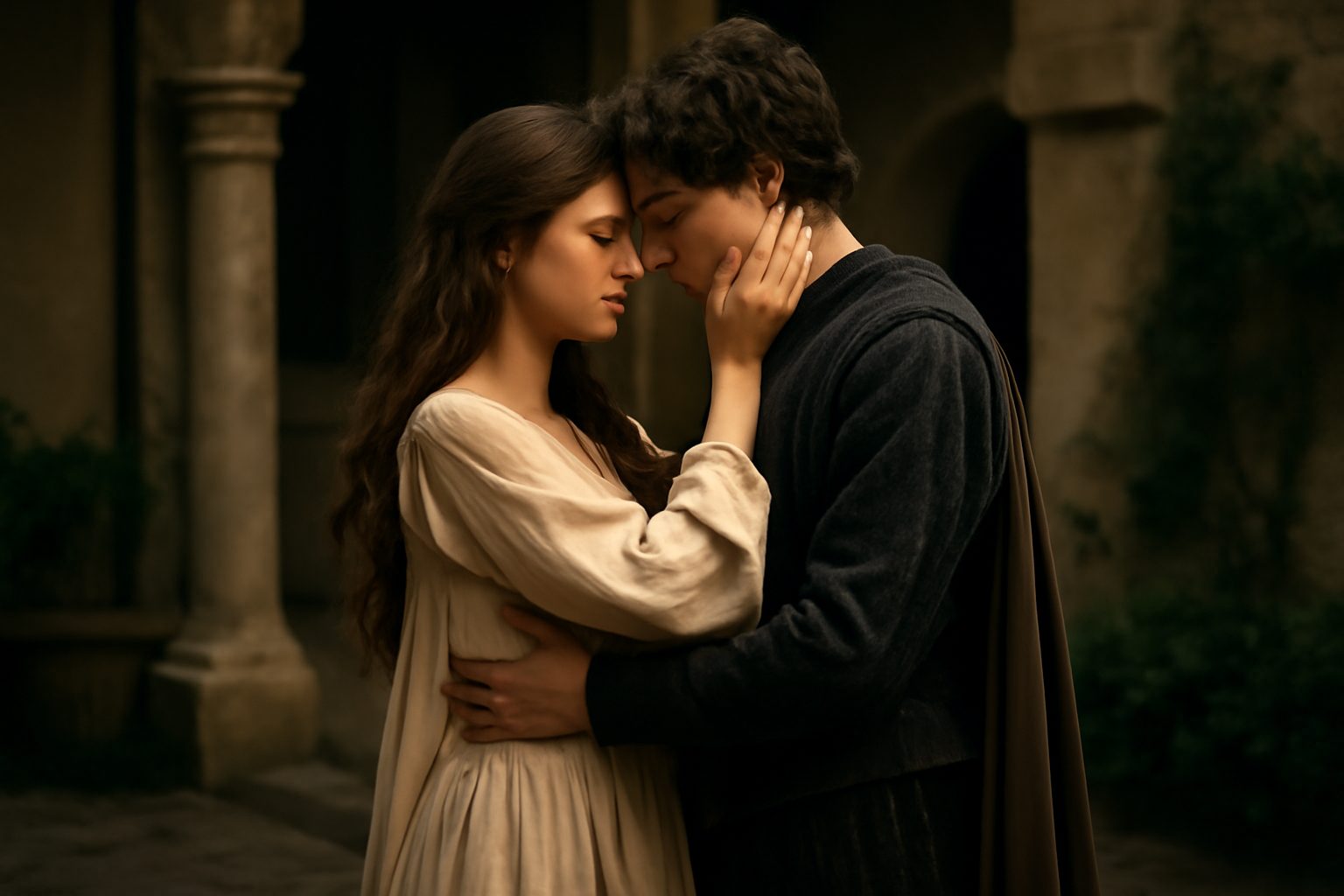
In Act 2, Scene 2 of Romeo and Juliet, Romeo has just left the Capulet feast and hidden in the orchard, where he overhears Juliet speaking from her balcony. This line reflects his inner conflict as he realizes that, despite being a Montague and thus an enemy to her family, he is drawn to her. The verse captures the irony of his love for Juliet, who is supposed to be his foe by family allegiance.
Chorus: "But to his foe supposed he must complain,"
In modern day english, we would say:
Romeo must express his love to someone he’s supposed to hate.
Frequently Asked Questions
Who is Romeo complaining to in this line?
Romeo is complaining to his supposed enemy, who is actually Juliet.
Connections to other verses:
Connection to "Being held a foe, he may not have access"
The verse "But to his foe supposed he must complain" directly relates to Being held a foe, he may not have access, as both emphasize the barrier created by the family feud. Romeo's inability to openly approach Juliet due to their families' enmity is a central conflict echoed in these lines.
Connection to "Now Romeo is beloved and loves again"
This line contrasts with Now Romeo is beloved and loves again, which highlights the mutual affection between Romeo and Juliet. While one speaks of love reciprocated, the other underscores the irony that he must direct his expressions of love to someone considered an enemy.
Connection to "Alike betwitched by the charm of looks"
The theme of mutual enchantment in Alike betwitched by the charm of looks complements the idea of Romeo complaining to his "foe," as both lovers are equally captivated yet constrained by external hostilities.
Connection to "And she steal love's sweet bait from fearful hooks"
This verse parallels And she steal love's sweet bait from fearful hooks, illustrating the dangerous yet irresistible nature of their love. Romeo's complaint to a foe mirrors Juliet's risk in seeking love despite peril.
Connection to "But passion lends them power, time means, to meet"
The determination implied in "But to his foe supposed he must complain" finds resolution in But passion lends them power, time means, to meet, showing how their intense emotions will ultimately overcome obstacles.
Connection to "To breathe such vows as lovers use to swear"
Romeo's need to complain to his foe contrasts with the ideal expressed in To breathe such vows as lovers use to swear, highlighting how the feud corrupts the pure expression of love.
Connection to "And she as much in love, her means much less"
This line resonates with And she as much in love, her means much less, as both emphasize the lovers' shared passion despite unequal social freedoms and external constraints.