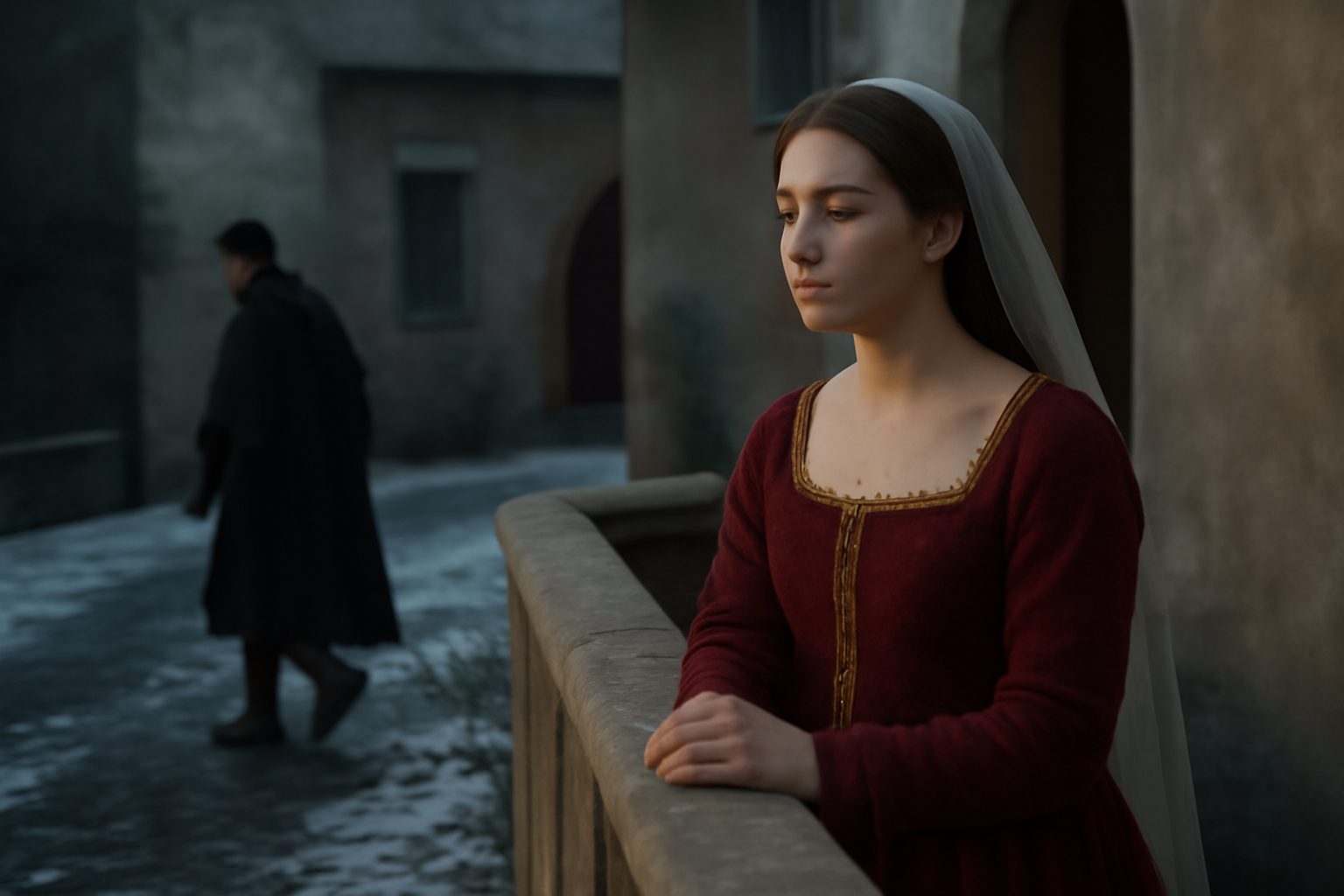
Act 1, Scene 2
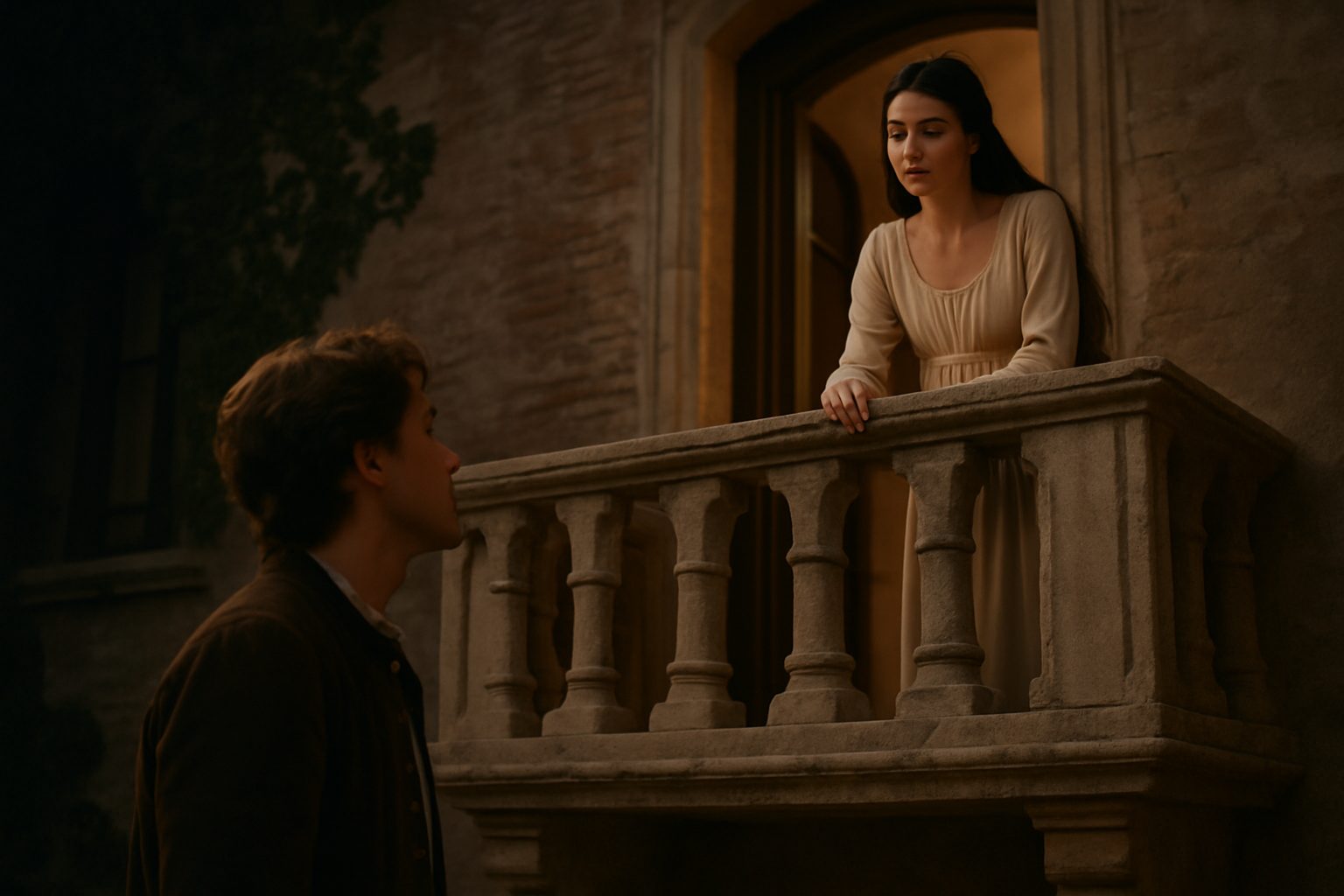
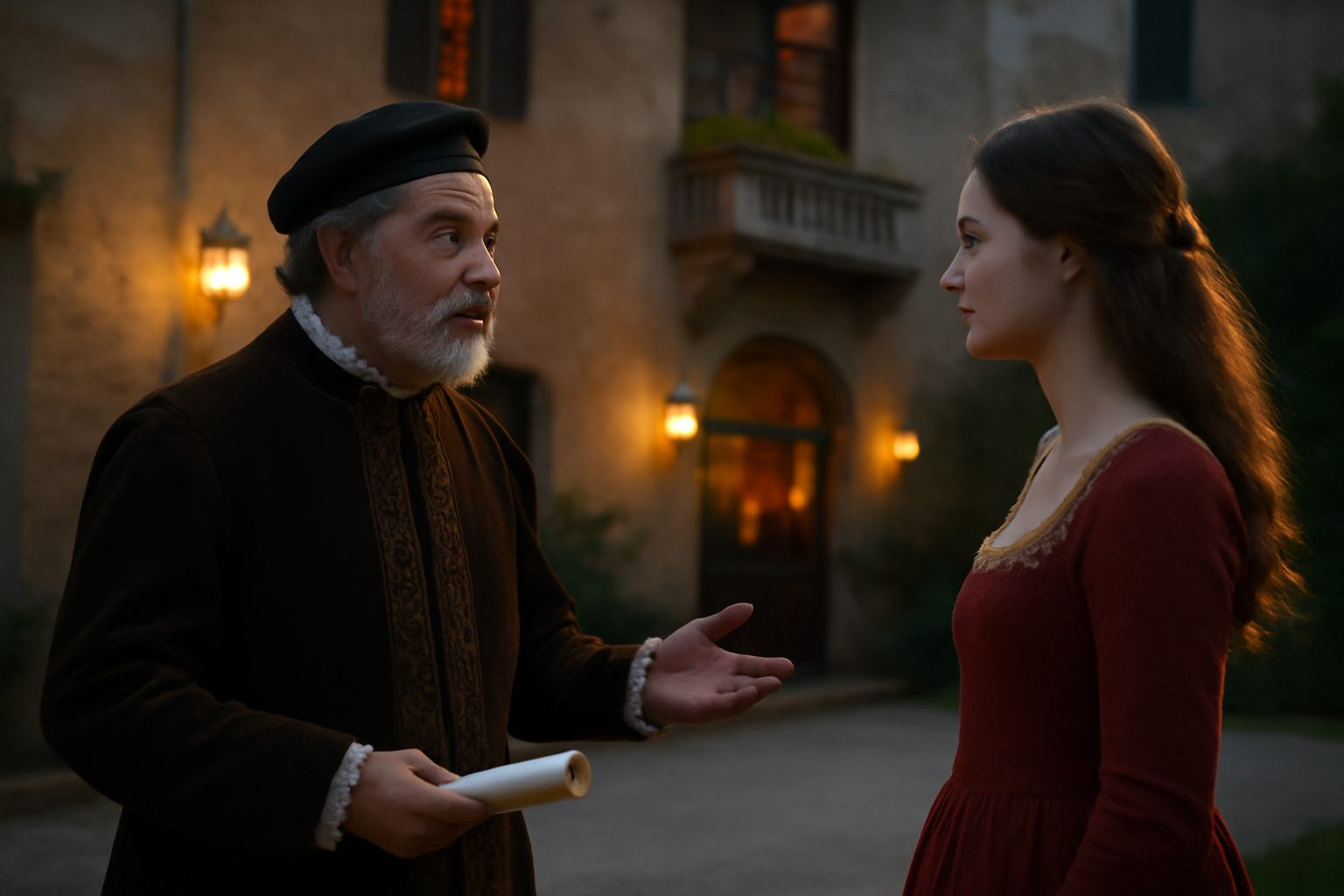
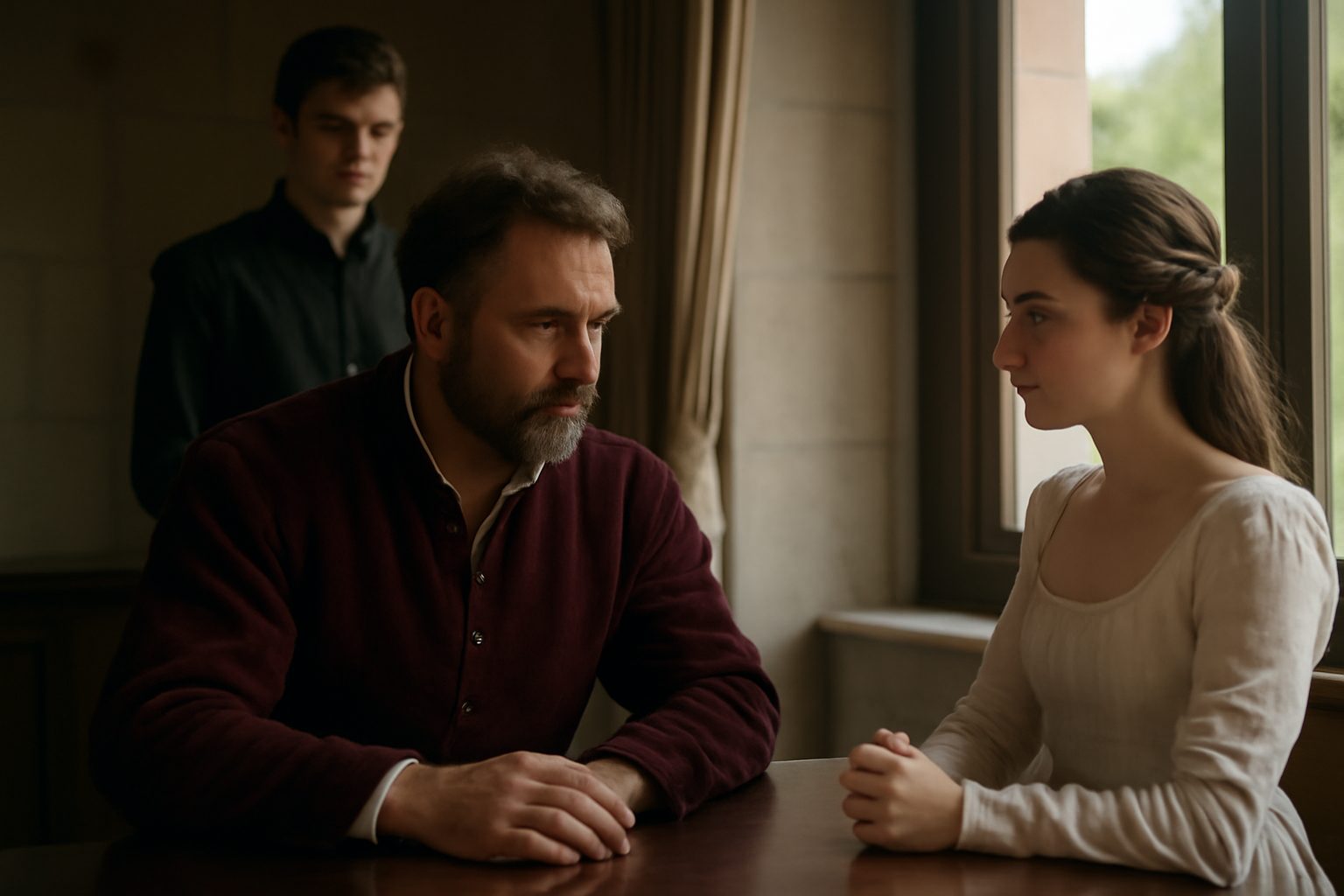
[Enter Capulet, County Paris, and a Servingman.]
But Montague is bound as well as I,
In penalty alike, and 'tis not hard, I think,
For men so old as we to keep the peace.
Of honorable reckoning are you both,
And pity 'tis you lived at odds so long.
But now, my lord, what say you to my suit?
But saying o'er what I have said before.
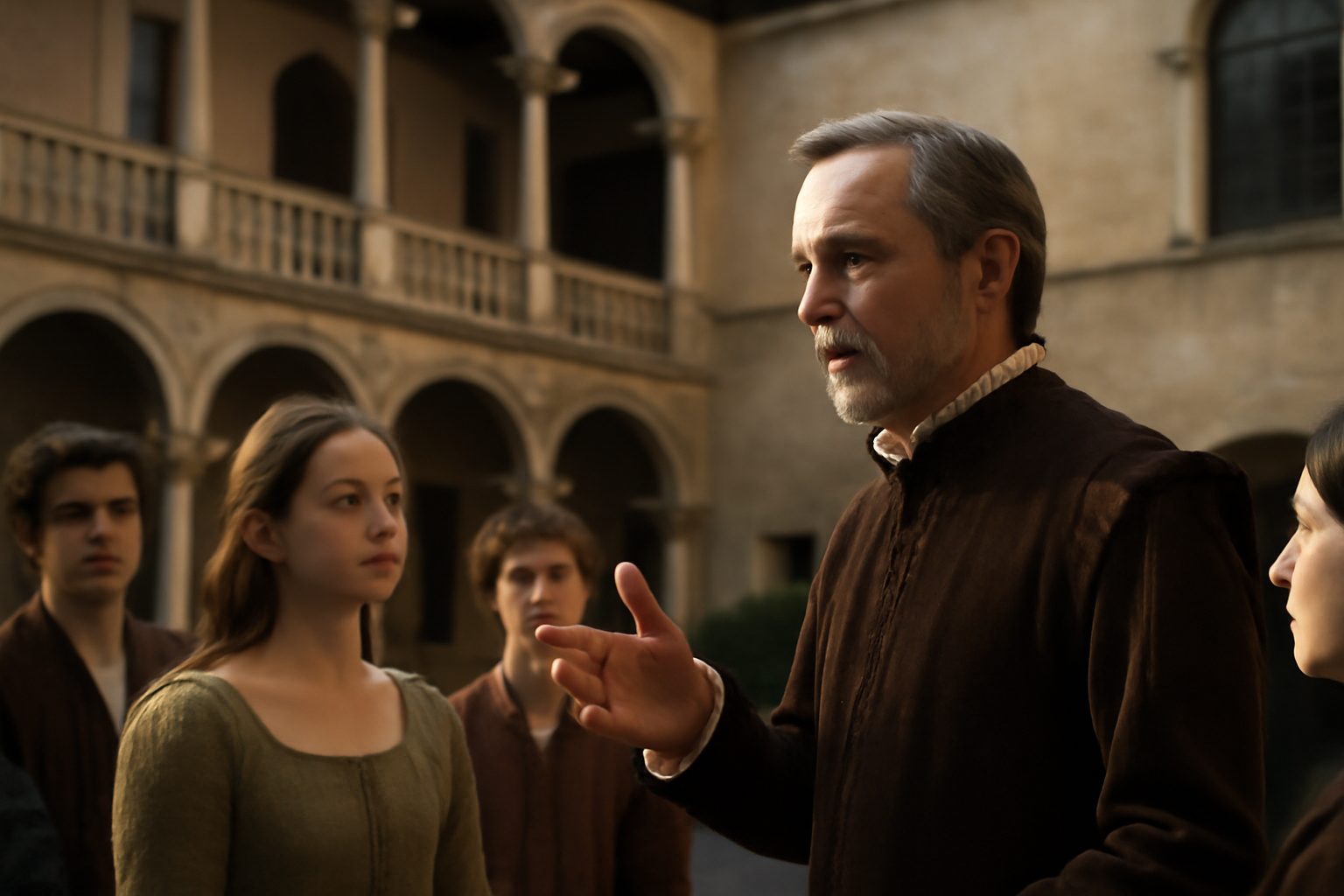
My child is yet a stranger in the world.
She hath not seen the change of fourteen years.
Let two more summers wither in their pride
Ere we may think her ripe to be a bride.
Younger than she are happy mothers made.
And too soon marred are those so early made.
Earth hath swallowed all my hopes but she;
She's the hopeful lady of my earth.
But woo her, gentle Paris, get her heart;
My will to her consent is but a part.
And, she agreed, within her scope of choice
Lies my consent and fair according voice.
This night I hold an old accustomed feast,
Whereto I have invited many a guest
Such as I love; and you among the store,
One more, most welcome, makes my number more.
At my poor house look to behold this night
Earth-treading stars that make dark heaven light.
Such comfort as do lusty young men feel
When well-appareled April on the heel
Of limping winter treads, even such delight
Among fresh fennel buds shall you this night
Inherit at my house. Hear all, all see,
And like her most whose merit most shall be;
Which, on more view of many, mine, being one,
May stand in number, though in reck'ning none.
Come go with me. [To Servingman, giving him a list.]
Go, sirrah, trudge about
Through fair Verona, find those persons out
Whose names are written there, and to them say
My house and welcome on their pleasure stay.
[Capulet and Paris exit.]
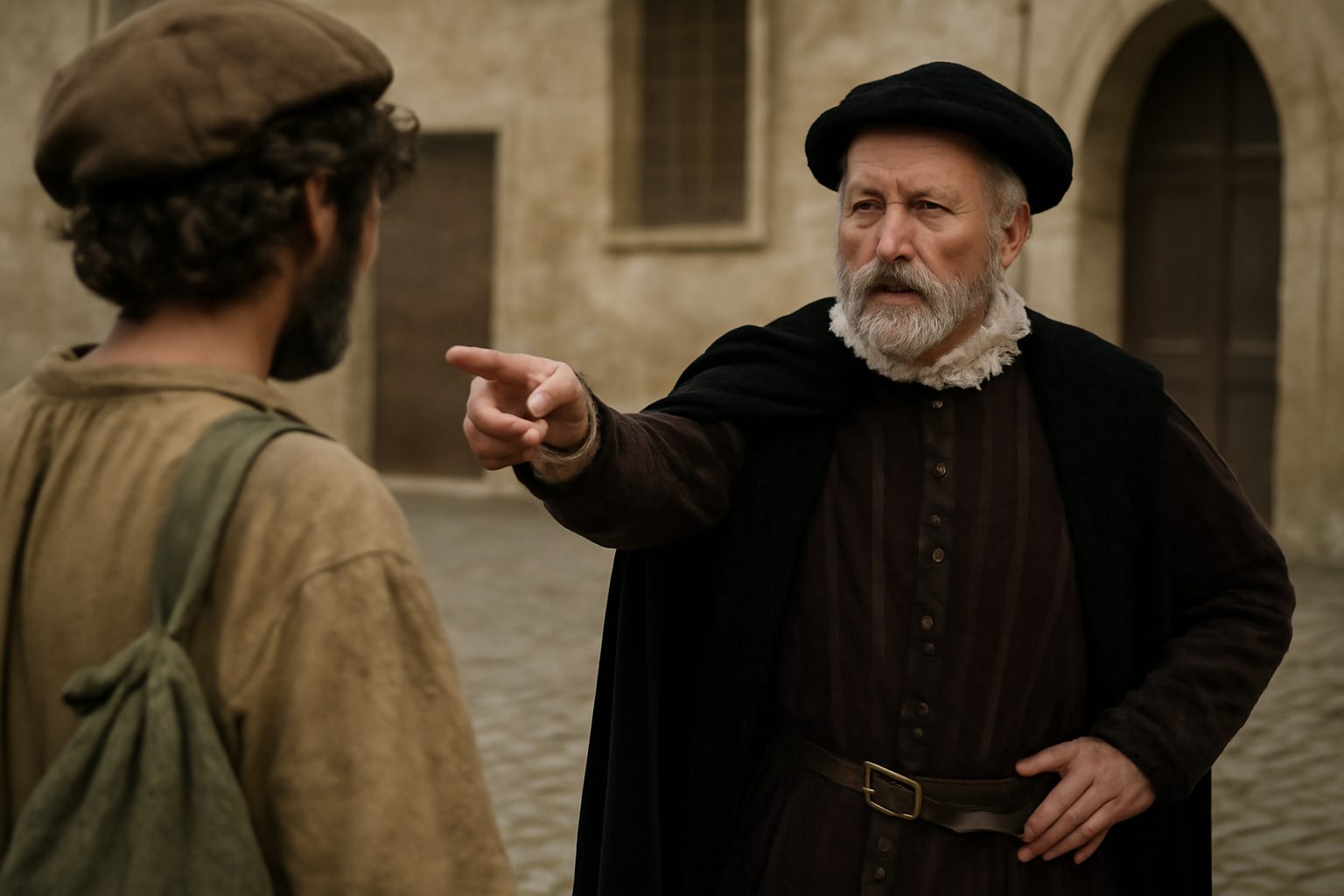
Find them out whose names are written here! It is written that the shoemaker should meddle with his yard and the tailor with his last, the fisher with his pencil and the painter with his nets. But I am sent to find those persons whose names are here writ, and can never find what names the writing person hath here writ. I must to the learned. In good time!
[Enter Benvolio and Romeo.]
[to Romeo]
Tut, man, one fire burns out another's burning;
One pain is lessened by another's anguish.
Turn giddy, and be helped by backward turning.
One desperate grief cures with another's languish.
Take thou some new infection to thy eye,
And the rank poison of the old will die.
Your plantain leaf is excellent for that.
For what, I pray thee?
For your broken shin.
Why Romeo, art thou mad?
Not mad, but bound more than a madman is,
Shut up in prison, kept without my food,
Whipped and tormented, and--good e'en, good fellow.
God gi' good e'en. I pray, sir, can you read?
Ay, mine own fortune in my misery.
Perhaps you have learned it without book. But I pray, can you read anything you see?
Ay, if I know the letters and the language.
You say honestly. Rest you merry.
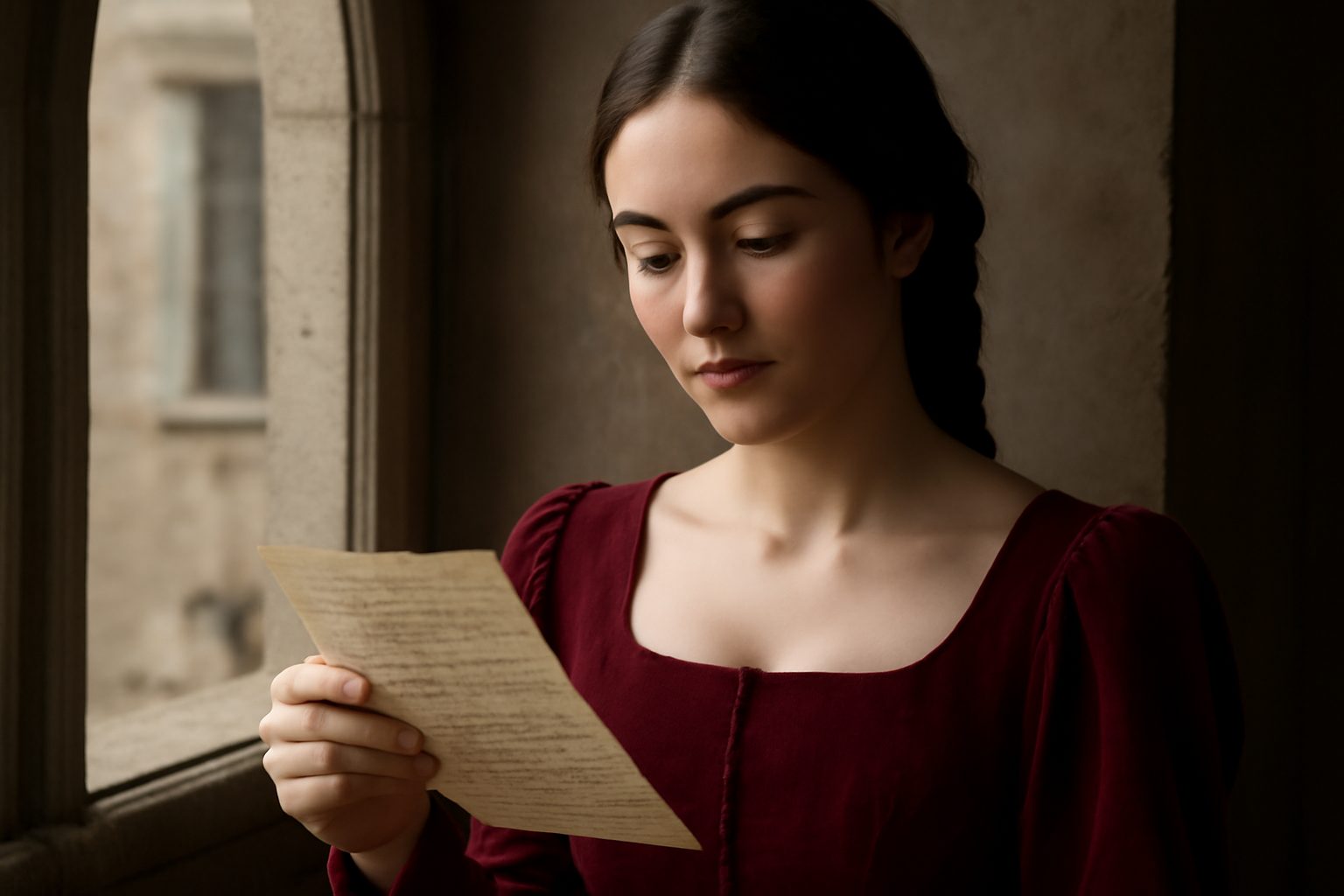
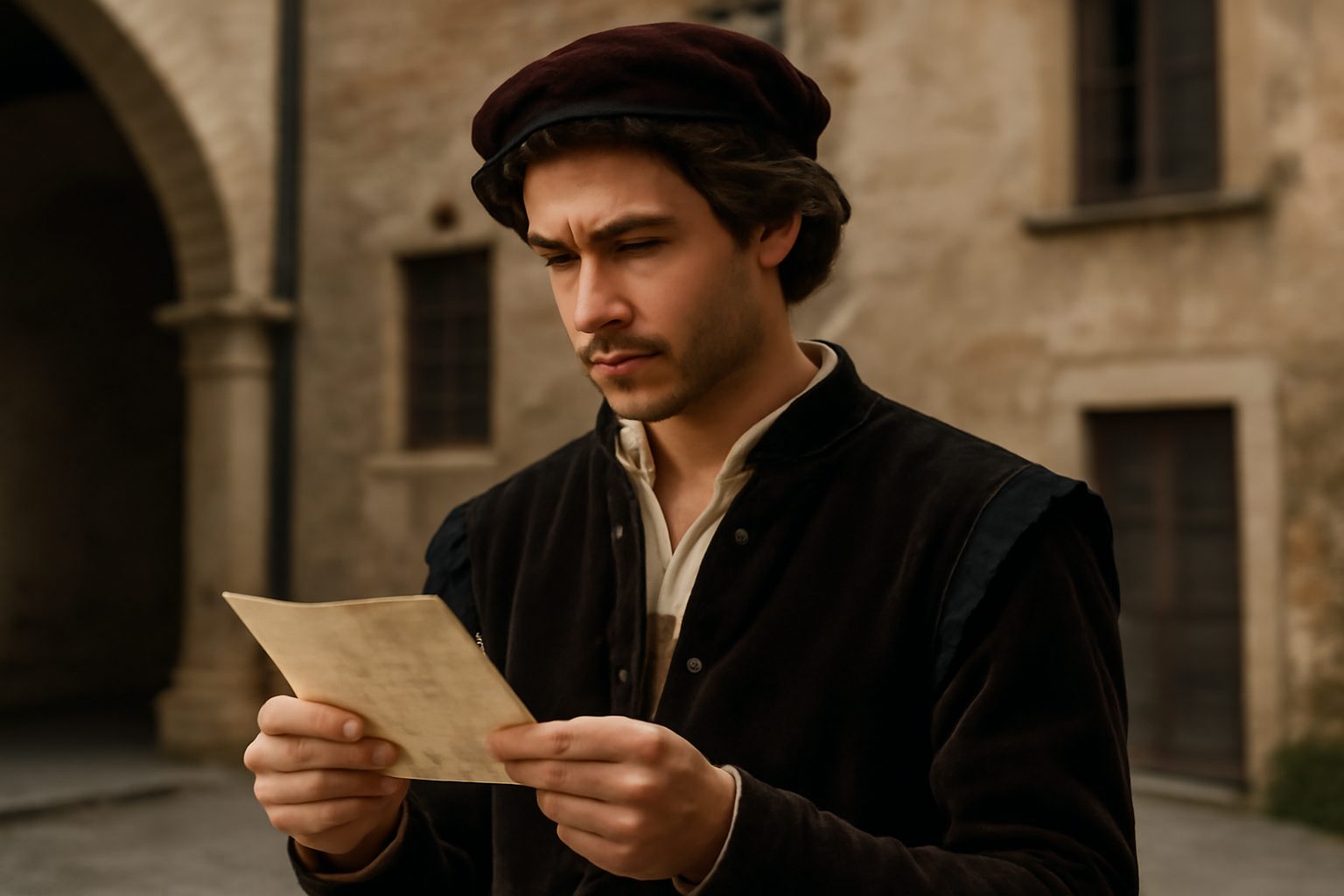
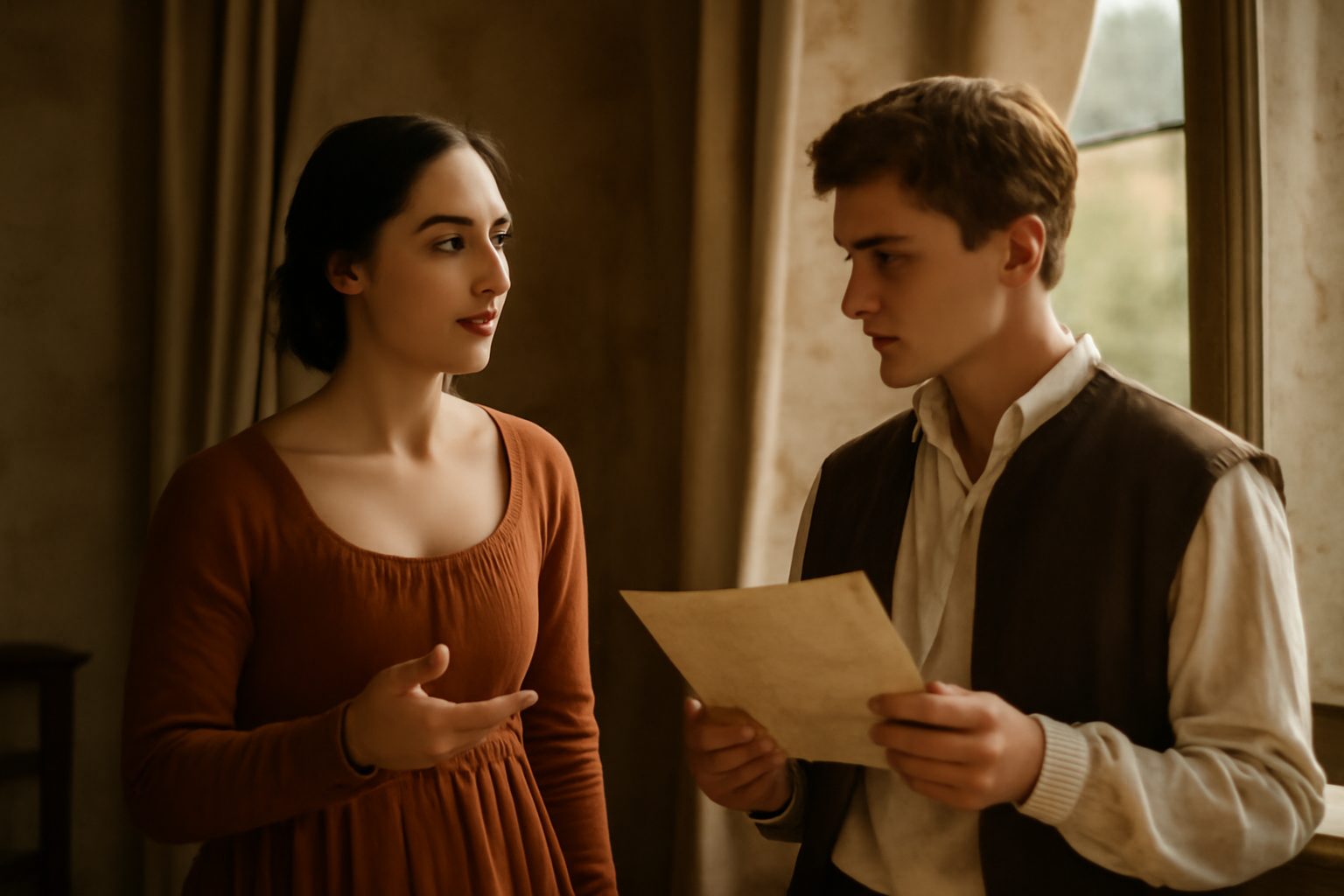
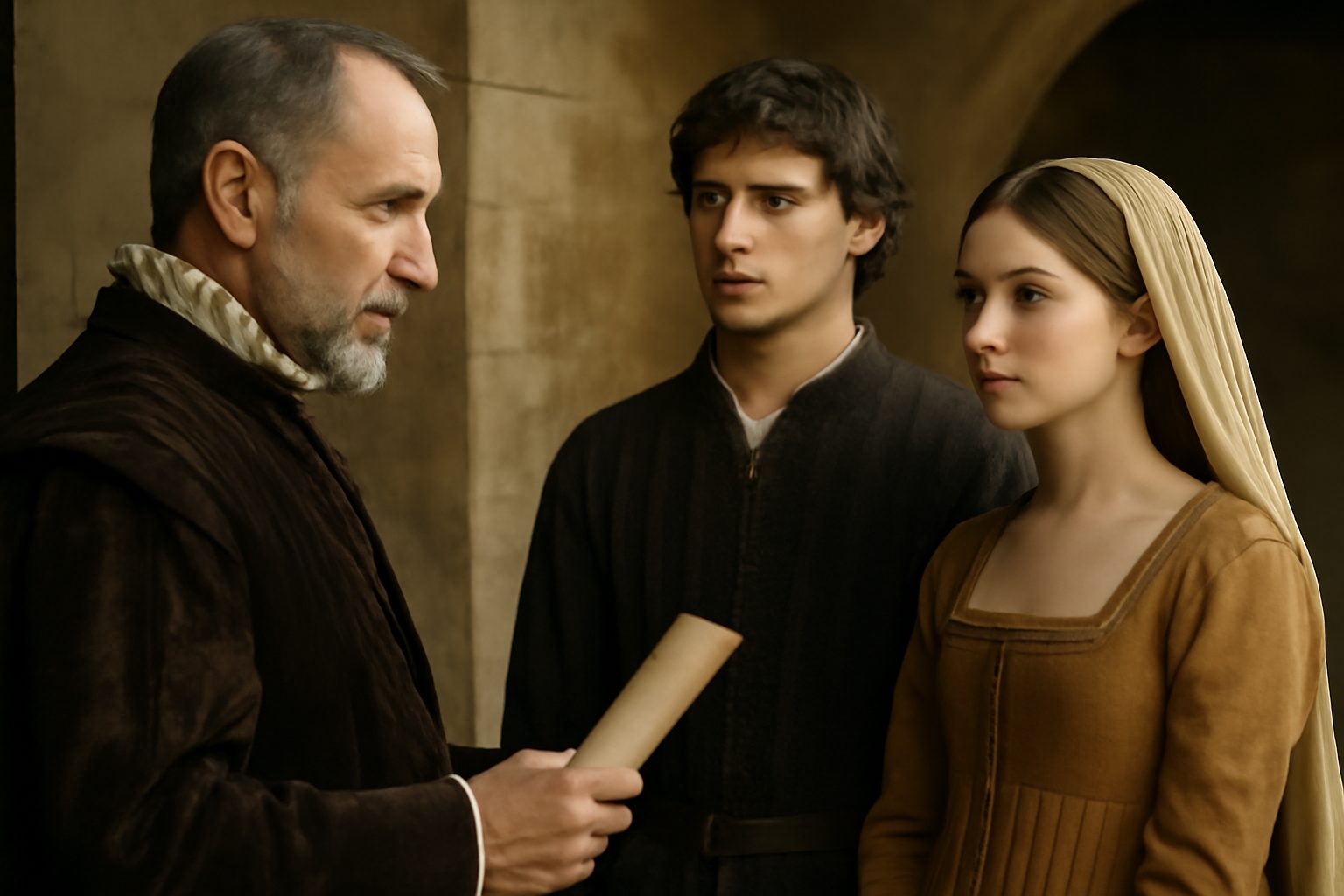
Stay, fellow. I can read. [(He reads the letter.)]
Signior Martino and his wife and daughters,
County Anselme and his beauteous sisters,
The lady widow of Vitruvio,
Signior Placentio and his lovely nieces,
Mercutio and his brother Valentine,
Mine Uncle Capulet, his wife and daughters,
My fair niece Rosaline and Livia,
Signior Valentio and his cousin Tybalt,
Lucio and the lively Helena.
A fair assembly. Whither should they come?
Up.
Whither? To supper?
To our house.
Whose house?
My master's.
Indeed I should have asked thee that before.
Now I'll tell you without asking. My master is the great rich Capulet, and, if you be not of the house of Montagues, I pray come and crush a cup of wine. Rest you merry. [He exits.]
At this same ancient feast of Capulet's
Sups the fair Rosaline whom thou so loves,
With all the admired beauties of Verona.
Go thither, and with unattainted eye
Compare her face with some that I shall show,
And I will make thee think thy swan a crow.
When the devout religion of mine eye
Frequently Asked Questions
Who is Paris in Act 1, Scene 2?
Paris is a nobleman who wants to marry Juliet.
What does Capulet tell Paris about Juliet?
Capulet tells Paris that Juliet is too young to marry and suggests he wait two more years.
Why does Capulet invite Paris to his feast?
Capulet invites Paris to the feast so he can meet other young women and compare them to Juliet.
Who is Romeo in love with at the start of this scene?
Romeo is in love with Rosaline at the start of this scene.
What does Benvolio suggest to Romeo to help him forget Rosaline?
Benvolio suggests Romeo should look at other beautiful women at the Capulet feast.
How does Romeo react to Benvolio's suggestion?
Romeo agrees to go to the feast but says he will only look at Rosaline.
What is the servant's problem in this scene?
The servant cannot read the guest list for the Capulet feast.
How does Romeo help the servant?
Romeo reads the guest list for the servant since the servant cannot read.
What does the servant invite Romeo to do after helping him?
The servant invites Romeo to come to the Capulet feast if he is not a Montague.
Why is it dangerous for Romeo to go to the Capulet feast?
It is dangerous because Romeo is a Montague, and the Capulets are his family's enemies.