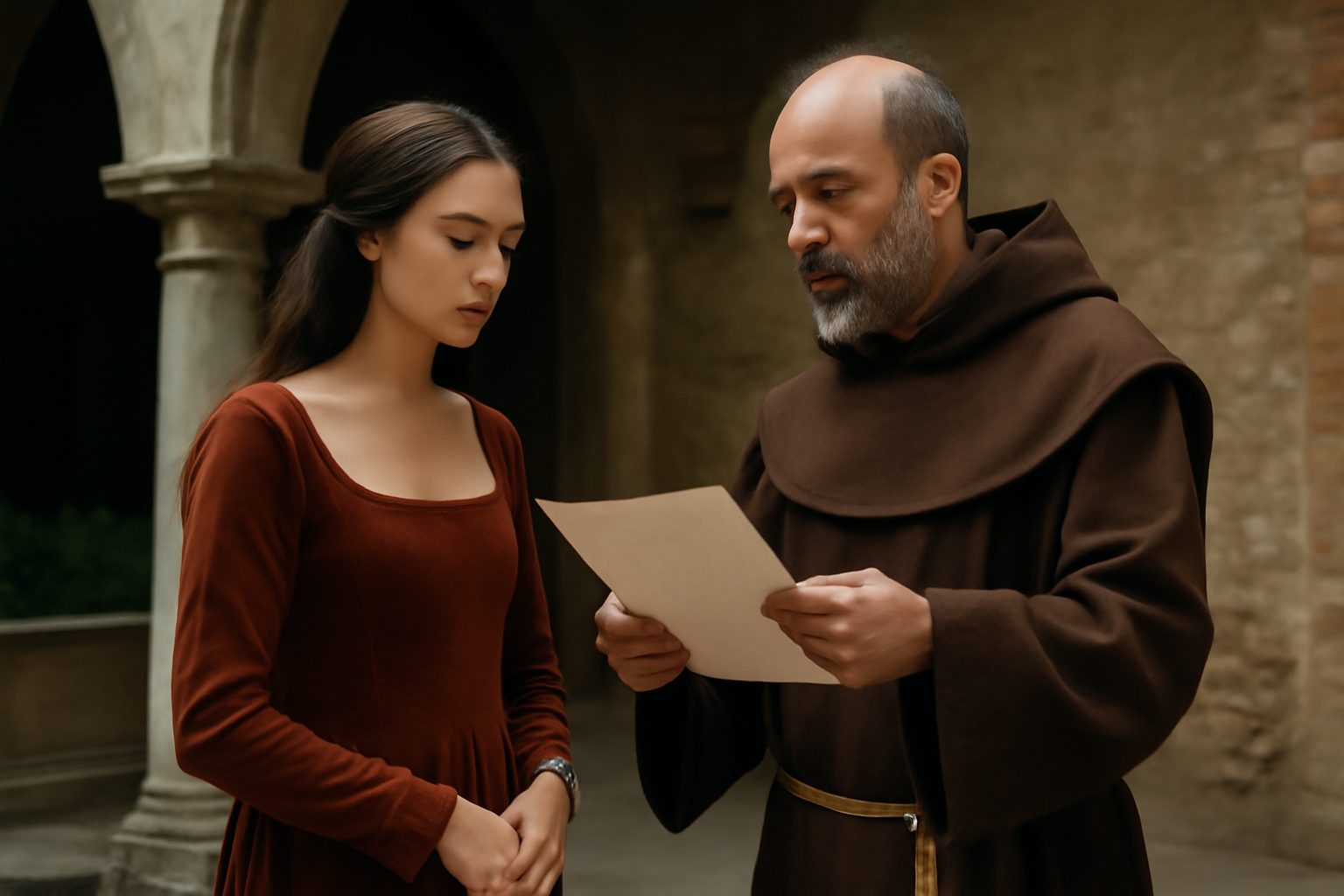
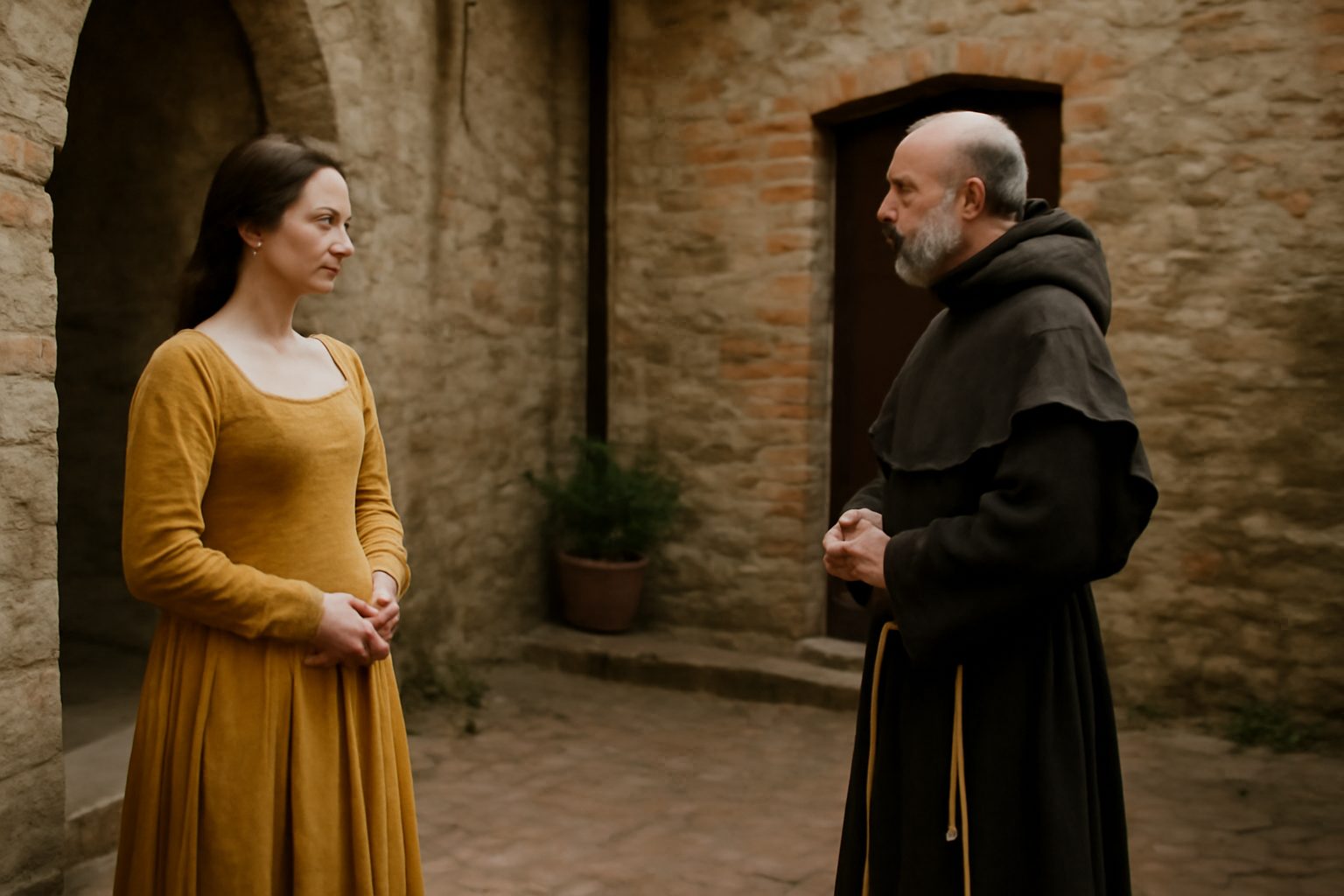
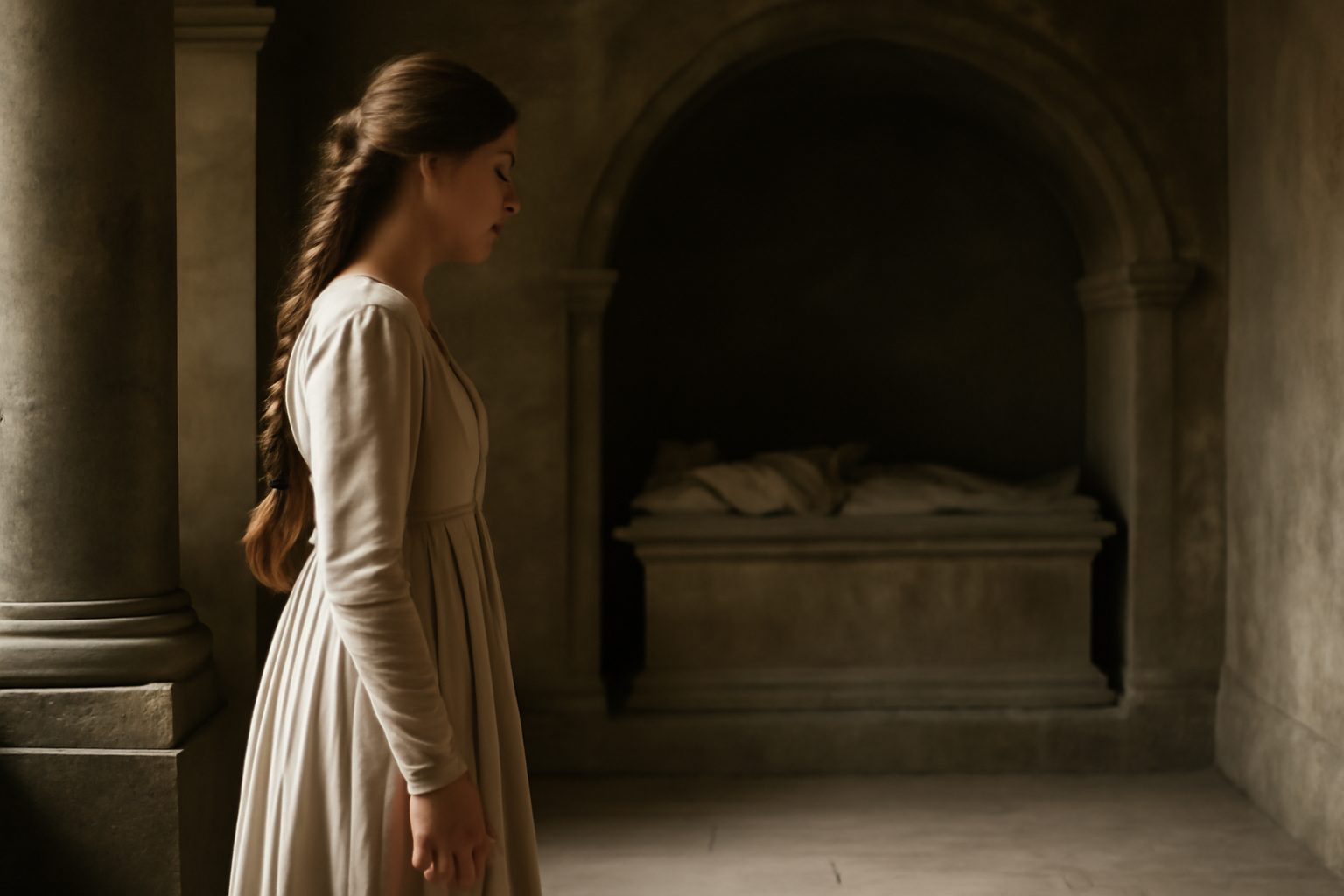
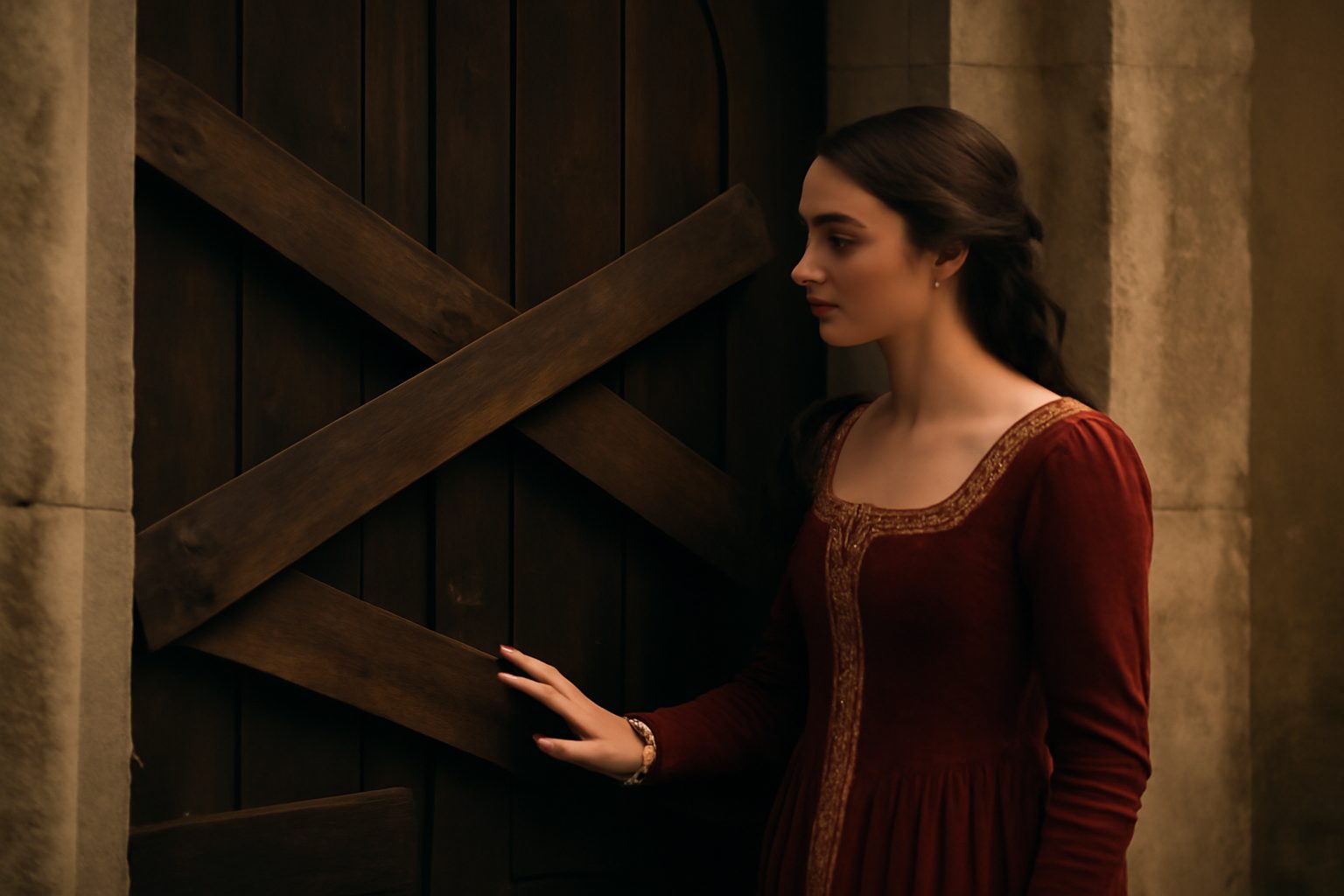
In Act 5, Scene 2 of Romeo and Juliet, Friar John returns to Friar Laurence with troubling news. He explains that he was unable to deliver a critical letter to Romeo due to being quarantined over fears of contagion. This moment heightens the tragedy, as the undelivered message sets in motion the play's devastating conclusion.
Friar John: "I could not send it,--here it is again,--"
In modern day english, we would say:
I couldn’t deliver the letter—here it is back.
Frequently Asked Questions
Why couldn't Friar John deliver the message?
He was unable to deliver the message because he was quarantined due to a plague outbreak.
Connections to other verses:
Connections to "I could not send it,--here it is again,--"
The verse "I could not send it,--here it is again,--" is spoken by Friar John, explaining his failure to deliver Friar Laurence's letter to Romeo. This moment is central to the tragic miscommunication in the scene.
Direct Causes and Context
Friar John's inability to send the letter is directly due to being quarantined, as described in "Seal'd up the doors, and would not let us forth;" and "So that my speed to Mantua there was stay'd." These verses detail the external circumstances—fear of infection and enforced isolation—that prevented the delivery.
Consequences and Urgency
The failure to deliver the letter has grave implications, emphasized by "The letter was not nice but full of charge" and "Of dear import, and the neglecting it." These lines underscore the letter's critical importance and the danger of its neglect, heightening the tension as Friar Laurence realizes the urgency.
Friar Laurence's Response
In response to this failure, Friar Laurence immediately plans to rectify the situation, declaring "But I will write again to Mantua," and deciding to take action himself with "Now must I to the monument alone;". This shows his desperation to prevent the impending tragedy.
Broader Implications
The undelivered letter directly leads to Romeo remaining uninformed, as noted in "Hath had no notice of these accidents;", and contributes to the final catastrophe, including Juliet's dire situation described in "Poor living corse, closed in a dead man's tomb!".