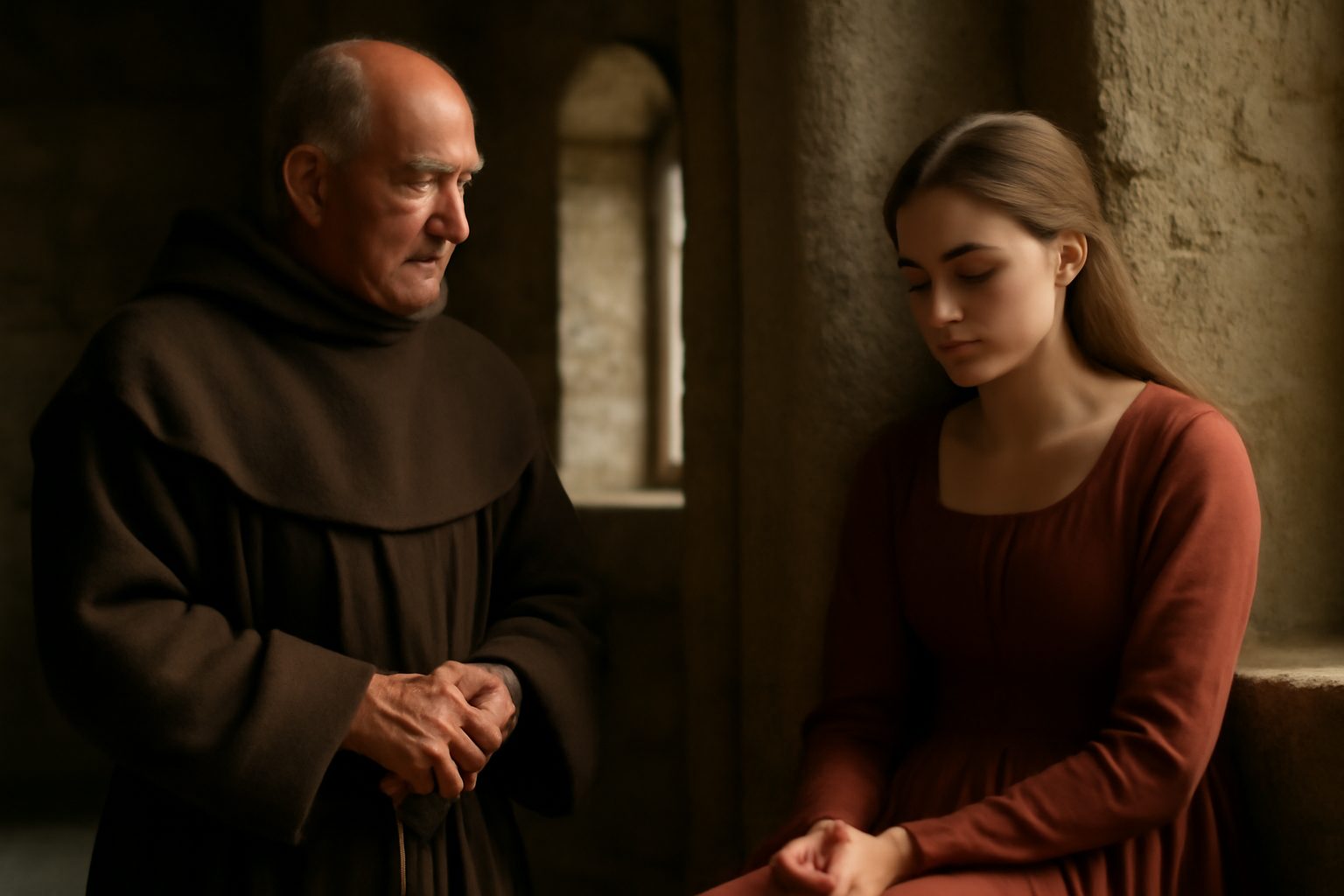
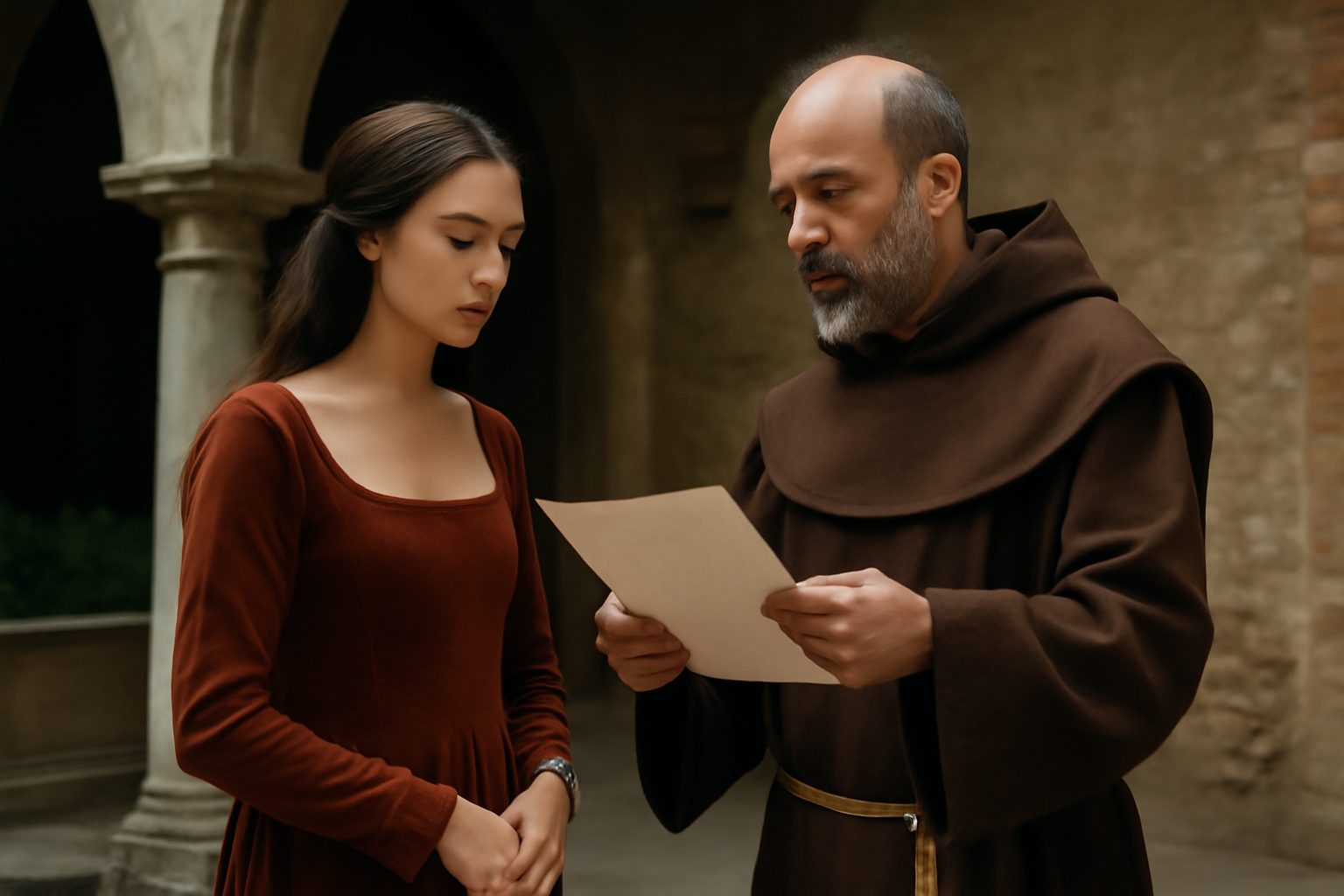
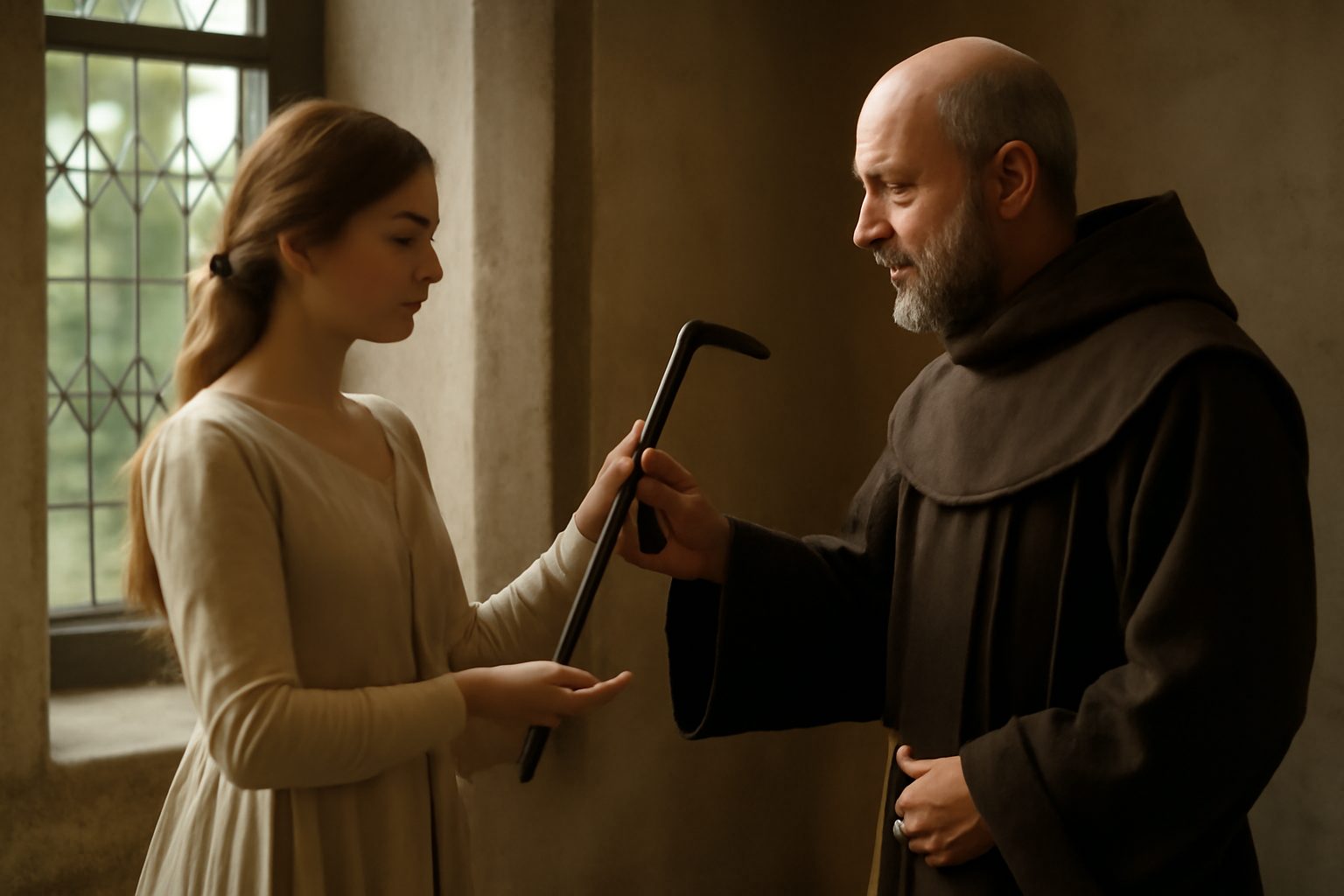
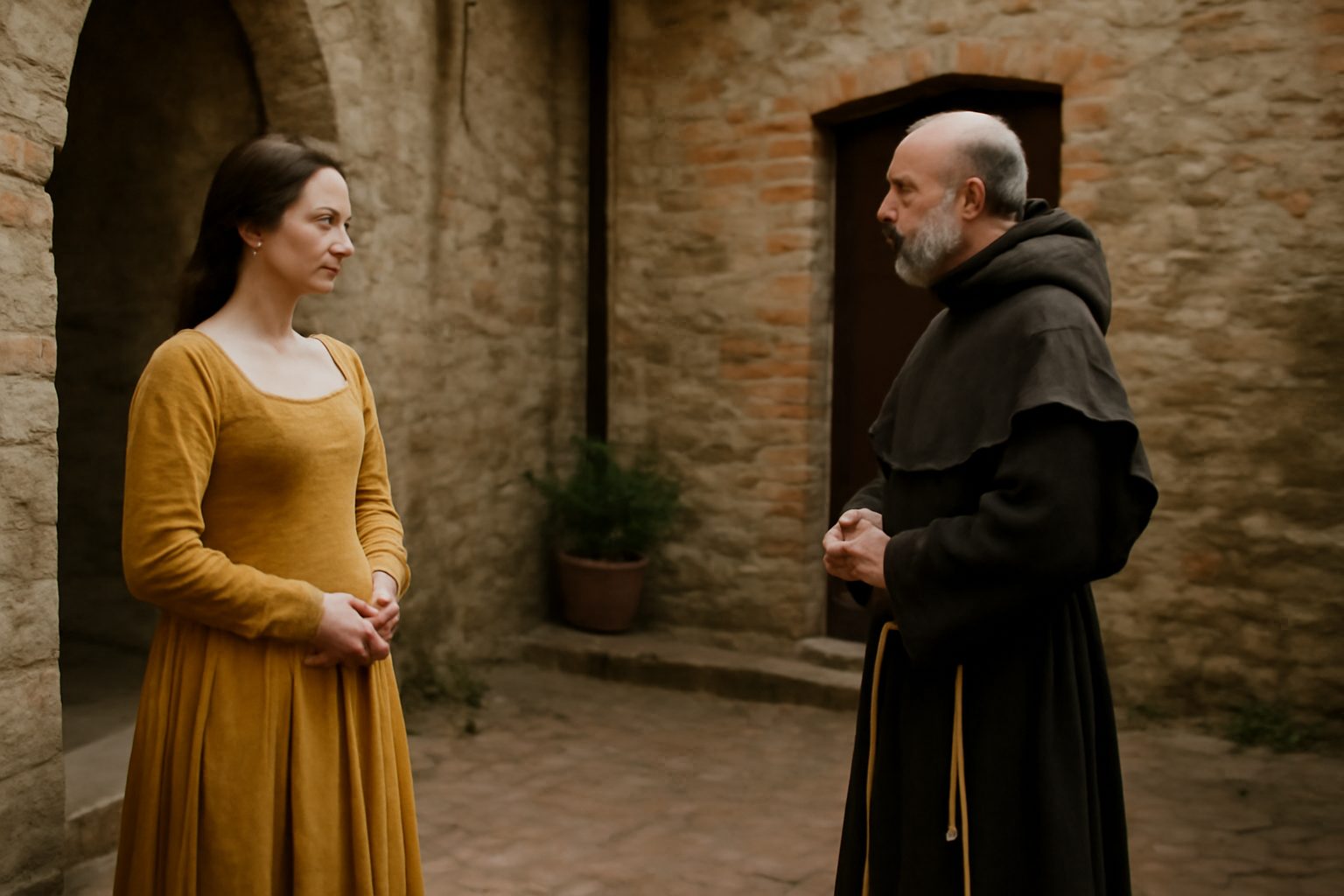
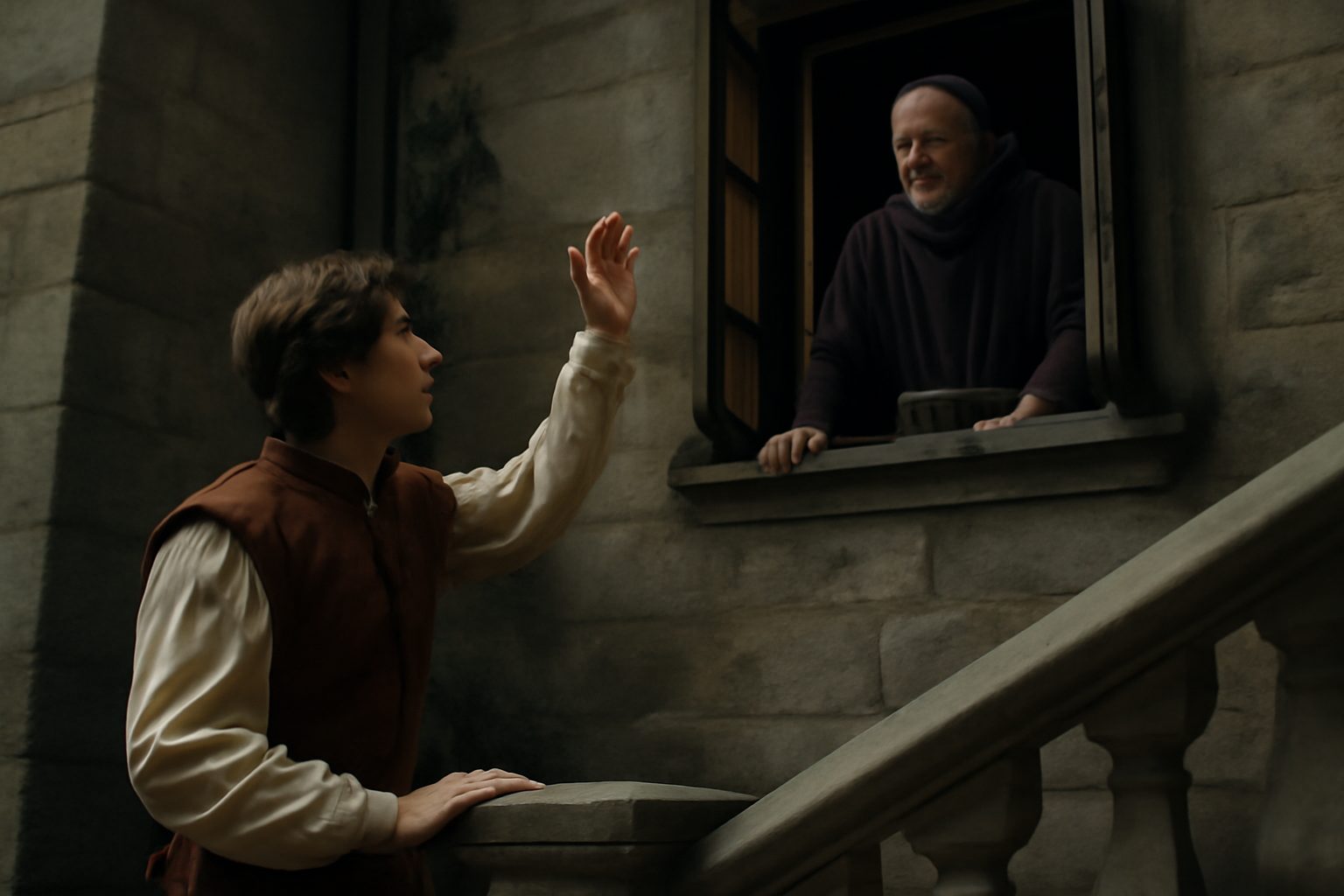
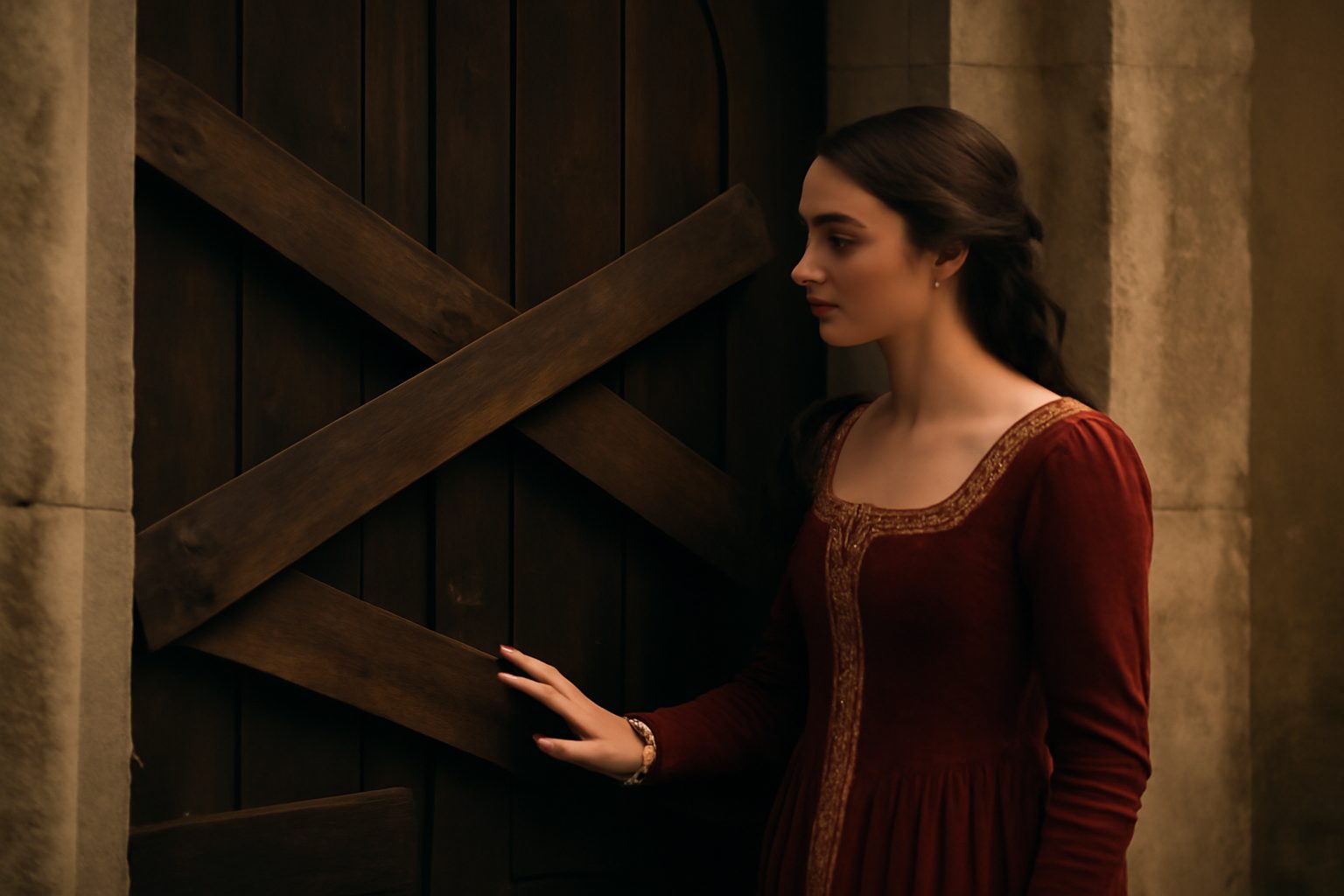
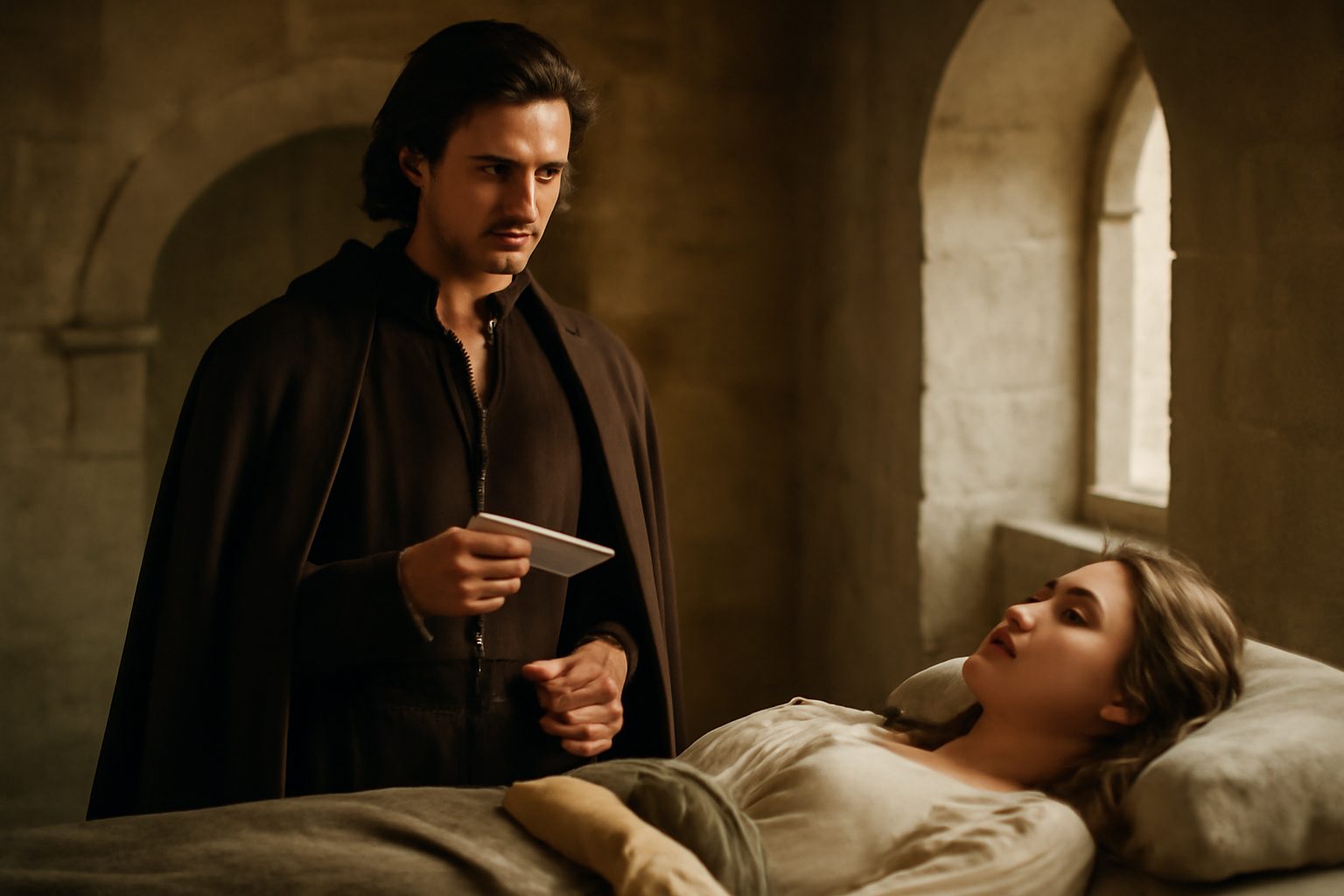
In Act 5, Scene 2 of Romeo and Juliet, Friar John explains to Friar Laurence why he was unable to deliver the crucial letter to Romeo. He recounts how authorities, fearing the spread of plague, quarantined him and his companion. This moment heightens the tragedy, as the miscommunication leads directly to the lovers' fate.
Friar John: "So fearful were they of infection."
In modern day english, we would say:
They were so afraid of catching the plague.
Frequently Asked Questions
Why couldn't Friar John deliver the letter to Romeo?
Because people were afraid of getting sick, so they wouldn't let him leave.
Connections to other verses:
Connections to "So fearful were they of infection"
The verse "So fearful were they of infection" is spoken by Friar John, explaining why he was unable to deliver Friar Laurence's letter to Romeo. This line directly connects to several other verses in the same scene that elaborate on the circumstances of the quarantine and its consequences.
Immediate Context of the Quarantine
Friar John recounts that he was visiting the sick "Here in this city visiting the sick" when the health authorities, "Suspecting that we both were in a house / Where the infectious pestilence did reign", took action. This suspicion led them to "Seal'd up the doors, and would not let us forth", directly causing "So that my speed to Mantua there was stay'd".
Consequences of the Failed Delivery
As a result, Friar John "could not send it,--here it is again,--" and "Nor get a messenger to bring it thee". This failure is critical because "The letter was not nice but full of charge" and "the neglecting it / May do much danger", as Friar Laurence immediately recognizes.
Friar Laurence's Response
Upon learning this, Friar Laurence exclaims "Unhappy fortune! by my brotherhood" and urgently commands "Friar John, go hence" to fetch tools like "Get me an iron crow, and bring it straight" to the tomb. He resolves to "Now must I to the monument alone" to prevent the tragic outcome of Juliet waking in the tomb, a "Poor living corse, closed in a dead man's tomb!".
Broader Implications
This chain of events underscores the theme of fate and miscommunication, as Romeo "Hath had no notice of these accidents", leading directly to the final tragedy. The fear of infection, a seemingly external and random factor, becomes the catalyst for the play's devastating conclusion.