In Act 5, Scene 2 of Romeo and Juliet, Friar John speaks these words to Friar Laurence, explaining that he will retrieve a letter meant for Romeo. This letter, which contains critical information about Juliet's feigned death, was never delivered due to quarantine restrictions. The failure to communicate this plan sets the stage for the tragic misunderstandings that follow.
Friar John: "Brother, I'll go and bring it thee."
In modern day english, we would say:
I’ll go get it for you, brother.
Frequently Asked Questions
What does Friar John offer to do in this line?
Friar John offers to go and bring something to someone.
Connections to other verses:
Connections to "Brother, I'll go and bring it thee."
The line "Brother, I'll go and bring it thee." is spoken by Friar Laurence in response to Friar John's explanation of why he could not deliver the crucial letter to Romeo. This moment is pivotal, as it reflects Friar Laurence's urgency and sense of responsibility to rectify the situation.
Direct Preceding Context
Just before this, Friar Laurence asks "Or, if his mind be writ, give me his letter.", showing his immediate concern for the message's content and his readiness to take action.
Connection to the Failed Delivery
Friar John explains his inability to deliver the letter in "I could not send it,--here it is again,--" and "Nor get a messenger to bring it thee,", which directly prompts Friar Laurence's decision to fetch the crow himself.
Urgency and Danger
Friar Laurence recognizes the gravity of the situation, stating in "Of dear import, and the neglecting it" and "May do much danger. Friar John, go hence;", emphasizing the critical need to act quickly to prevent tragedy.
Immediate Action Plan
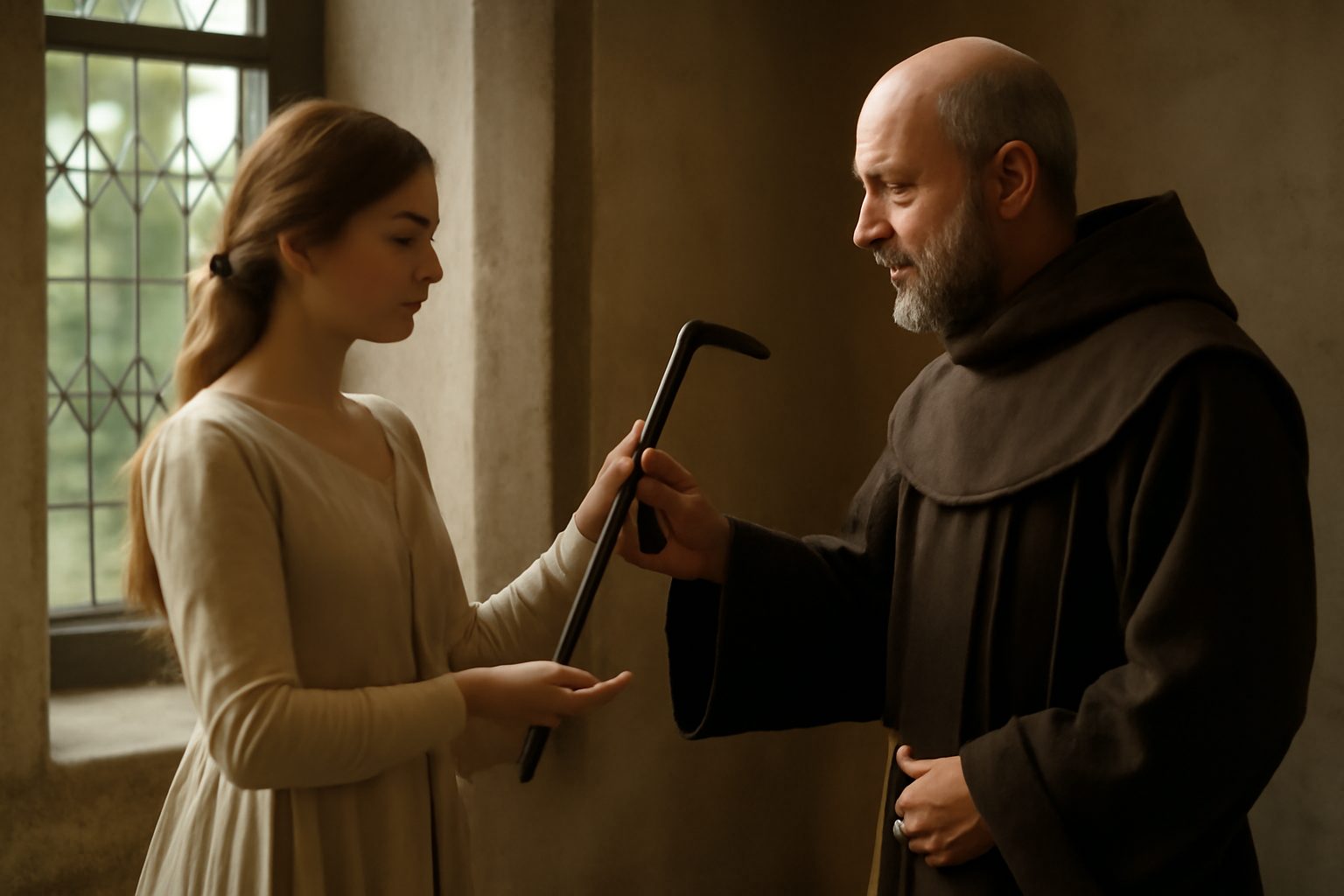
Following his declaration, Friar Laurence instructs in "Get me an iron crow, and bring it straight" and directs to "Unto my cell.", outlining the practical steps he is about to take.
Isolation and Responsibility
This leads to his resolve in "Now must I to the monument alone;", showing his acceptance of solitary duty, and his concern for Juliet in "She will beshrew me much that Romeo", acknowledging potential blame.
Final Preparations
He also mentions in "But I will write again to Mantua," as a backup plan, and his intention to "And keep her at my cell till Romeo come;", highlighting his strategy to safeguard Juliet.
Underlying Tension
The entire exchange is framed by the urgency of time, as noted in "Within three hours will fair Juliet wake:", reinforcing why Friar Laurence's quick action is essential.