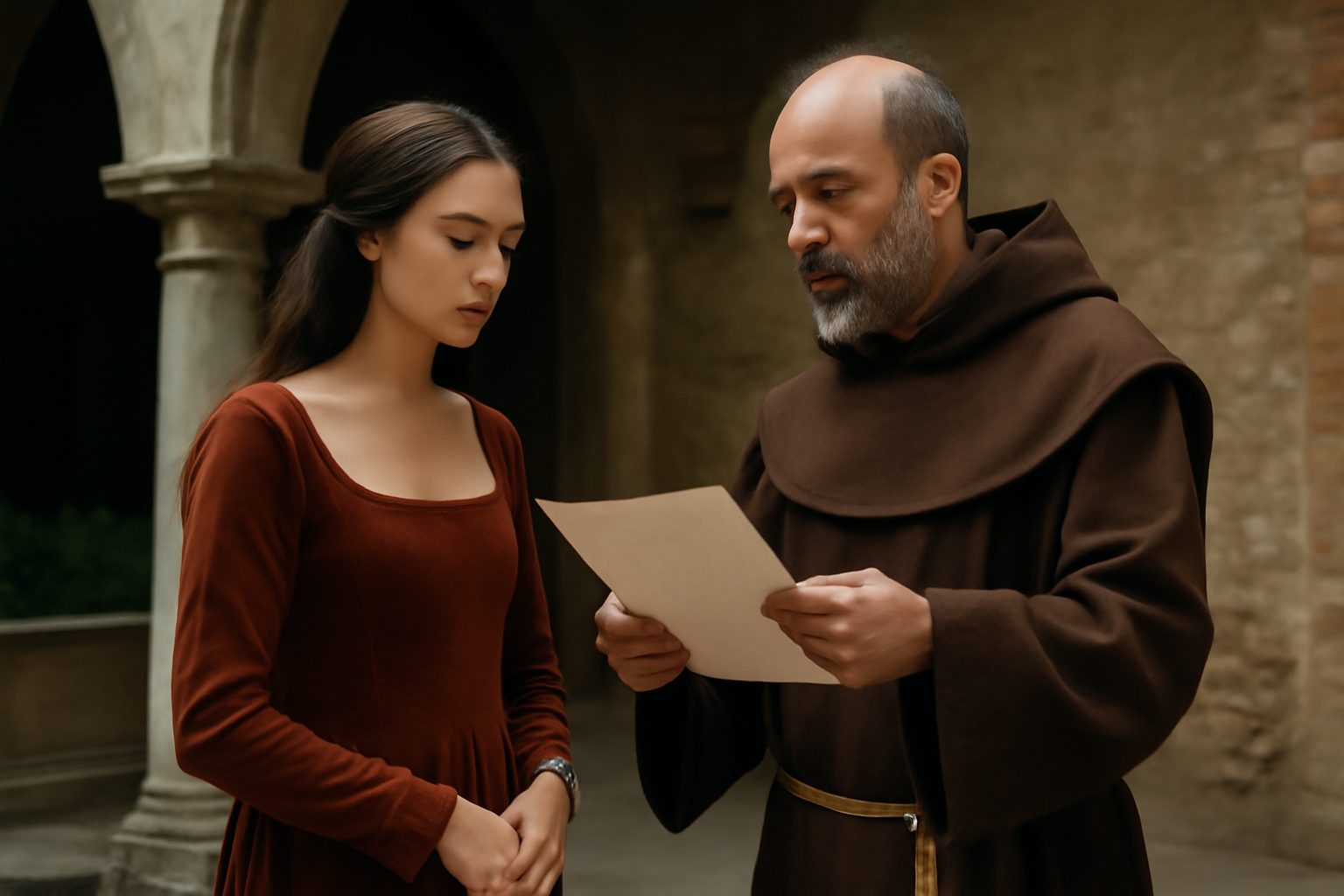
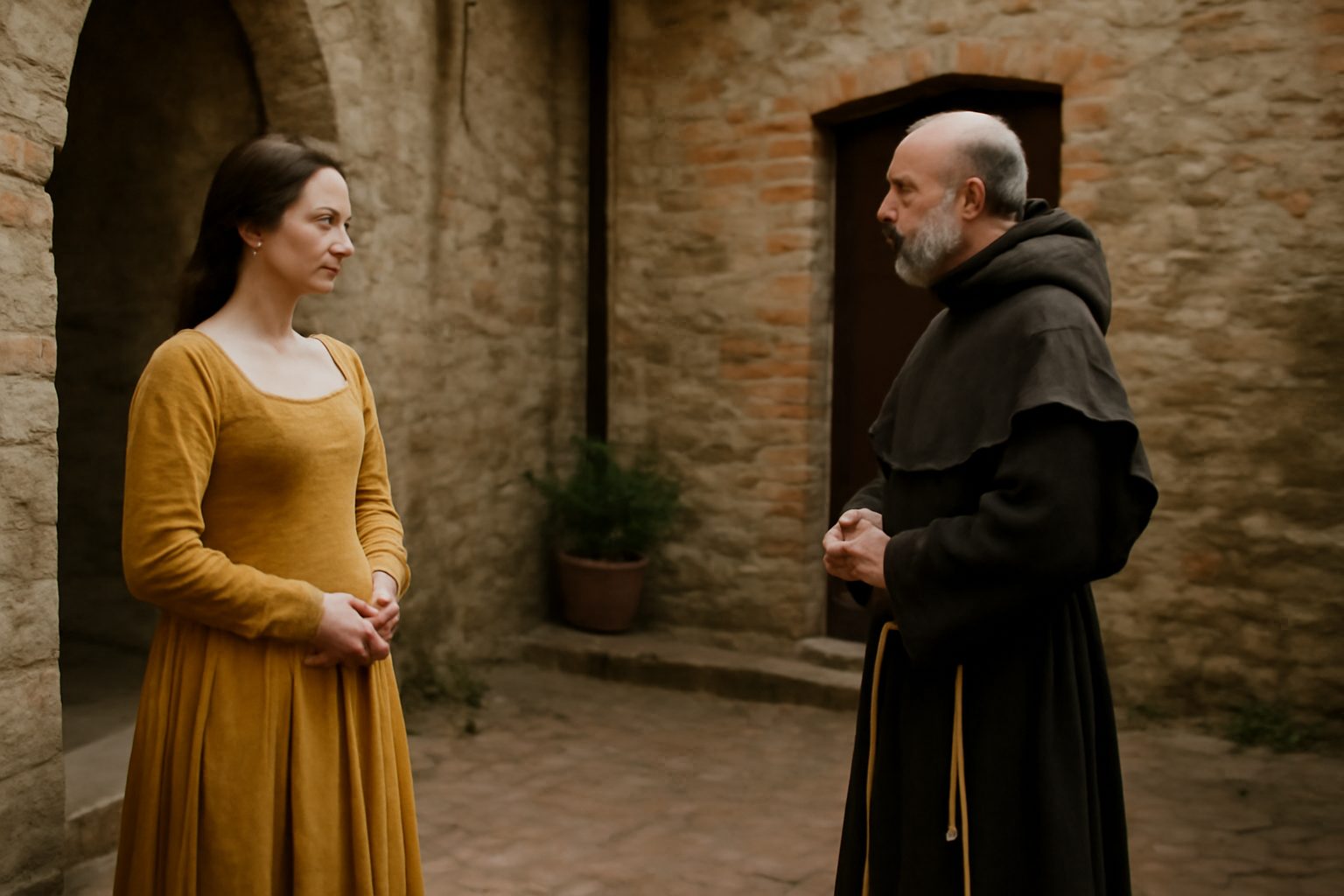
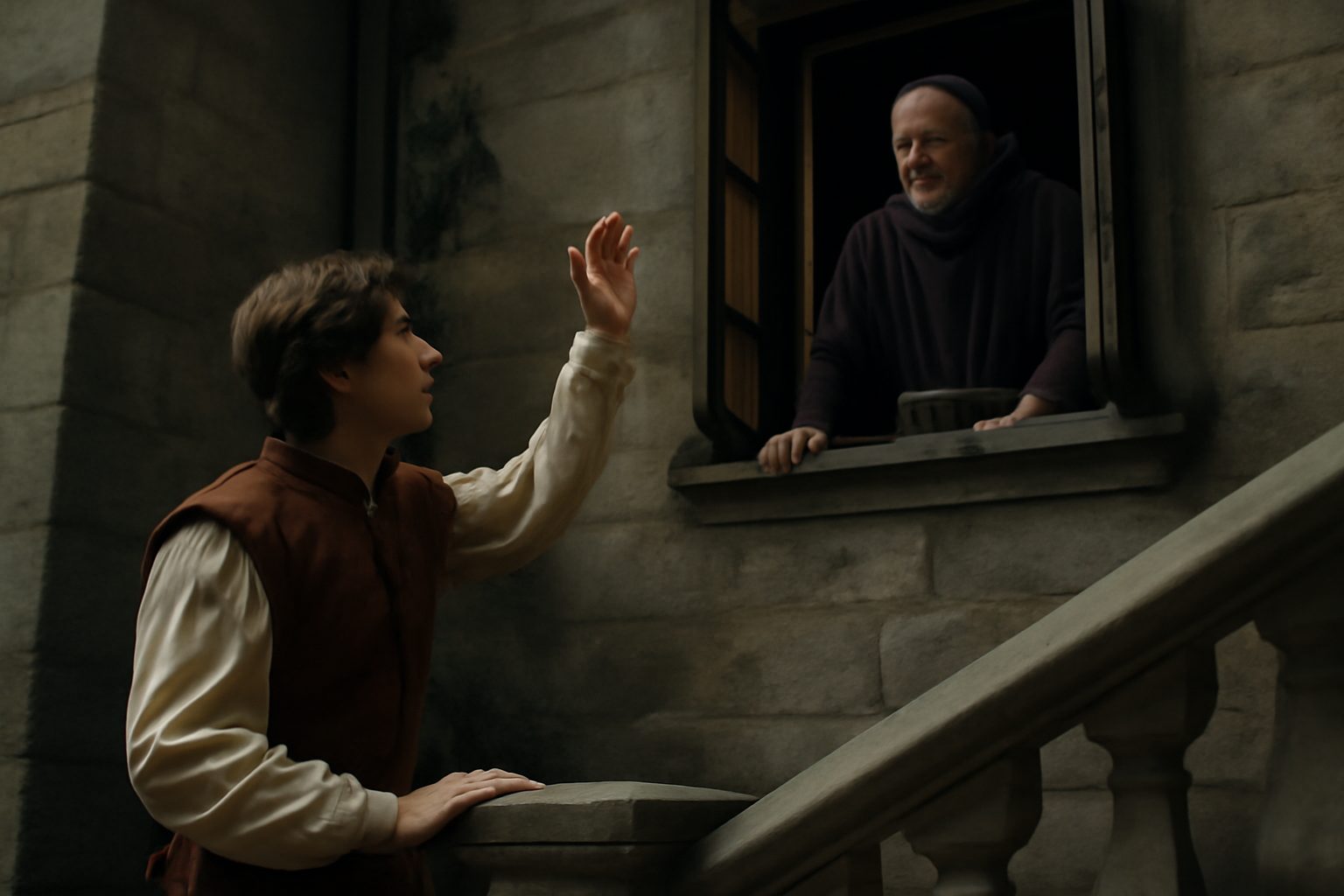
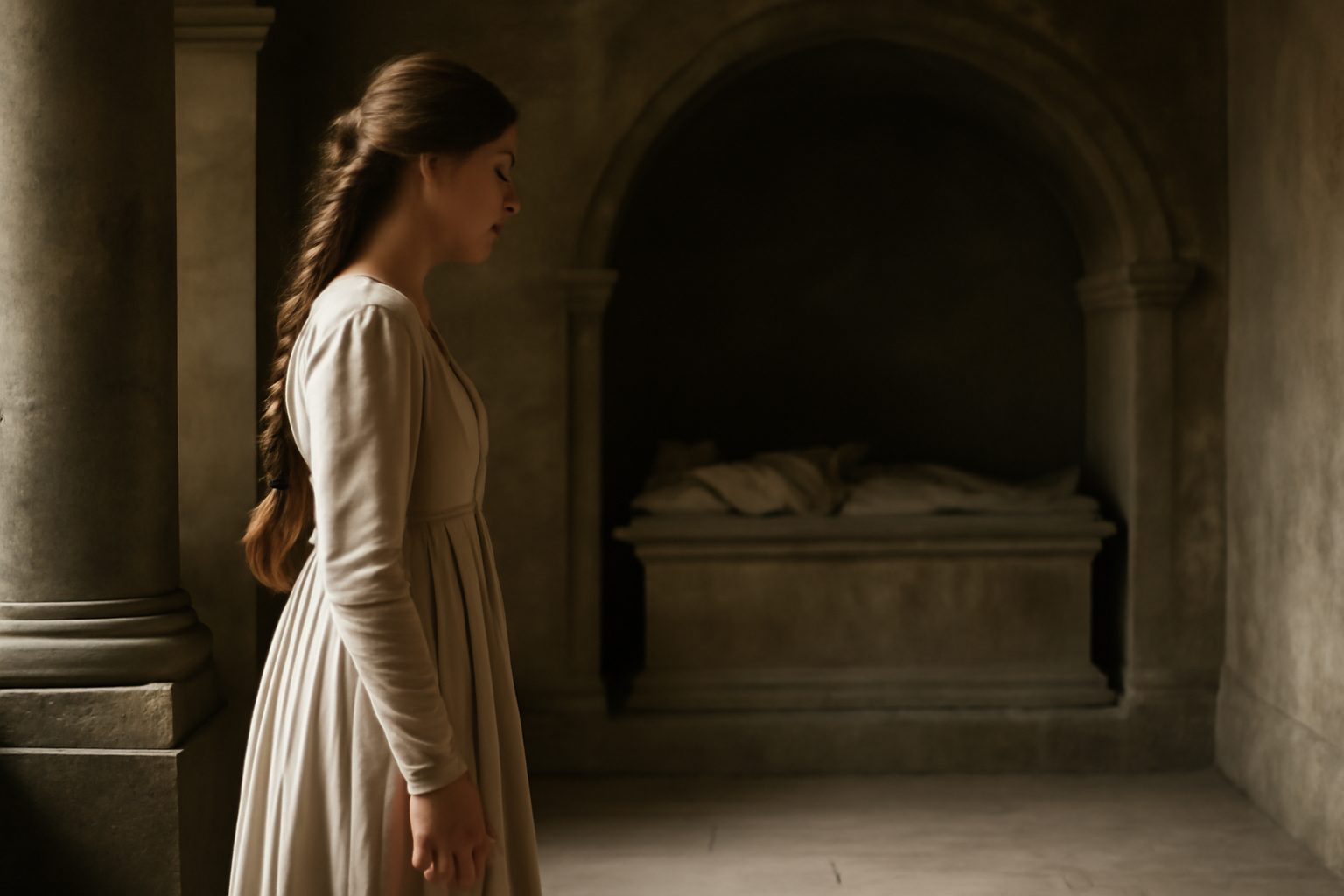
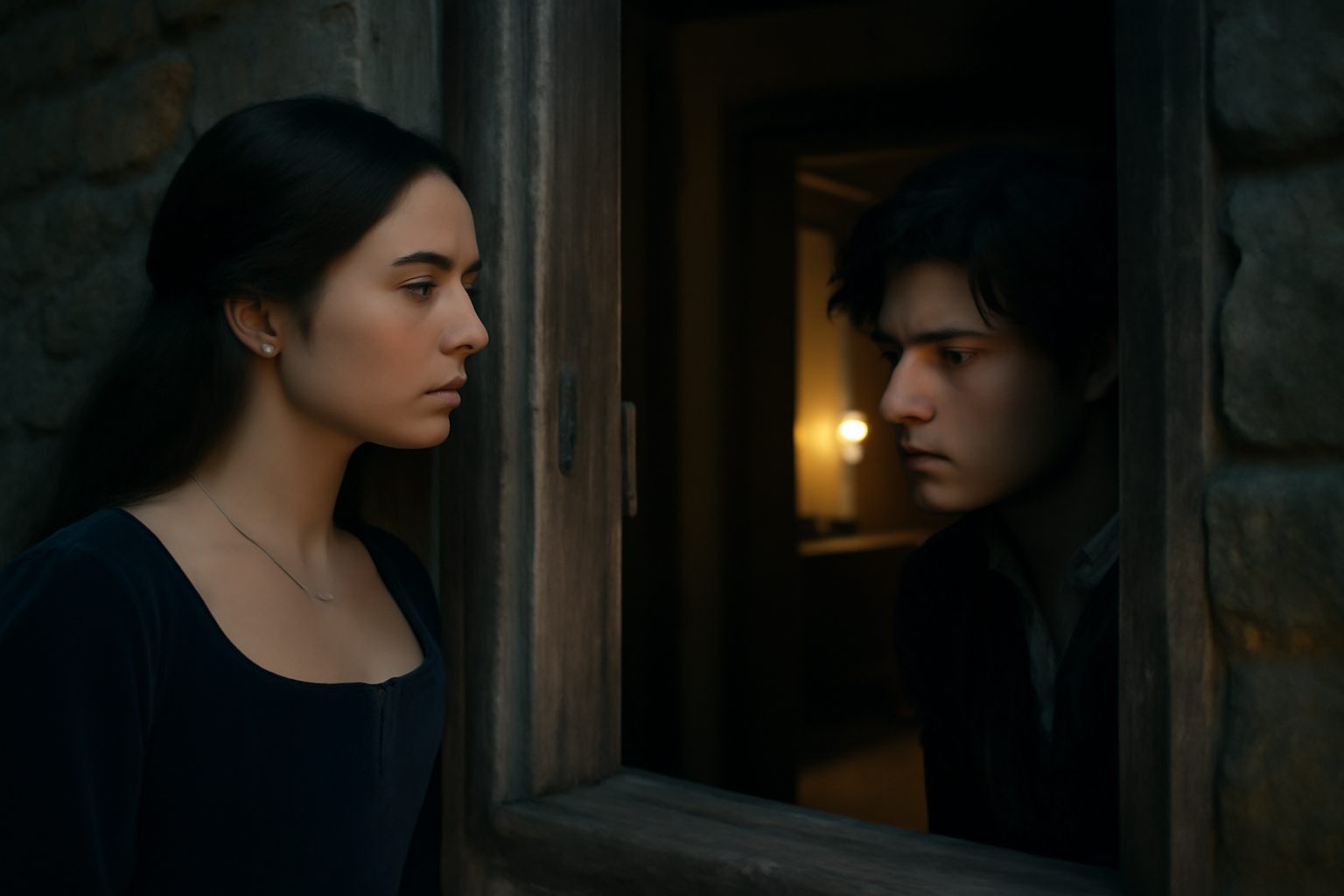
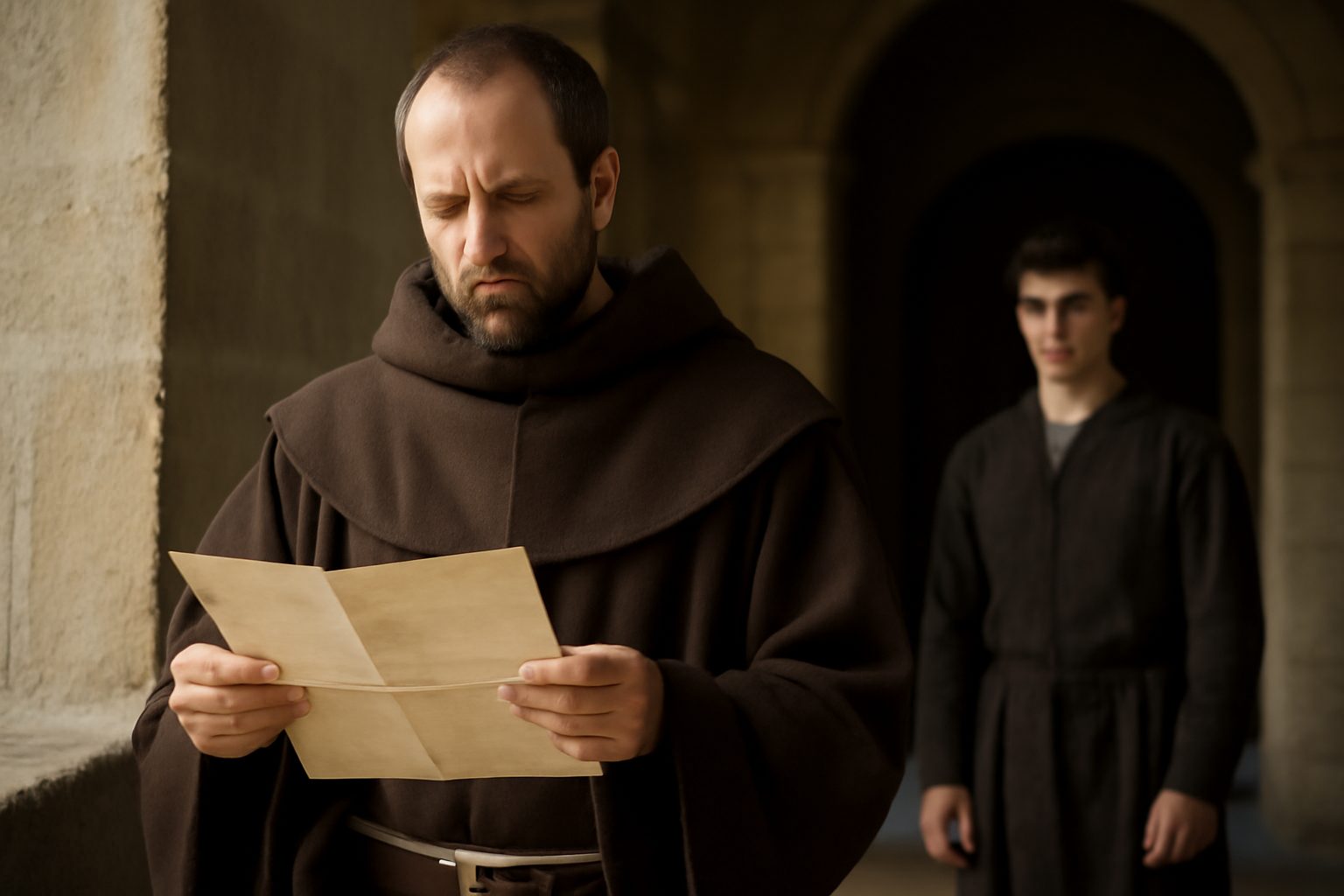
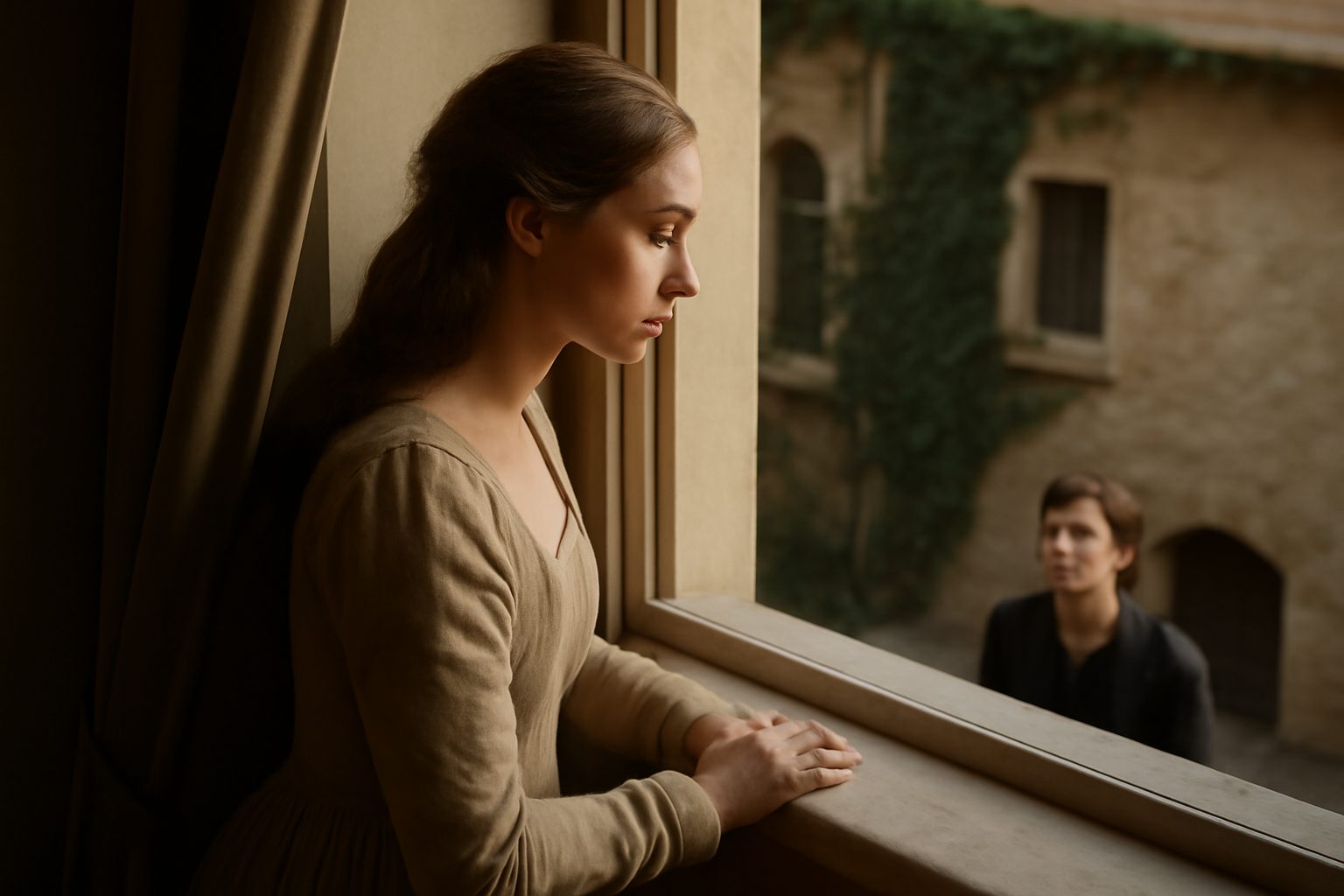
In Act 5, Scene 2 of Romeo and Juliet, Friar John informs Friar Laurence that his letter explaining Juliet's feigned death never reached Romeo. Friar Laurence, realizing the dire consequences, urgently plans to retrieve Juliet from the tomb himself before she awakens. The line reflects his anxious awareness that time is running out to prevent tragedy.
Friar Laurence: "Within three hours will fair Juliet wake:"
In modern day english, we would say:
Juliet will wake up in three hours.
Frequently Asked Questions
How long does Friar Laurence say it will take for Juliet to wake up?
Three hours.
Connections to other verses:
Connections to "Within three hours will fair Juliet wake:"
This verse marks the critical timeline for Juliet's awakening from her potion-induced sleep, setting the stage for the tragic events that follow. It is directly connected to Friar Laurence's plan to reunite the lovers.
Immediate Context and Urgency
The line follows Now must I to the monument alone;, where Friar Laurence resolves to personally intervene, realizing the urgency as Juliet's revival approaches. This underscores his responsibility and the mounting pressure.
Failed Communication
The awakening is tied to the failed delivery of the letter, as explained in I could not send it,--here it is again,-- and Nor get a messenger to bring it thee,, which detail Friar John's inability to inform Romeo of the plan, leading to the impending crisis.
Friar's Contingency Plan
Upon realizing the message hasn't reached Romeo, Friar Laurence states But I will write again to Mantua,, showing his attempt to mitigate the danger, though it proves too late. He also intends to And keep her at my cell till Romeo come;, highlighting his effort to provide temporary safety for Juliet upon her awakening.
Tools for Intervention
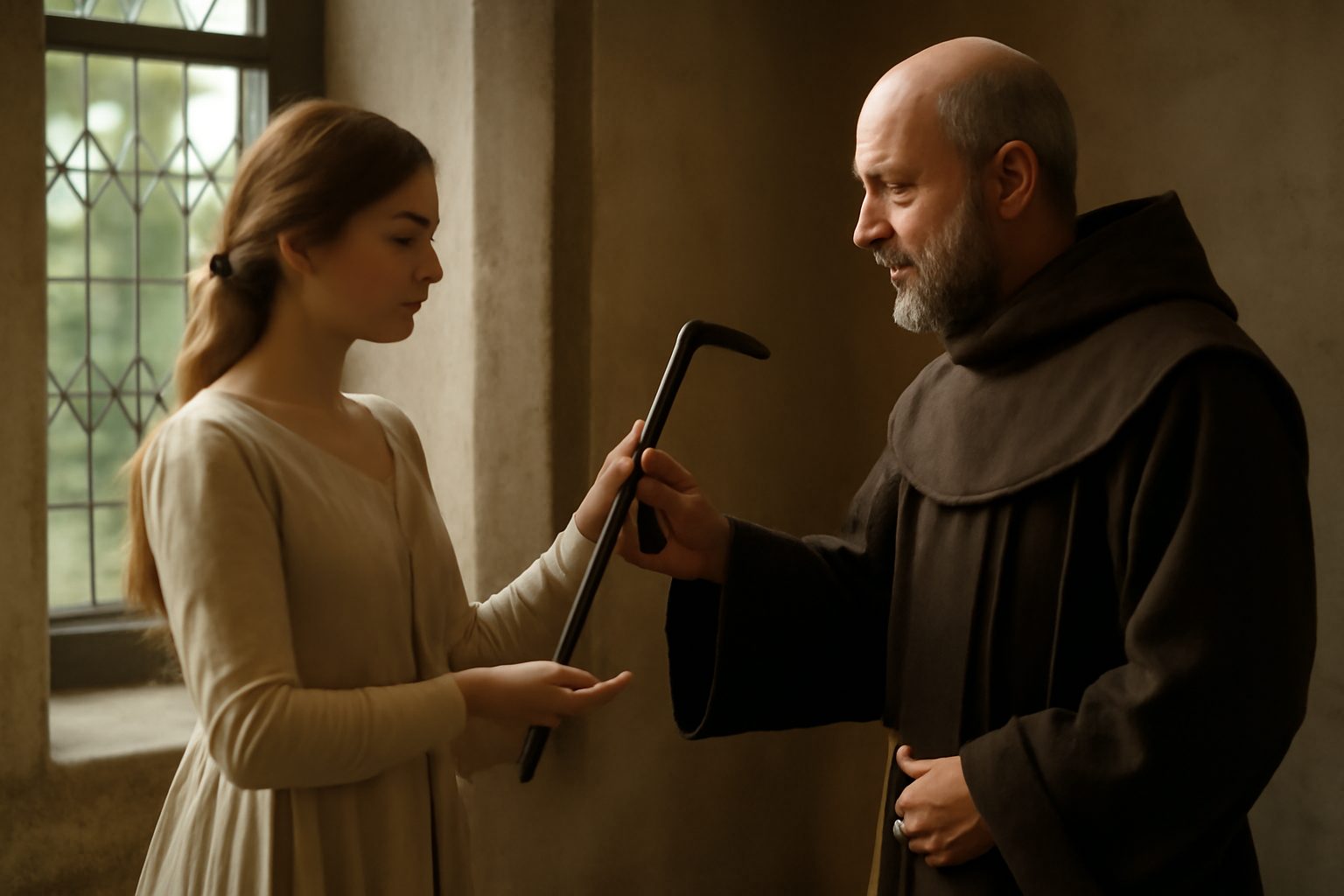
To access the tomb, he commands Get me an iron crow, and bring it straight, emphasizing the physical means required to reach Juliet in time, which ties directly to the three-hour window.
Foreshadowing Tragedy
The verse ominously precedes Poor living corse, closed in a dead man's tomb!, which reflects Friar Laurence's dread of Juliet waking alone in the crypt, a fear realized due to the timing and failed plans.