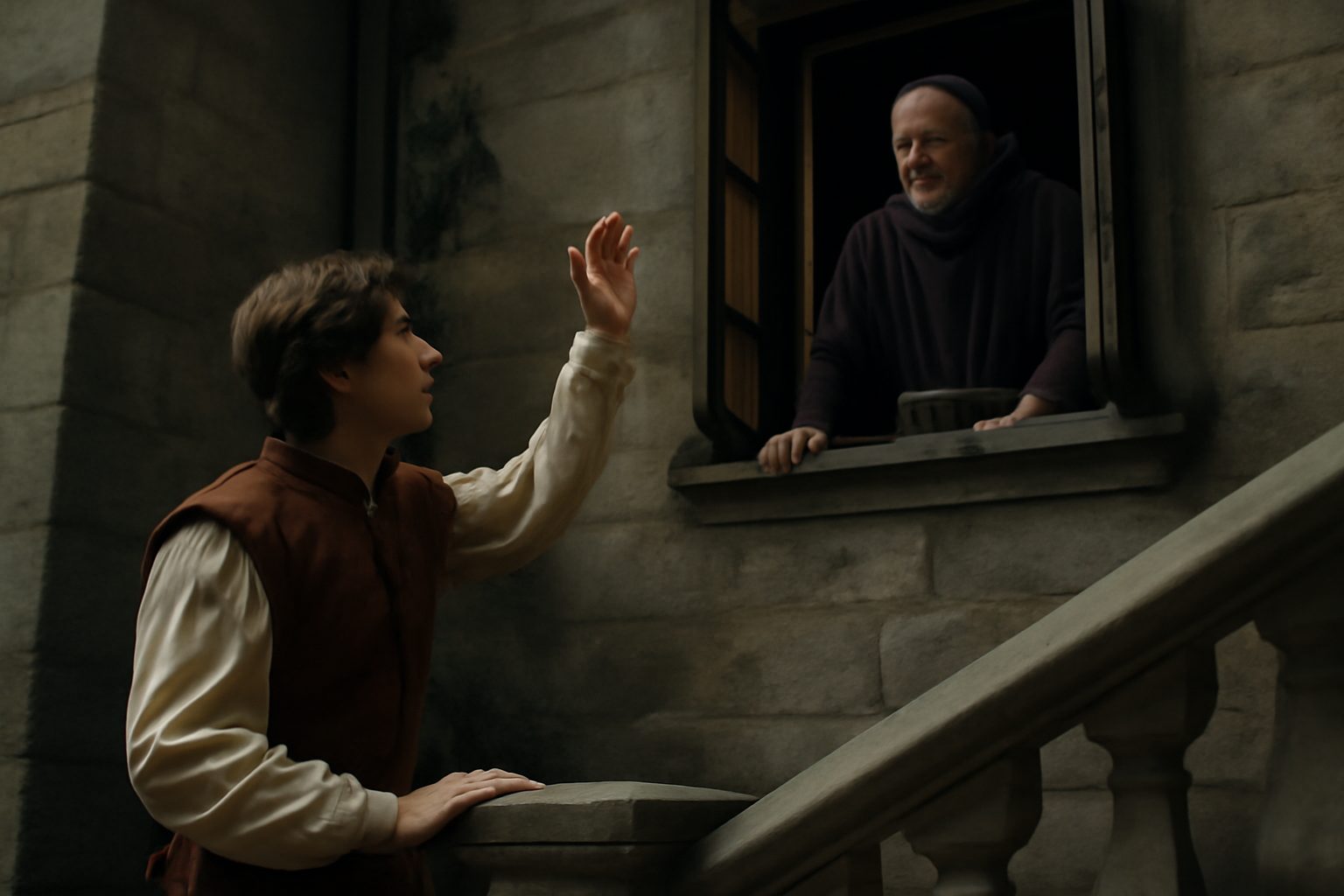
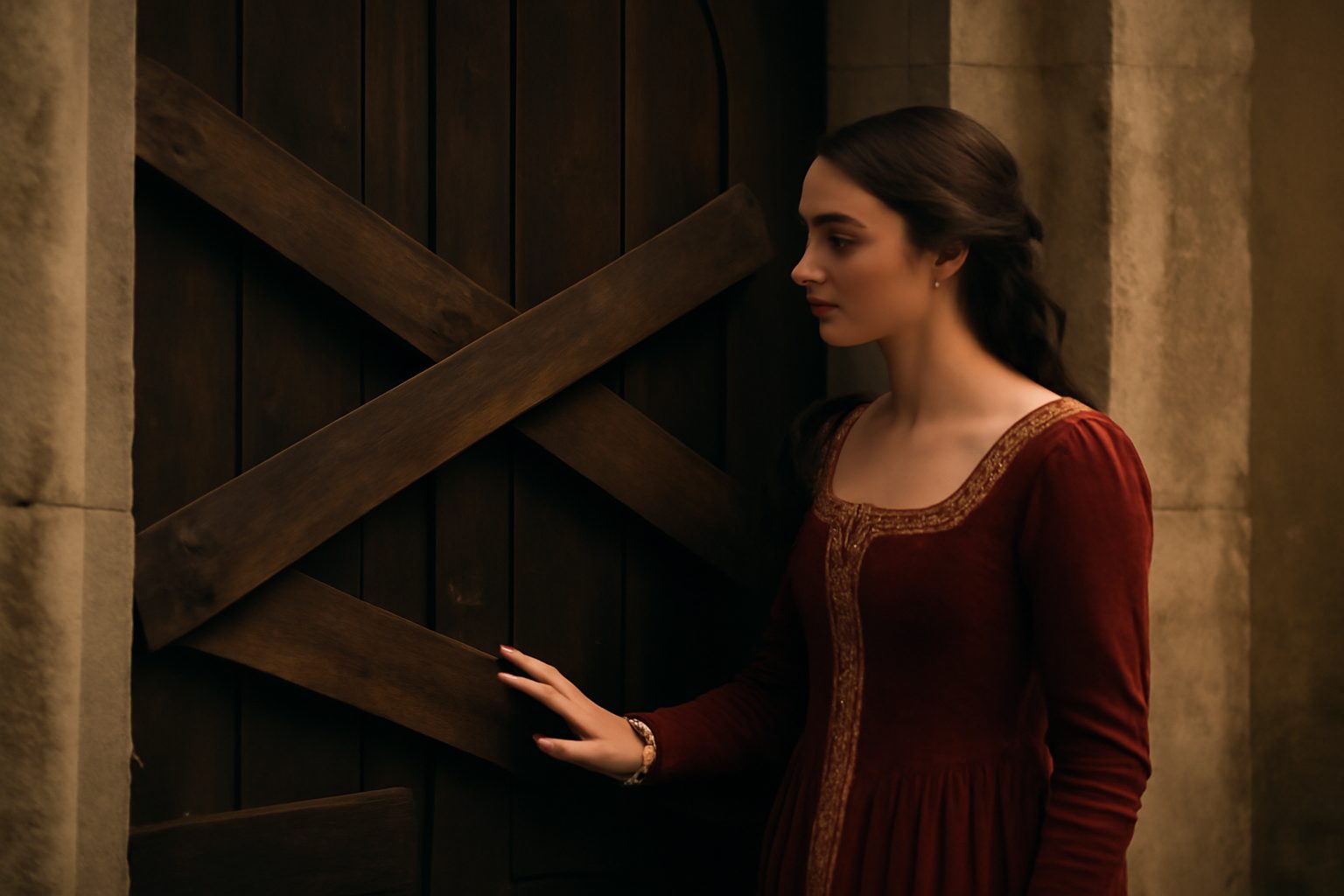
In Act 5, Scene 2 of Romeo and Juliet, Friar Laurence learns that his letter explaining Juliet's fake death never reached Romeo. Distraught, he rushes to the Capulet tomb to prevent tragedy, knowing Juliet will soon awaken. This line captures his horror at the thought of her trapped alive in the dark, suffocating confines of the tomb.
Friar Laurence: "Poor living corse, closed in a dead man's tomb!"
In modern day english, we would say:
A pitiful living body, locked inside a tomb meant for the dead.
Frequently Asked Questions
What does Friar Laurence mean when he says a living body is trapped in a dead man's tomb?
He is referring to Juliet, who is alive but placed in the Capulet tomb, which is meant for the dead.
Connections to other verses:
Connections to "Poor living corse, closed in a dead man's tomb!"
The verse "Poor living corse, closed in a dead man's tomb!" expresses Friar Laurence's horror at Juliet's premature entombment. This line connects thematically and narratively to several other verses in the scene.
Immediate Context and Urgency
This exclamation follows directly from "Within three hours will fair Juliet wake:", which establishes the timeline for her awakening. The Friar's panic is a reaction to the realization that Juliet will soon revive in the Capulet tomb.
Failed Communication
The tragedy stems from the undelivered letter, referenced in "I could not send it,--here it is again,--" and "Nor get a messenger to bring it thee". This failure directly leads to Romeo's ignorance and Juliet's perilous situation.
Friar's Plan and Its Consequences
The Friar's original intention to "keep her at my cell till Romeo come" is now impossible, heightening the desperation in his cry about her entombment.
Symbolism of the Tomb
The "dead man's tomb" echoes earlier references to death and confinement, such as the quarantine described in "Seal'd up the doors, and would not let us forth", symbolizing fate's inescapable grip.
Dramatic Irony
This line underscores the tragic irony that Juliet is alive but trapped, a twist stemming from the "neglecting it / Of dear import", emphasizing how a single oversight leads to catastrophe.