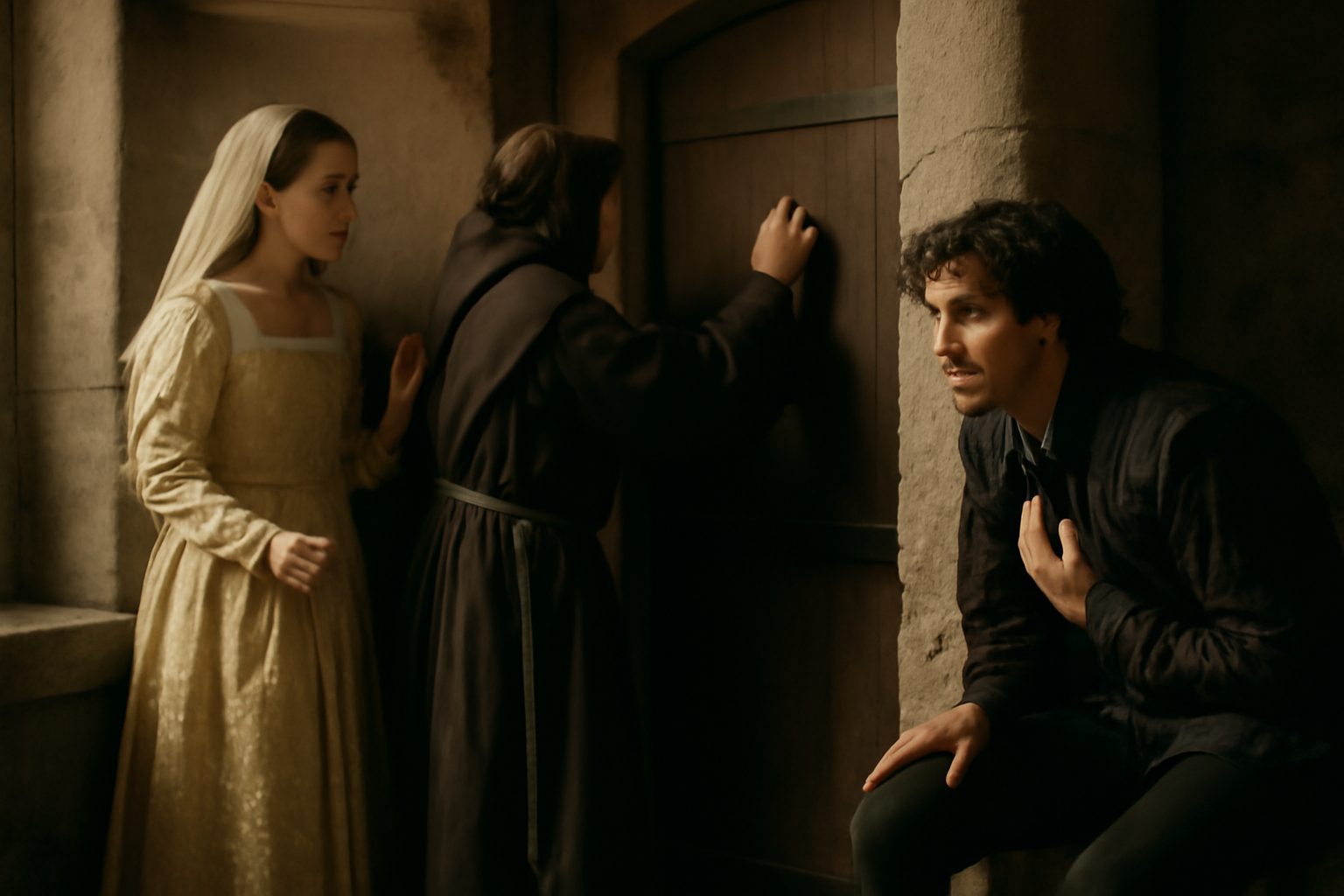
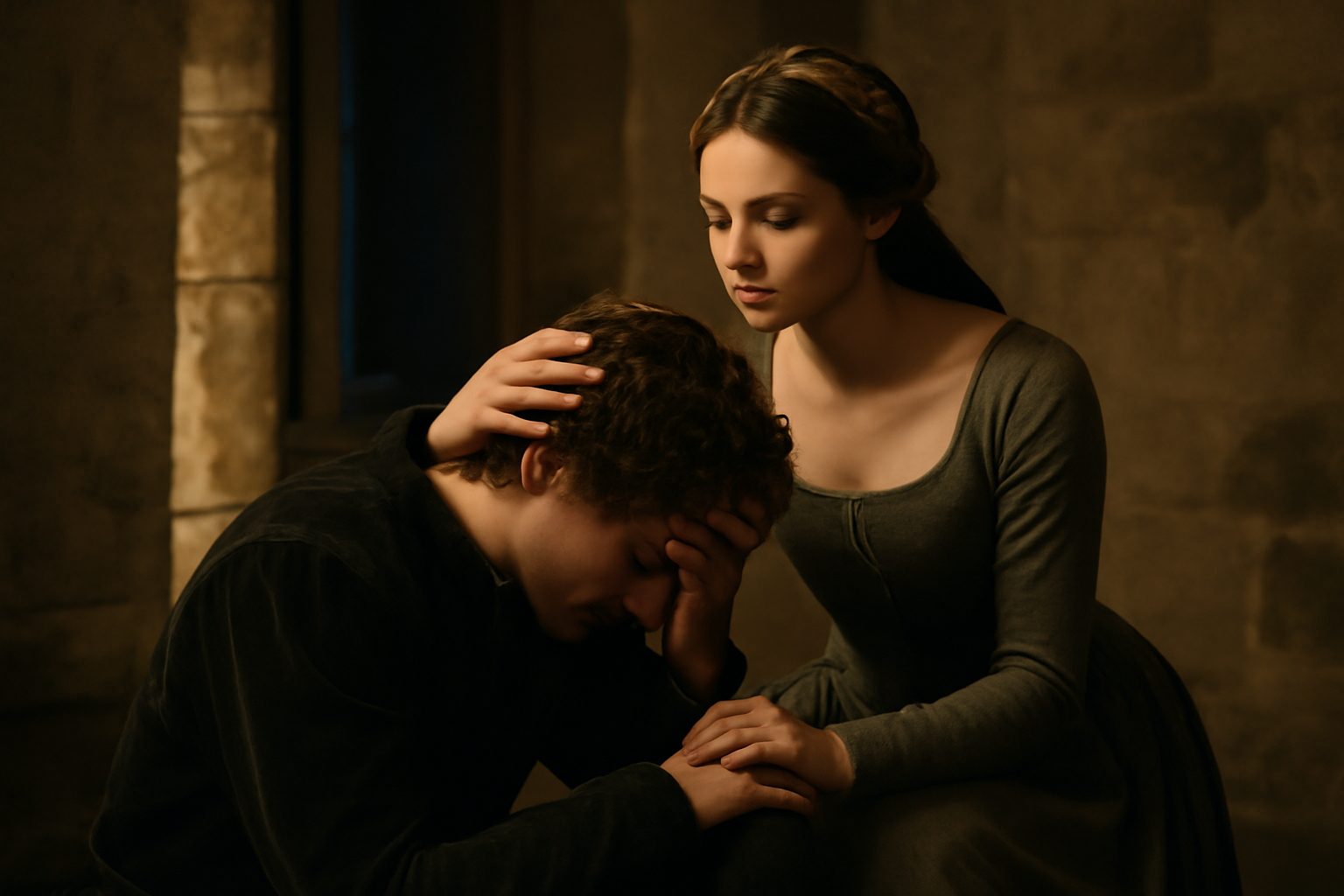
In Act 3, Scene 3 of Romeo and Juliet, Romeo has just been banished for killing Tybalt and hides in Friar Laurence's cell, overwhelmed by despair. When the Friar tries to console him, Romeo dismisses his words, comparing himself to the lowliest creatures to express his self-loathing. This moment captures Romeo's dramatic despair, as he feels unworthy of love or mercy after the violent turn of events.
Romeo: "And little mouse, every unworthy thing,"
In modern day english, we would say:
Even the smallest, most insignificant creature, no matter how unworthy, lives while I suffer.
Frequently Asked Questions
What does Romeo call the person he is speaking to in this line?
He calls them a little mouse.
How does Romeo describe things in this line?
He describes them as unworthy.
Connections to other verses:
Connections to "And little mouse, every unworthy thing,"
The line "And little mouse, every unworthy thing," spoken by Romeo, reflects his deep self-loathing and despair after killing Tybalt and being banished. This sentiment connects thematically and emotionally to several other verses in the scene.
Self-Deprecation and Despair
Romeo's comparison of himself to a "little mouse" and "every unworthy thing" echoes his earlier outcry in "And world's exile is death: then banished," where he equates banishment with a living death, reinforcing his sense of worthlessness. Similarly, in "And fall upon the ground, as I do now," his physical collapse mirrors this emotional degradation.
Contrast with Friar Laurence's Counsel
Friar Laurence's attempts to console Romeo stand in stark contrast to Romeo's self-condemnation. For instance, in "And turns it to exile; there art thou happy," the Friar tries to reframe Romeo's perspective, suggesting that banishment is a mercy. This is further emphasized in "A pack of blessings lights up upon thy back," where he lists the positive aspects of Romeo's situation, directly opposing Romeo's negative self-view.
Connection to Juliet's Anguish
Romeo's despair is paralleled by Juliet's suffering, as noted by the Nurse in "Piteous predicament! Even so lies she," highlighting their shared misery. Additionally, Romeo's fear that Juliet views him as "an old murderer," as expressed in "Doth she not think me an old murderer," ties back to his feeling of being "unworthy."
Rejection of Comfort
Romeo's stubborn refusal to see any silver lining is evident in his dismissal of philosophy in "Yet 'banished'? Hang up philosophy!" This rejection aligns with his earlier inability to accept comfort, reinforcing the depth of his despair captured in the "little mouse" metaphor.