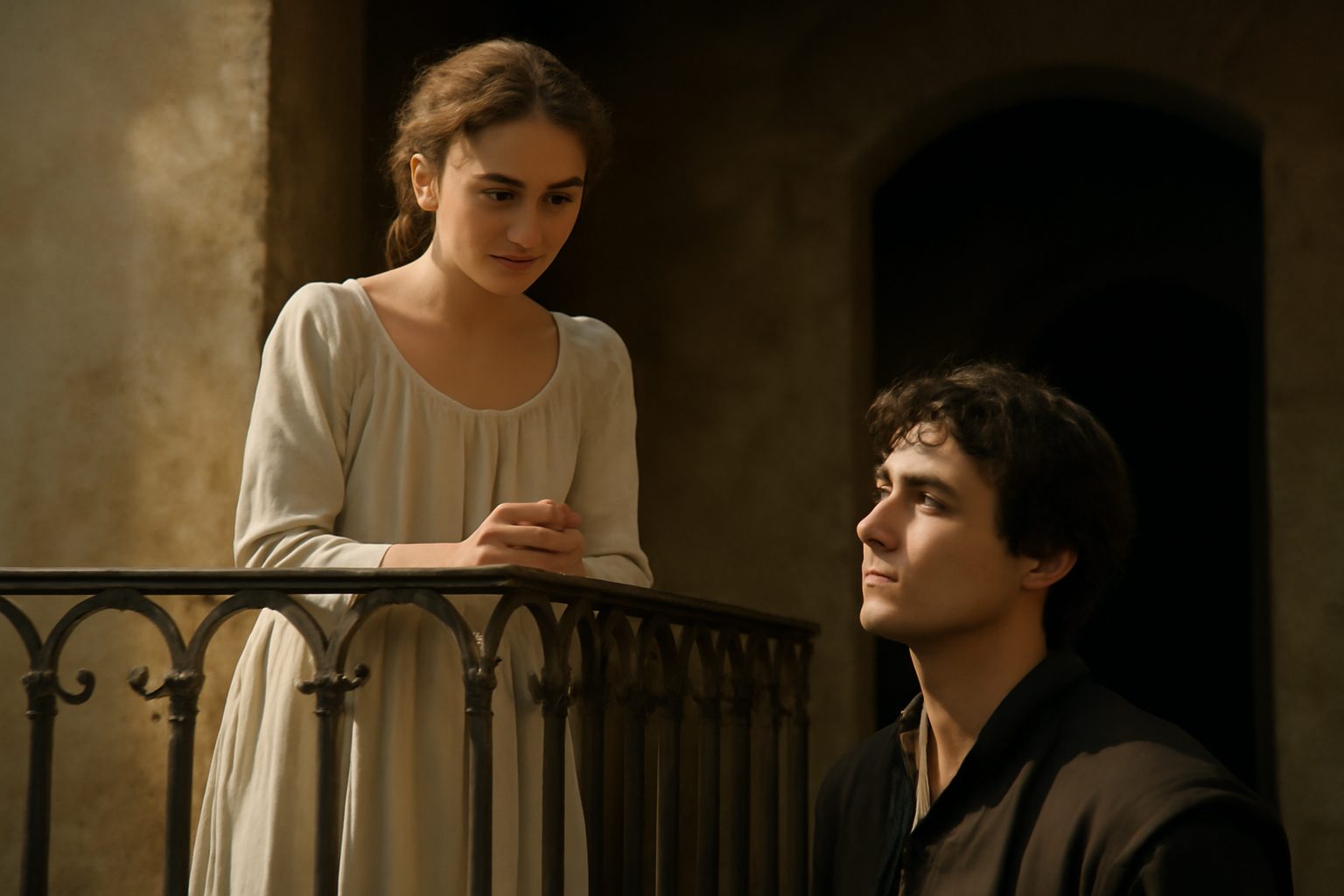
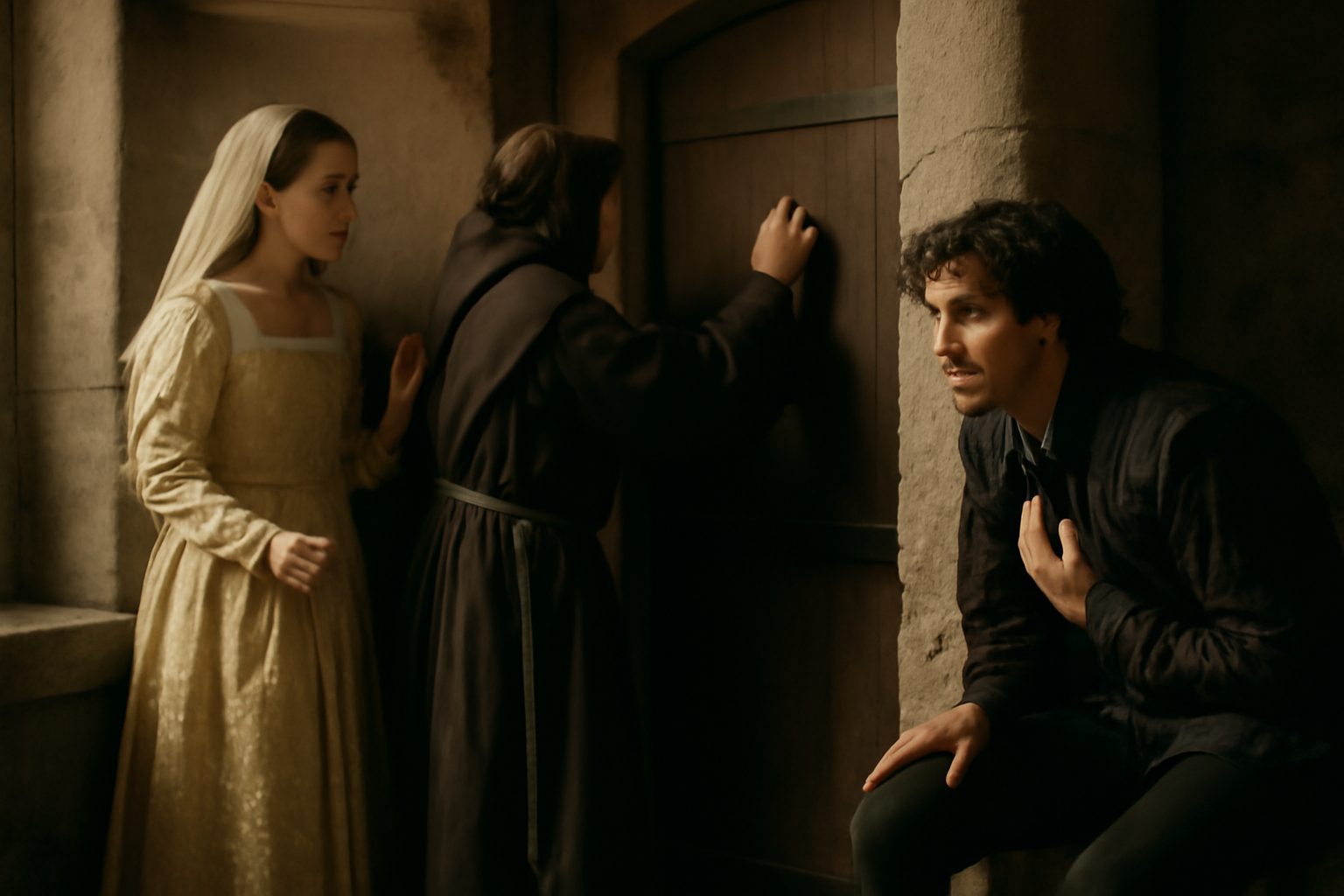
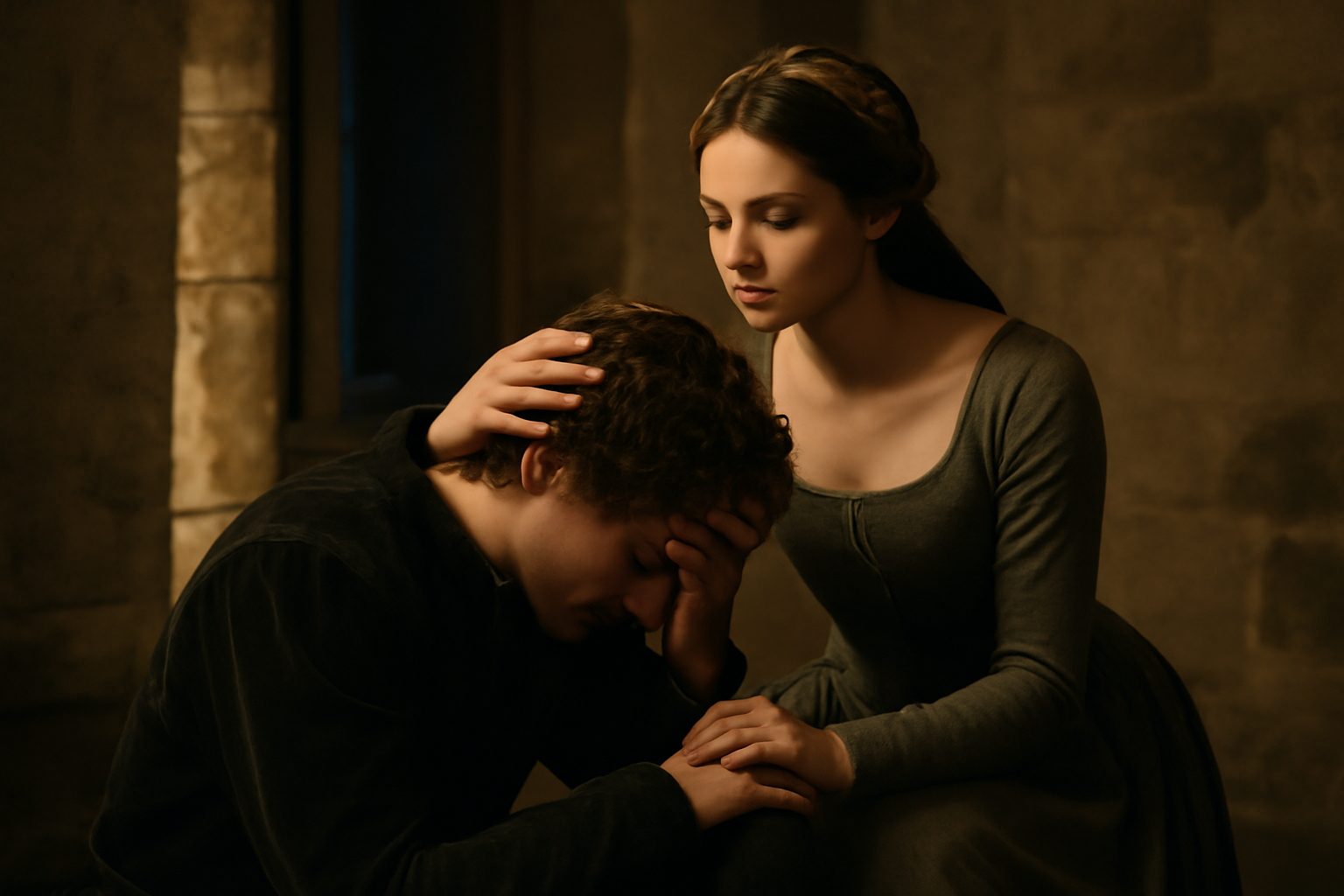
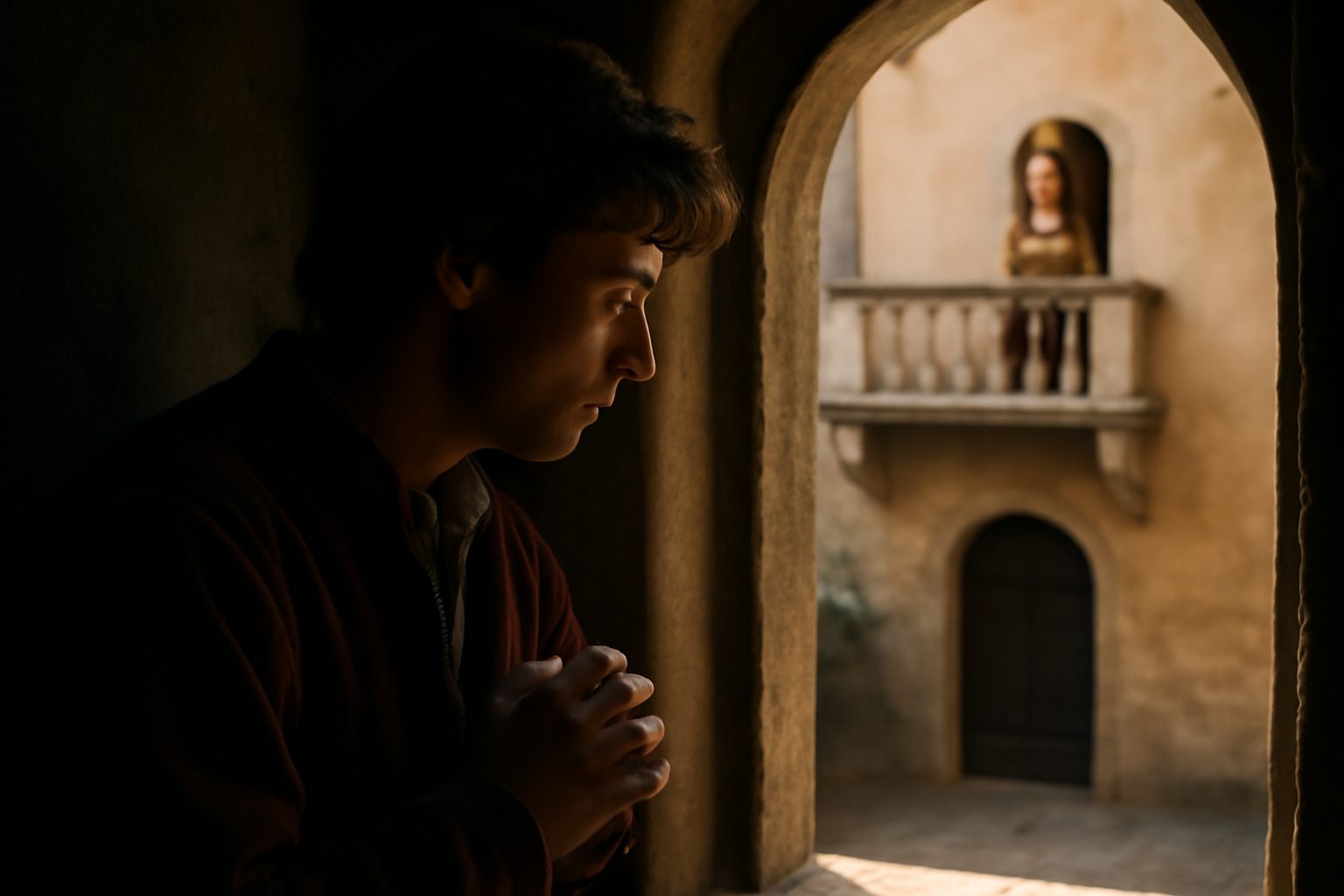
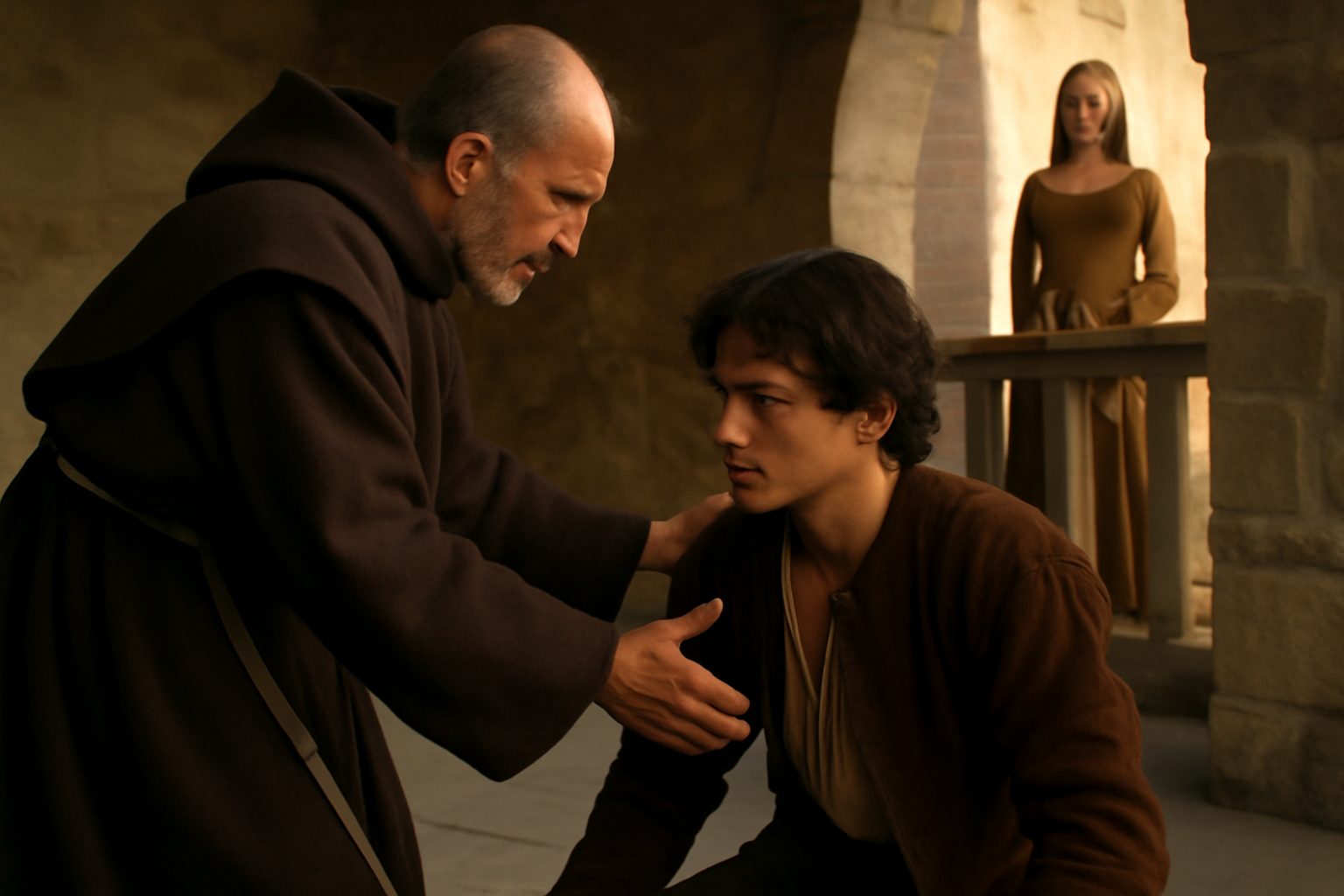
In Act 3, Scene 3 of Romeo and Juliet, Friar Laurence is advising Romeo after his banishment from Verona for killing Tybalt. The friar warns Romeo that if he does not act quickly and wisely, he will be unable to escape to Mantua, where he could safely wait for a chance to reunite with Juliet. This moment highlights the urgency and desperation of Romeo's situation as he faces exile.
Friar Laurence: "For then thou canst not pass to Mantua;"
In modern day english, we would say:
Otherwise you won’t be able to escape to Mantua.
Frequently Asked Questions
What does Friar Laurence mean when he says Romeo cannot go to Mantua?
Friar Laurence means that Romeo will not be able to travel to Mantua if he does not follow the friar's advice or plan.
Connections to other verses:
Connections to "For then thou canst not pass to Mantua"
The verse "For then thou canst not pass to Mantua" is part of Friar Laurence's urgent instructions to Romeo regarding his banishment and escape. It emphasizes the critical timing and danger Romeo faces if he delays.
Immediate Context and Urgency
This line is directly preceded by "But look thou stay not till the watch be set", which warns Romeo not to linger until the city watch is posted, reinforcing the necessity for haste. Following this, "Either be gone before the watch be set" echoes the same urgency, stressing that Romeo must leave Verona promptly to avoid capture.
Planning for Exile
The friar's plan for Romeo's refuge in Mantua is detailed in "Where thou shalt live, till we can find a time", which outlines the temporary nature of his exile and the hope for future reconciliation. Additionally, "Sojourn in Mantua; I'll find out your man" assures Romeo that the friar will arrange for communication and support during his banishment.
Contrast with Romeo's Despair
Romeo's earlier despair over banishment, such as in "And say'st thou yet that exile is not death?", highlights his emotional turmoil, which contrasts sharply with the friar's practical advice. Similarly, "There is no world without Verona walls" captures Romeo's belief that life outside Verona is meaningless, underscoring why the friar's instructions are both a lifeline and a challenge.
Connection to Juliet
The urgency to depart for Mantua is also tied to Romeo's desire to see Juliet one last time, as seen in "Ascend her chamber, hence and comfort her". This moment of farewell is critical, as delaying could prevent their final meeting, emphasized by "Hie you, make haste, for it grows very late", which reiterates the time-sensitive nature of their plans.