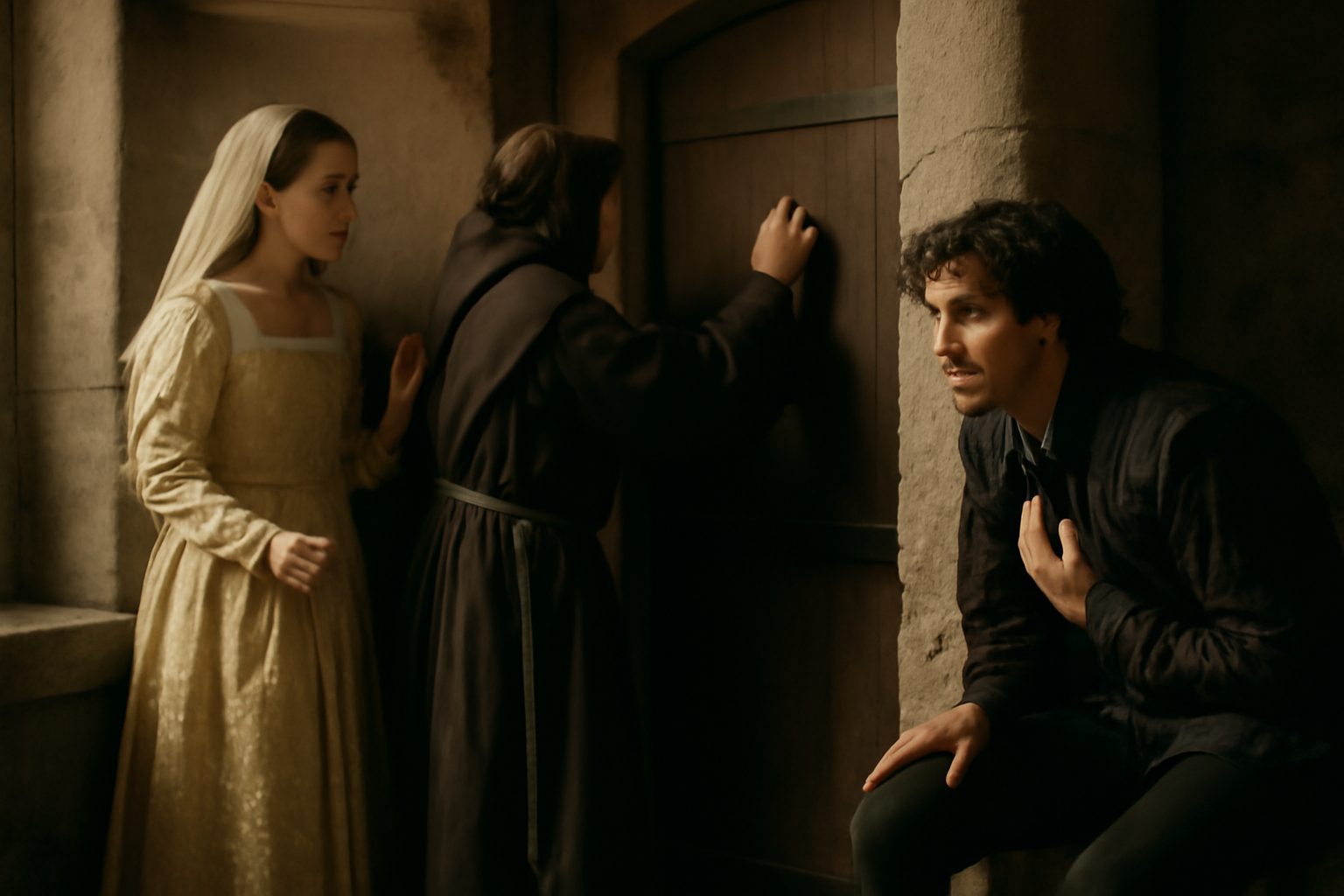
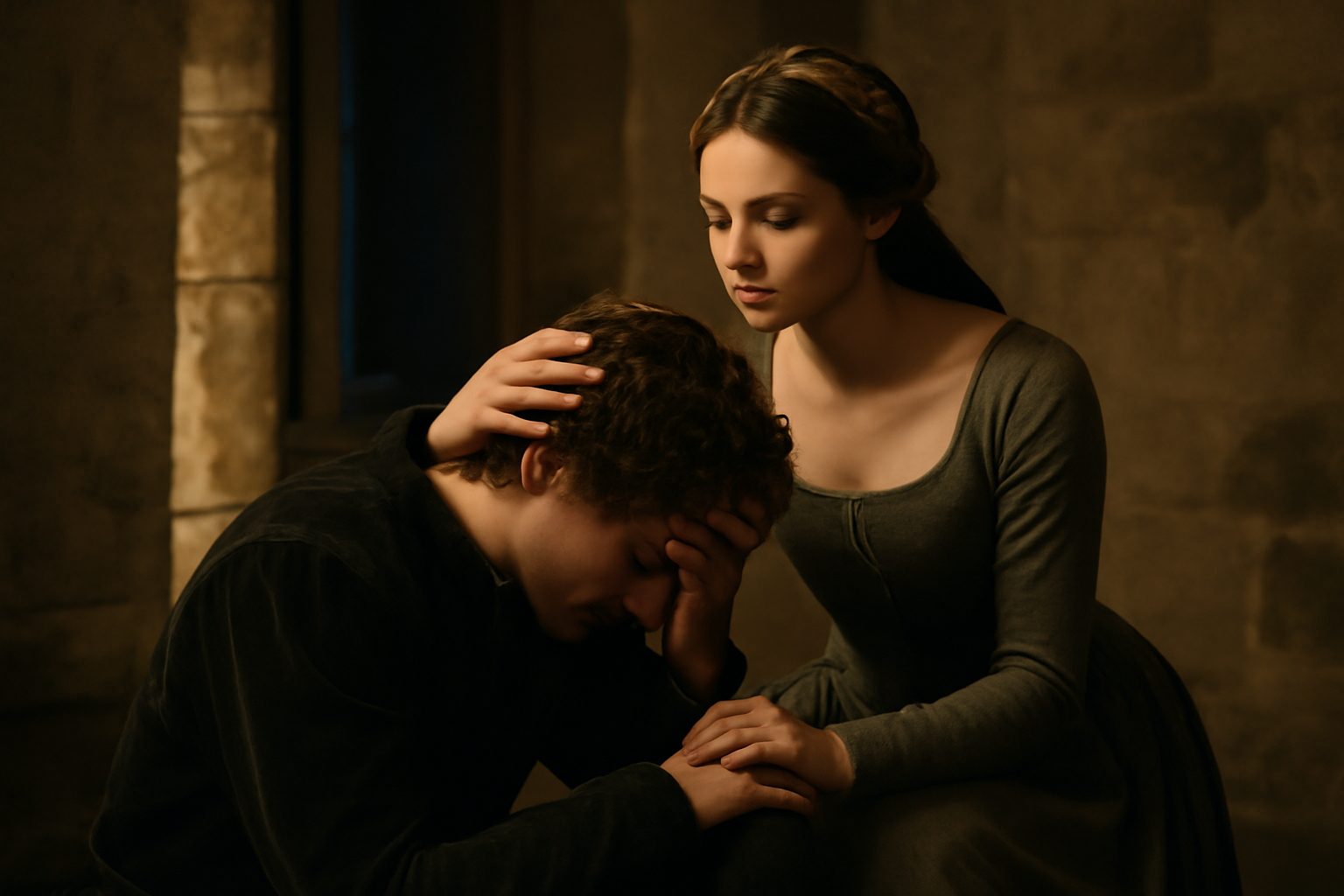
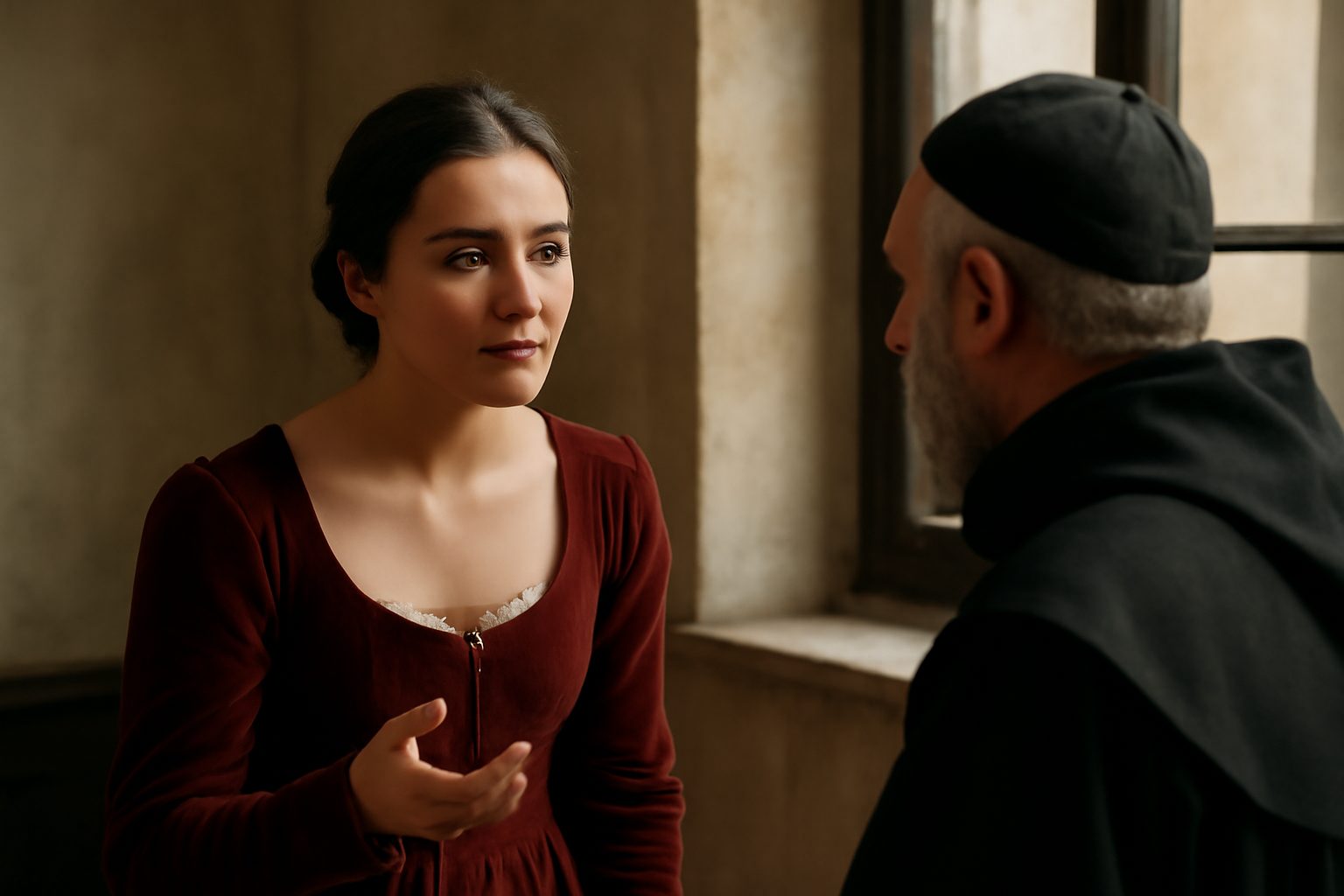
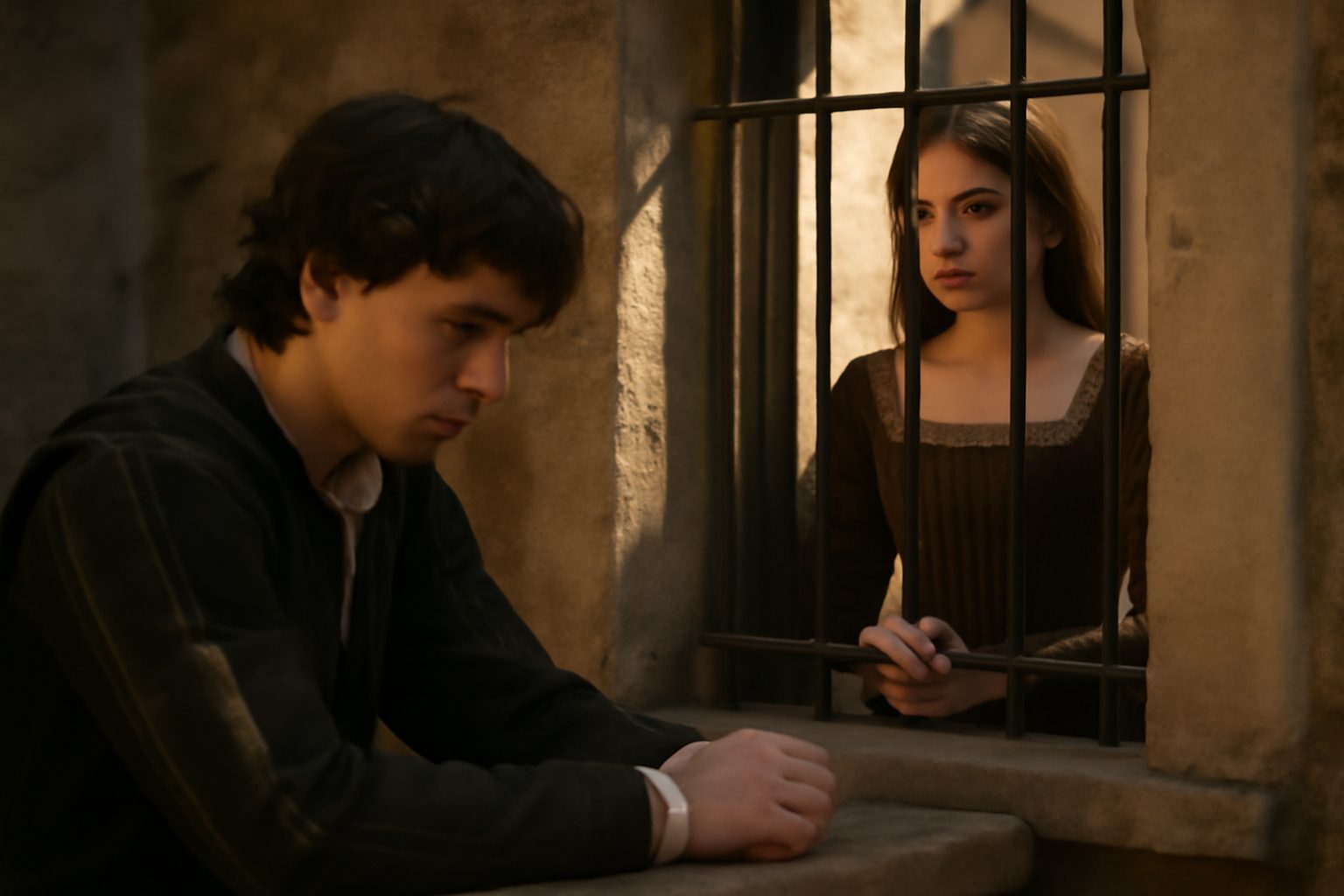
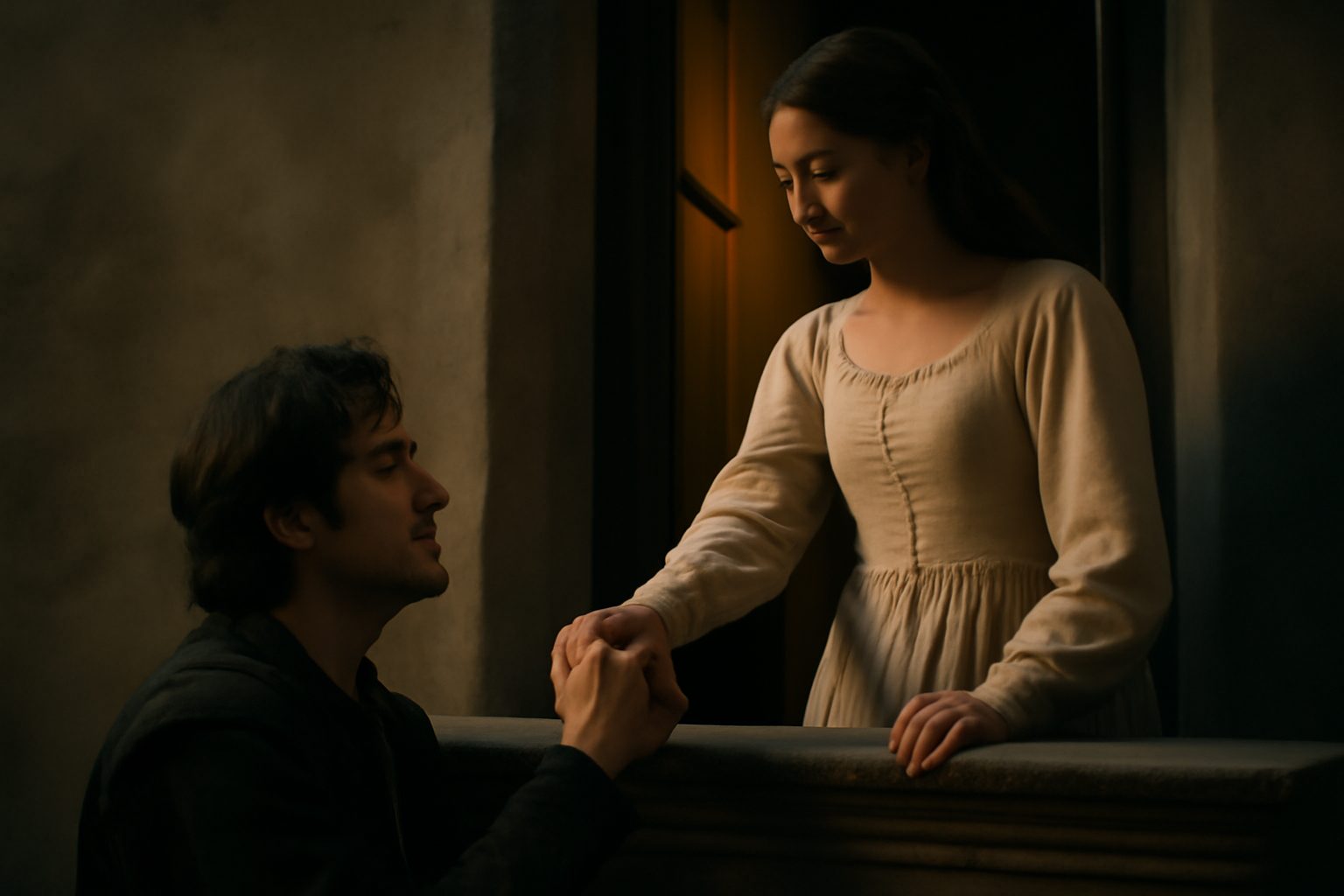
In Act 3, Scene 3 of Romeo and Juliet, Friar Laurence informs Romeo of his banishment from Verona as punishment for killing Tybalt. Overwhelmed by despair, Romeo resists the news until the Friar urges him to see the mercy in his sentence. When Romeo finally accepts his fate, the Friar responds with a simple yet relieved acknowledgment of his compliance.
Friar Laurence: "Welcome, then."
In modern day english, we would say:
Sure, here you go:
Come in, then.
(Note: In this scene, Friar Laurence is speaking to Romeo, who has just fled to the friar’s cell after killing Tybalt. The line is a simple but tense invitation, showing the friar’s cautious welcome to the distressed Romeo.)
Frequently Asked Questions
Who says the words 'Welcome, then' in Act 3 Scene 3 of Romeo and Juliet?
Friar Laurence says 'Welcome, then' in Act 3 Scene 3 of Romeo and Juliet.
Connections to other verses:
Connections to "Welcome, then." in Romeo & Juliet Act 3 Scene 3
Immediate Context and Arrival
The line Welcome, then. is spoken by Friar Laurence in response to the Nurse's arrival. It follows her announcement, I come from Lady Juliet, and precedes her inquiry, Where is my lady's lord, where's Romeo?. This establishes the Nurse as a messenger and a comforting presence amid the turmoil.
Emotional Contrast
Friar Laurence's welcoming tone contrasts sharply with Romeo's despair earlier in the scene, such as his lament in Ha, banishment! be merciful, say 'death;' and his declaration that world's exile is death. The Nurse's entrance shifts the focus from Romeo's suffering to practical news from Juliet.
Transition to Hope
The greeting serves as a pivot toward hope and action. It leads directly to the Friar's plan for Romeo's escape to Mantua, detailed in Go, get thee to thy love, as was decreed, and the assurance that Beg pardon of the prince, and call thee back might eventually reunite him with Juliet.
Connection to Juliet's State
The Nurse's arrival and the welcome she receives are tied to descriptions of Juliet's distress, such as O, she says nothing, sir, but weeps and weeps and And now falls on her bed; and then starts up, emphasizing the shared anguish between the lovers and the urgency of the Nurse's message.