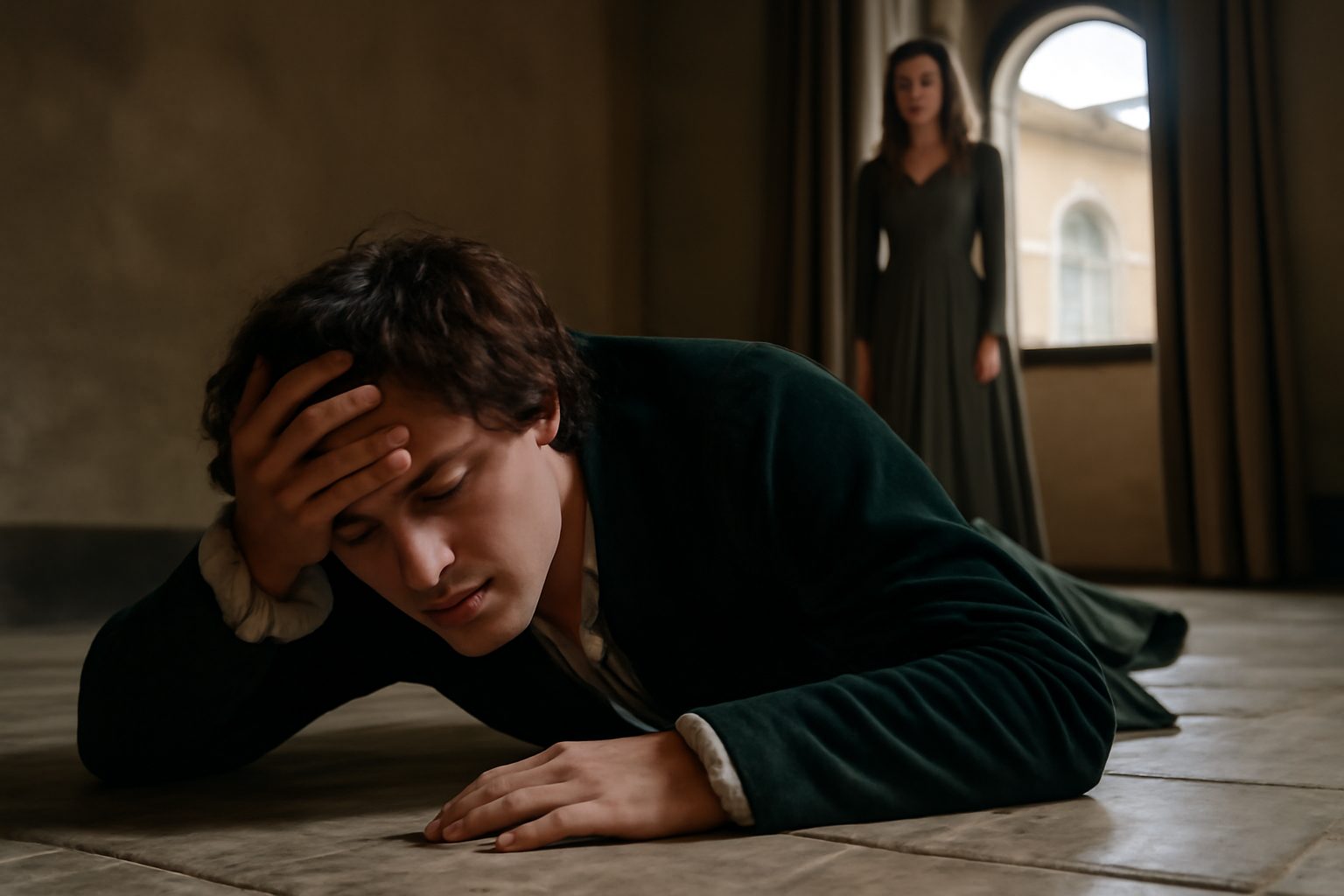
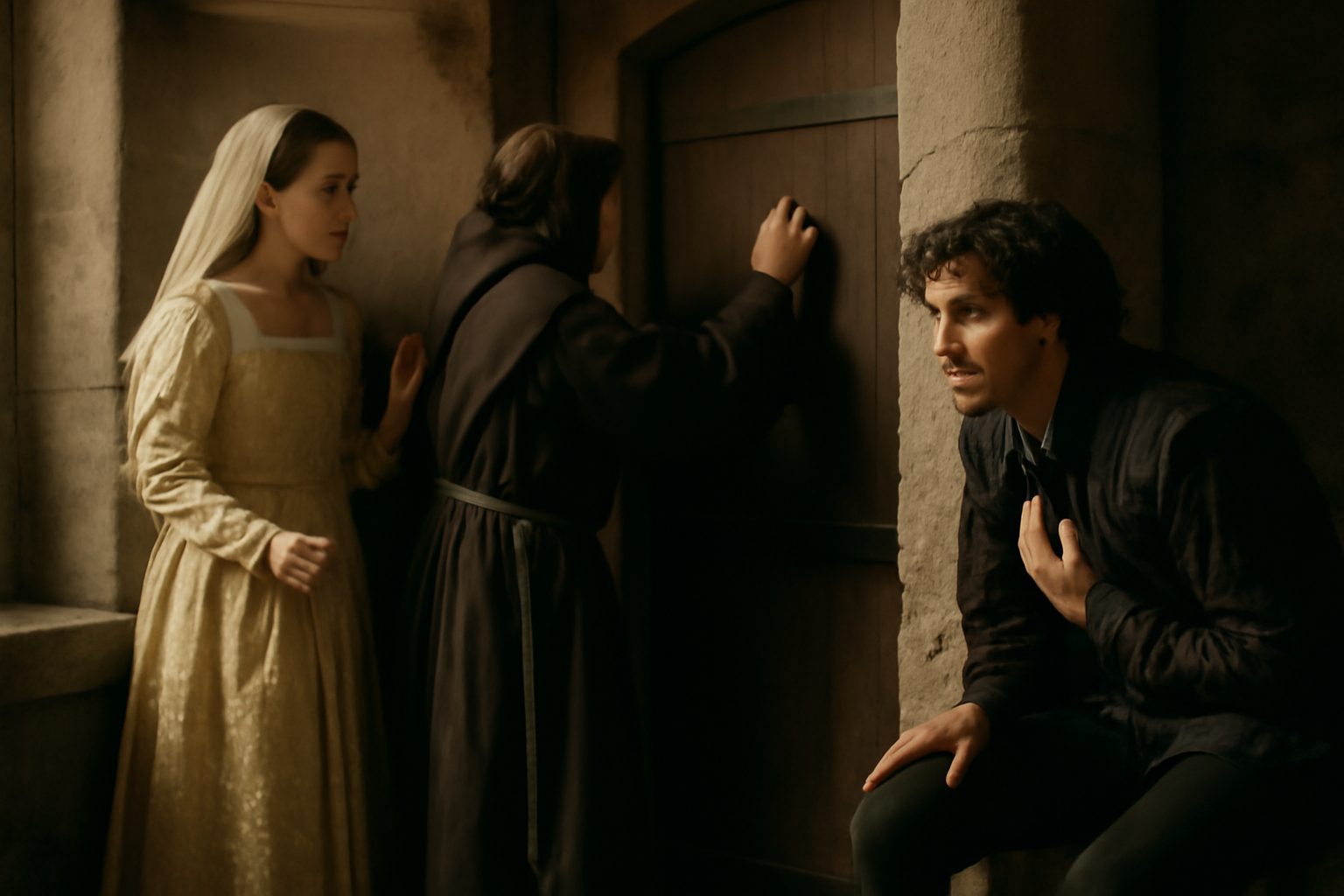
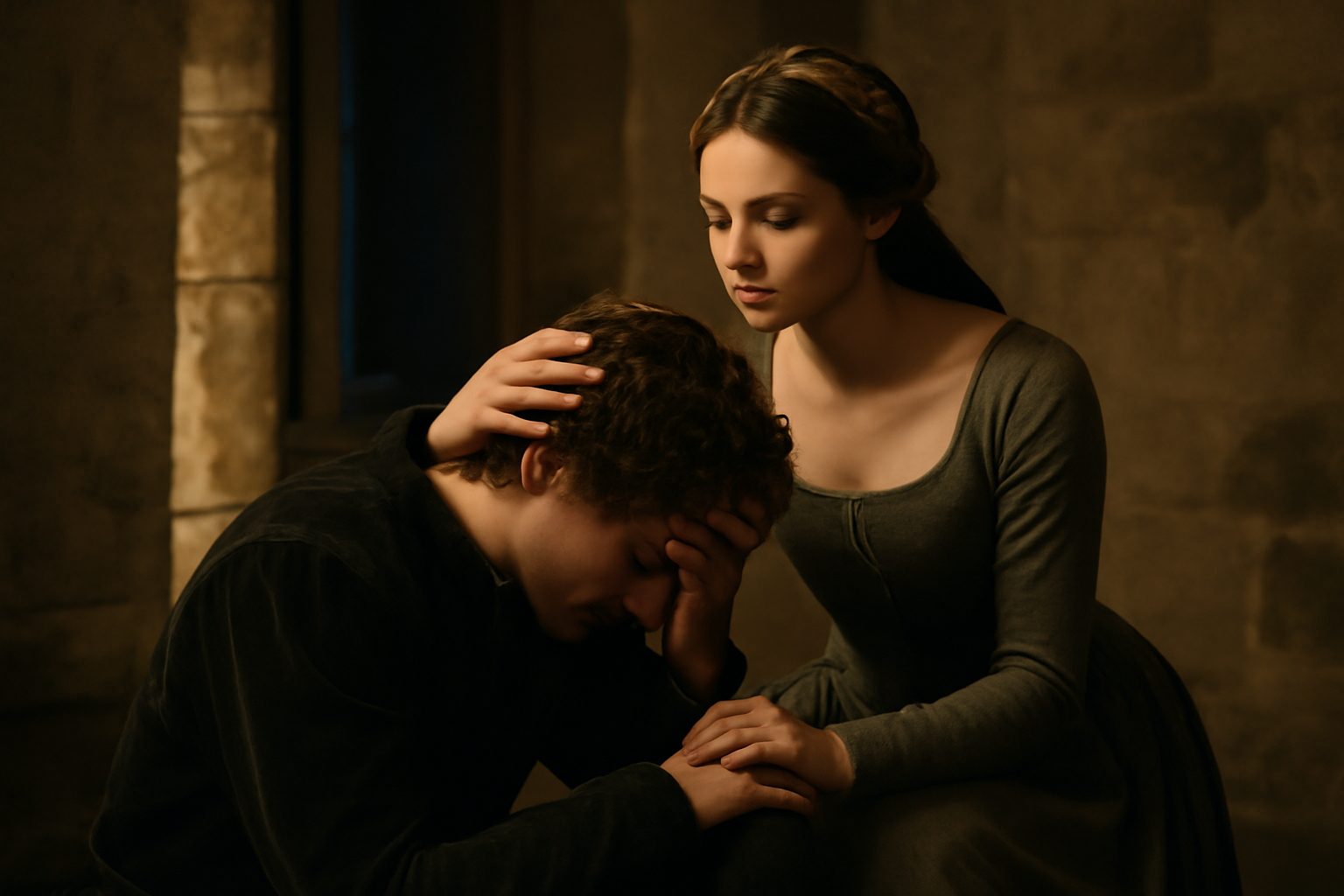
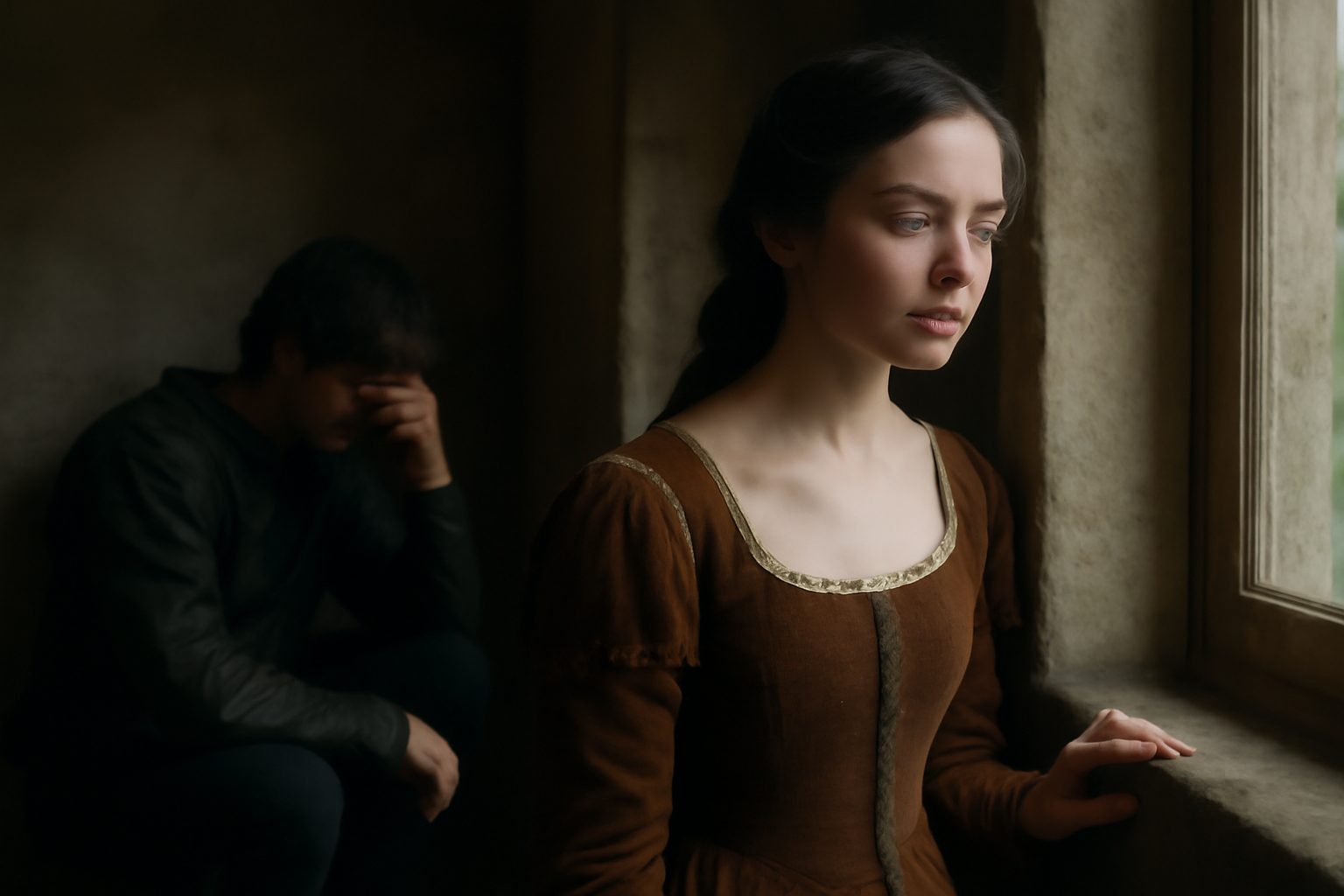
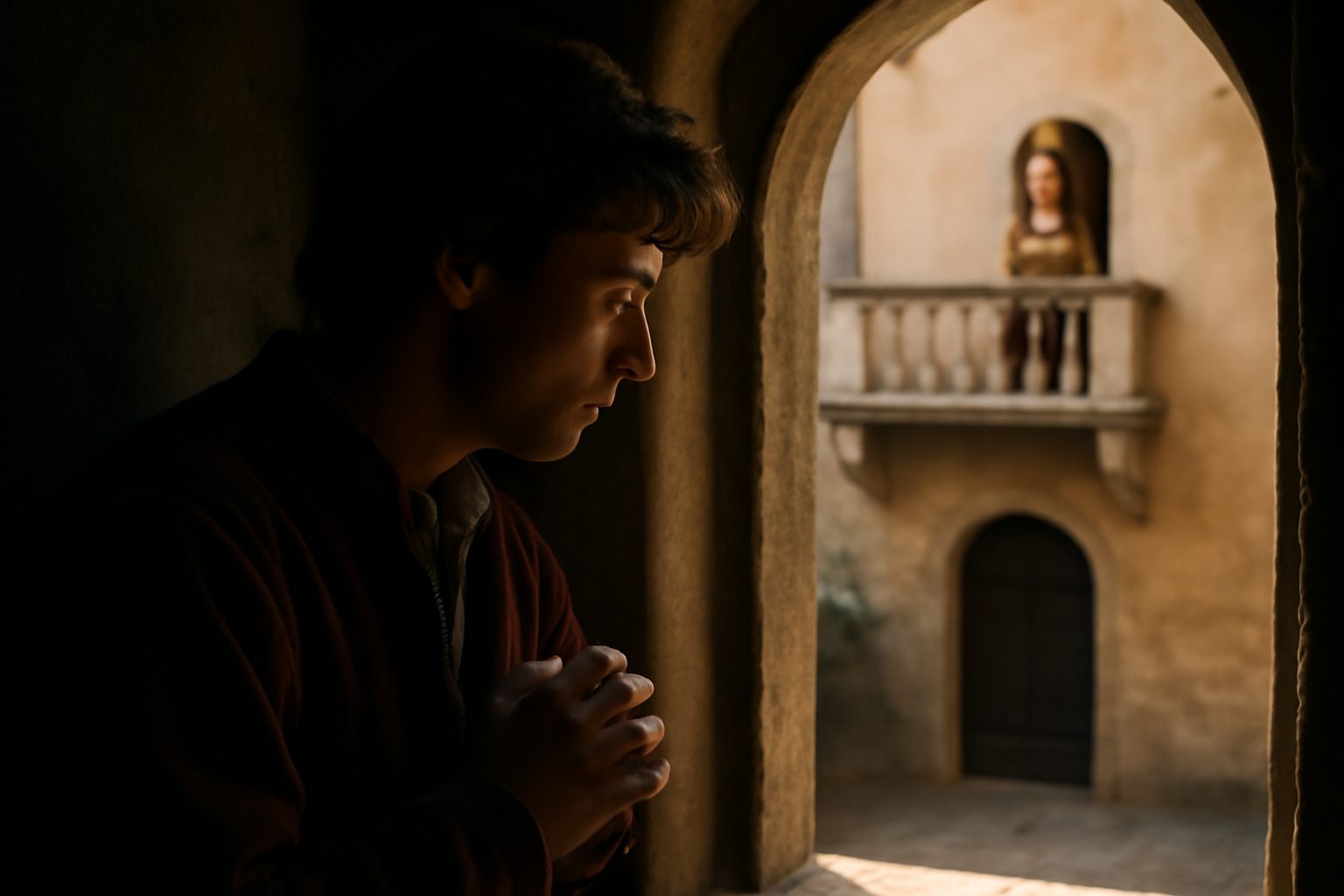
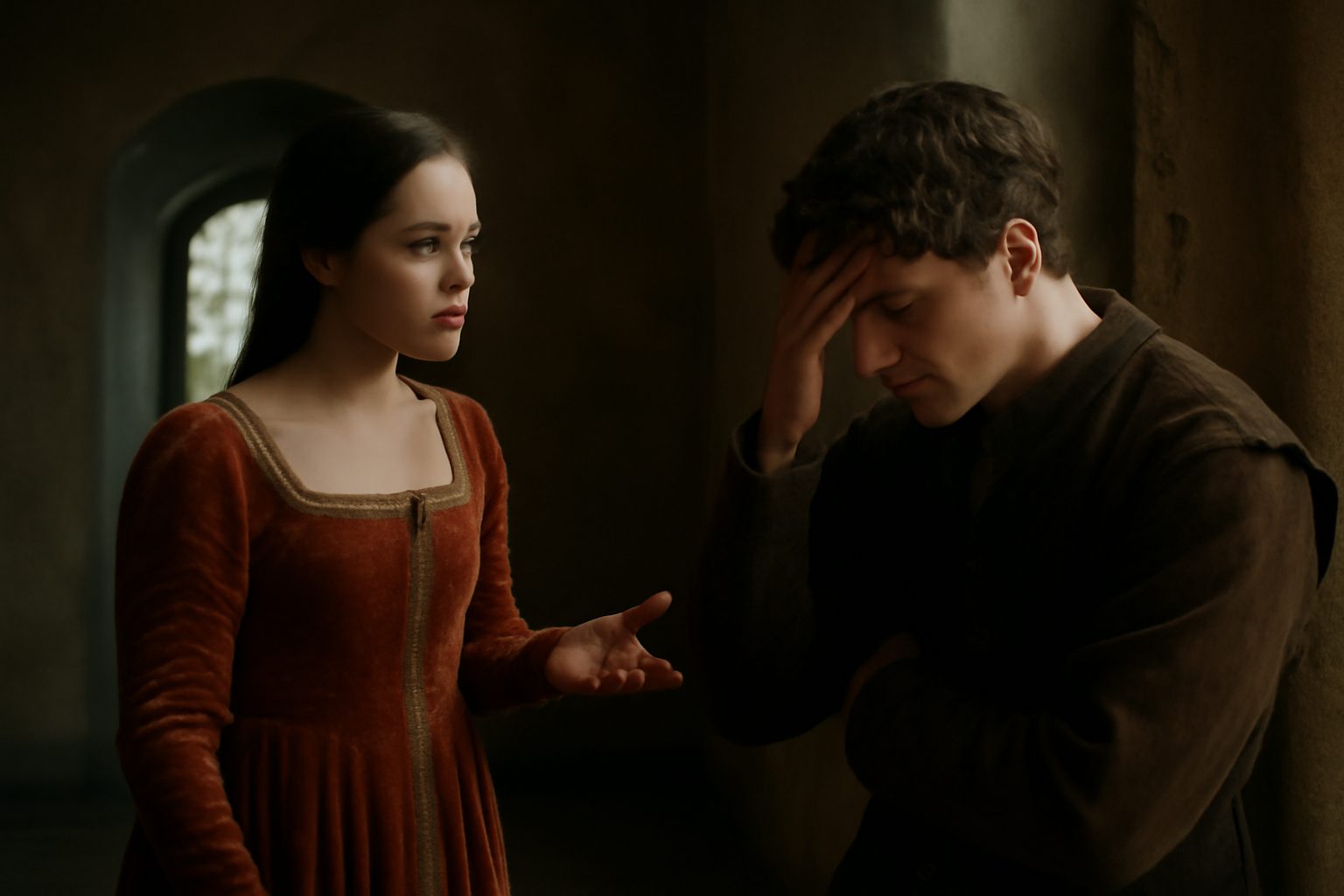
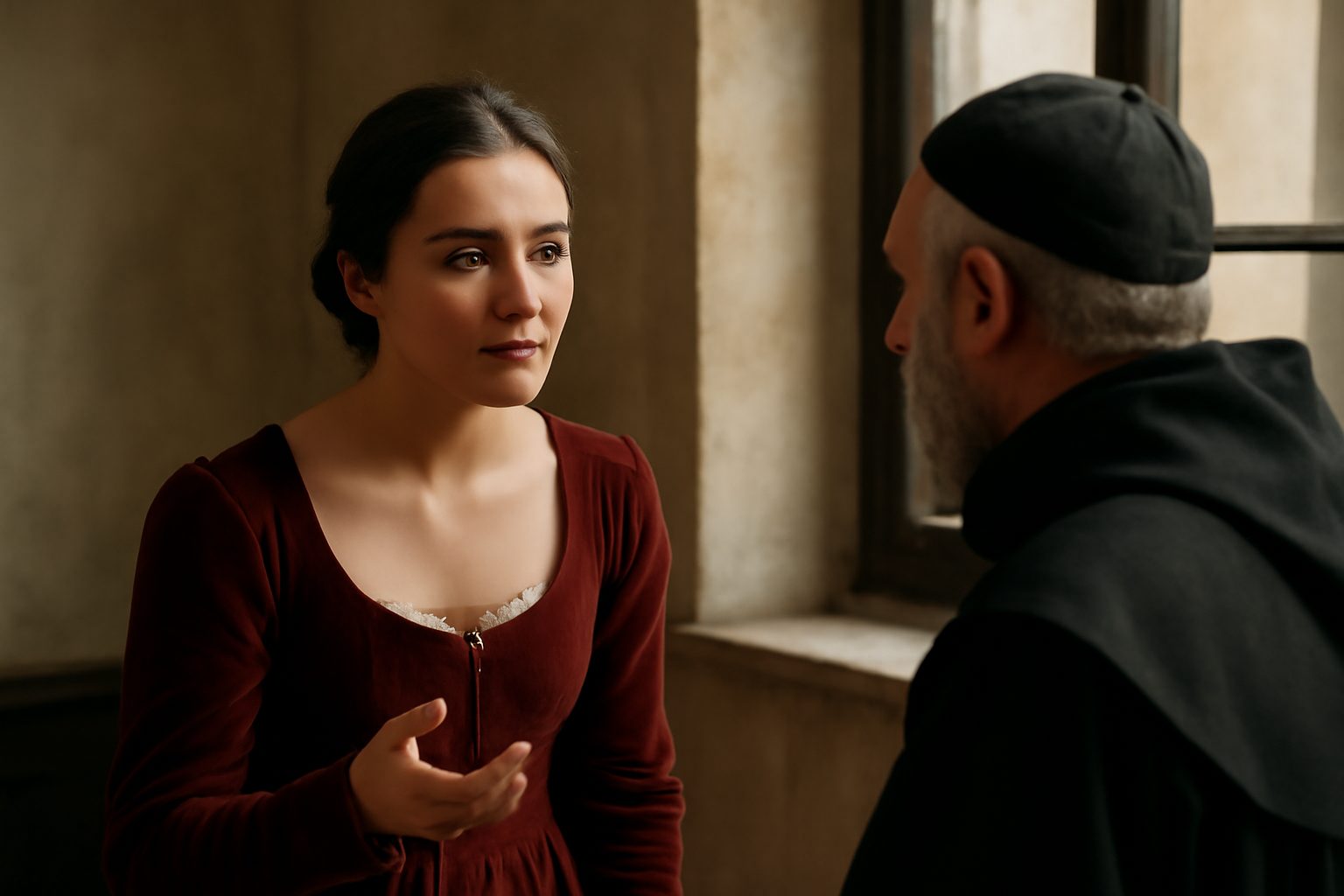
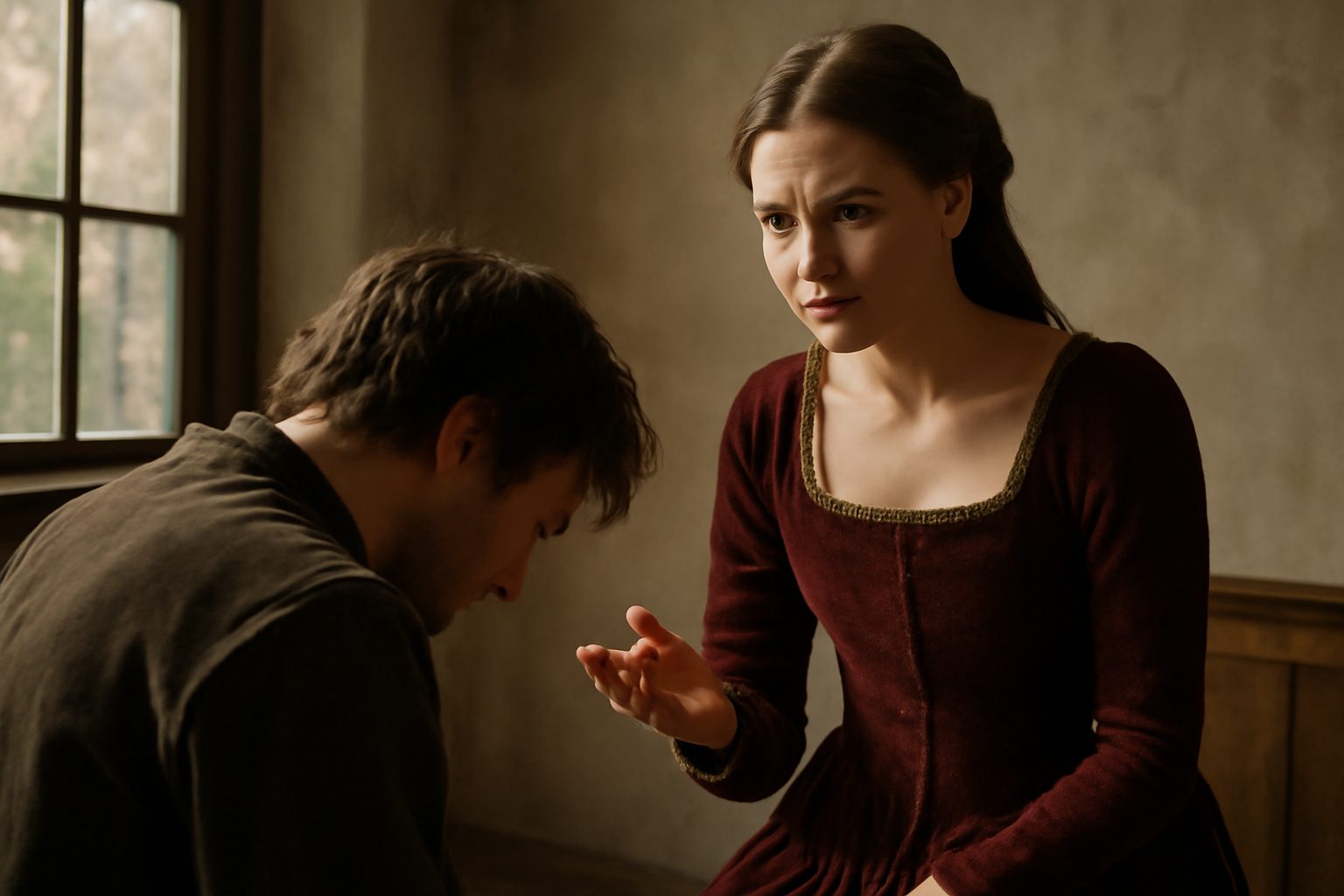
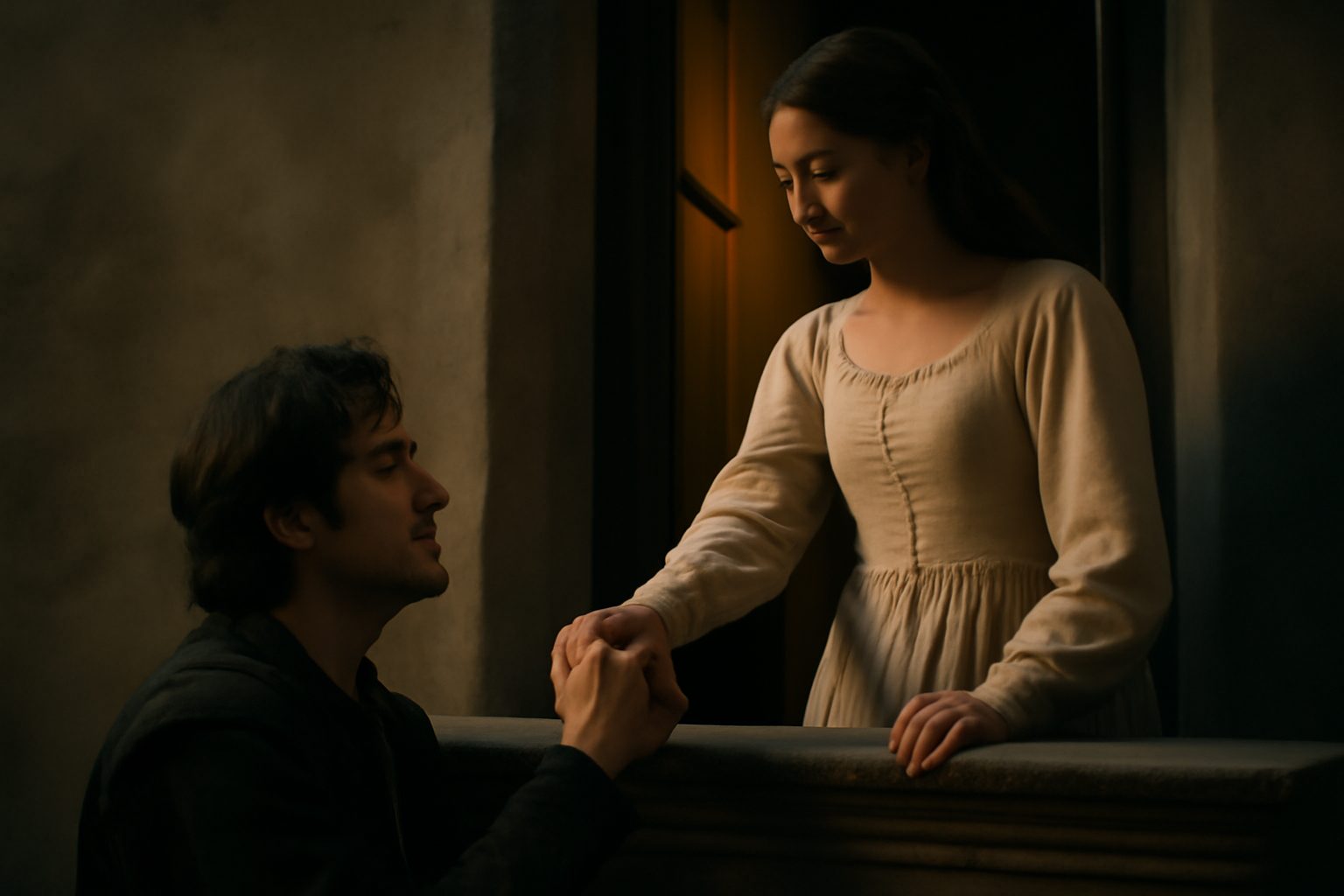
In Act 3 Scene 3 of Romeo and Juliet, Romeo has just killed Tybalt in a fit of rage and is now hiding in Friar Laurence's cell, overwhelmed by guilt and despair. When the Friar tries to console him with news that Prince Escalus has only banished him rather than sentencing him to death, Romeo responds with a bleak resignation. This line reflects his hopelessness, as he sees banishment as a fate worse than death, cutting him off from Juliet and any chance of happiness.
Nurse: "Ah sir! ah sir! Well, death's the end of all."
In modern day english, we would say:
Oh man, oh man—well, death is what everything comes to in the end.
Frequently Asked Questions
What does the Nurse mean when she says death is the end of all?
The Nurse is expressing that death is the final outcome for everyone, meaning all life eventually ends with death.
Connections to other verses:
Connections to "Ah sir! ah sir! Well, death's the end of all."
The verse Ah sir! ah sir! Well, death's the end of all reflects Romeo's despair and fixation on death as the ultimate conclusion to his suffering. This sentiment is echoed and contrasted throughout the scene, particularly in Friar Laurence's attempts to counsel Romeo.
Related Themes and Dialogues
Romeo's declaration that "death's the end of all" connects thematically with his earlier plea, Ha, banishment! be merciful, say 'death;', where he equates banishment with a fate worse than death. This is further emphasized when he states, And world's exile is death: then banished, reinforcing his perception that exile is synonymous with spiritual and emotional death.
Friar Laurence counters Romeo's nihilism with rational arguments, such as in Not body's death, but body's banishment, attempting to distinguish physical death from the punishment of exile. He also offers perspective in Happiness courts thee in her best array, urging Romeo to see hope and opportunity rather than despair.
Additionally, Romeo's dramatic collapse in And fall upon the ground, as I do now physically manifests his emotional state, while Juliet's parallel suffering, described in And now falls on her bed; and then starts up, shows how both lovers share this depth of anguish, though Romeo's focus remains narrowly on death as the only resolution.