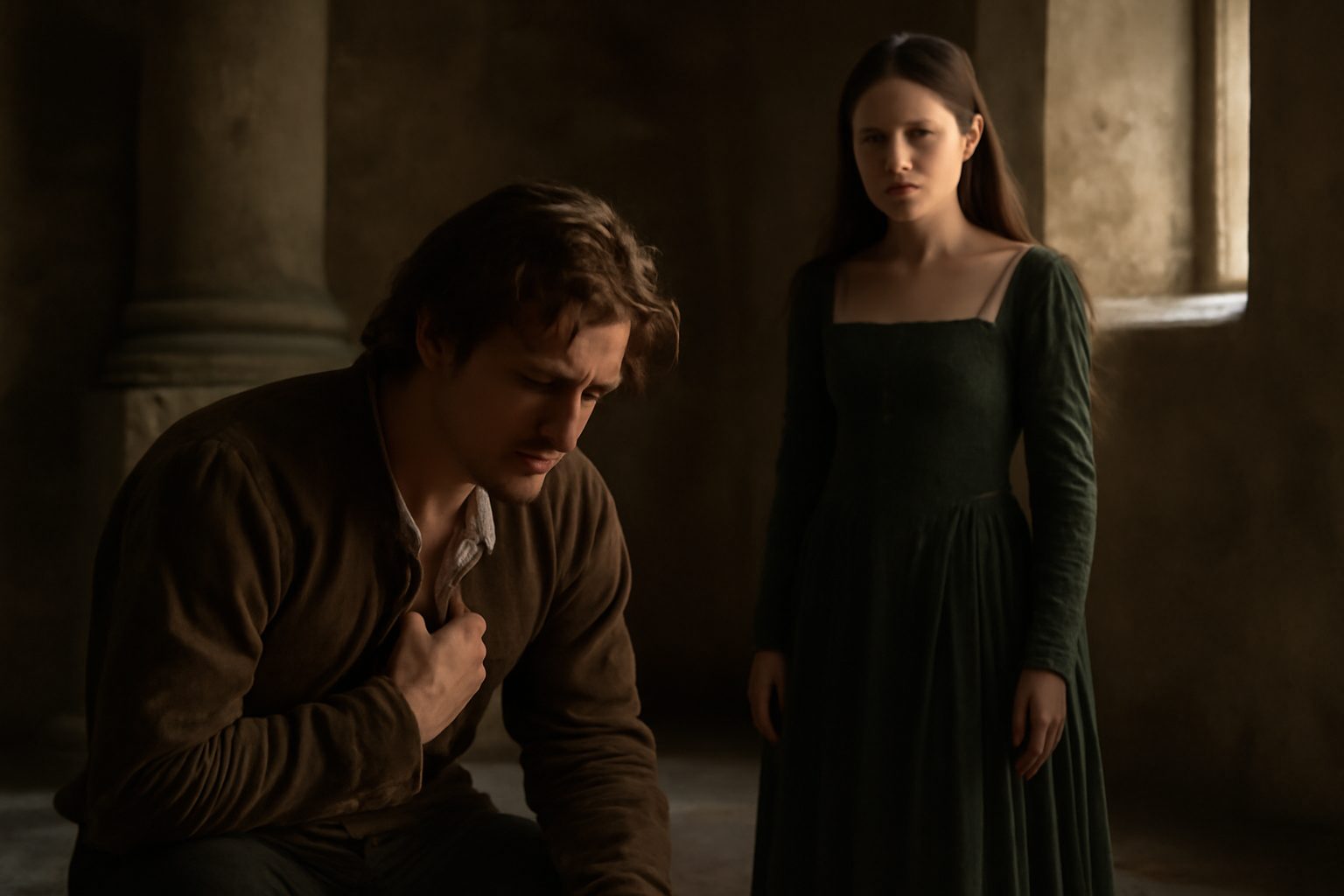
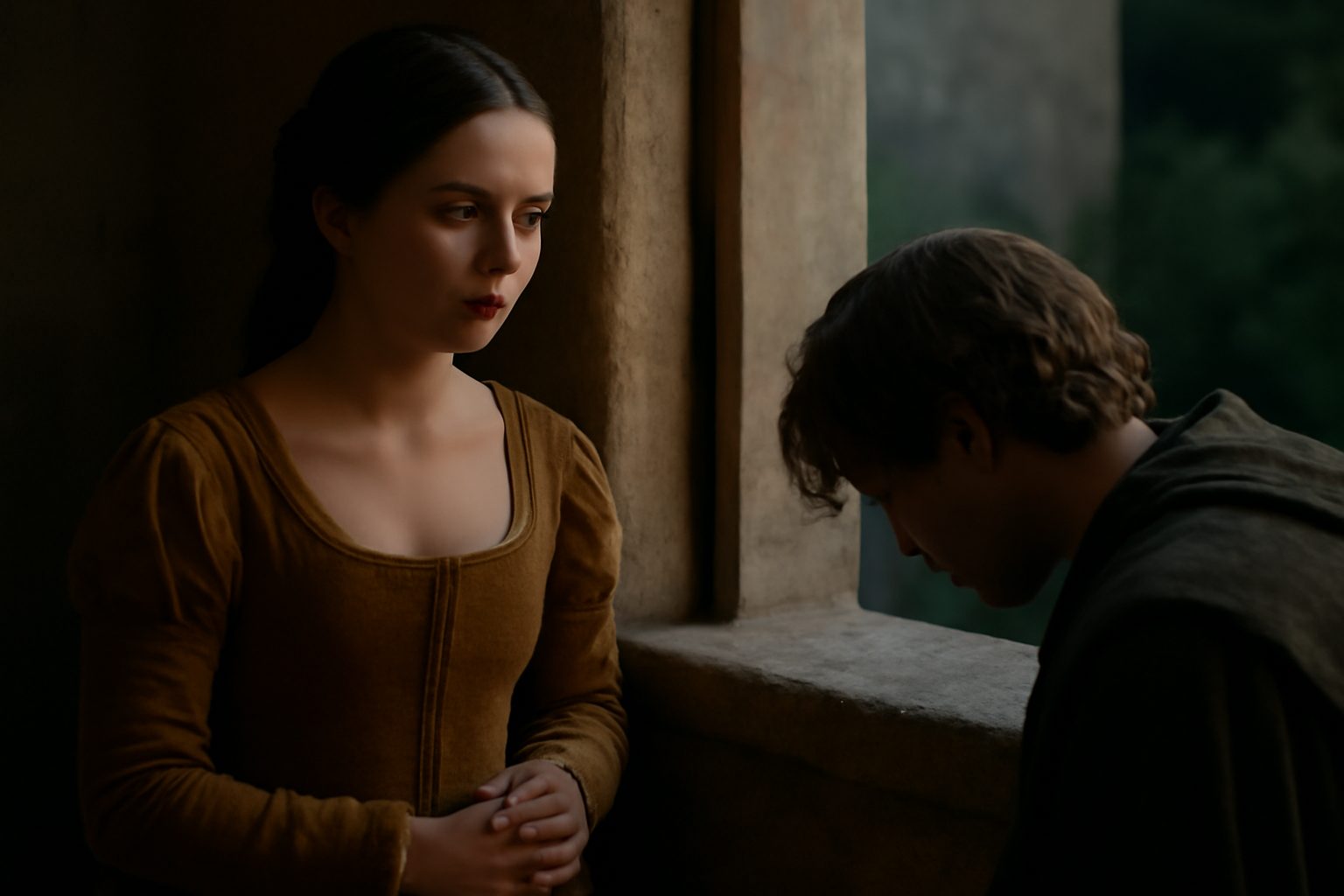
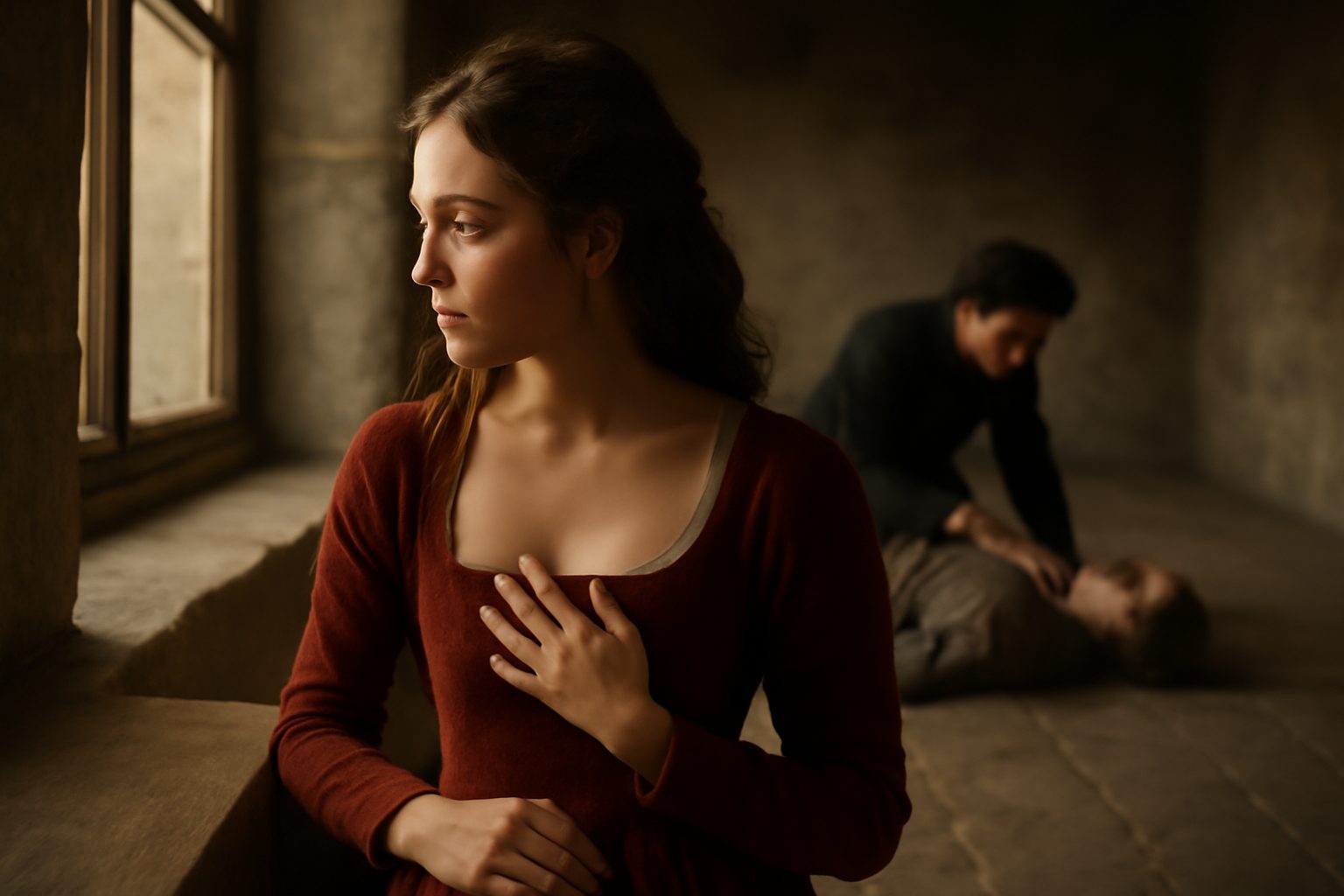
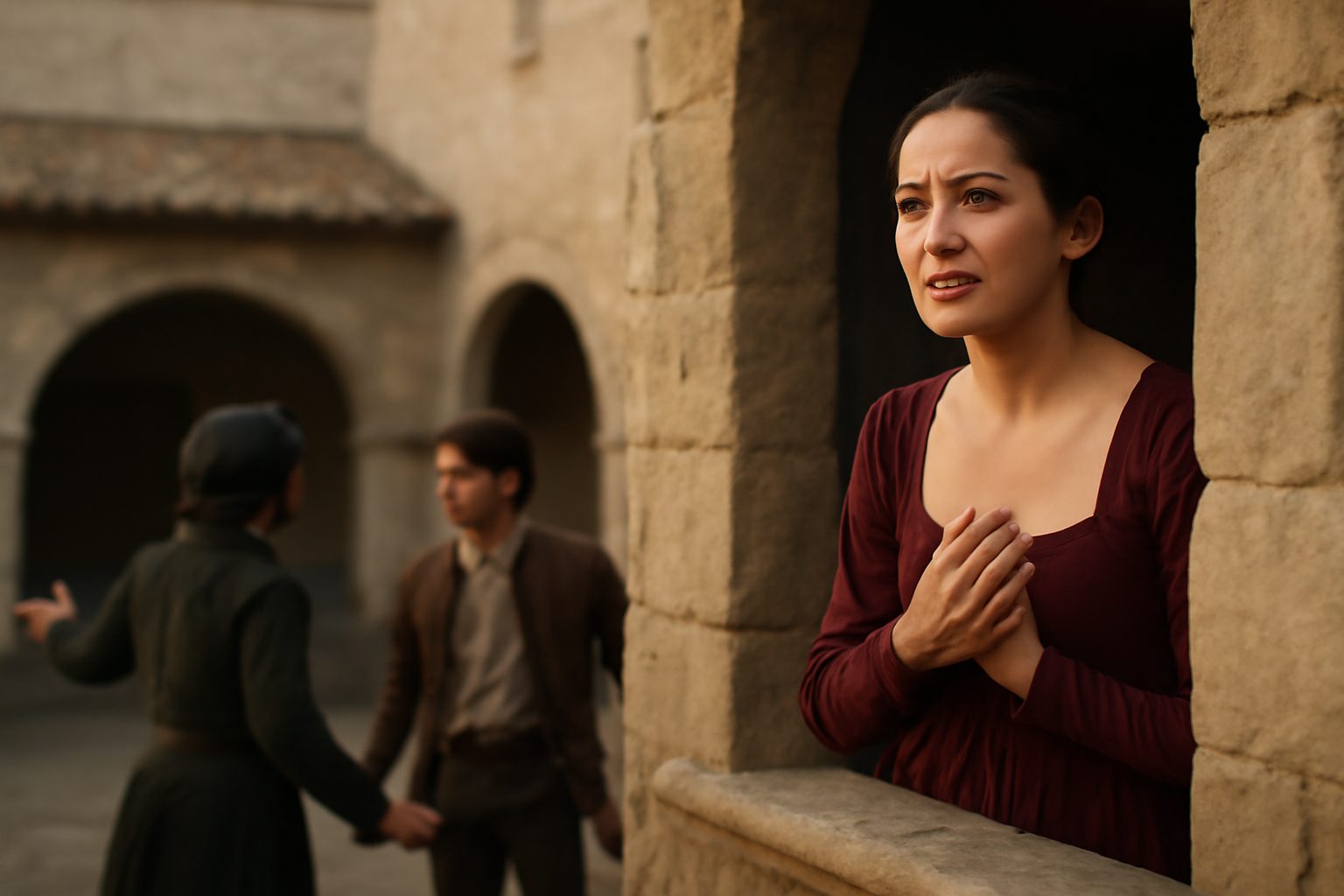
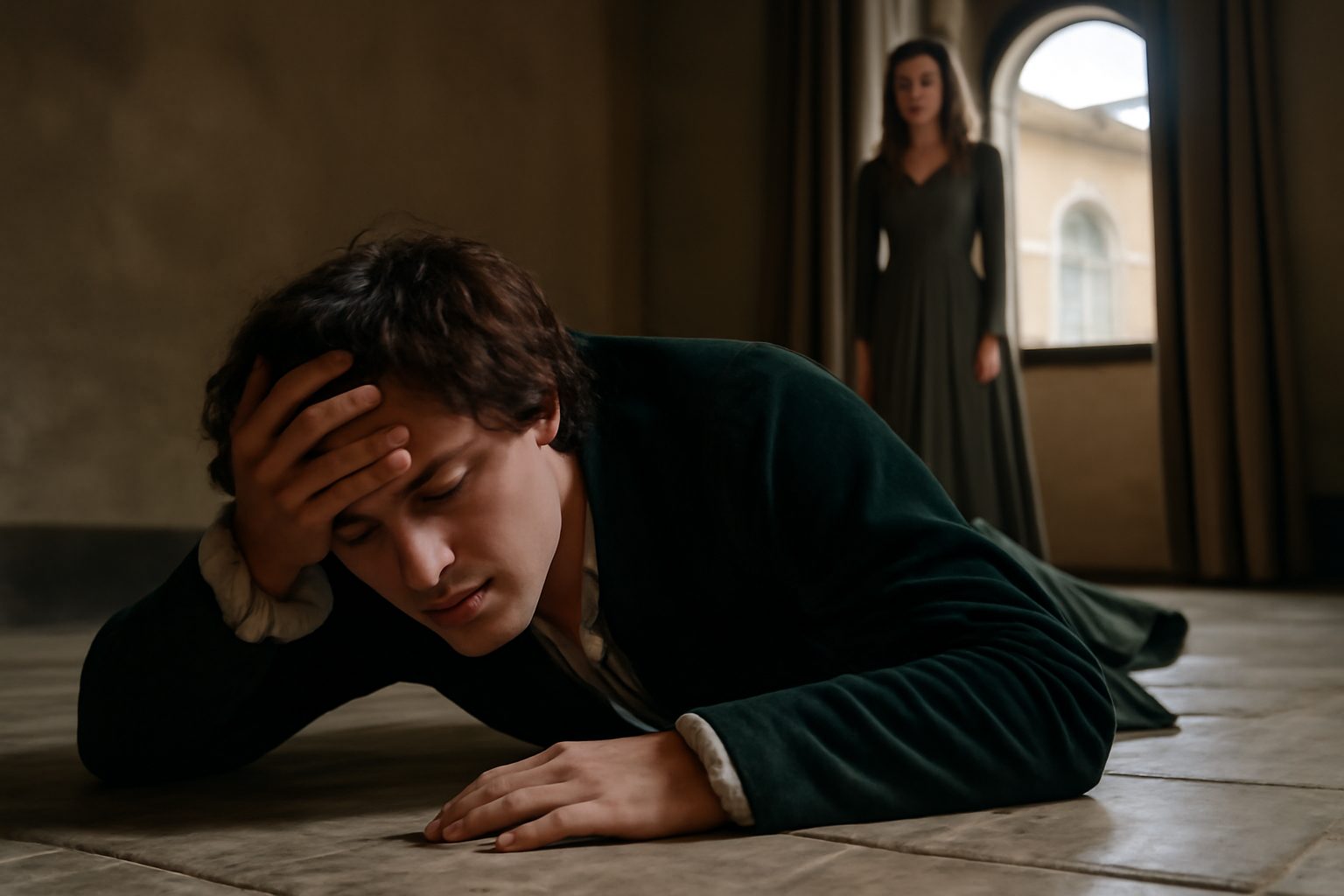
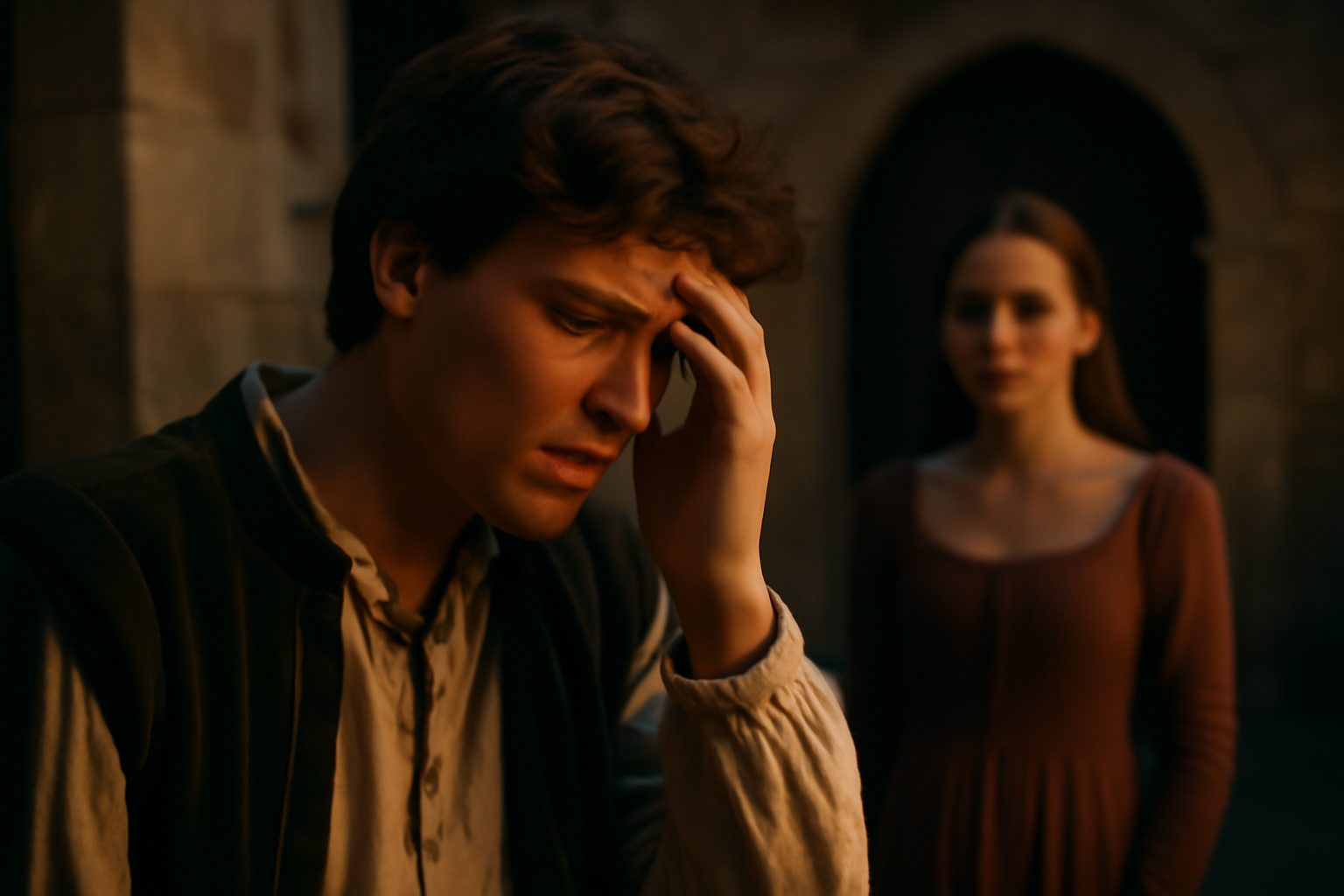
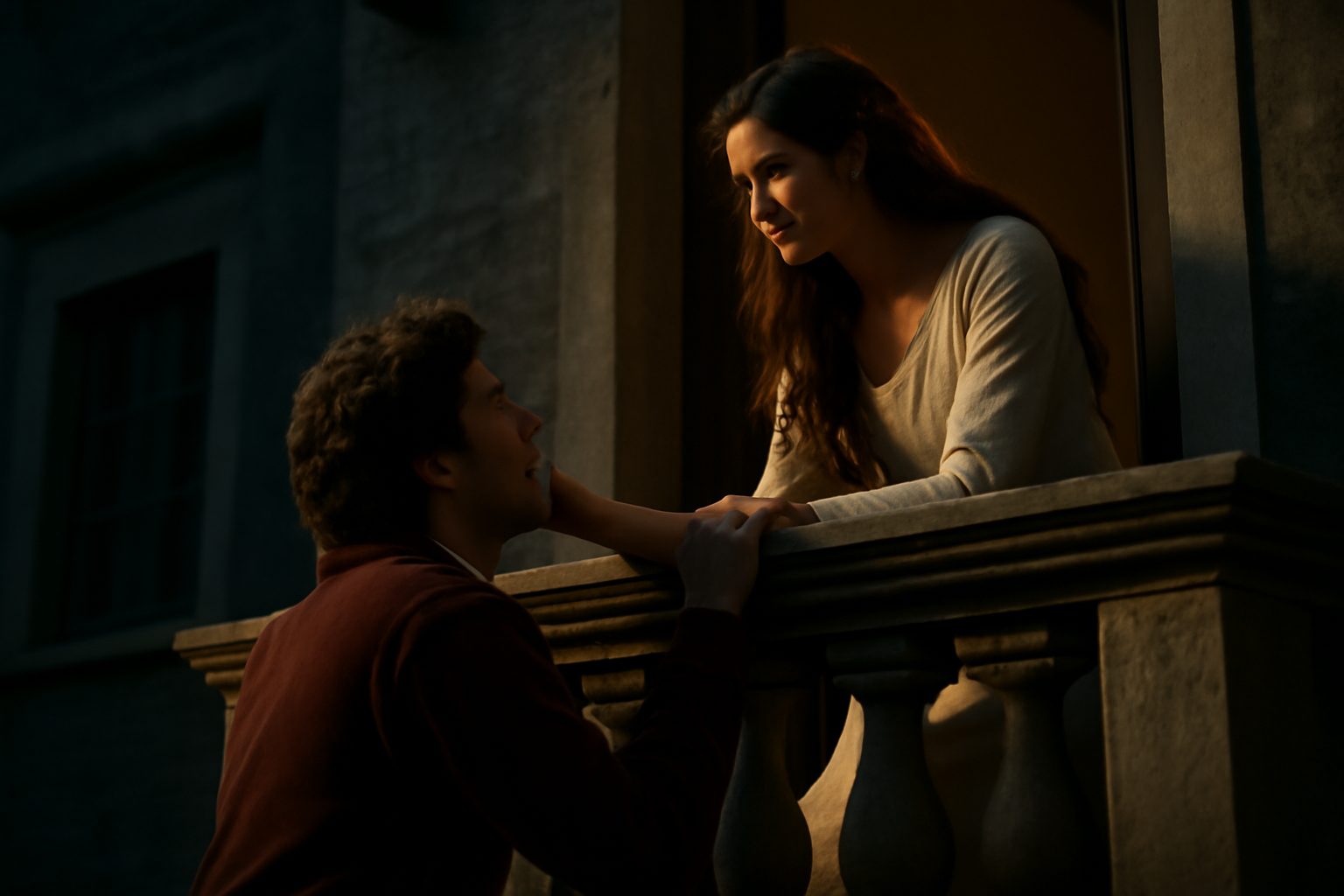
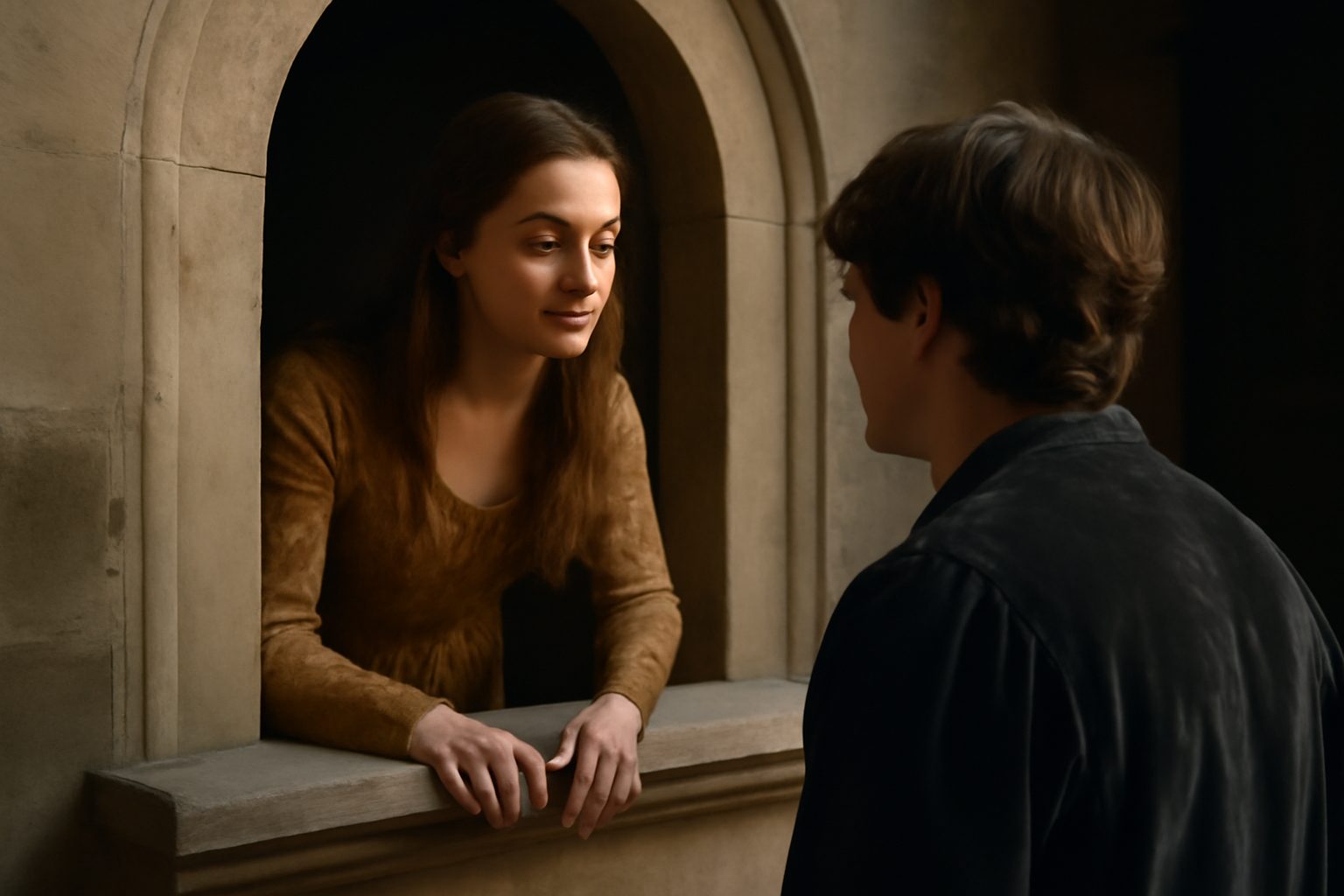
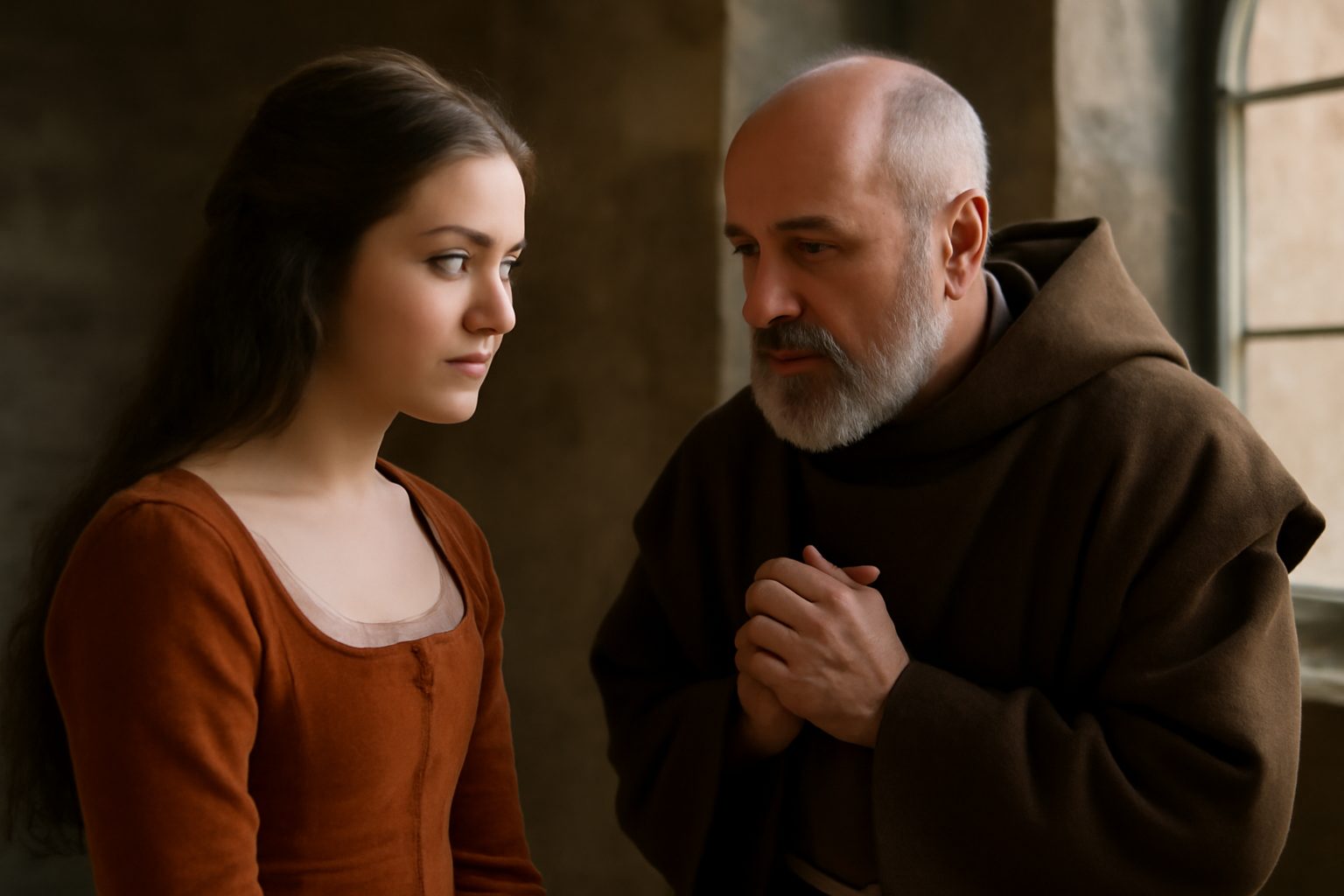
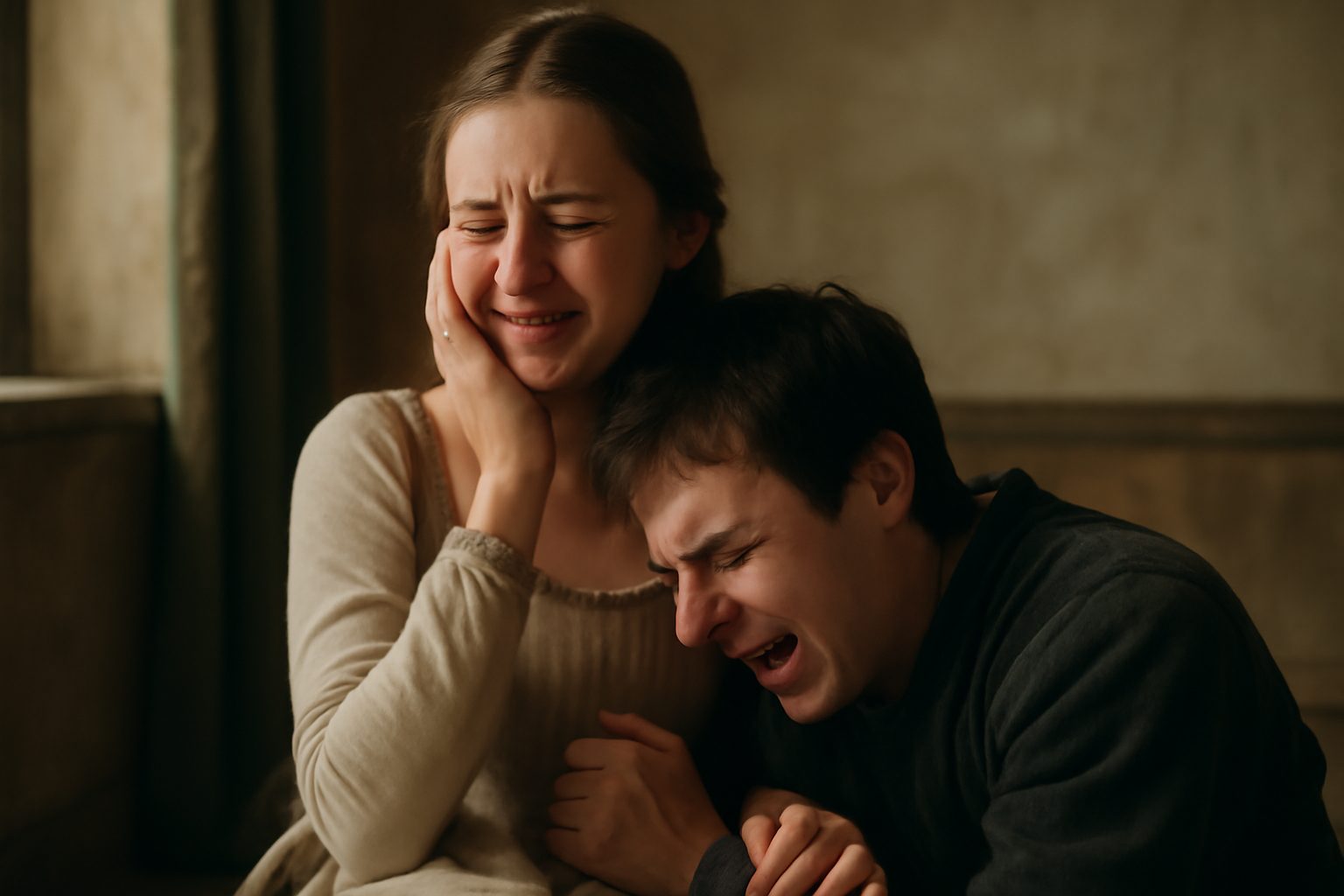
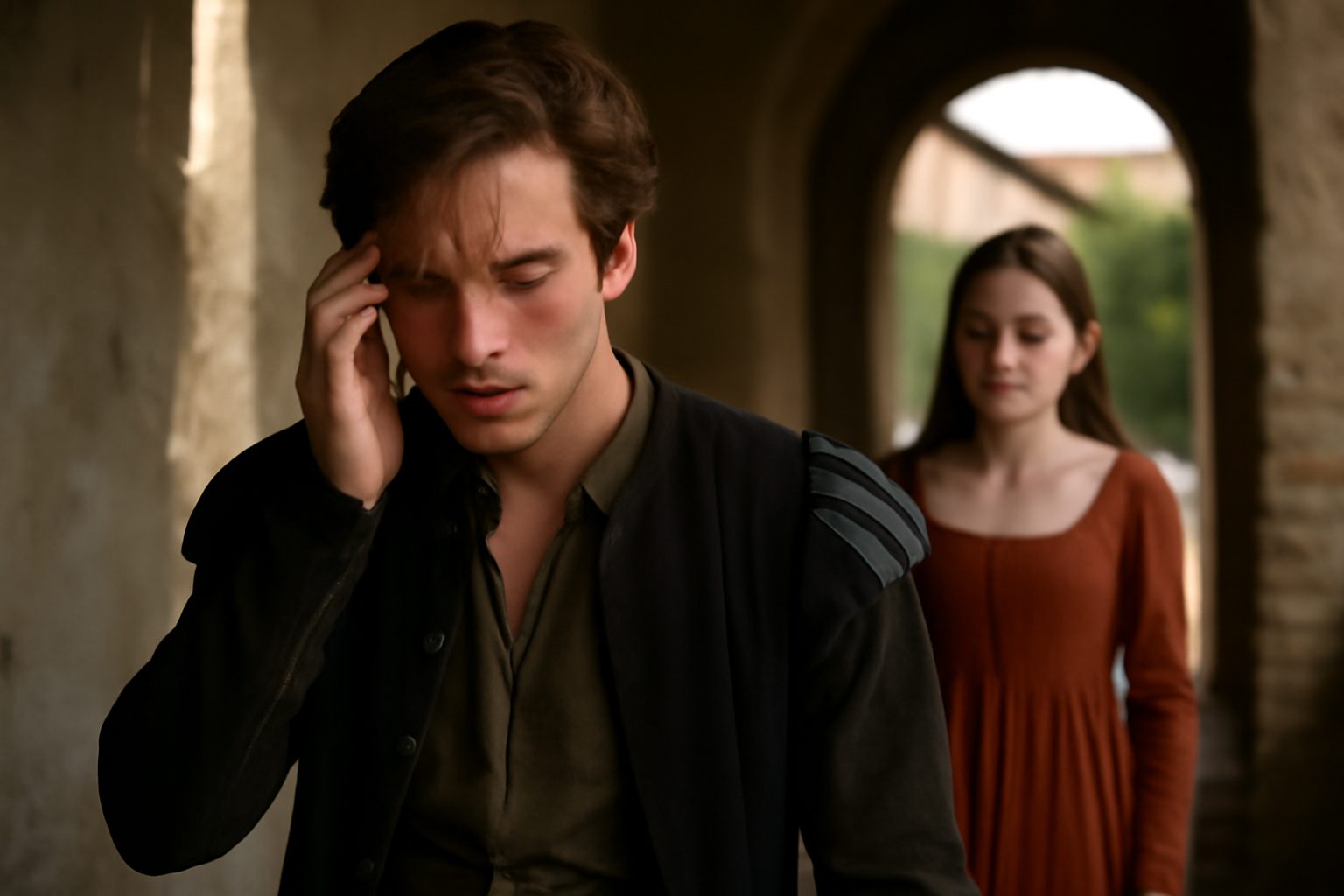
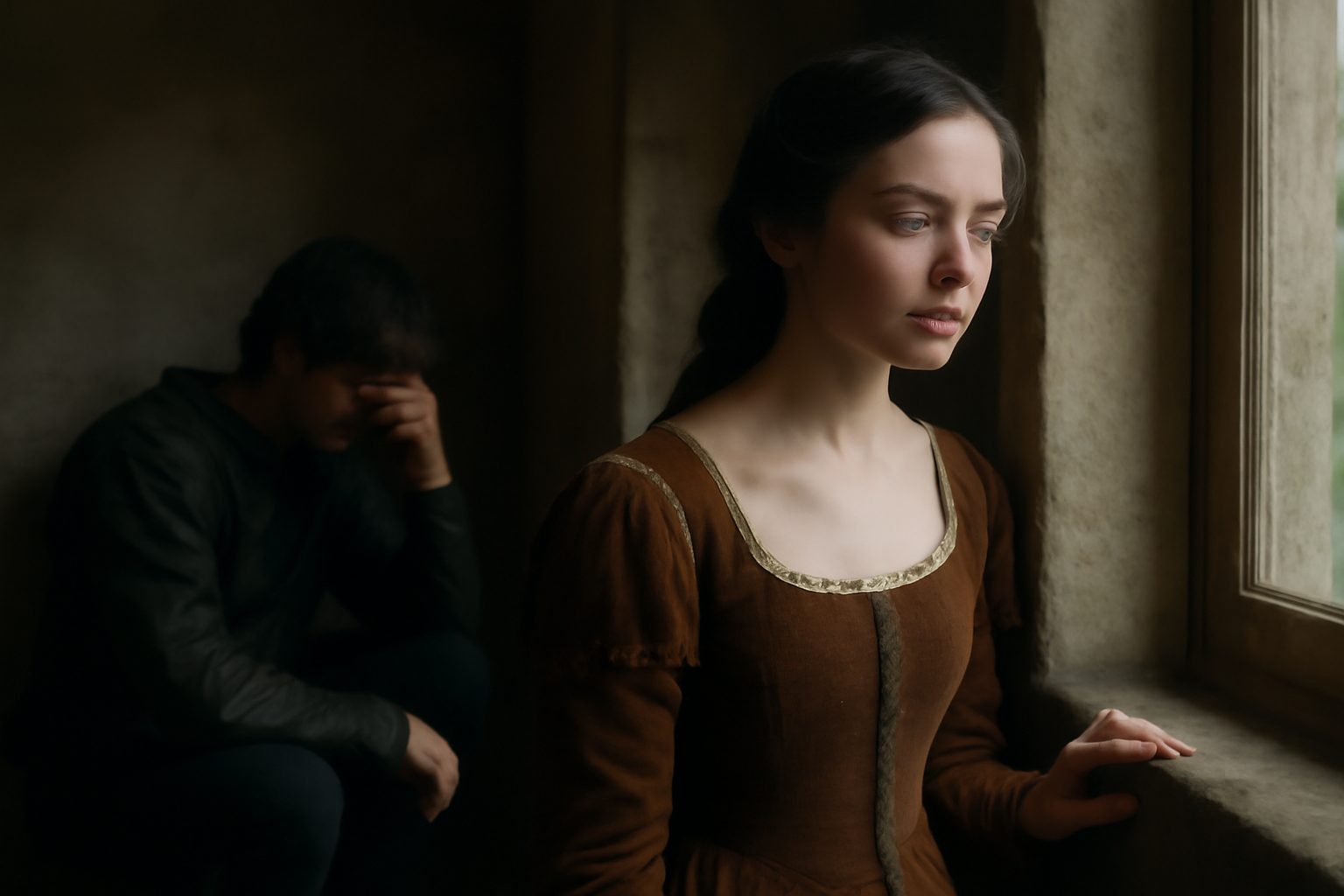
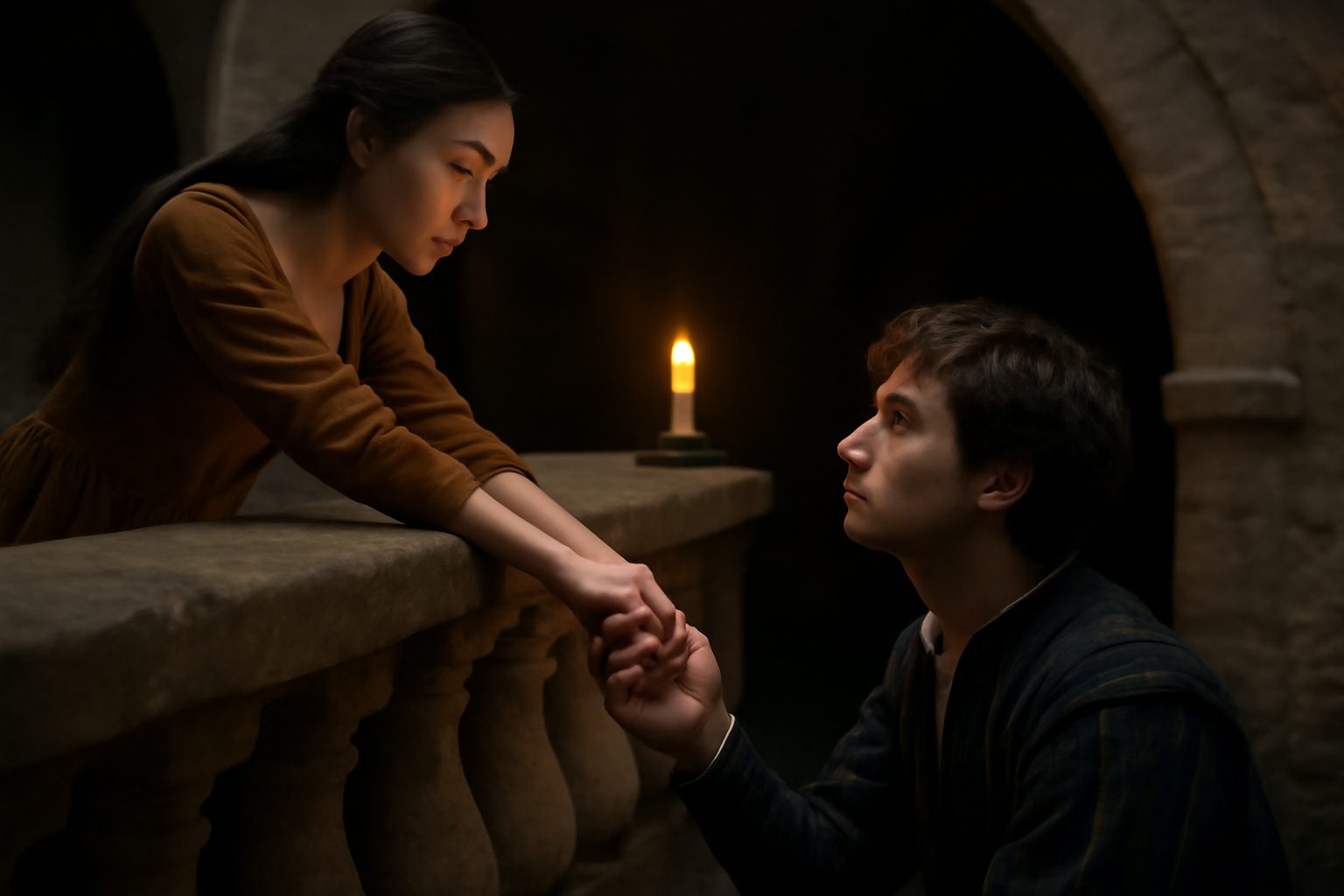
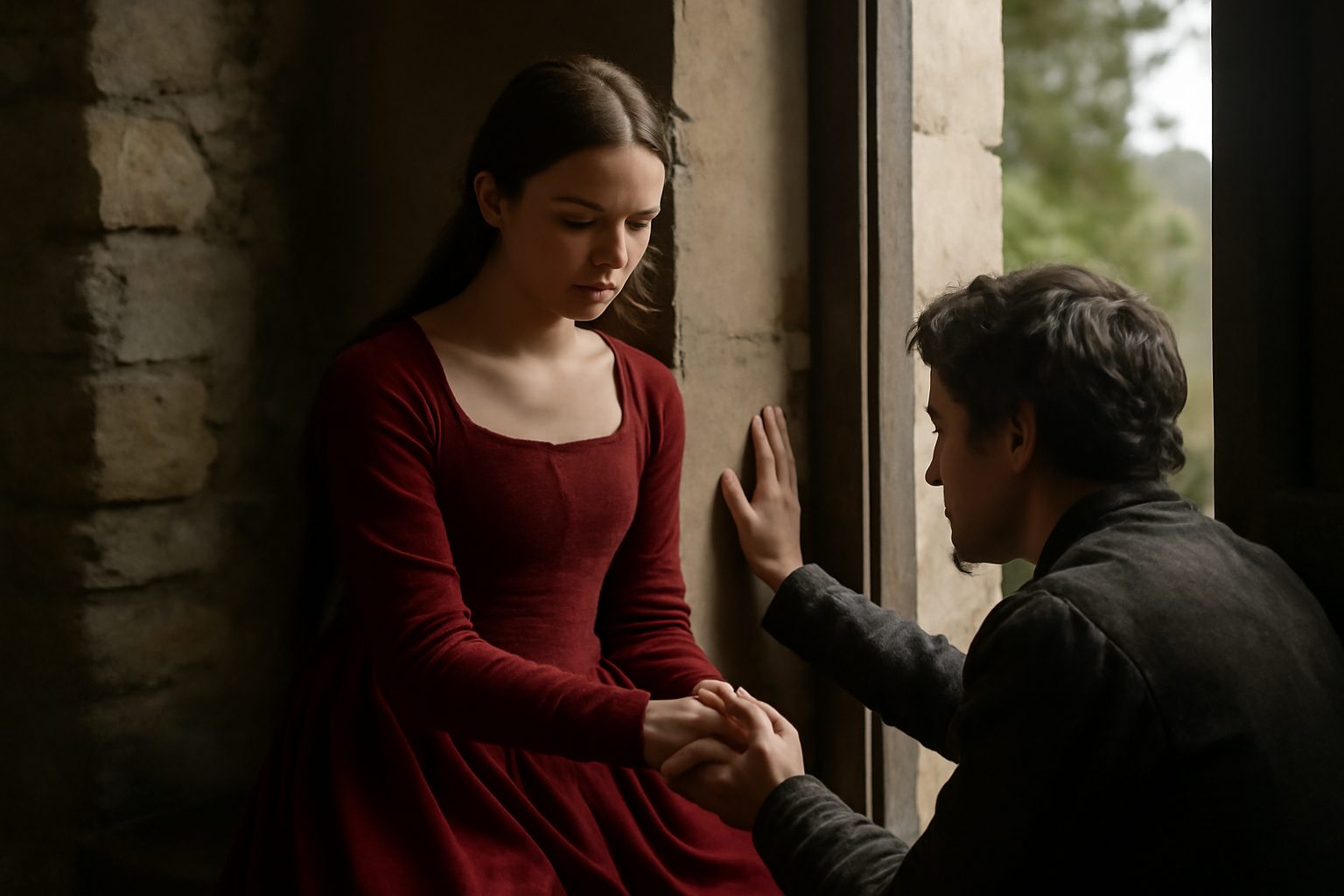
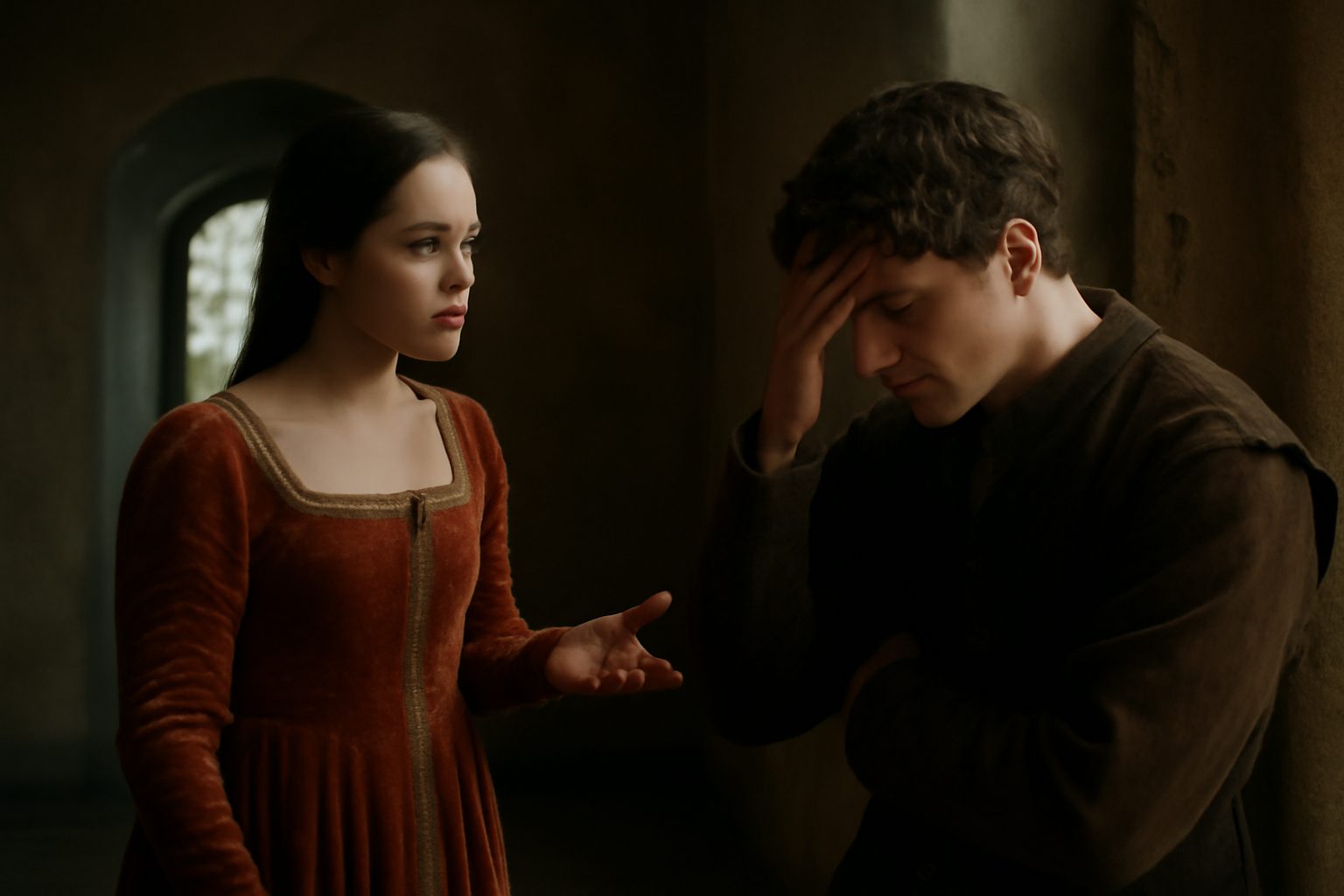
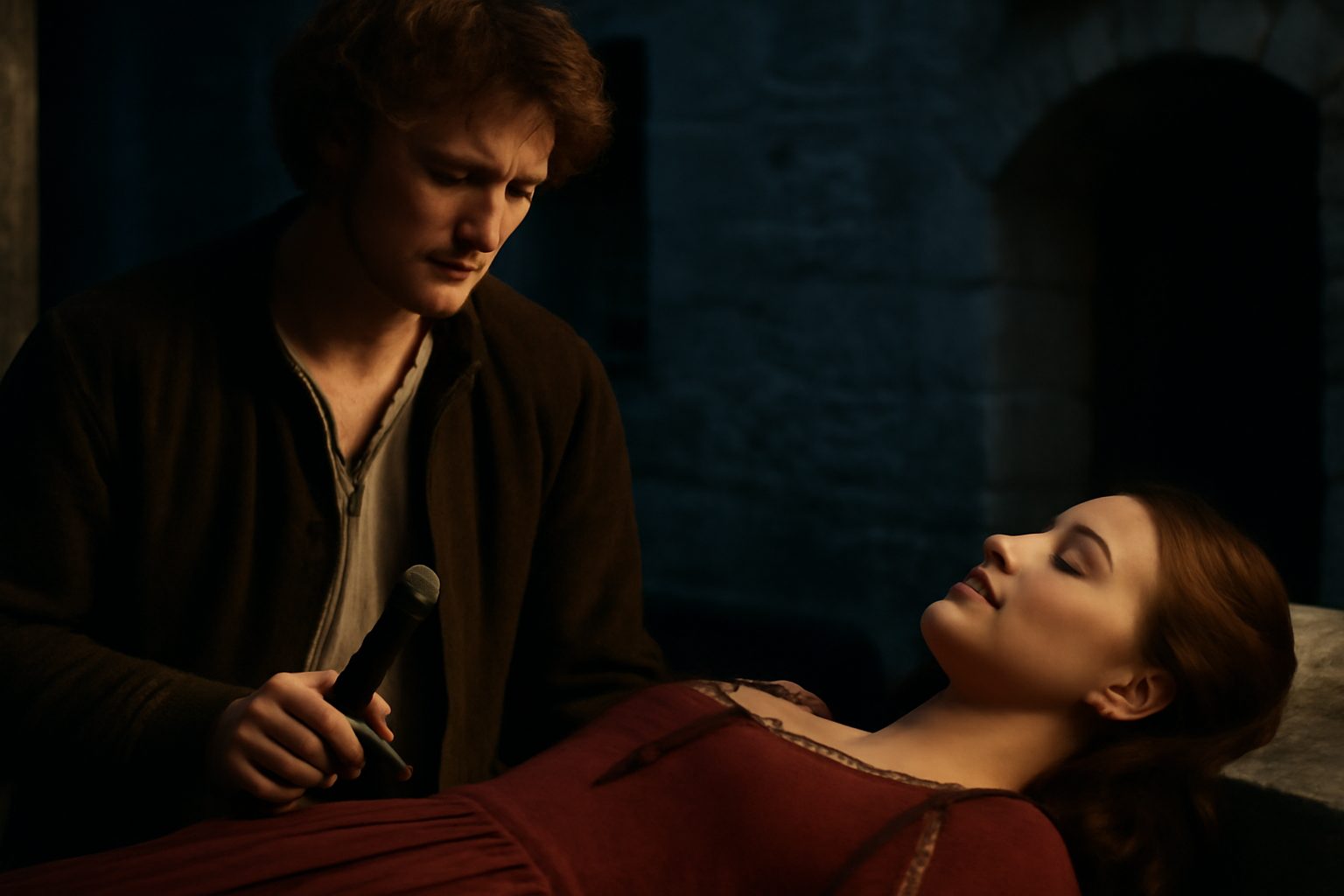
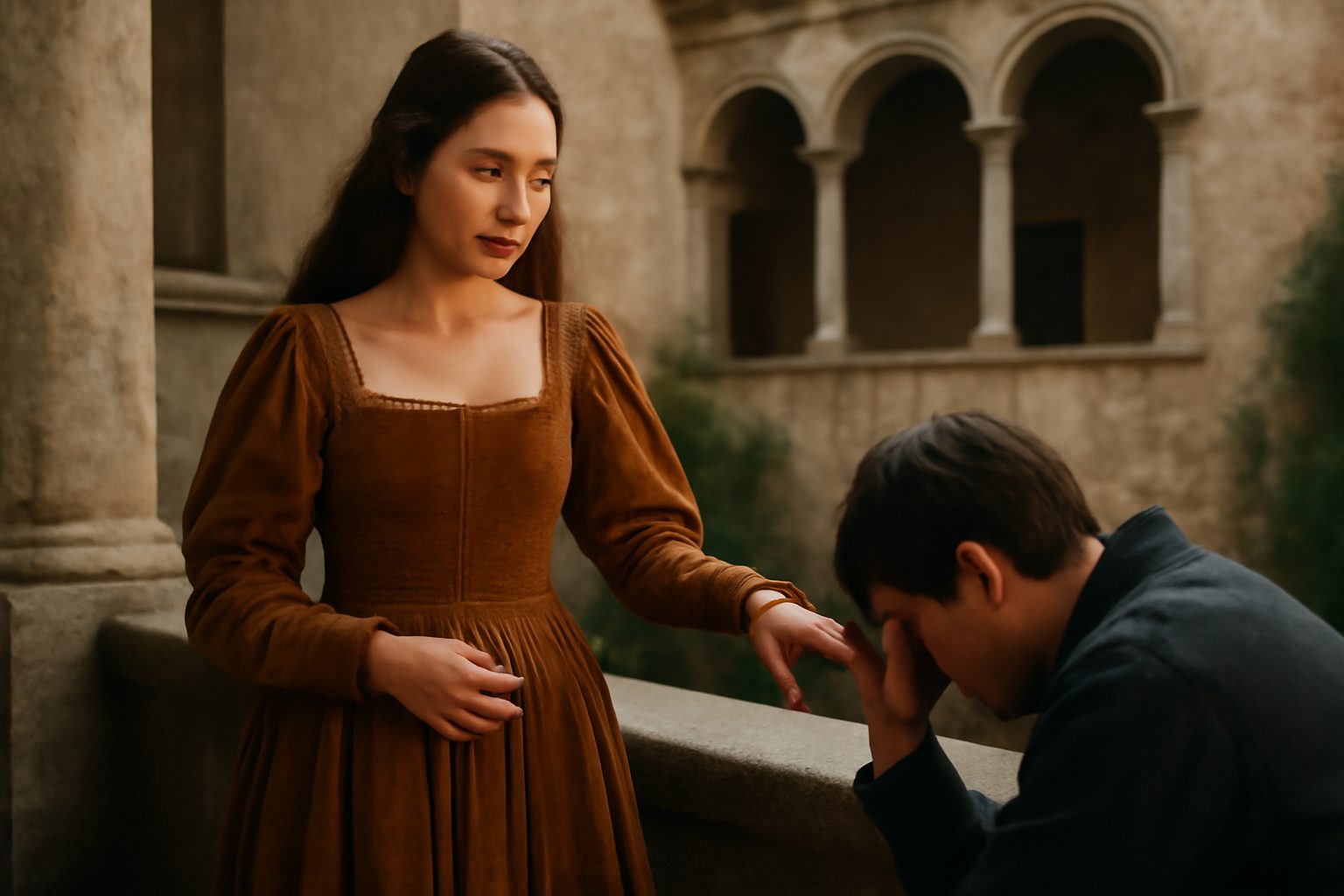
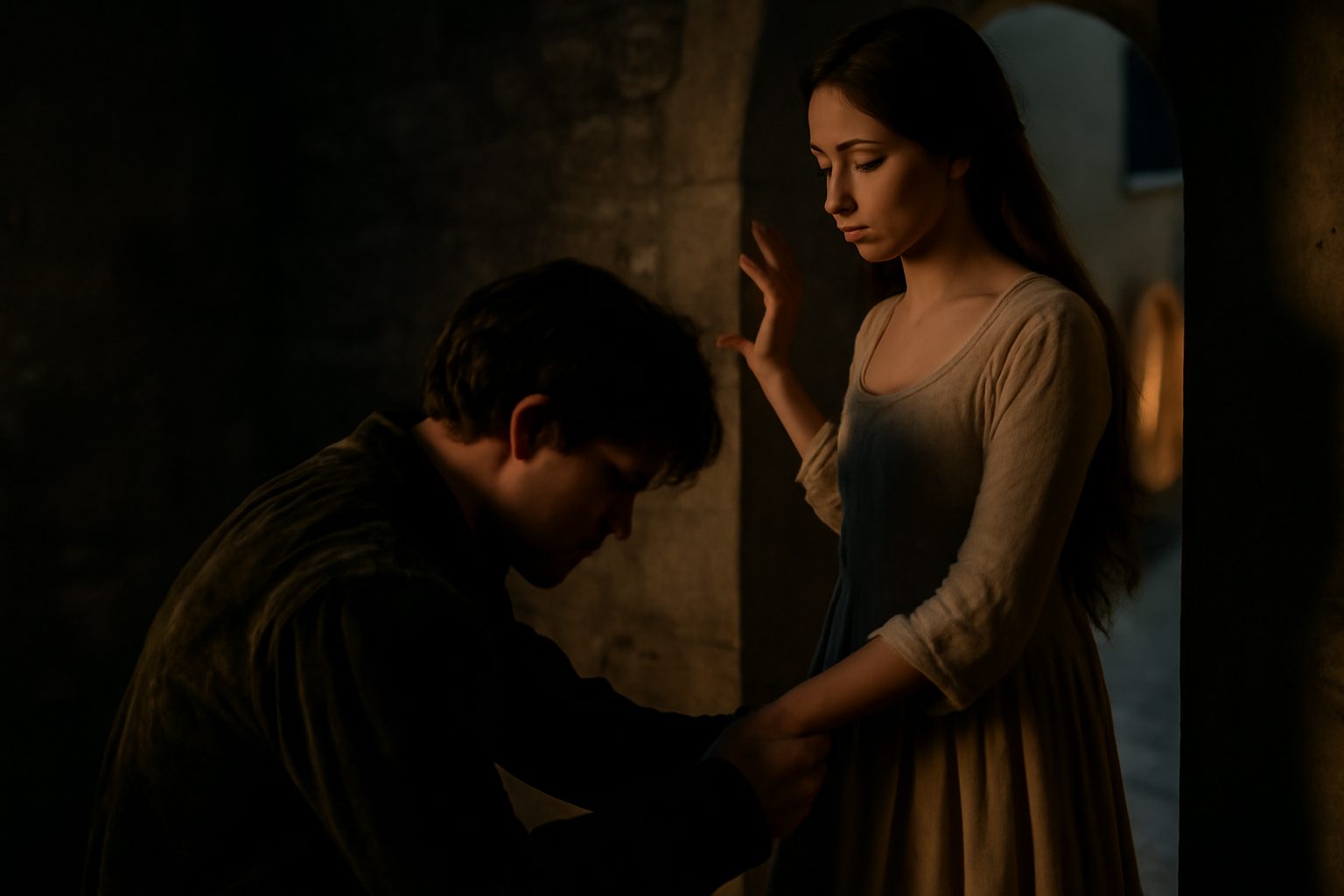
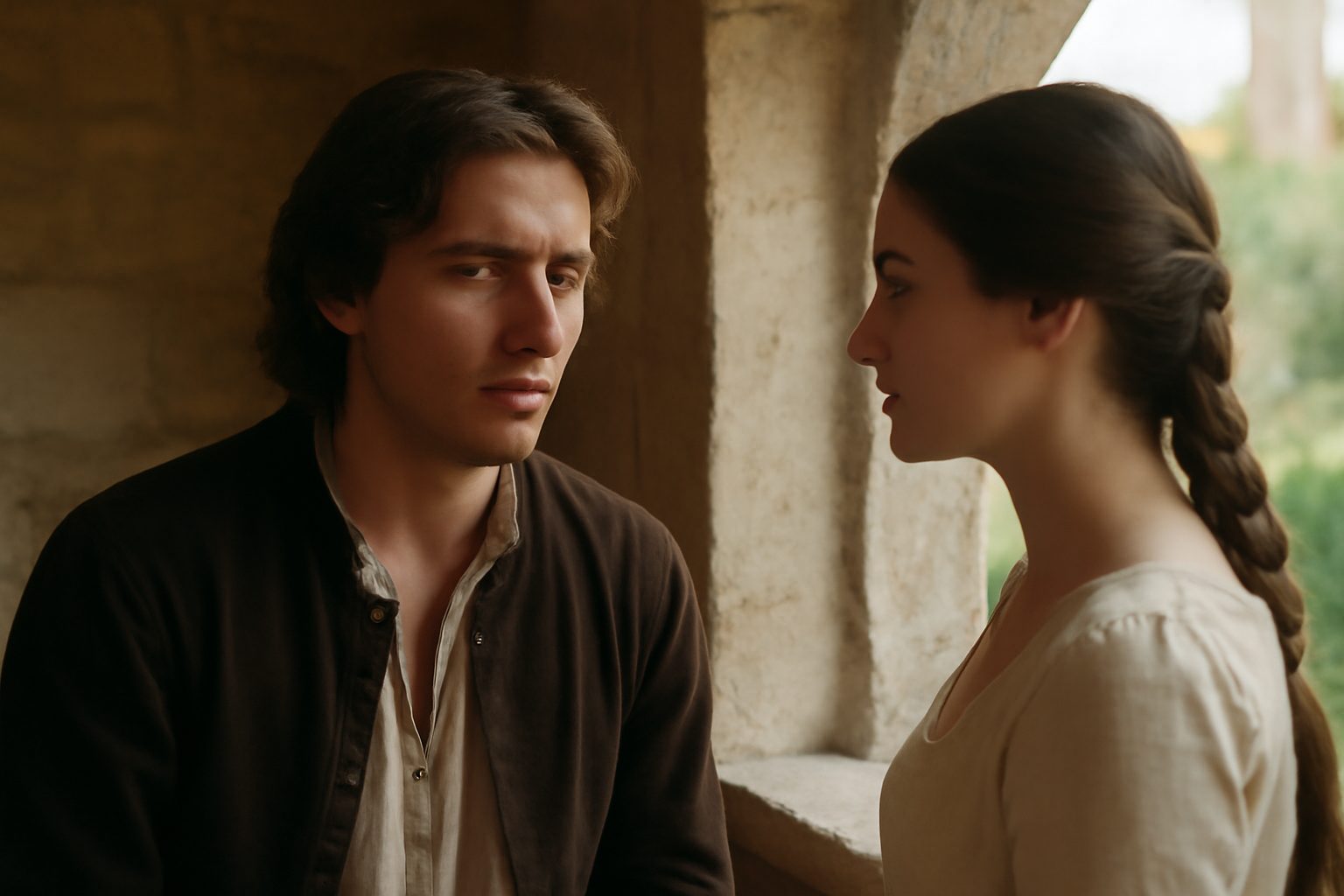
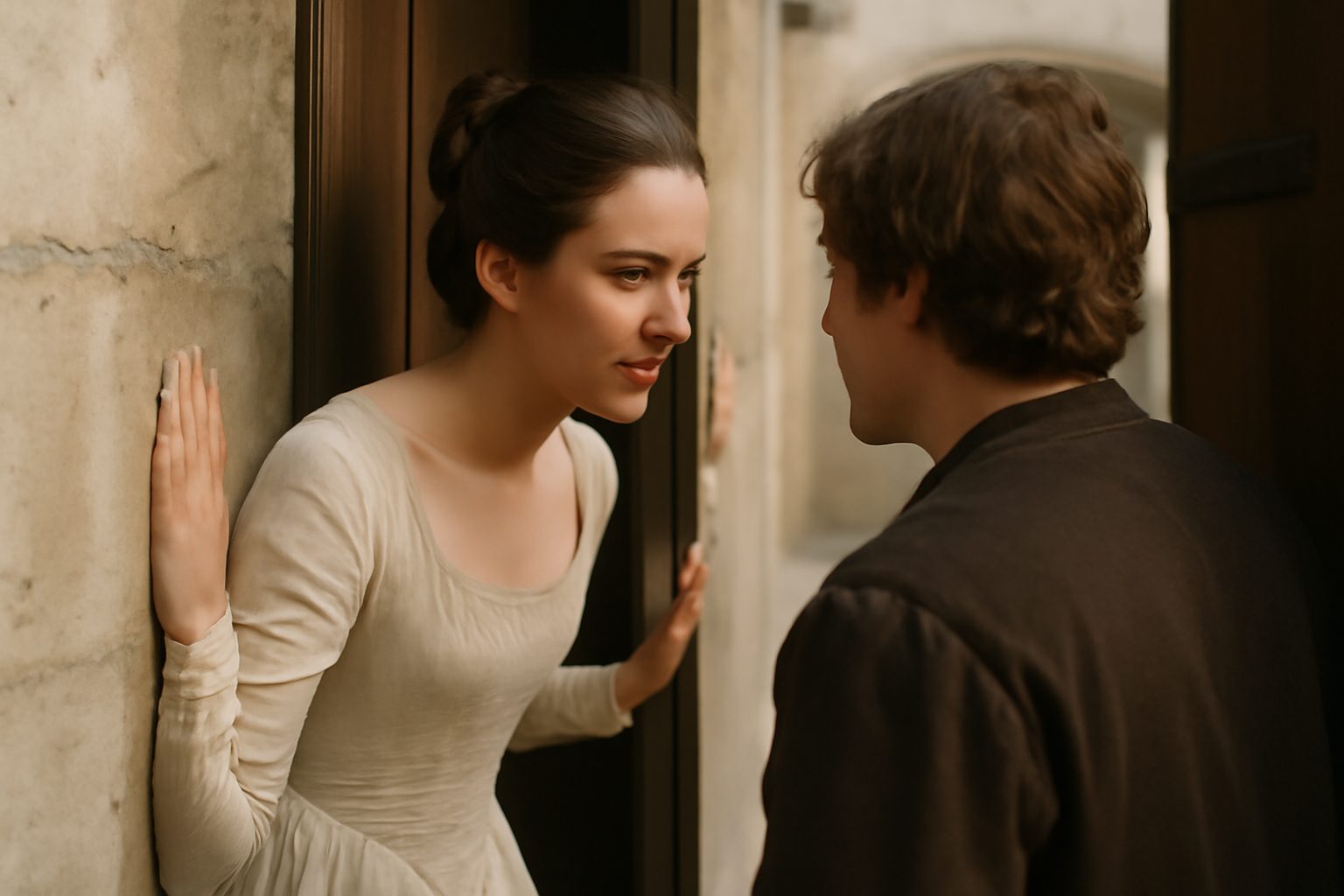
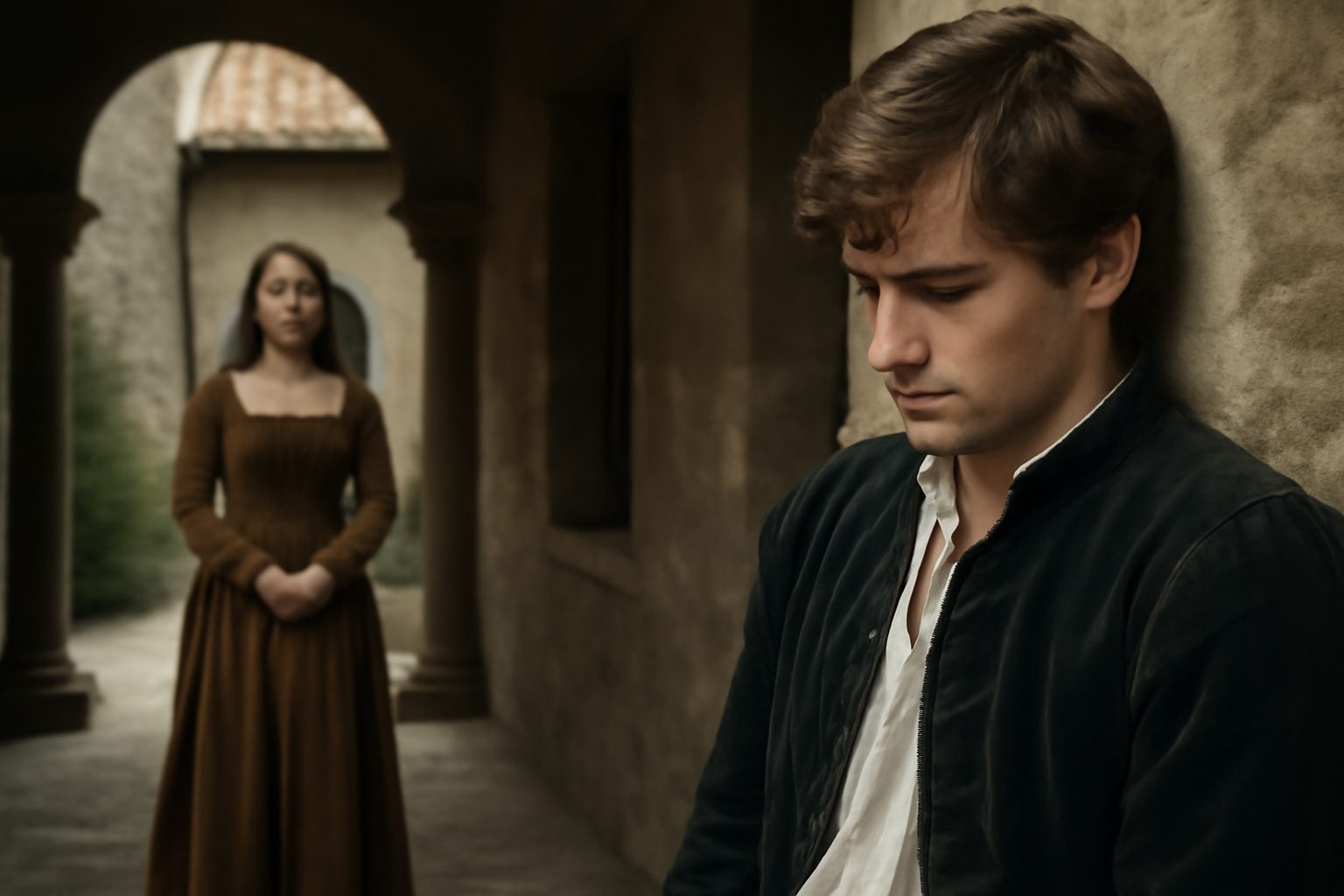
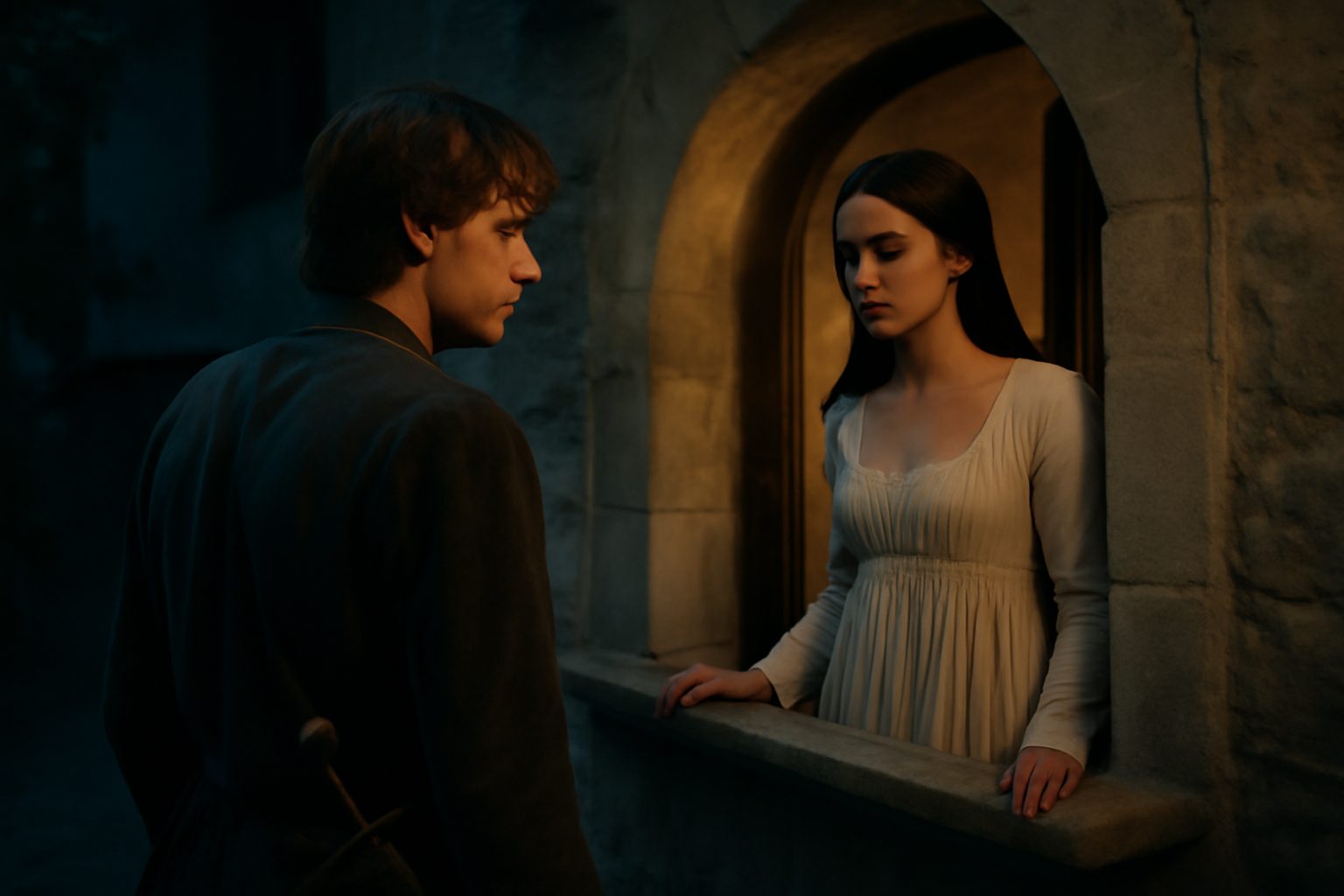
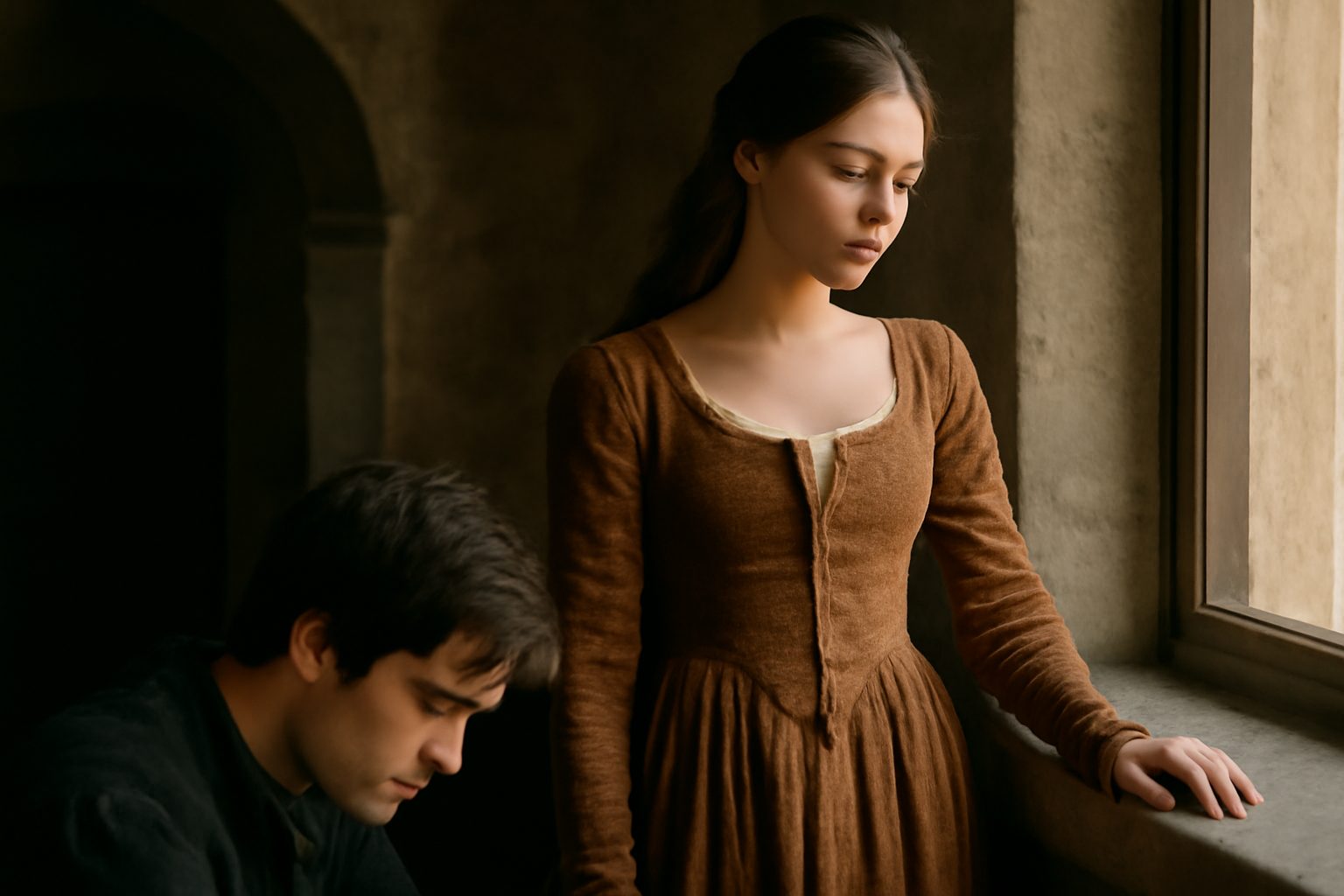
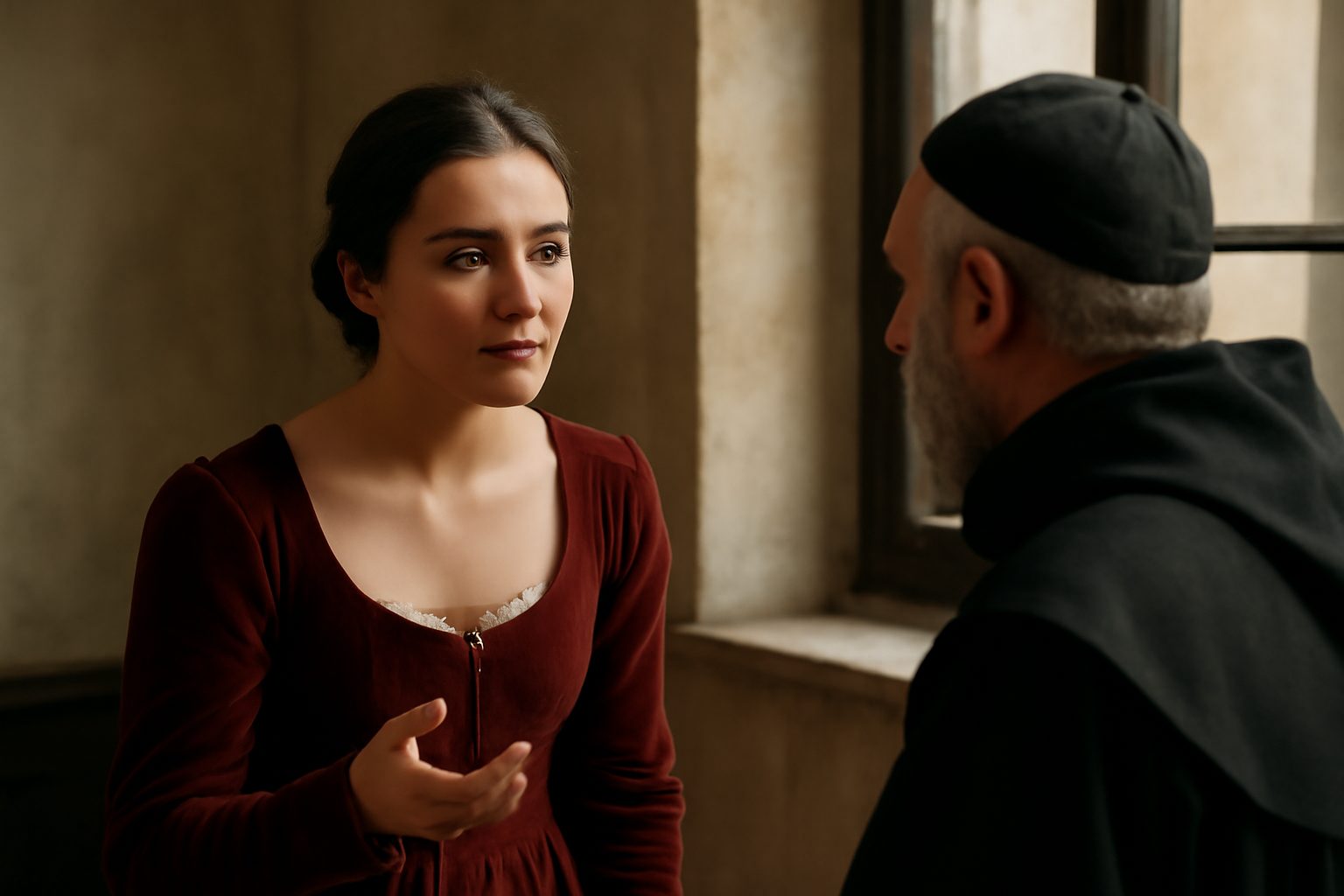
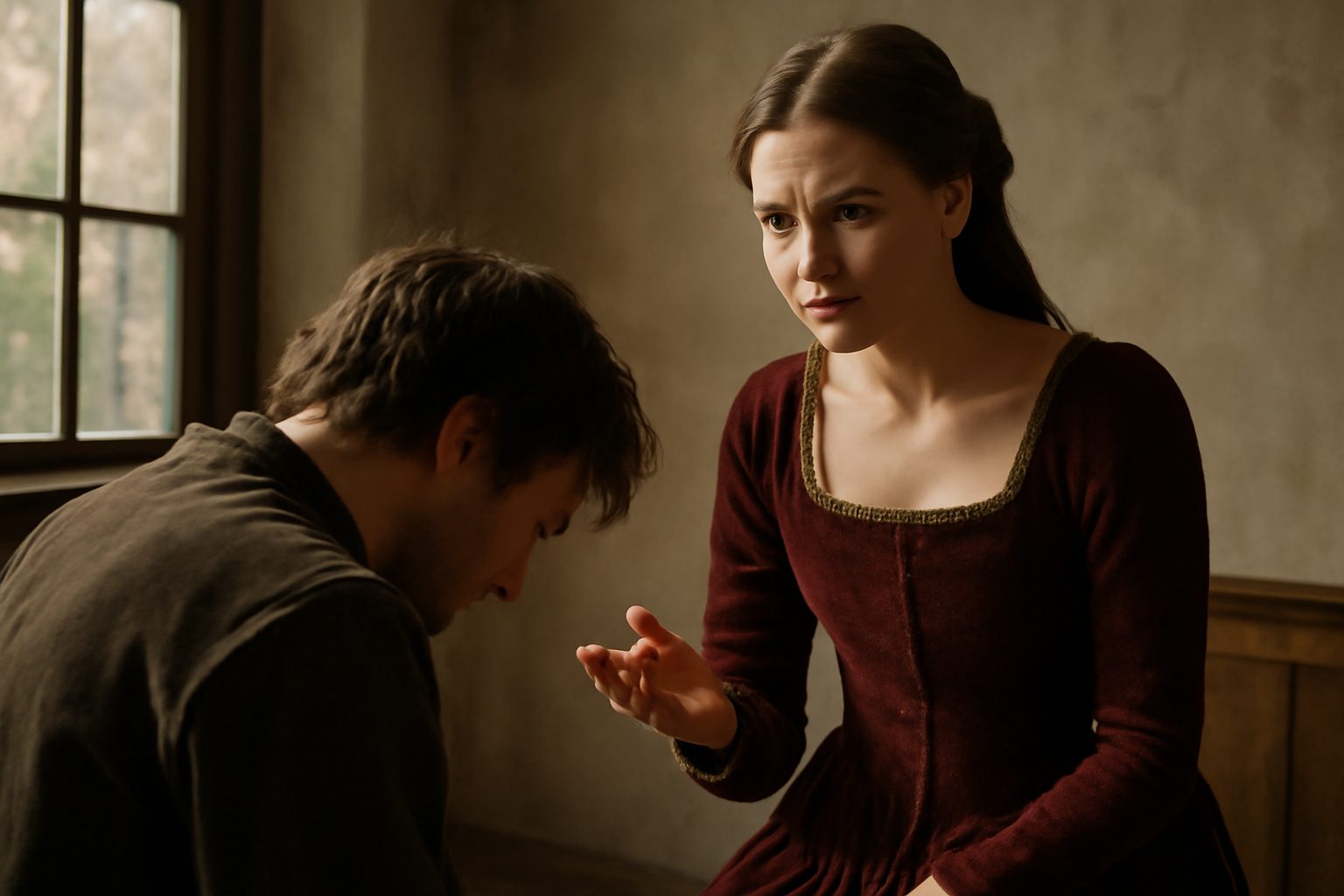
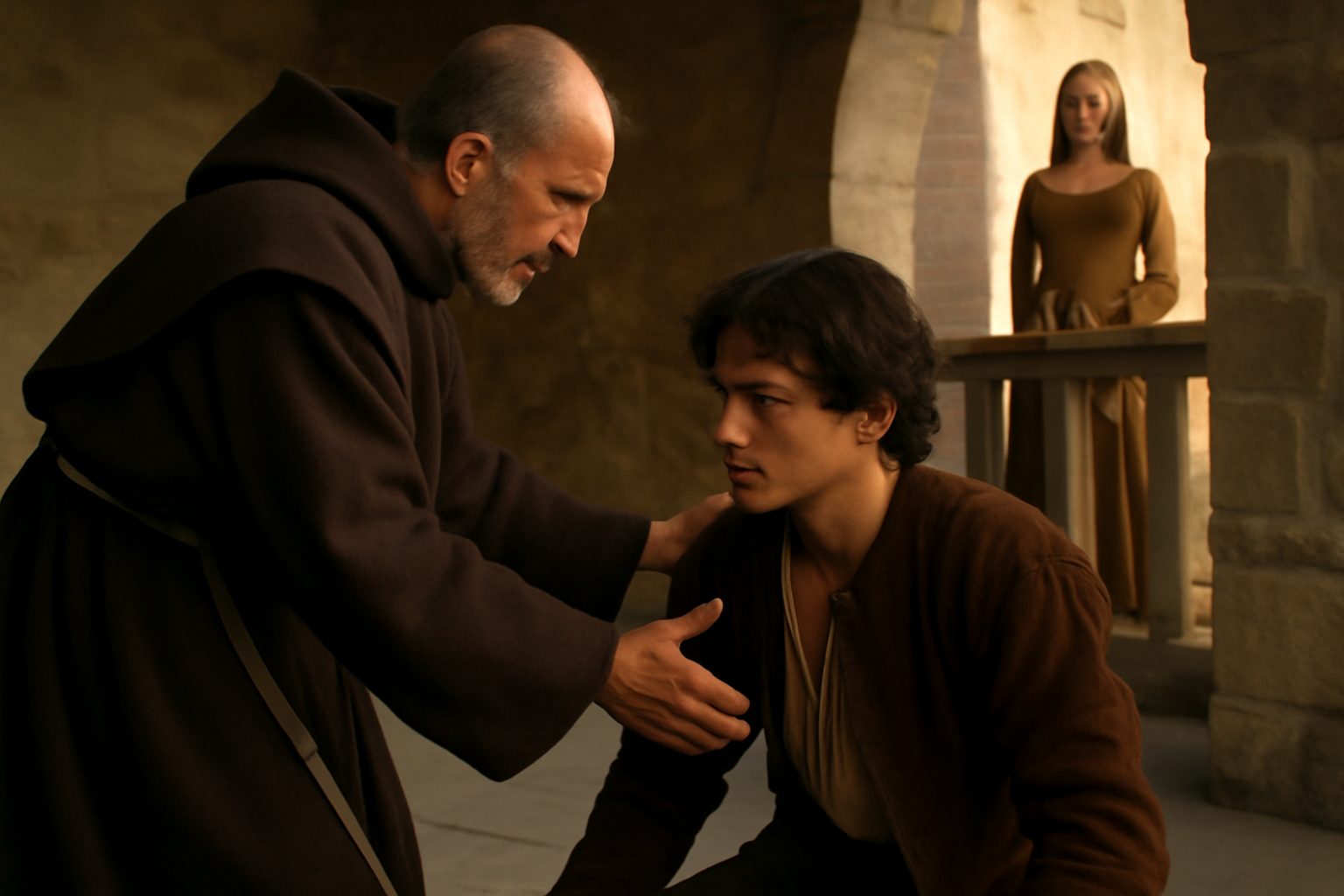
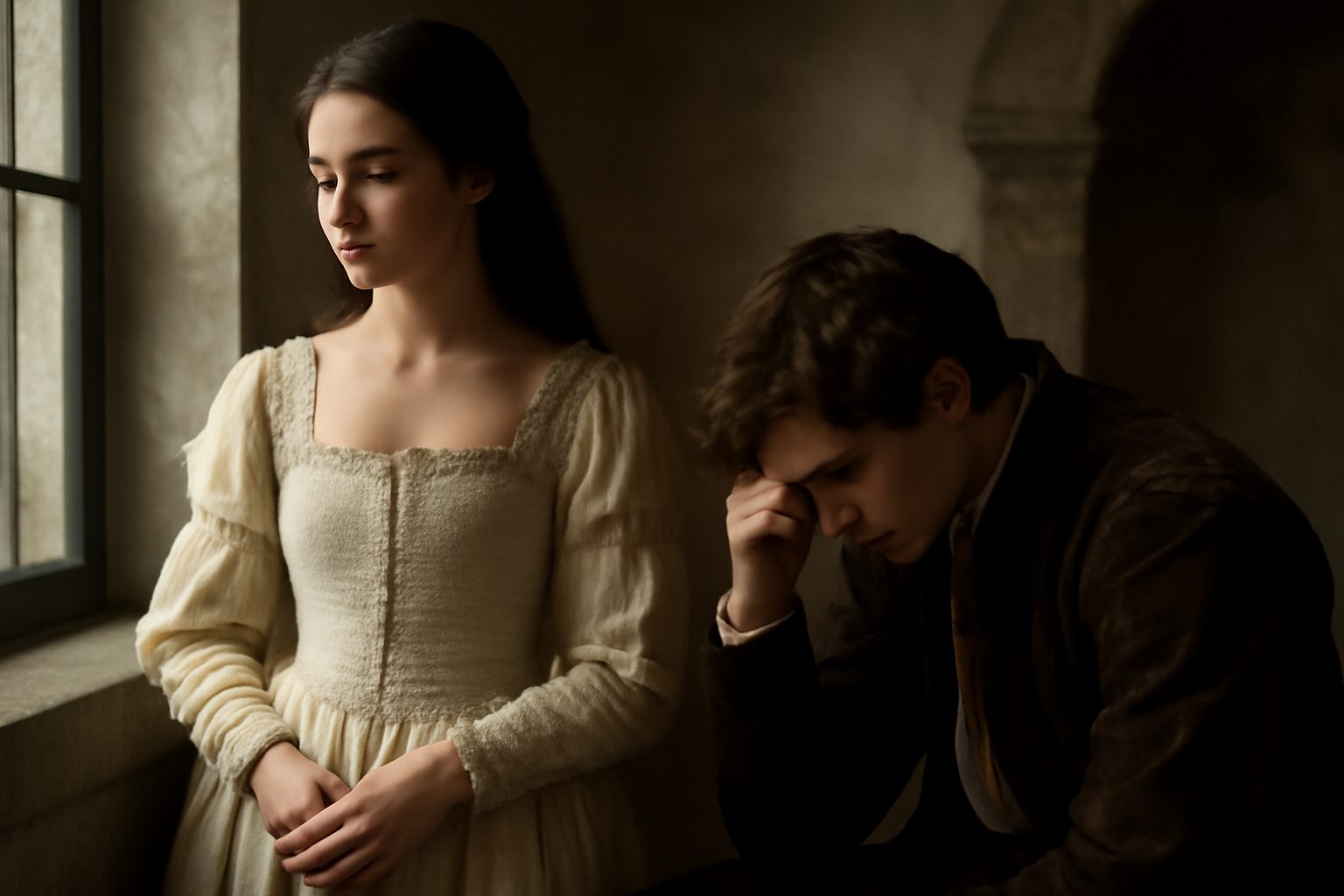
In Act 3, Scene 3 of Romeo and Juliet, Romeo has just killed Tybalt in a fit of rage after Tybalt slain Mercutio. Fleeing to Friar Laurence's cell, Romeo is overwhelmed with guilt and despair, learning that Prince Escalus has banished him from Verona. This line captures his anguished realization that his actions have not only doomed his future with Juliet but also led to the death of her kinsman.
Romeo: "Murder'd her kinsman. O, tell me, friar, tell me,"
In modern day english, we would say:
Romeo is distraught and begging the friar for answers after killing Juliet’s cousin.
Frequently Asked Questions
What is Romeo upset about in this line?
Romeo is upset because he killed Juliet's cousin, Tybalt.
Connections to other verses:
Connections to "Murder'd her kinsman. O, tell me, friar, tell me"
This verse, spoken by Romeo, expresses his anguish and guilt over killing Tybalt, Juliet's cousin. It connects thematically and emotionally to several other lines in the scene.
Guilt and Self-Reproach
Romeo's despair is echoed in "Now I have stain'd the childhood of our joy", where he laments tarnishing his new marriage. His self-loathing is further emphasized in "Doth my name lodge? tell me, that I may sack", as he wishes to destroy the part of himself associated with the murder.
Friar Laurence's Counsel
The Friar's responses provide a counterpoint to Romeo's turmoil. In "Hast thou slain Tybalt? wilt thou slay thyself?", he challenges Romeo's destructive mindset. He later offers practical advice in "Go, get thee to thy love, as was decreed", urging action over despair.
Juliet's Anguish
Romeo's concern for Juliet's reaction is reflected in the Nurse's description of her distress: "O, she says nothing, sir, but weeps and weeps". This mirrors Romeo's own emotional state and underscores the mutual suffering caused by his action.
Banishment and Consequences
The murder directly leads to Romeo's banishment, a fate he considers worse than death, as stated in "And world's exile is death: then banished". The Friar attempts to console him by highlighting the silver lining in "But thou slew'st Tybalt; there are thou happy too", noting that Romeo at least survived the encounter.