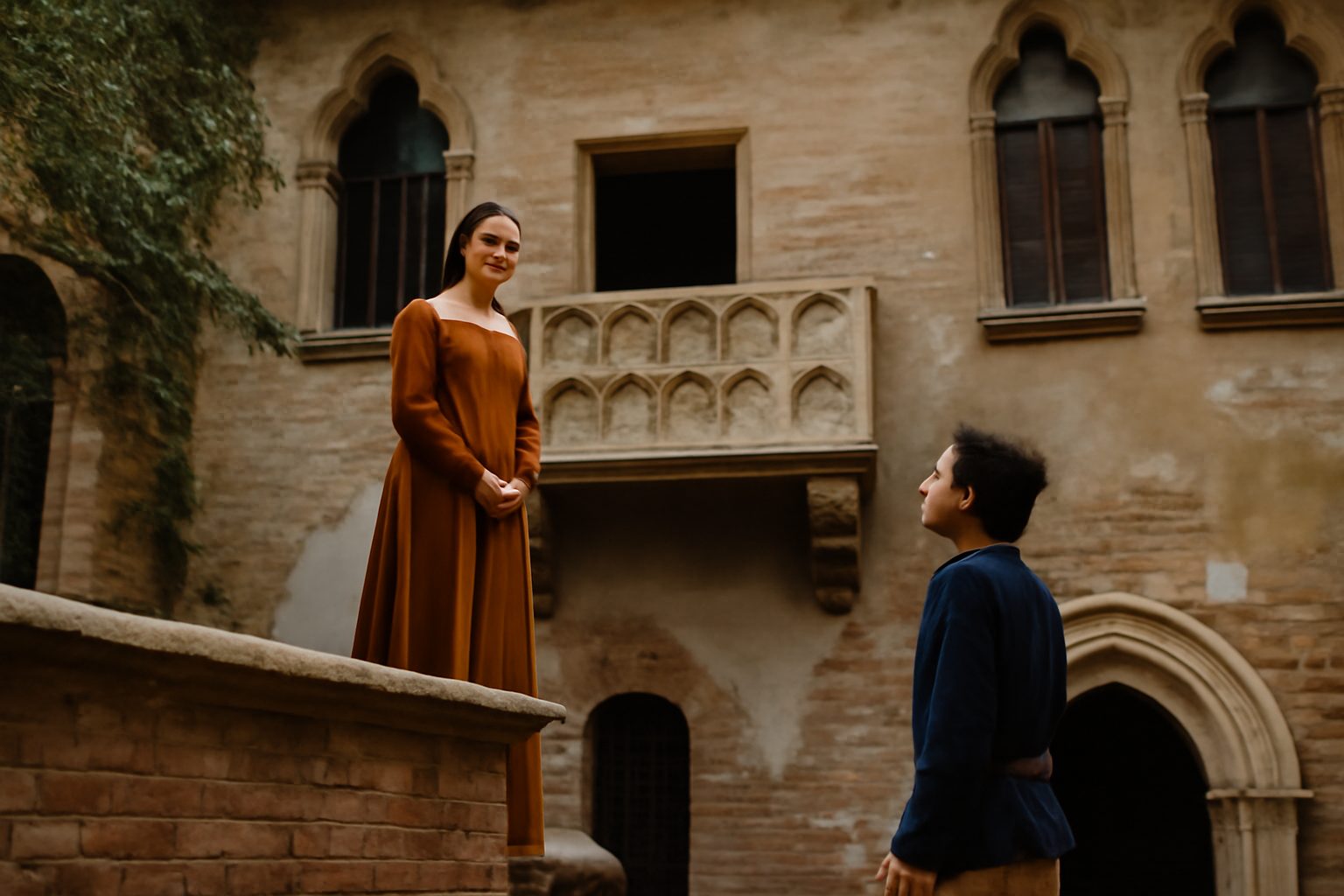
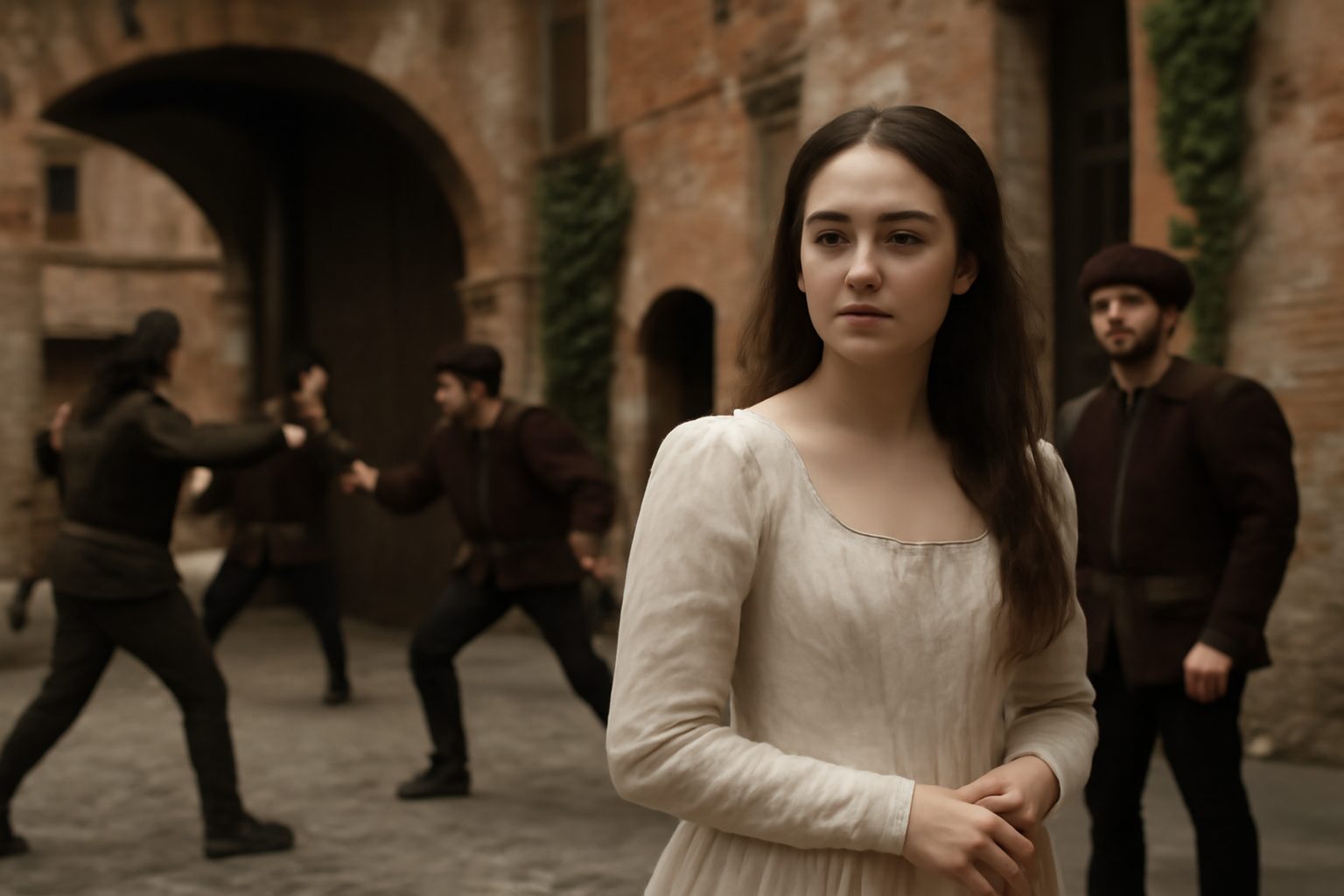
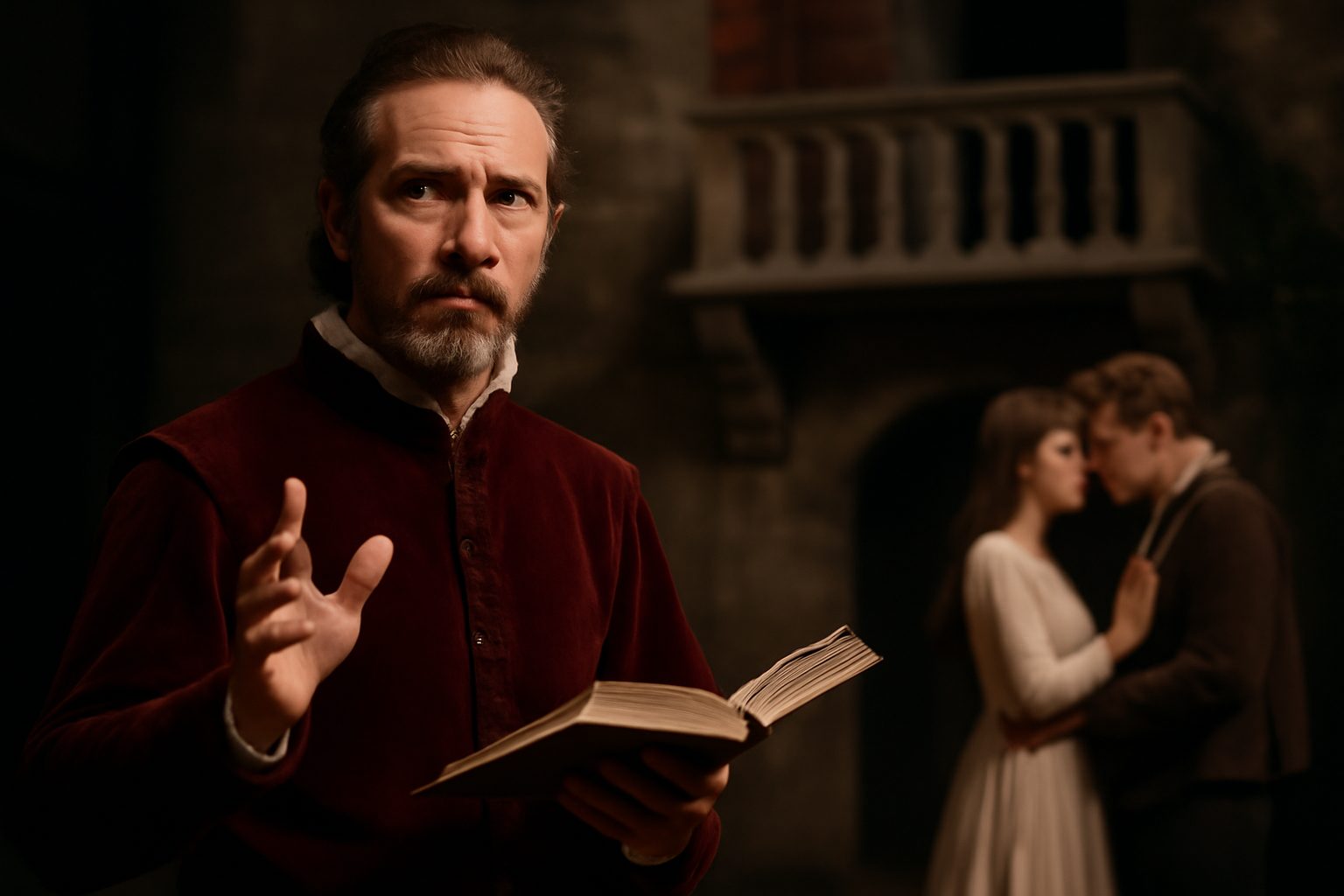
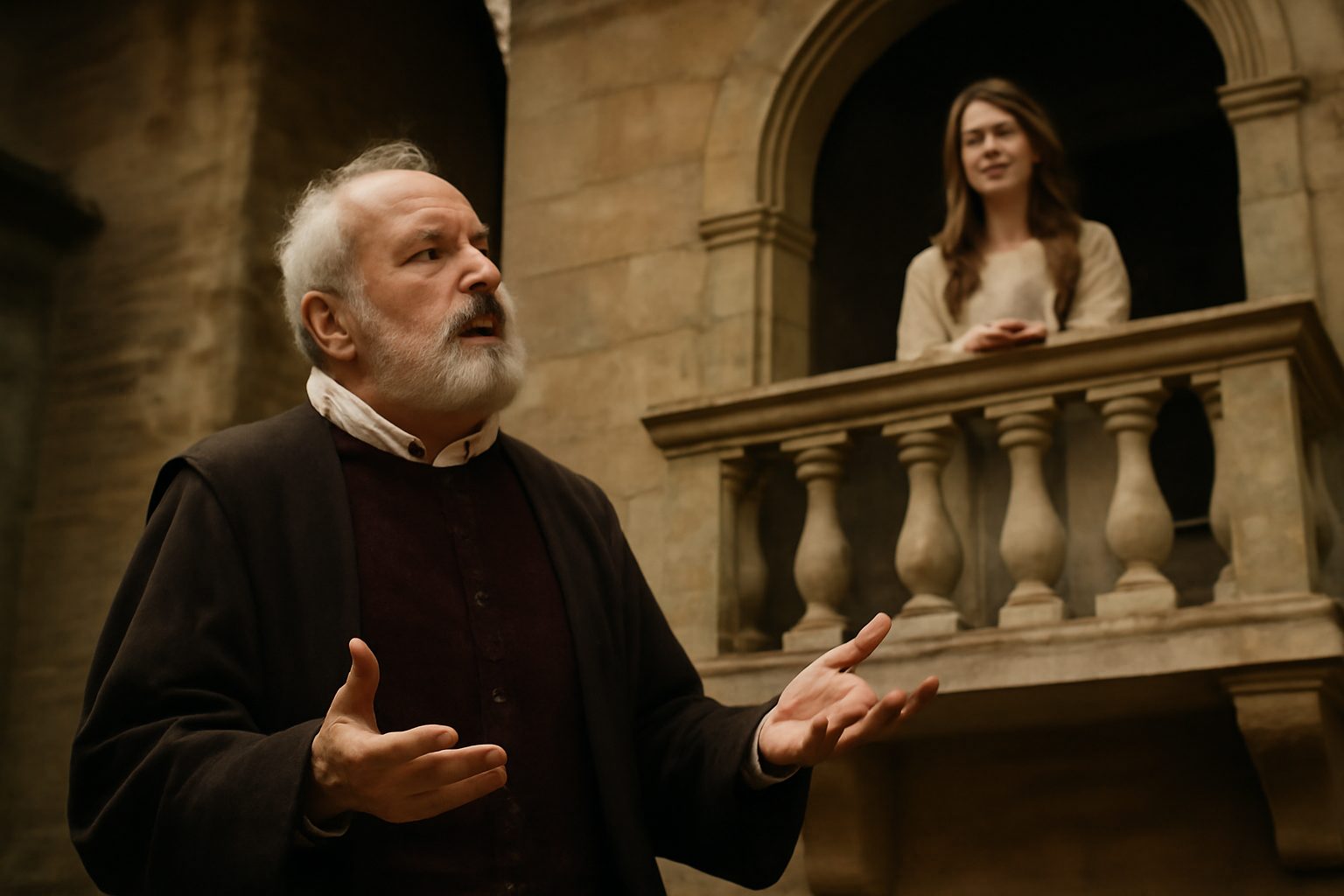
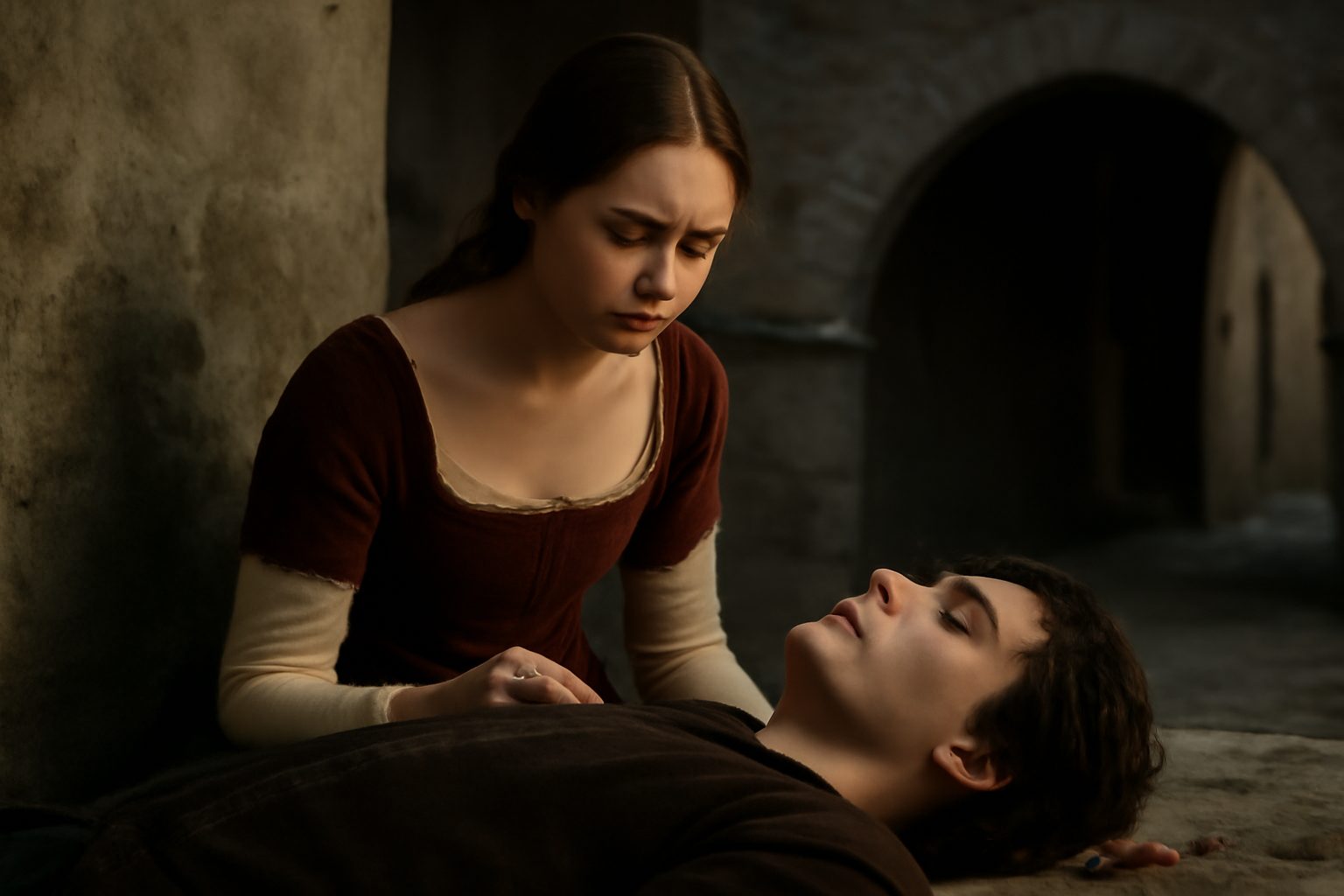
This line opens Shakespeare's Romeo and Juliet, serving as the prologue's introduction to the feud between the Montagues and Capulets. It establishes that the two families are of equal social standing, yet bound by conflict. The verse sets the stage for the tragic rivalry that drives the play's events.
Chorus: "Two households, both alike in dignity"
In modern day english, we would say:
Two families, equally respected and noble.
Frequently Asked Questions
What does the chorus say about the two families at the start of Romeo and Juliet?
The chorus says that the two families are equal in social status and respect.
Connections to other verses:
Connections to "Two households, both alike in dignity"
The verse "Two households, both alike in dignity" establishes the equal social standing of the Montagues and Capulets, setting the stage for the tragedy that unfolds from their rivalry.
Related Verses in the Prologue
- This equality in dignity contrasts sharply with the "ancient grudge break to new mutiny", highlighting how longstanding hatred erupts despite their shared status.
- The phrase "Where civil blood makes civil hands unclean" illustrates the consequences of this feud, showing how violence stains a community of dignified people.
- From these dignified households come "the fatal loins of these two foes", emphasizing that the lovers originate from these respected but opposed families.
- The "pair of star-crossed lovers" are products of these households, destined for tragedy despite their noble origins.
- Their fate is tied to "the continuance of their parents' rage", showing how the parents' undignified conflict overshadows their social equality.
- Ultimately, only "their children's end" could resolve the strife, underscoring the irony that dignity could not prevent destruction.
- Their deaths "bury their parents' strife", serving as a poignant resolution to the conflict between households of equal dignity.