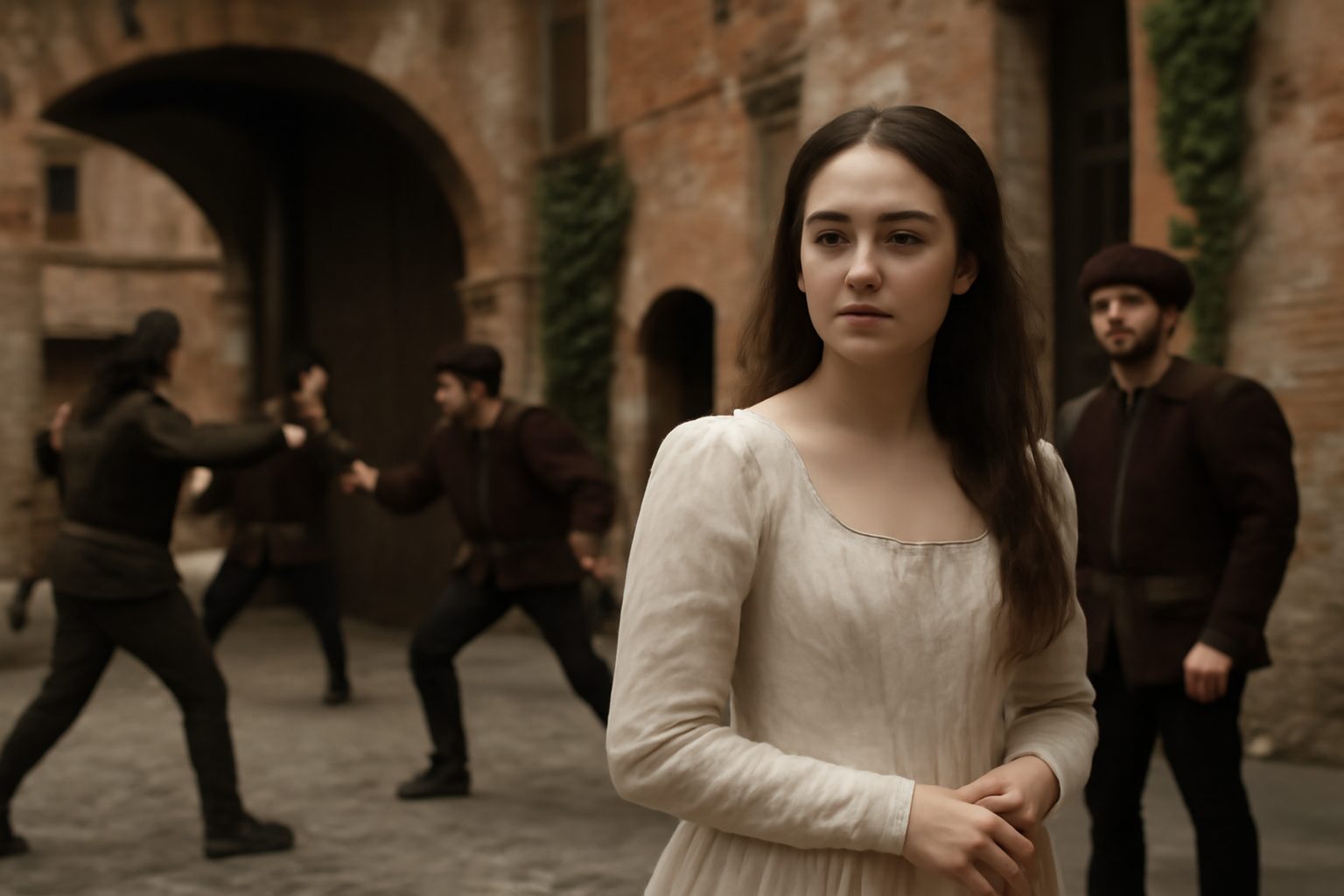
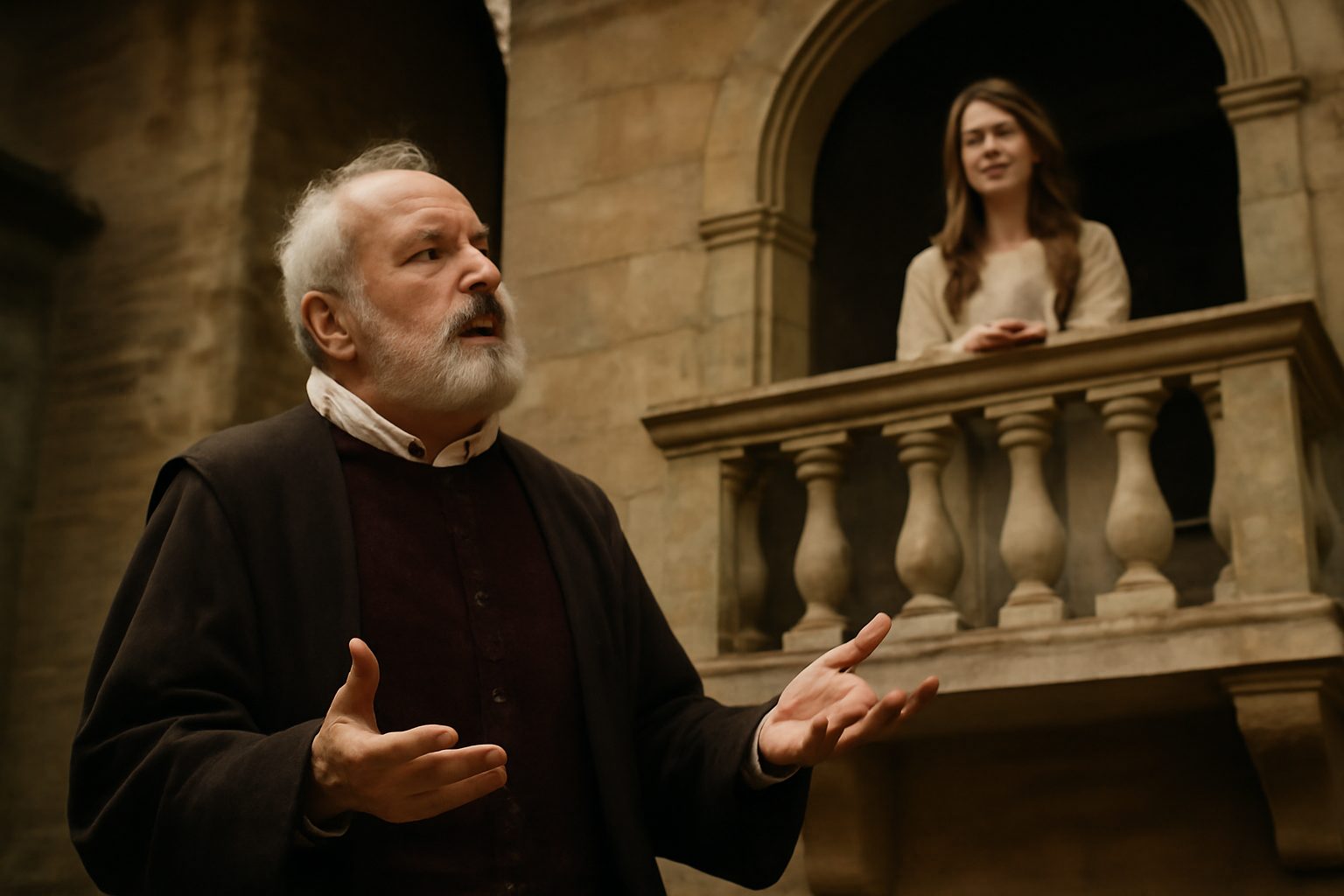
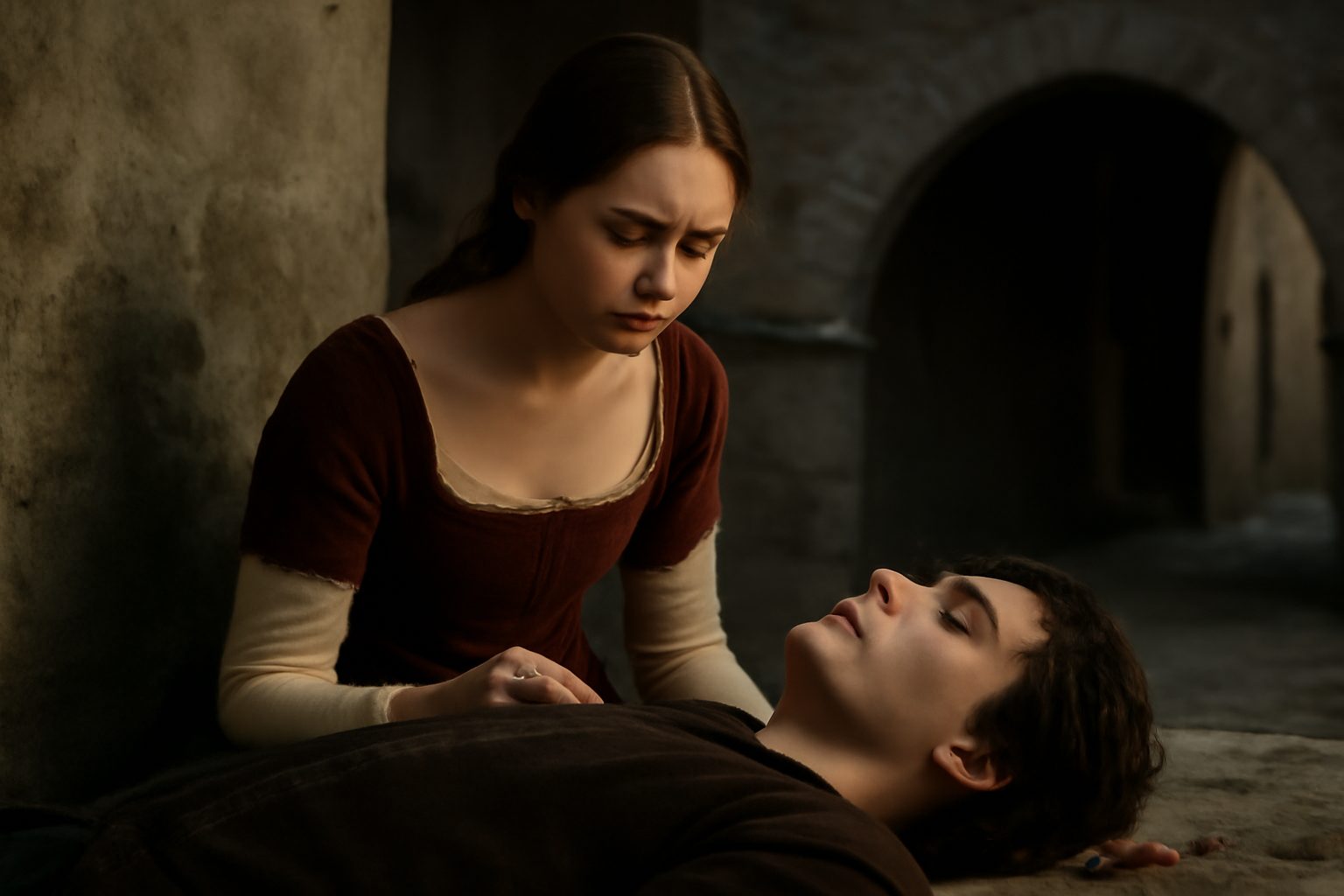
This line serves as the opening to the prologue of Shakespeare's Romeo and Juliet, setting the stage for the tragic love story that follows. Spoken by the Chorus, it immediately establishes the play's location—the Italian city of Verona—as the backdrop for the feud between the Montague and Capulet families. The phrase introduces the audience to the world of the play before the action begins.
Chorus: "(In fair Verona, where we lay our scene),"
In modern day english, we would say:
Our story takes place in the beautiful city of Verona.
Frequently Asked Questions
Where does the story of Romeo and Juliet take place?
The story of Romeo and Juliet takes place in Verona.
Connections to other verses:
Connections to "In fair Verona, where we lay our scene"
The verse "In fair Verona, where we lay our scene" establishes the setting for the entire tragedy, immediately connecting to "Two households, both alike in dignity", which introduces the feuding families central to the play's conflict. This geographical and social context is further darkened by "Where civil blood makes civil hands unclean", illustrating how Verona's beauty is marred by violence.
Narrative and Thematic Links
The setting directly ties to the origin of the conflict mentioned in "From ancient grudge break to new mutiny", showing how Verona's environment fuels ongoing strife. From this strife emerge the "star-crossed lovers" as noted in "From forth the fatal loins of these two foes", whose tragic fate is summarized in "A pair of star-crossed lovers take their life".
Resolution and Dramatic Purpose
The lovers' deaths, as depicted in "Doth with their death bury their parents' strife", resolve the conflict introduced in Verona, a resolution necessitated by "And the continuance of their parents' rage". This tragic arc is framed as the play's content in "Is now the two hours' traffic of our stage", with the audience urged to attend closely in "The which, if you with patient ears attend".