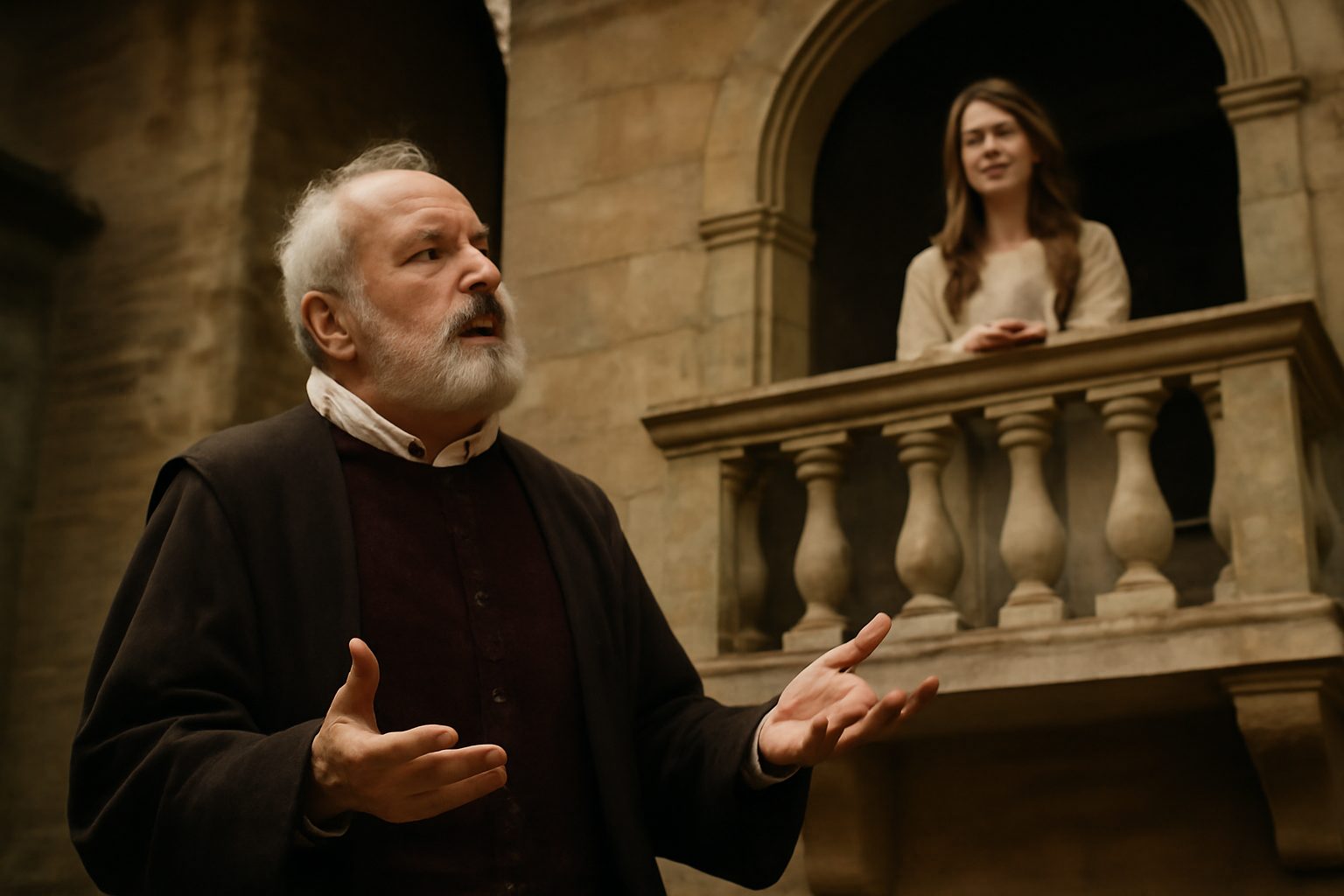
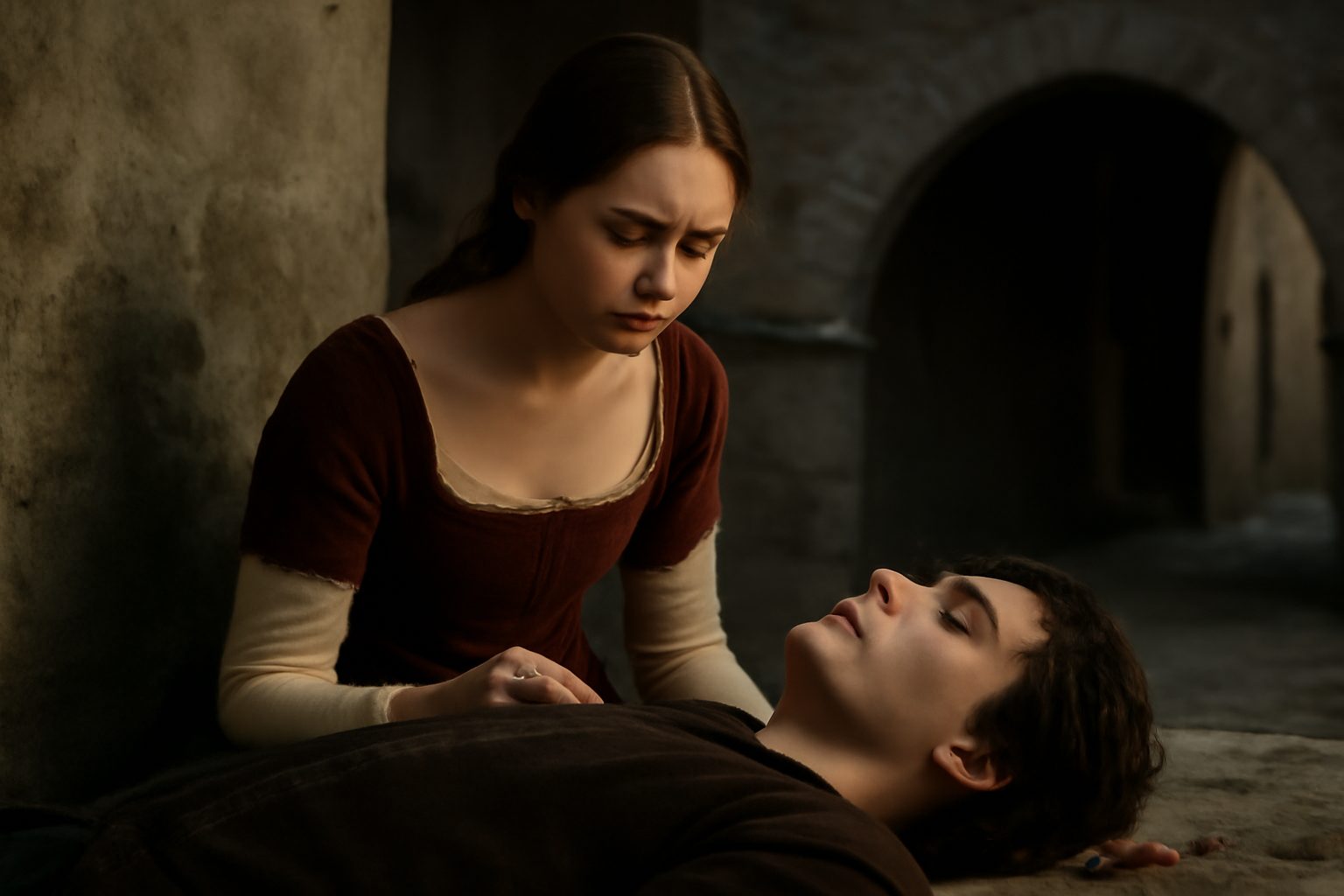
This line appears in the prologue of Romeo and Juliet, setting the stage for the conflict that drives the play. It refers to the long-standing feud between the Montague and Capulet families, which erupts into fresh violence as the story begins. The phrase hints at the cyclical nature of hatred and the chaos it unleashes.
Chorus: "From ancient grudge break to new mutiny,"
In modern day english, we would say:
An old feud flares up again into fresh violence.
Frequently Asked Questions
What does the chorus mean by an ancient grudge leading to new fighting?
The chorus is explaining that an old feud between two families is causing fresh violence and conflict.
Connections to other verses:
Connections to "From ancient grudge break to new mutiny"
The verse "From ancient grudge break to new mutiny" introduces the central conflict between the Montagues and Capulets, which is rooted in a long-standing feud. This theme is immediately connected to "Two households, both alike in dignity", establishing that both families are noble yet equally entrenched in hostility.
Escalation of Conflict
The "new mutiny" referenced in this line is vividly depicted in "Where civil blood makes civil hands unclean", illustrating how the feud has escalated to violence among Verona's citizens, tainting the city with bloodshed.
Origin of the Lovers
This ancient grudge directly impacts the protagonists, as seen in "From forth the fatal loins of these two foes", indicating that Romeo and Juliet are born from the warring families, destined to be caught in the conflict.
Consequences and Resolution
The persistence of the feud is emphasized in "And the continuance of their parents' rage", showing that the hostility endures. Ultimately, it is only through tragedy, as stated in "Doth with their death bury their parents' strife", that the grudge is resolved, linking the mutiny to the lovers' sacrificial end.
Foreshadowing and Irony
The phrase also connects to the irony in "Which, but their children's end, naught could remove", underscoring that nothing but death could end the ancient grudge, tying the mutiny directly to the play's tragic outcome.