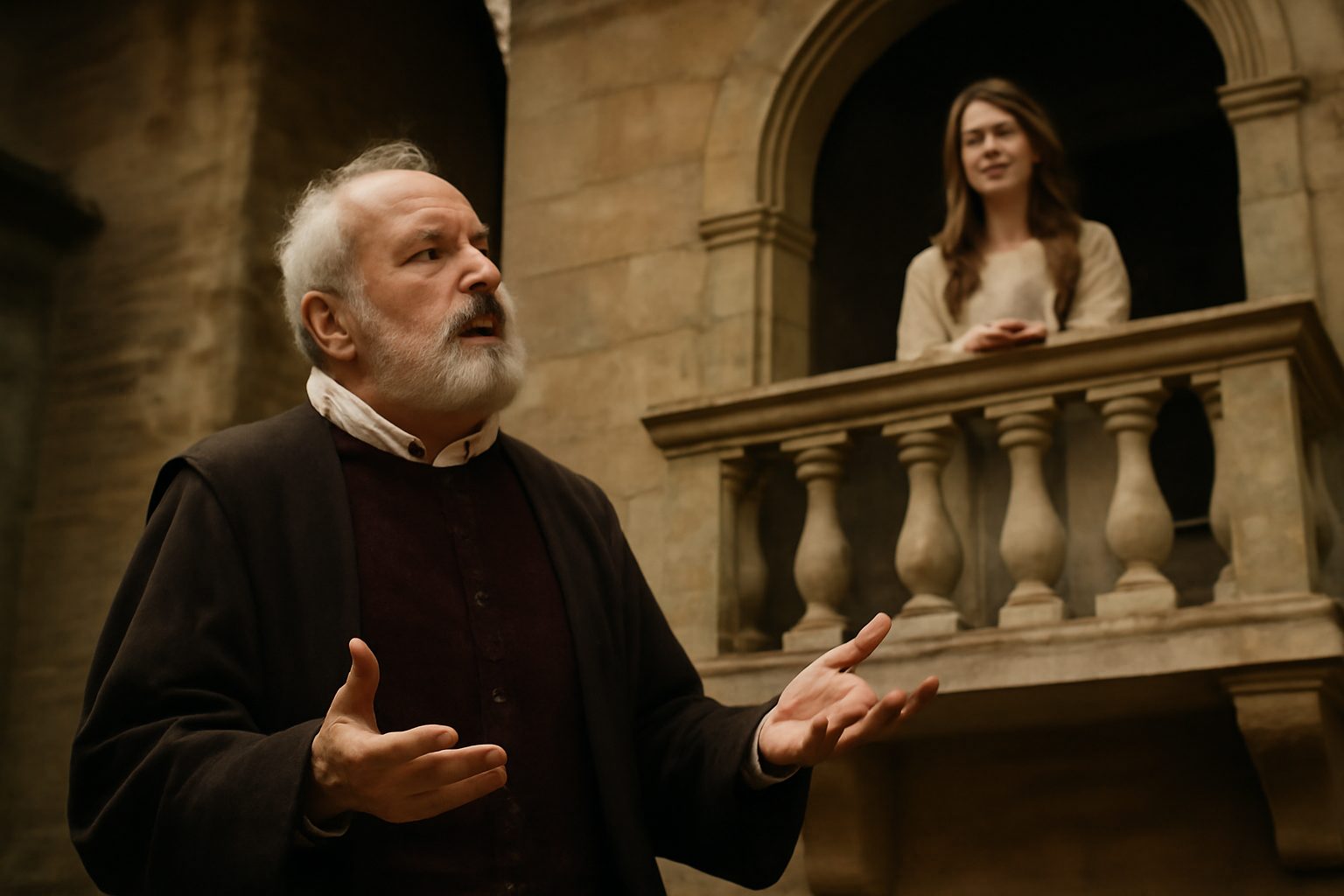
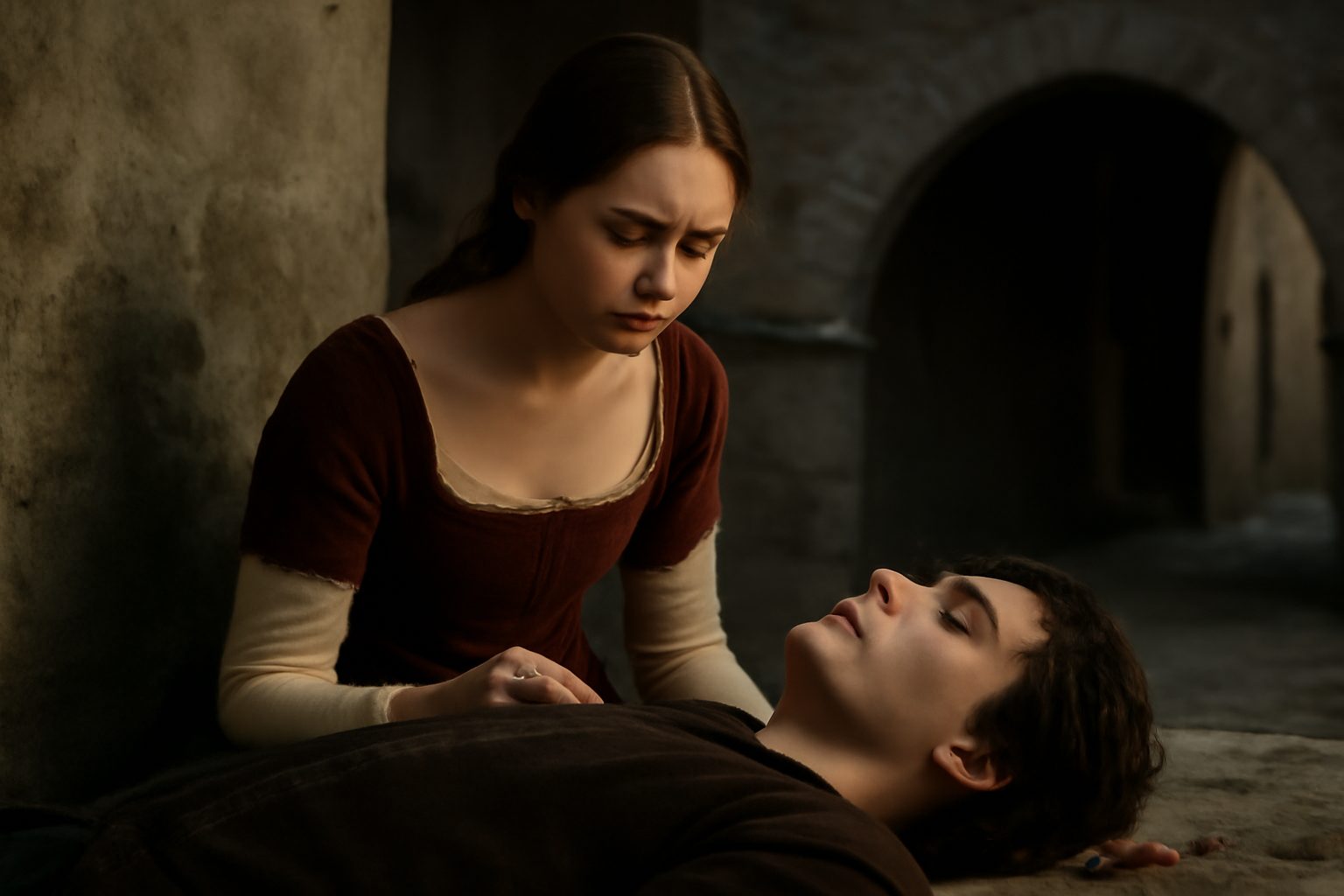
This line appears in the prologue of Romeo and Juliet, setting the stage for the tragic fate of the young lovers. It foreshadows how their deaths will ultimately end the long-standing feud between the Montague and Capulet families. The prologue serves as a summary of the play, and this particular line highlights the central irony that only through loss can peace be achieved.
Chorus: "Doth with their death bury their parents' strife."
In modern day english, we would say:
Their deaths put an end to their parents' feud.
Frequently Asked Questions
What does the Chorus say will end the conflict between the two families?
The deaths of Romeo and Juliet will end the conflict between their families.
Connections to other verses:
Connections to "Doth with their death bury their parents' strife"
The verse Doth with their death bury their parents' strife serves as the tragic resolution foreshadowed throughout the prologue. It directly responds to And the continuance of their parents' rage, presenting death as the only force powerful enough to end the ancient feud.
Foundation of the Conflict
The parents' strife originates from From ancient grudge break to new mutiny, establishing the persistent conflict that requires such extreme resolution. This violence occurs in In fair Verona, where we lay our scene, ironically contrasting the city's beauty with its bloodshed, further emphasized by Where civil blood makes civil hands unclean.
The Lovers' Role
The children who enable this resolution come From forth the fatal loins of these two foes, born directly into the conflict. Their fate as A pair of star-crossed lovers take their life confirms the mechanism through which the burial of strife occurs, detailed through The fearful passage of their death-marked love and Whose misadventured piteous overthrows.
Inevitability and Purpose
The prologue emphasizes that Which, but their children's end, naught could remove, reinforcing that only their deaths could end the feud. This tragic outcome becomes Is now the two hours' traffic of our stage, the central drama audiences are invited to follow with The which, if you with patient ears attend, promising that What here shall miss, our toil shall strive to mend through the full performance.