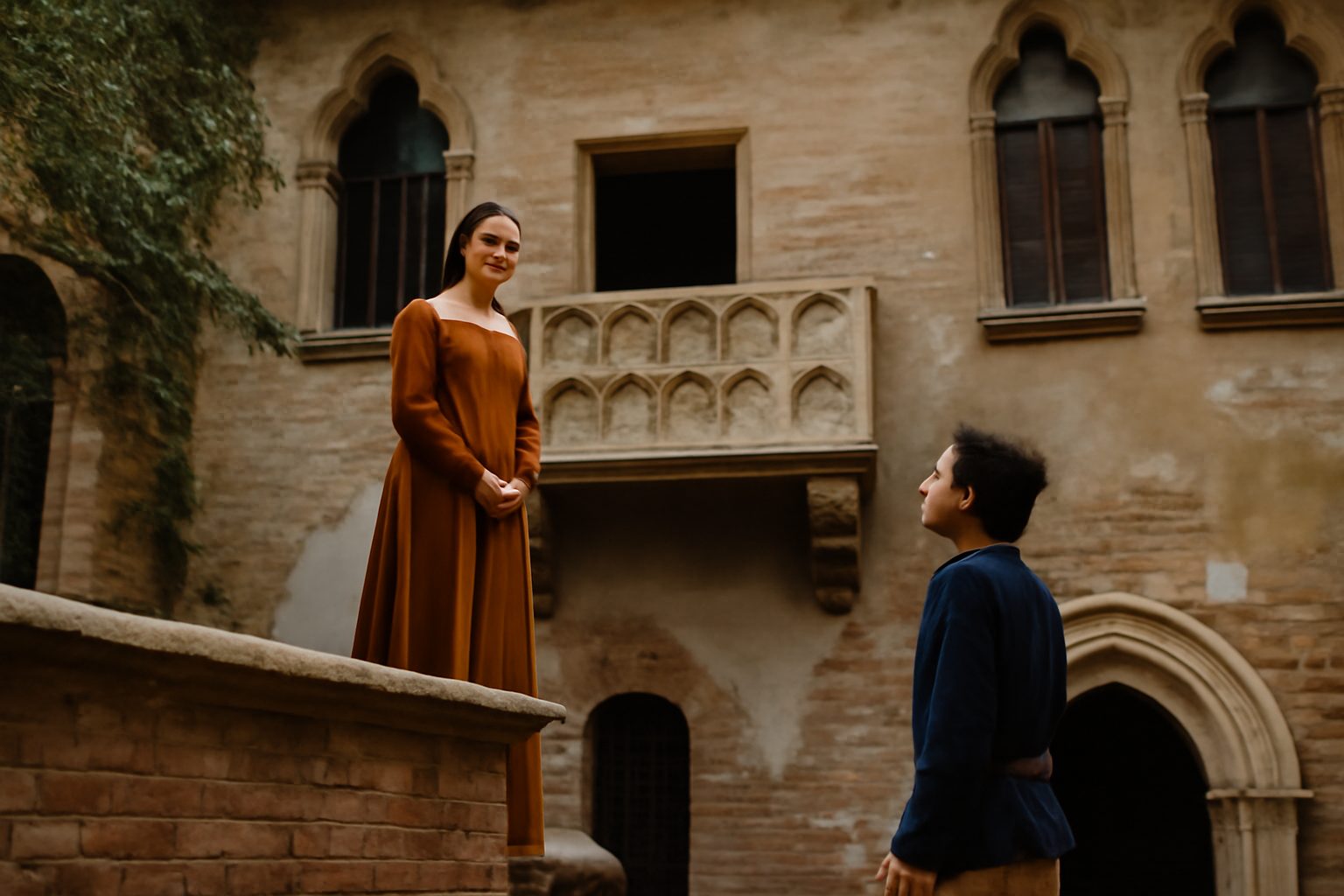
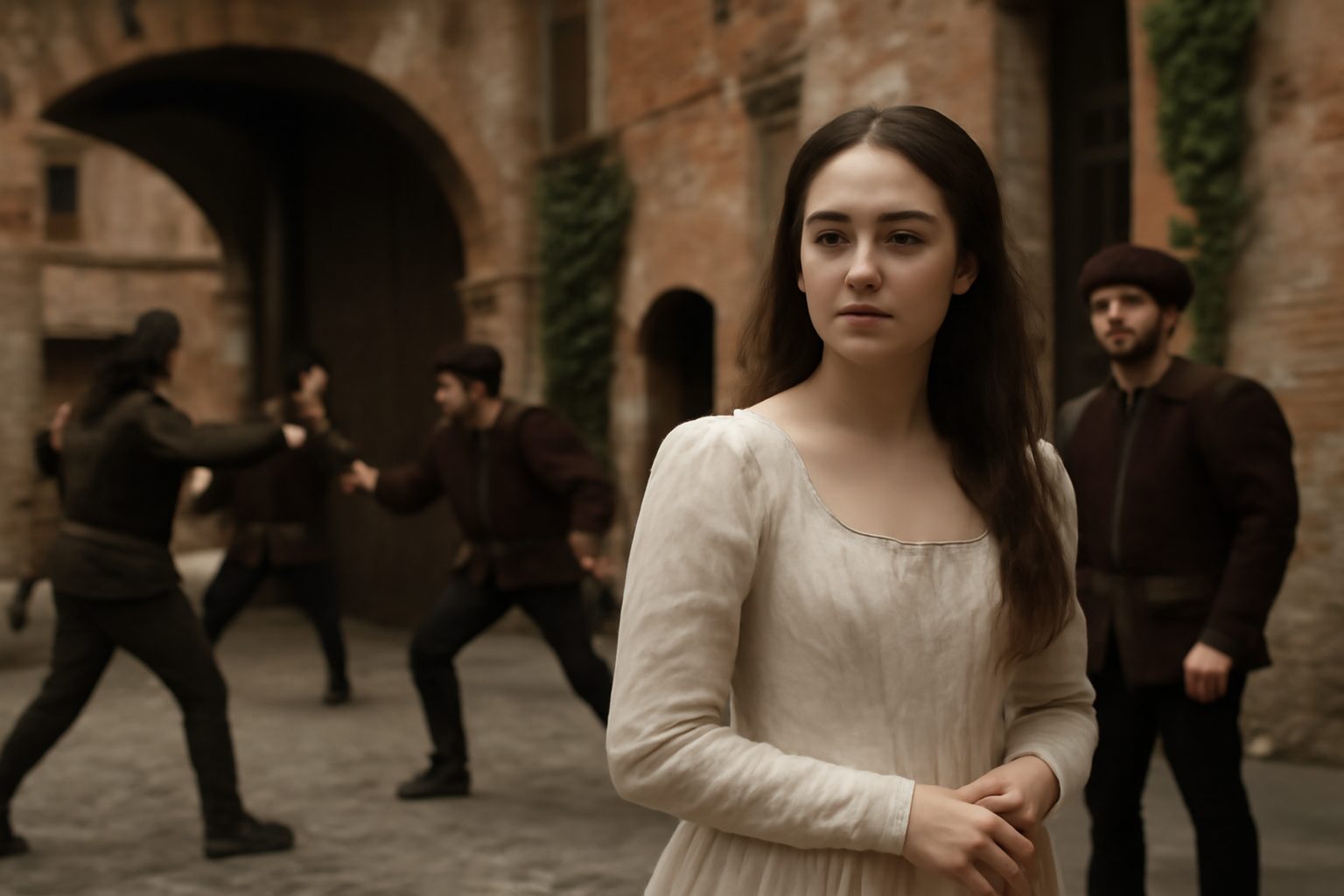
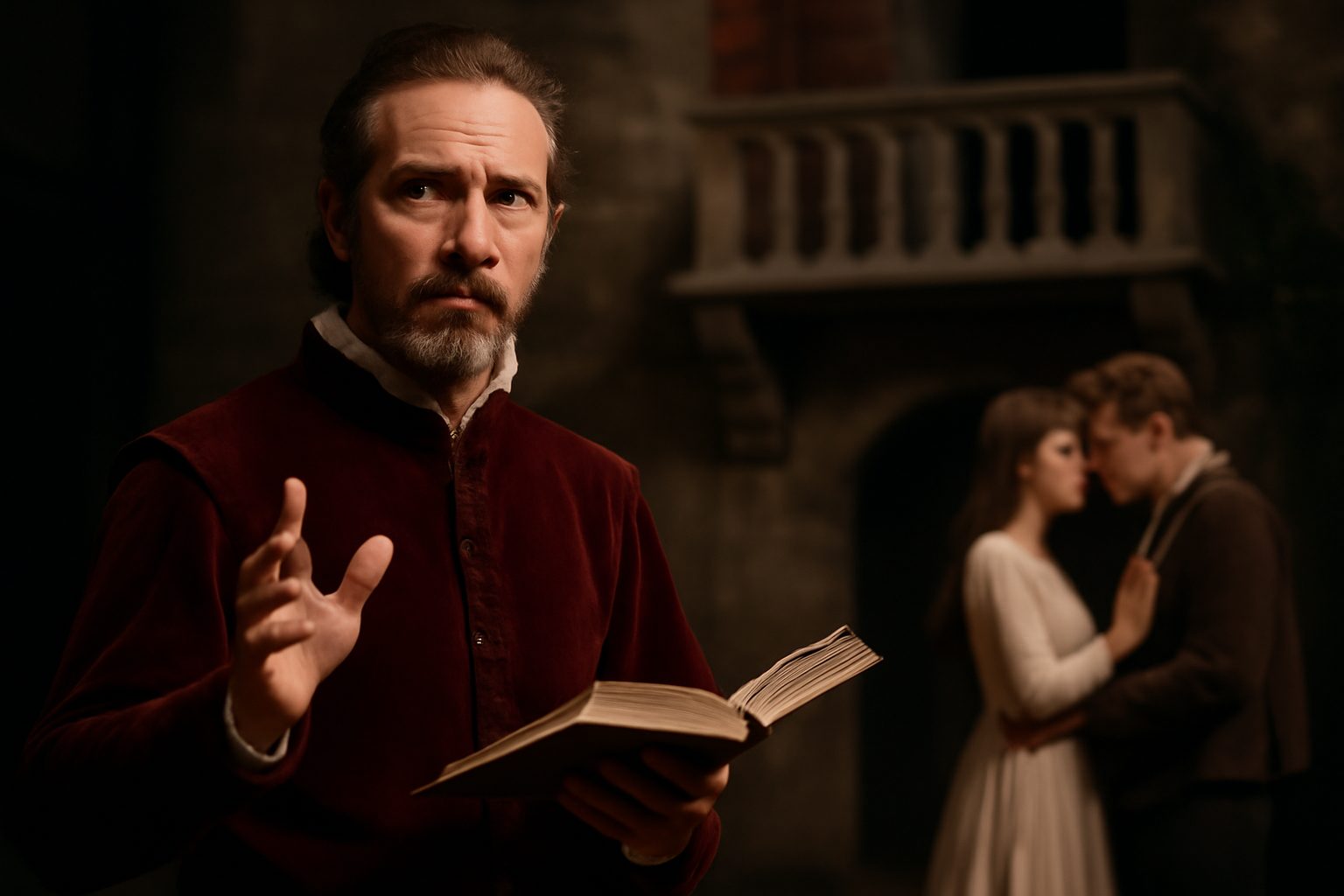
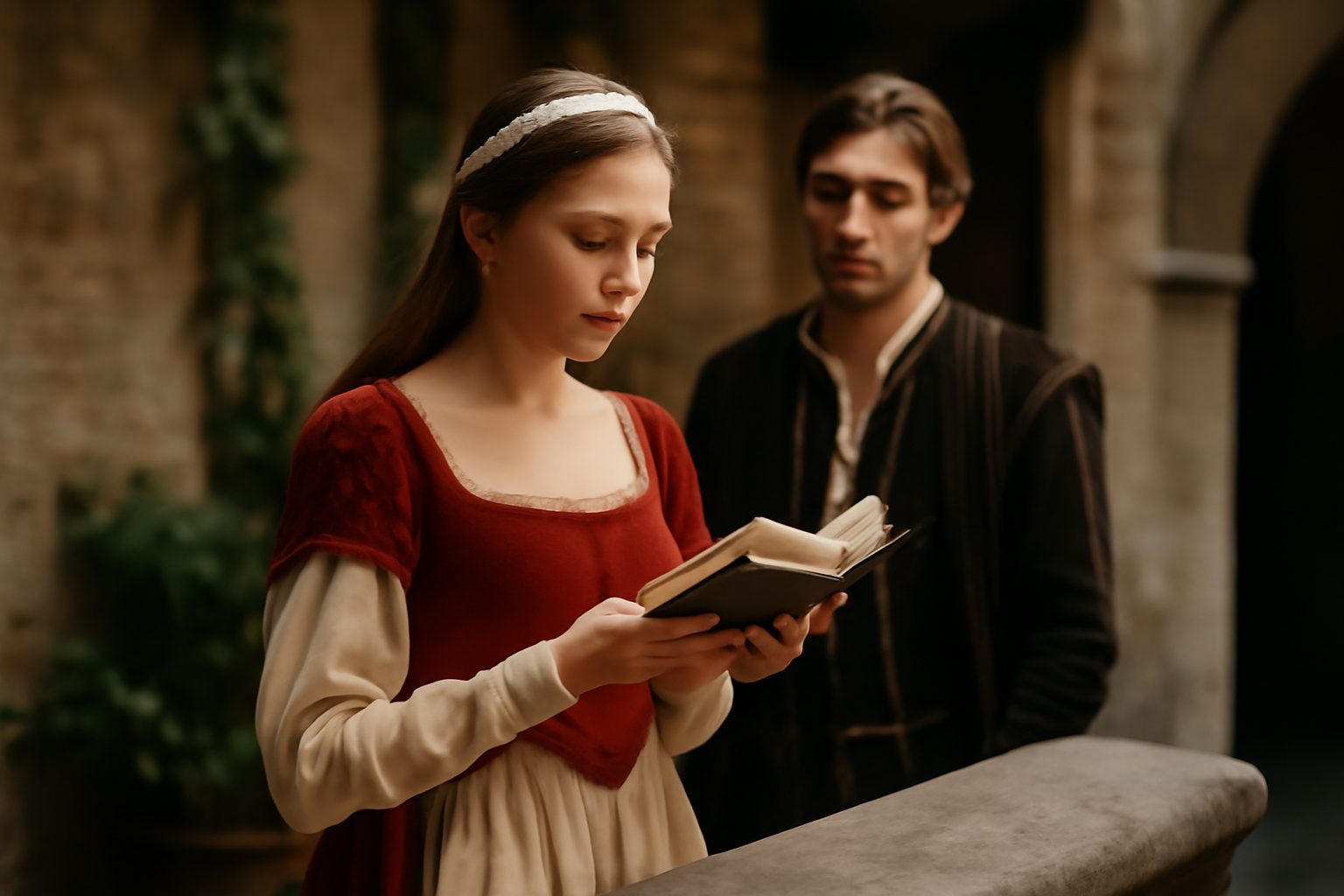
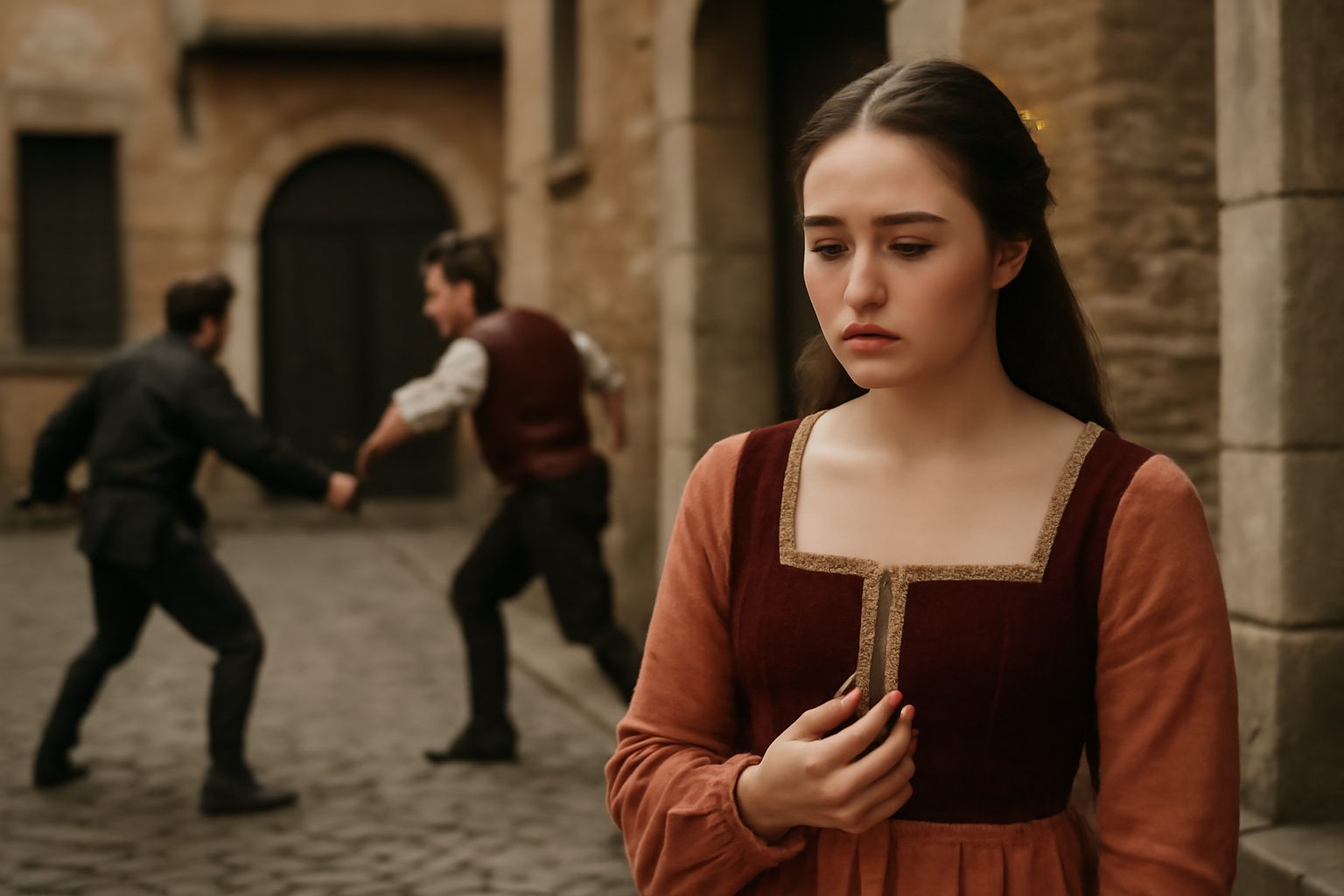
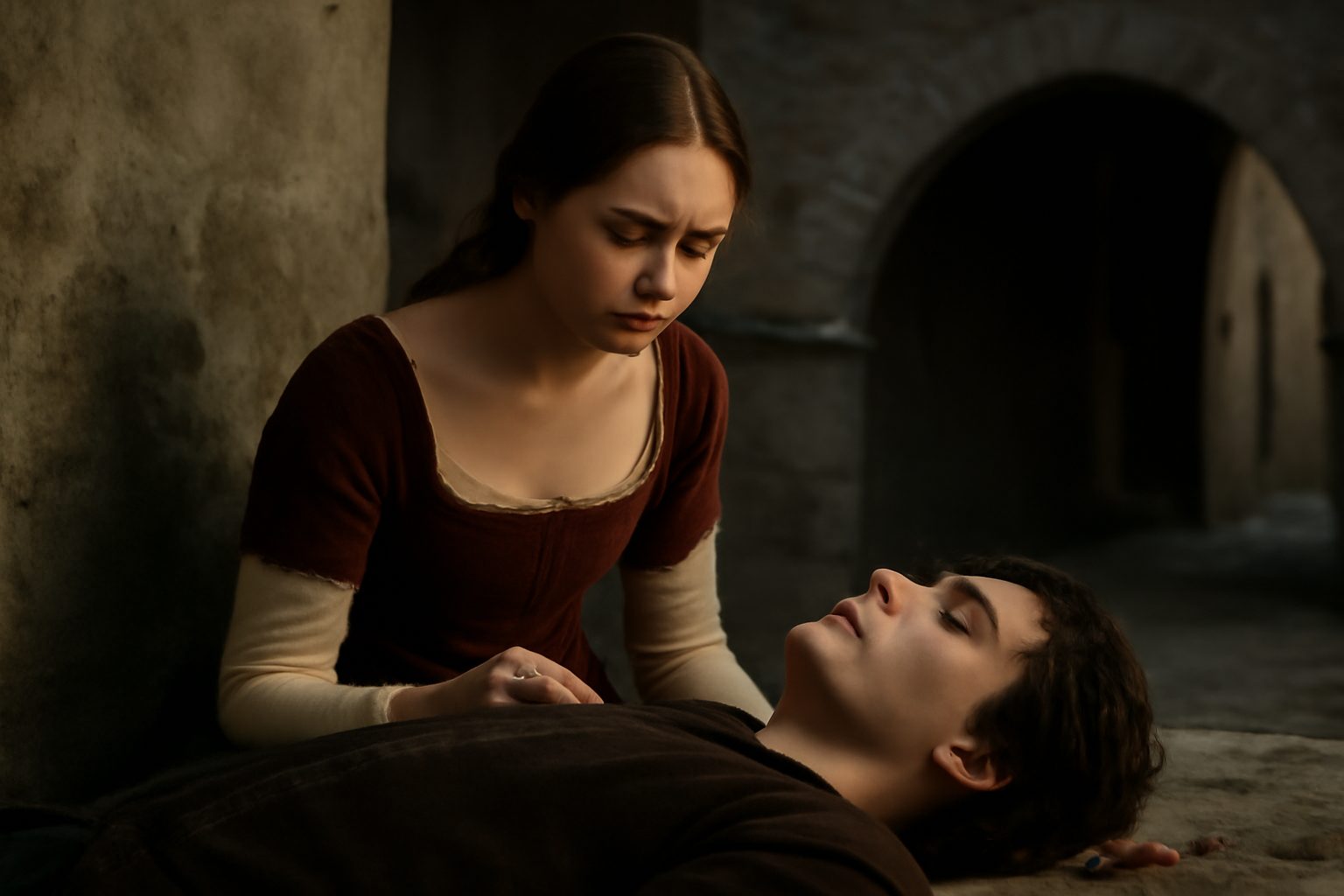
This line appears in the prologue of Romeo and Juliet, setting the stage for the tragic conflict between the Montague and Capulet families. It emphasizes that only the deaths of their children could end the feud, foreshadowing the play's devastating outcome. The prologue frames the story as one of fate and inescapable sorrow from the very beginning.
Chorus: "Which, but their children's end, naught could remove,"
In modern day english, we would say:
Nothing could end their feud except their children's deaths.
Frequently Asked Questions
What does the Chorus mean when they say only the death of their children could end the feud?
The Chorus is saying that the long-standing conflict between the Montagues and Capulets was so deep that nothing except the tragic deaths of Romeo and Juliet could finally stop it.
Connections to other verses:
Connections to Other Verses in Act 1 Scene 0
The verse "Which, but their children's end, naught could..." directly refers to the tragic resolution of the feud between the Montagues and Capulets, made possible only by the deaths of Romeo and Juliet. This idea is intrinsically linked to several other verses in the prologue.
Connection to the Feud's Origin and Continuation
This verse connects to "From ancient grudge break to new mutiny", which establishes the long-standing conflict, and "And the continuance of their parents' rage", emphasizing the persistence of the hostility that only the children's end could cease.
Connection to the Lovers' Fate
It is also tied to "A pair of star-crossed lovers take their life", as their suicide is the "end" mentioned, and "The fearful passage of their death-marked love", which foreshadows their doomed journey.
Connection to the Resolution
The outcome is summarized in "Doth with their death bury their parents' strife", directly echoing how the children's end resolves the conflict, as nothing else ("naught") could achieve this.
Connection to the Setting and Families
The verse also relates to the foundational lines: "Two households, both alike in dignity" introduces the families, and "Where civil blood makes civil hands unclean" highlights the violence that their end ultimately stops.