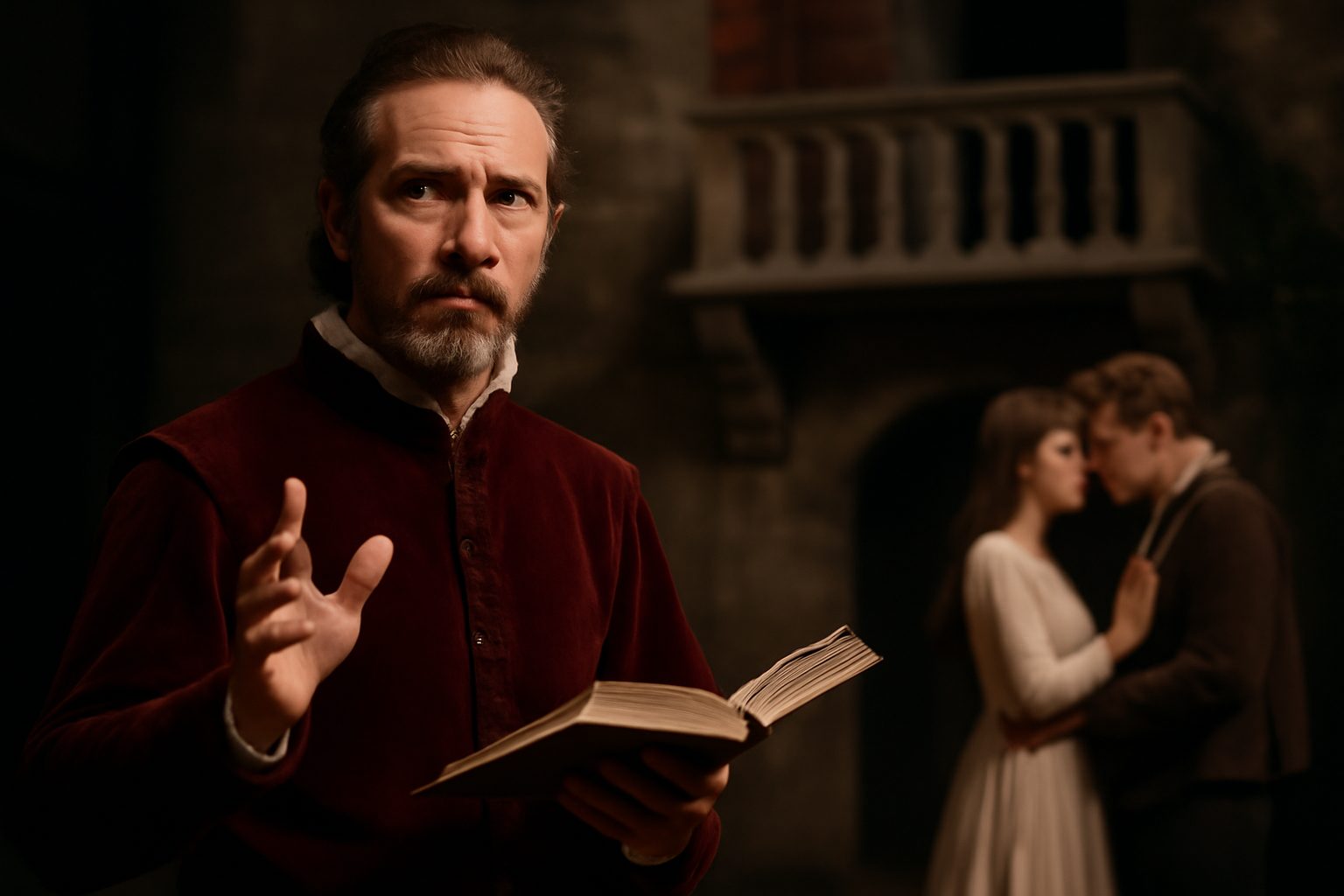
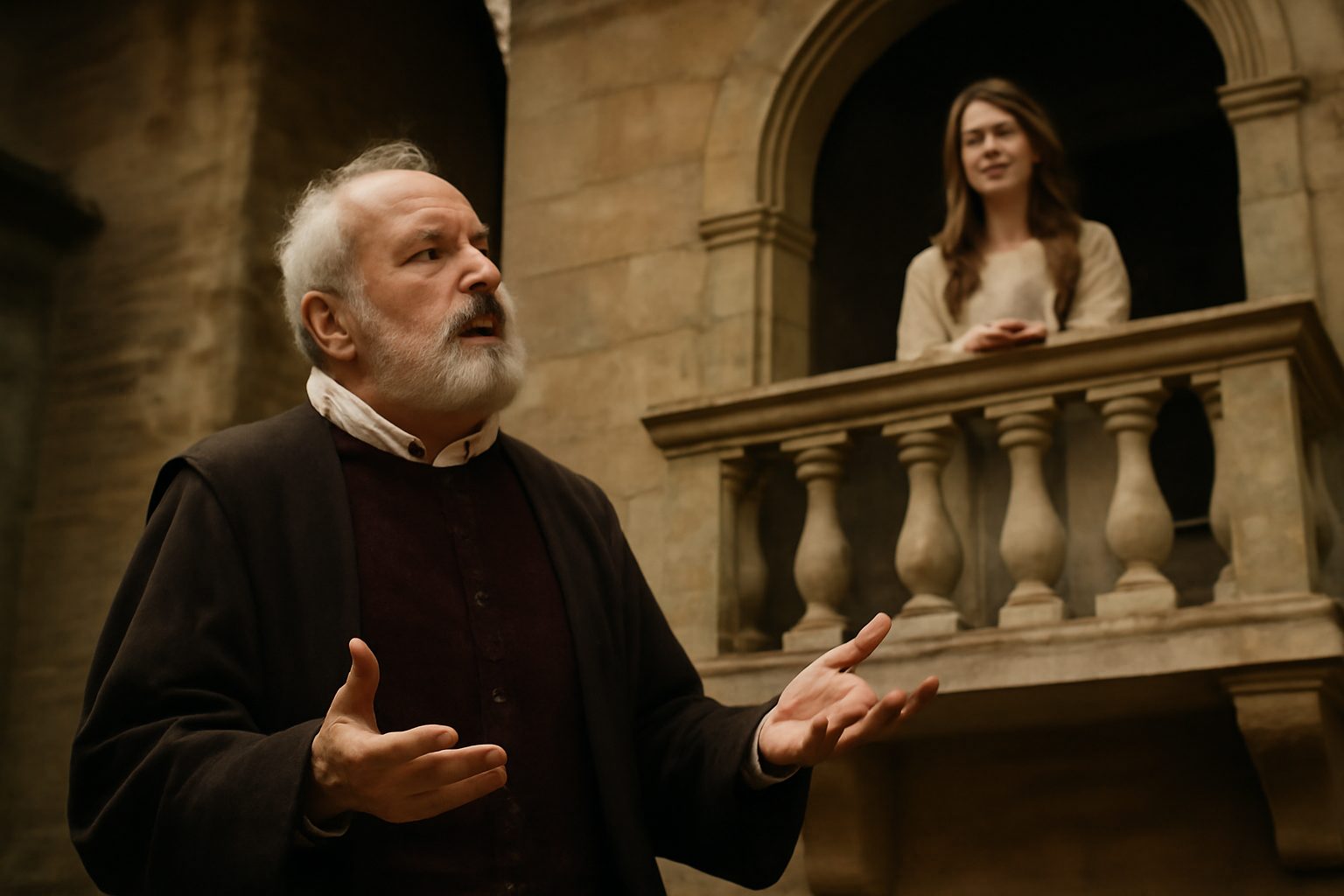
In the opening scene of Romeo and Juliet, a heated confrontation between the Montague and Capulet servants escalates into a brawl in the streets of Verona. As Prince Escalus arrives to restore order, he delivers a stern warning to the feuding families, demanding they cease their violent clashes. This line is part of his speech, urging the citizens to listen carefully to his decree before he imposes harsh consequences.
Chorus: "The which, if you with patient ears attend,"
In modern day english, we would say:
If you listen carefully to what I’m about to say.
Frequently Asked Questions
What does the Chorus ask the audience to do in this line?
The Chorus asks the audience to listen carefully and patiently.
Connections to other verses:
Connections to "The which, if you with patient ears attend,"
This verse serves as a direct appeal to the audience, inviting attentive listening to the unfolding tragedy. It connects thematically and structurally with other lines in the prologue that set the stage for the narrative.
Invitation to the Audience
The call for "patient ears" echoes the prologue's introductory function, similar to the opening line that establishes the setting: In fair Verona, where we lay our scene. Both verses orient the audience, preparing them for the story's context and emotional weight.
Foreshadowing the Tragedy
The attentive listening requested is crucial for understanding the tragic arc foretold in lines like A pair of star-crossed lovers take their life and The fearful passage of their death-marked love. Without patient attention, the depth of their fate—Whose misadventured piteous overthrows—might be missed.
Resolution Through Tragedy
The audience's engagement is key to appreciating how the lovers' demise resolves the central conflict, as stated in Doth with their death bury their parents' strife and Which, but their children's end, naught could remove. The prologue emphasizes that only through their end does the "continuance of their parents' rage" cease.
Structural and Thematic Unity
This verse also ties to the prologue's conclusion, where the promise to fill any gaps in the story—What here shall miss, our toil shall strive to mend—reinforces the need for audience patience. Together, these lines frame the play's action, summarized as the two hours' traffic of our stage, and root it in the setting of Where civil blood makes civil hands unclean.