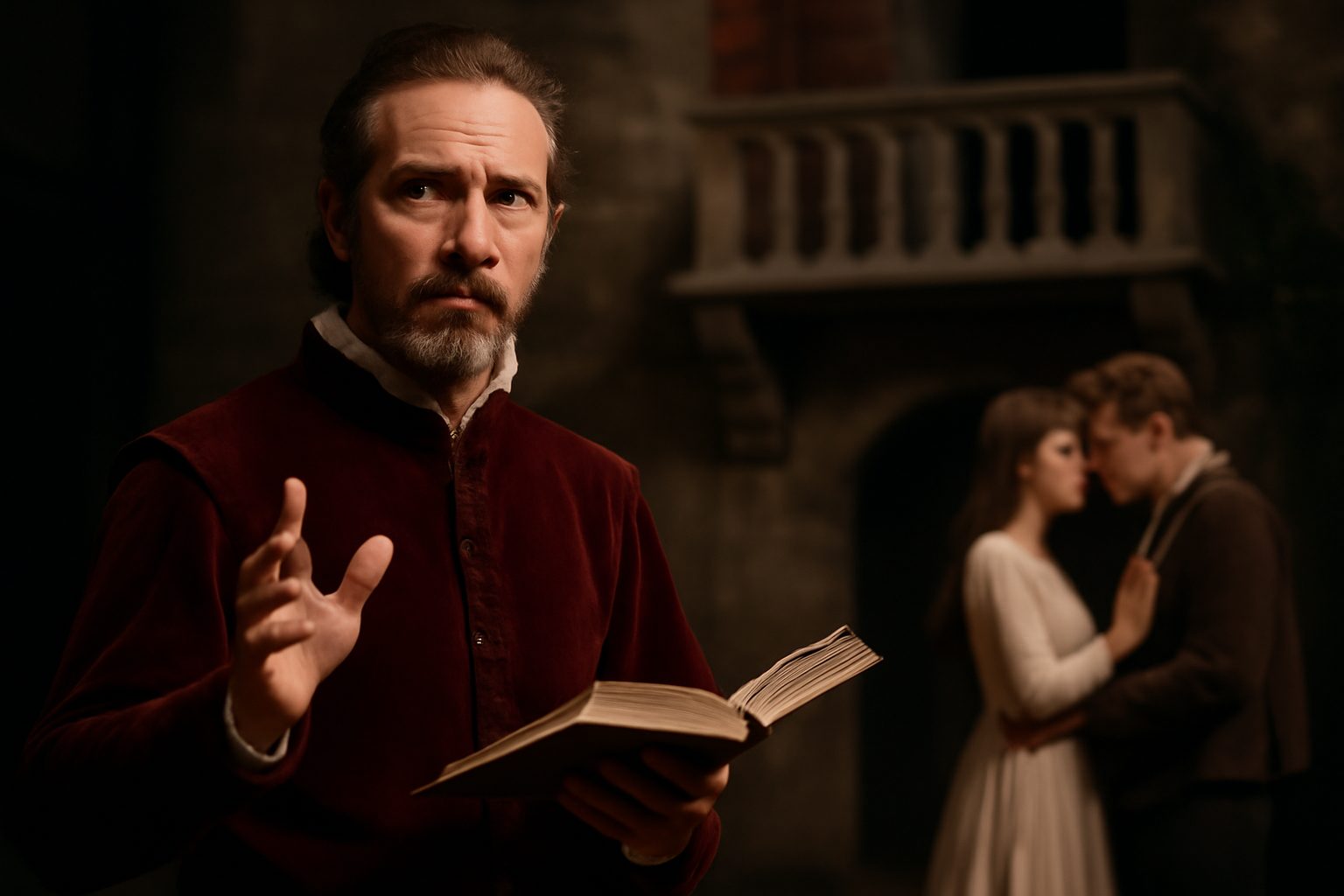
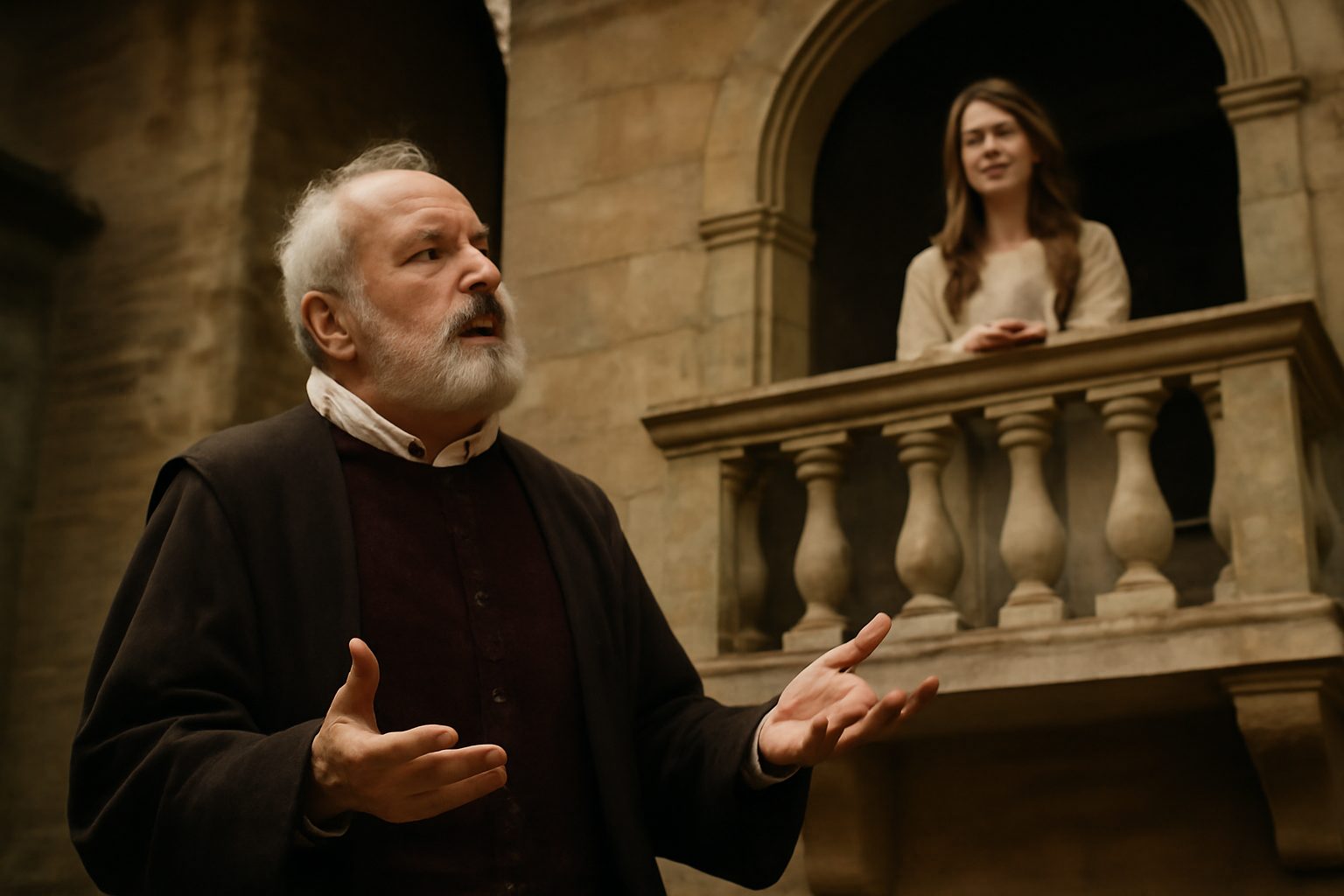
This line appears in the prologue of Romeo and Juliet, spoken by the Chorus as a closing remark. It follows a summary of the play's upcoming events, suggesting that any gaps in the audience's understanding will be filled by the actors' efforts. The phrase underscores the collaborative nature of theater, inviting viewers to engage with the performance.
Chorus: "What here shall miss, our toil shall strive to mend."
In modern day english, we would say:
Anything this prologue leaves out, we’ll work hard to explain in the play.
Frequently Asked Questions
What does the Chorus mean when they say their hard work will fix what is missing?
The Chorus is saying that the play will fill in any gaps or details that the audience might not understand at first.
Connections to other verses:
Connections to "What here shall miss, our toil shall strive to…"
This verse serves as a promise from the Chorus to the audience that any gaps or omissions in the prologue's summary will be filled by the performance itself. It directly links to the verse The which, if you with patient ears attend, which invites the audience to listen carefully, implying that their attention will reward them with a full understanding of the story.
Narrative Fulfillment
The phrase "our toil shall strive to…" anticipates the detailed enactment of the tragedy outlined in other verses, such as The fearful passage of their death-marked love and A pair of star-crossed lovers take their life. It assures that the play will vividly portray the lovers' doomed journey.
Resolution of Conflict
This line also connects to the resolution of the central conflict, as hinted in Doth with their death bury their parents' strife and Which, but their children's end, naught could…, promising that the performance will clarify how the tragedy leads to peace.
Setting and Context
It relates indirectly to the establishment of the setting in In fair Verona, where we lay our scene and the conflict in From ancient grudge break to new mutiny, assuring that the play will expand on these foundational elements.
Structural Purpose
Finally, it complements Is now the two hours' traffic of our stage, emphasizing that the live performance will complete the narrative arc introduced in the prologue.