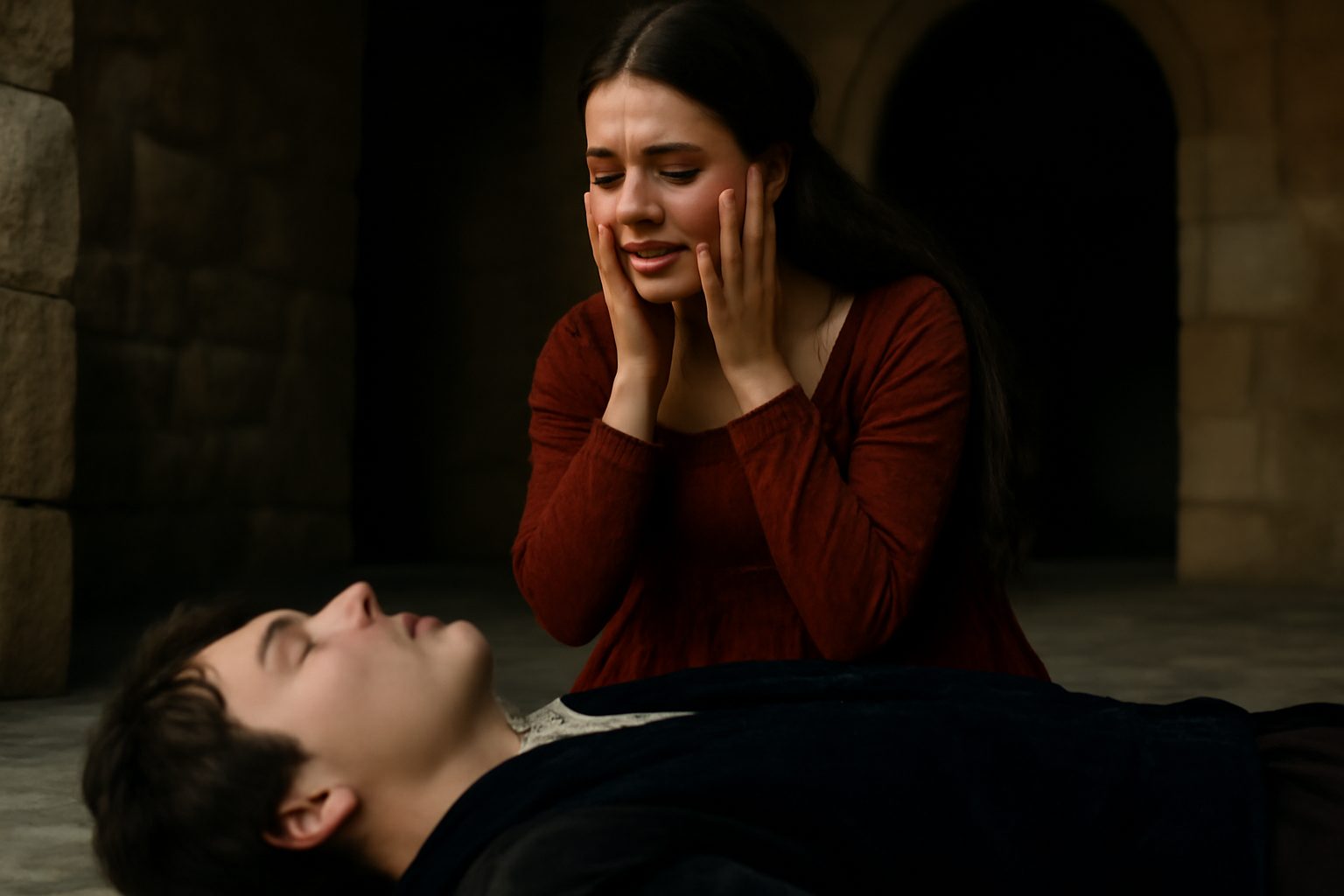
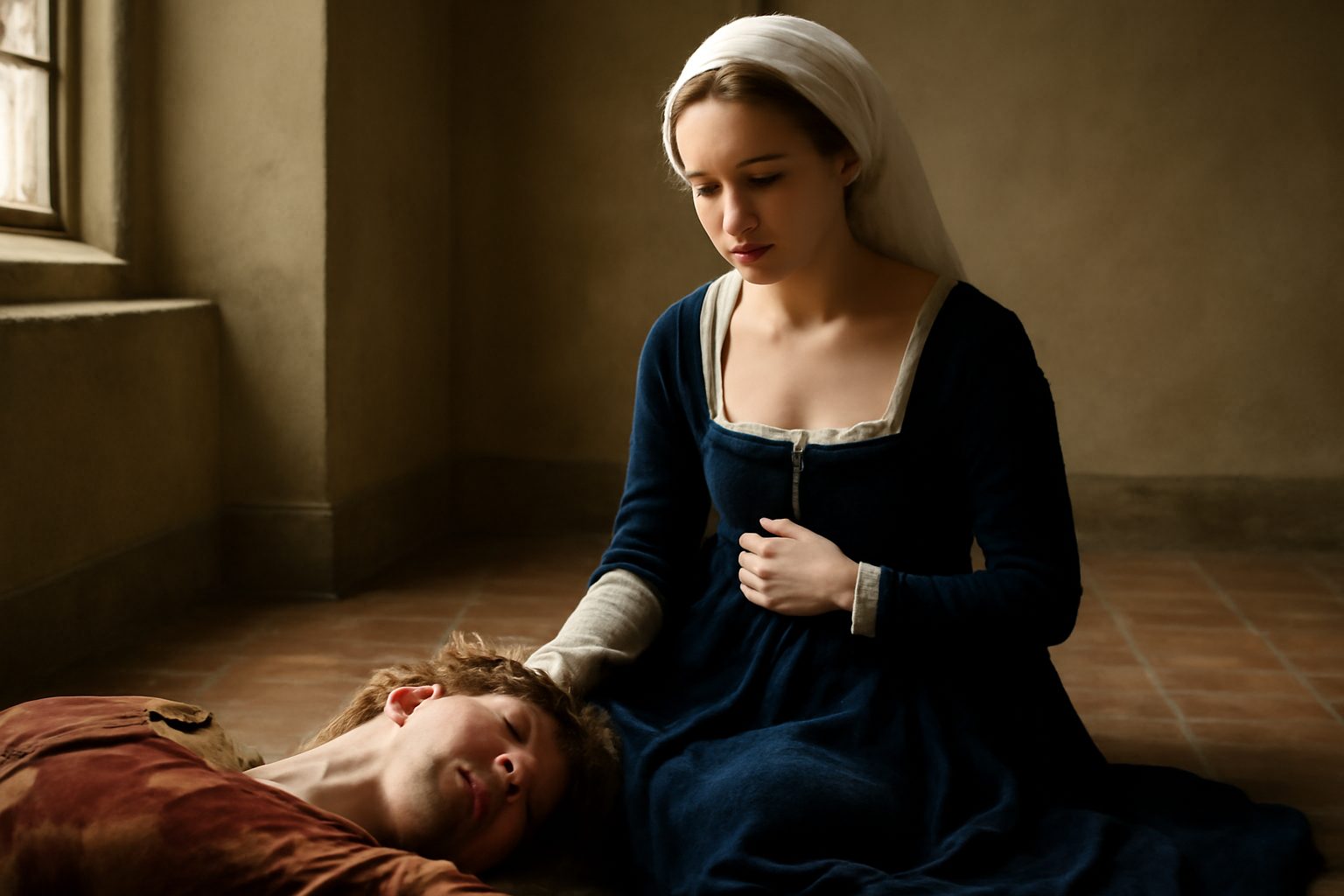
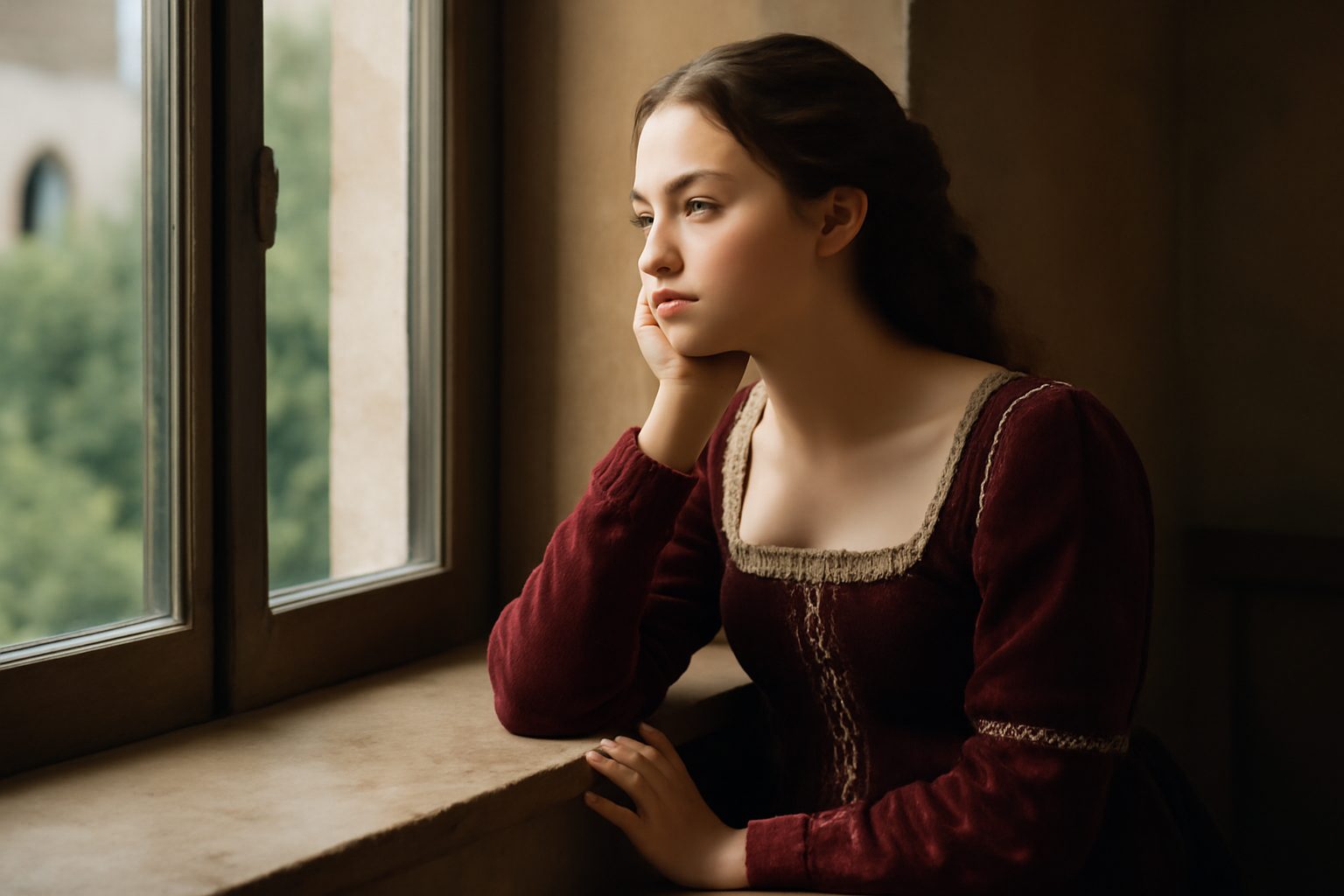
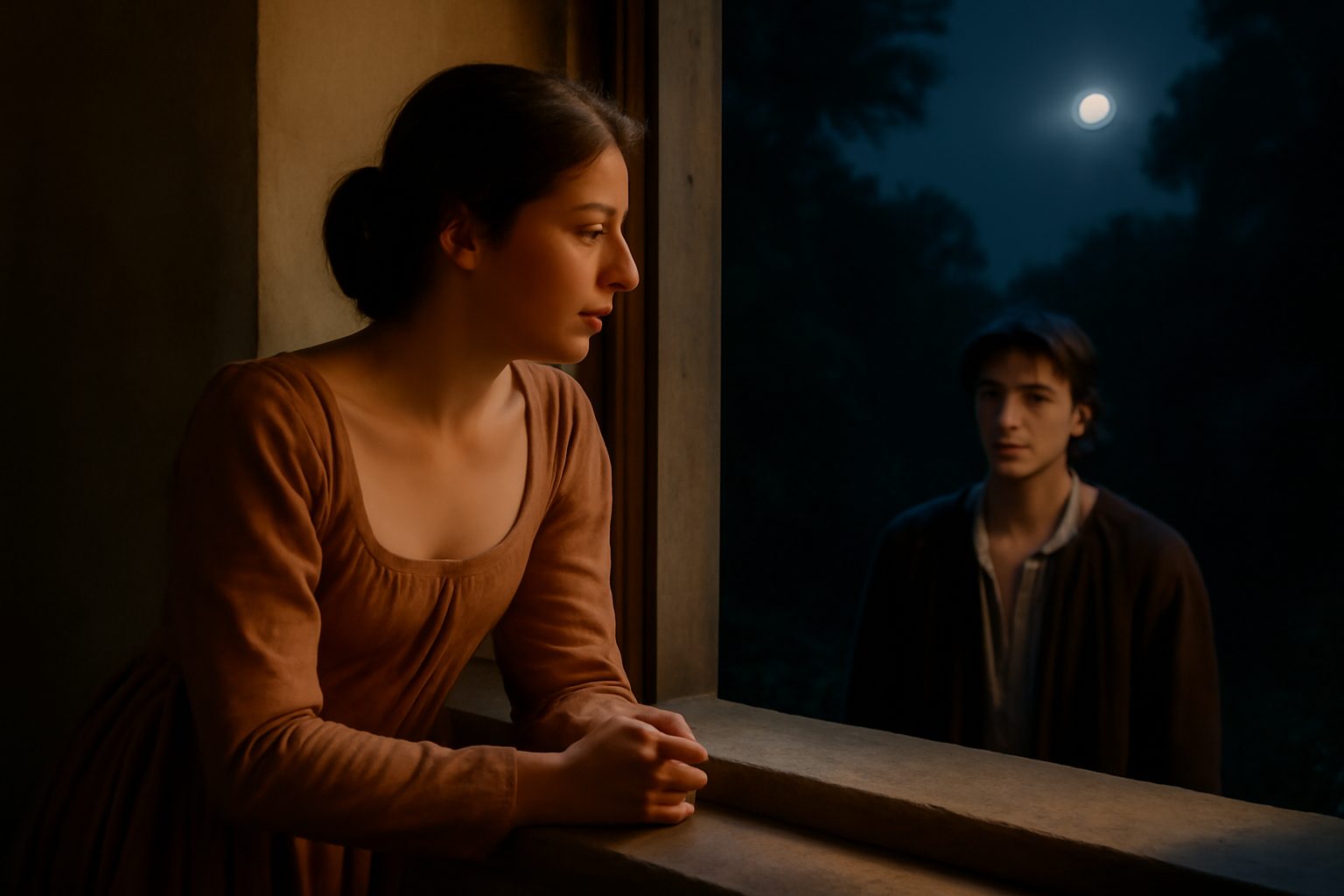
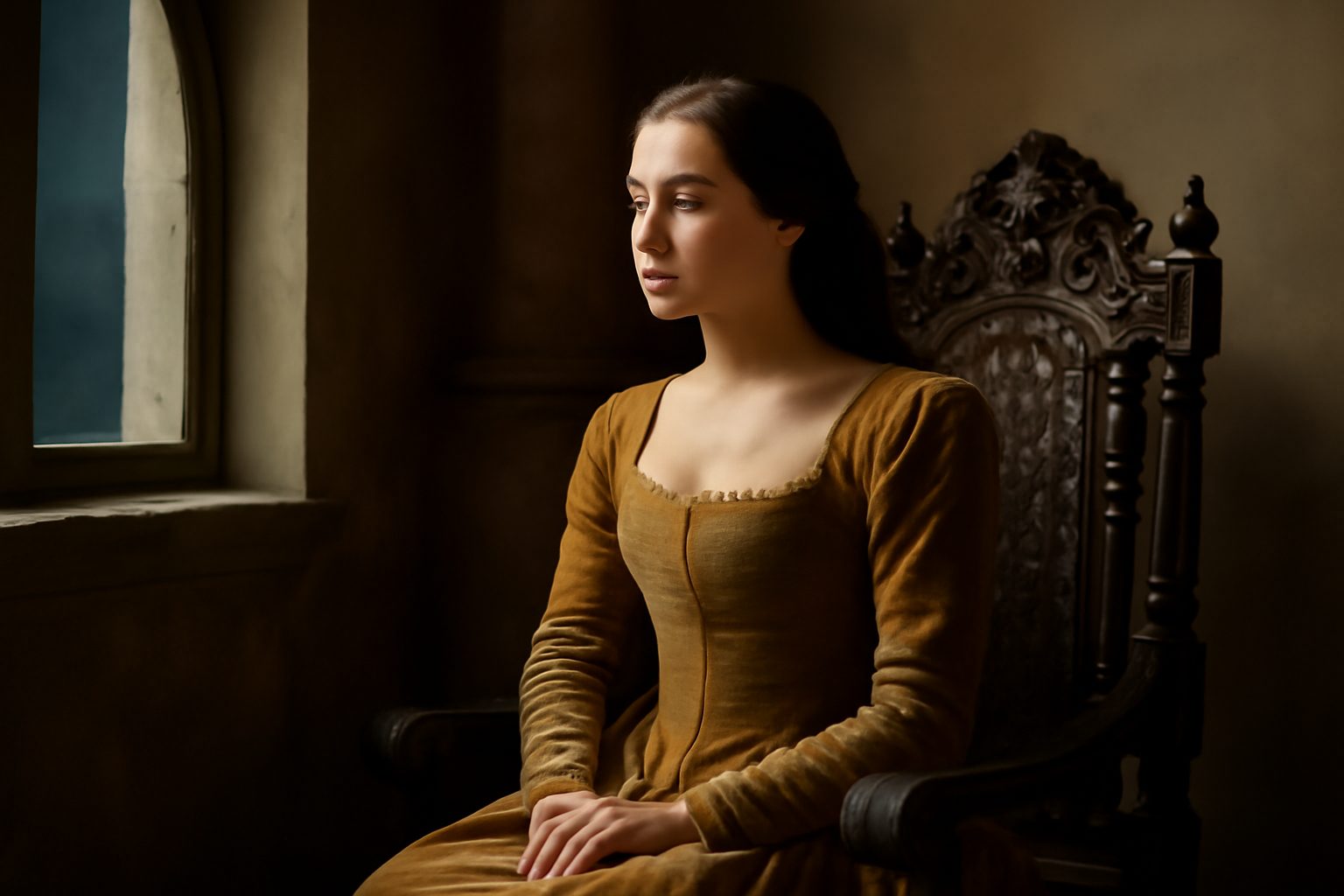
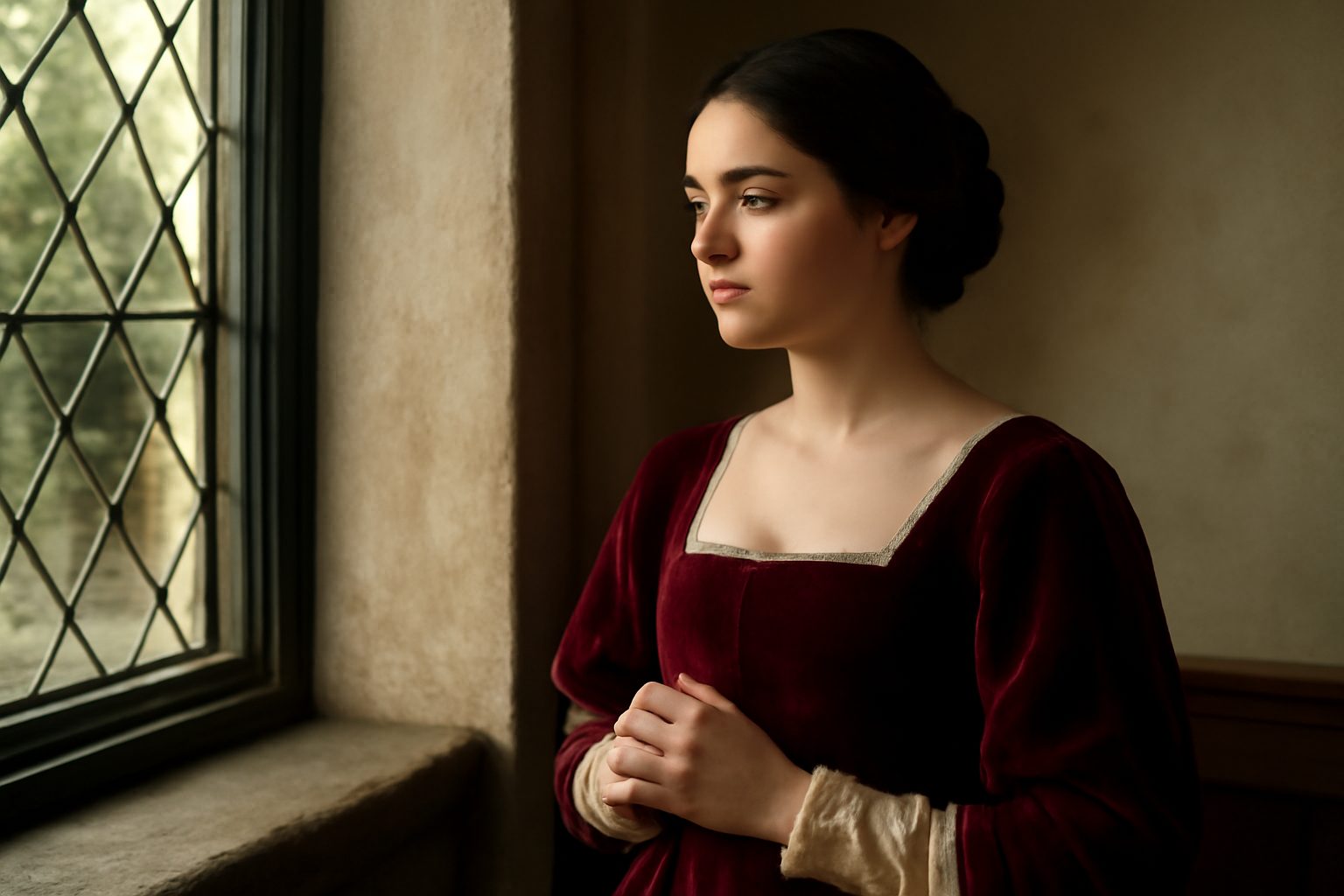
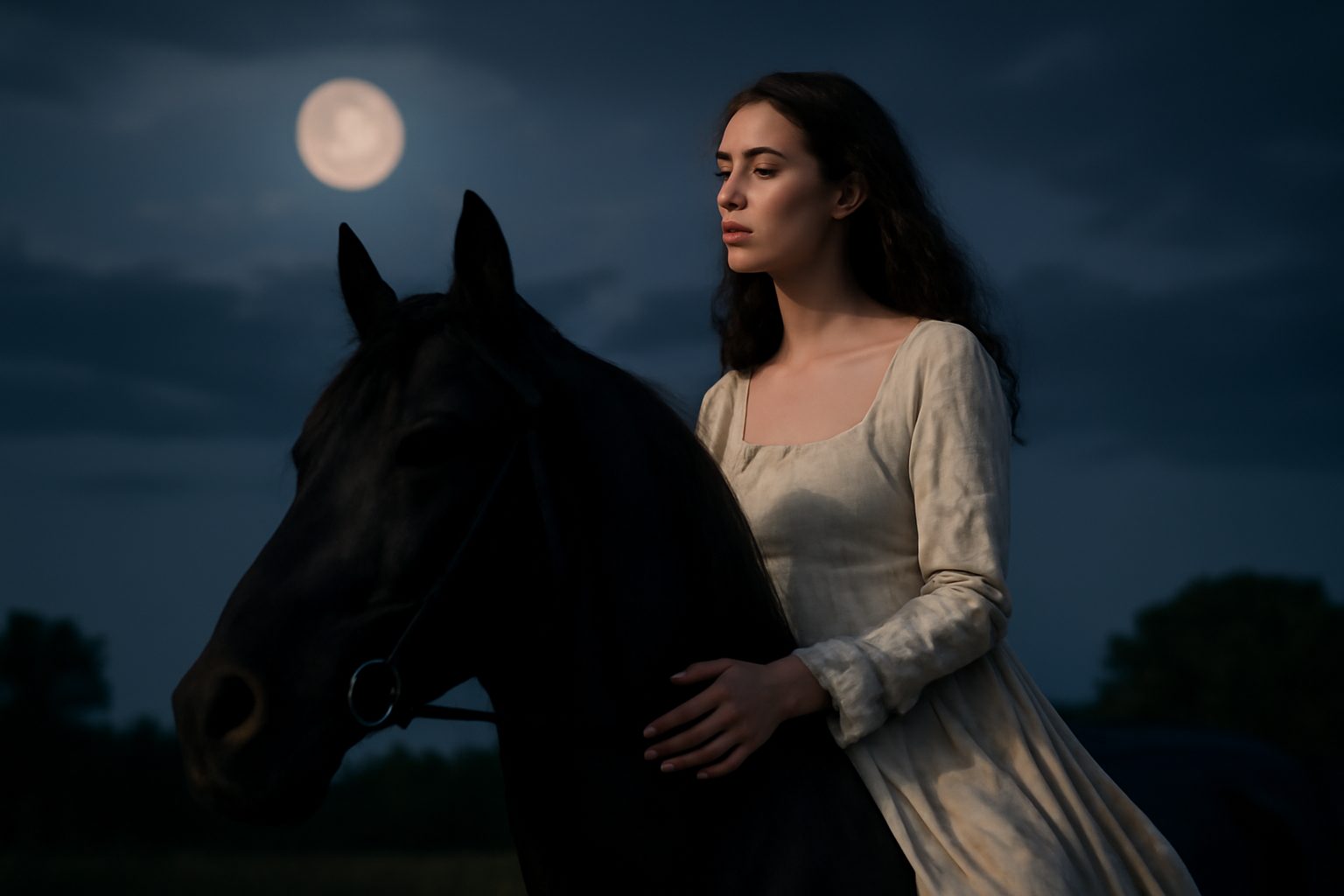
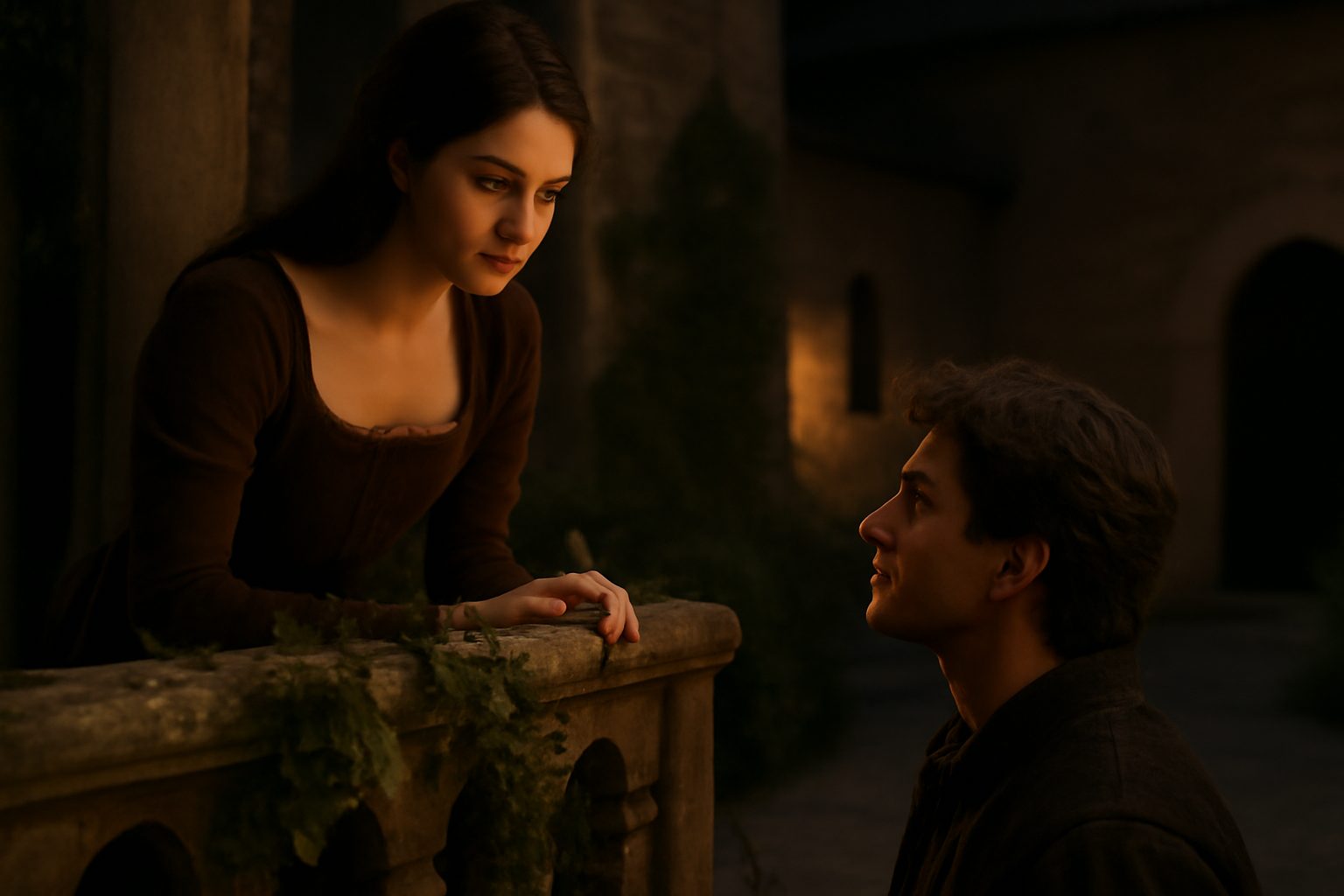
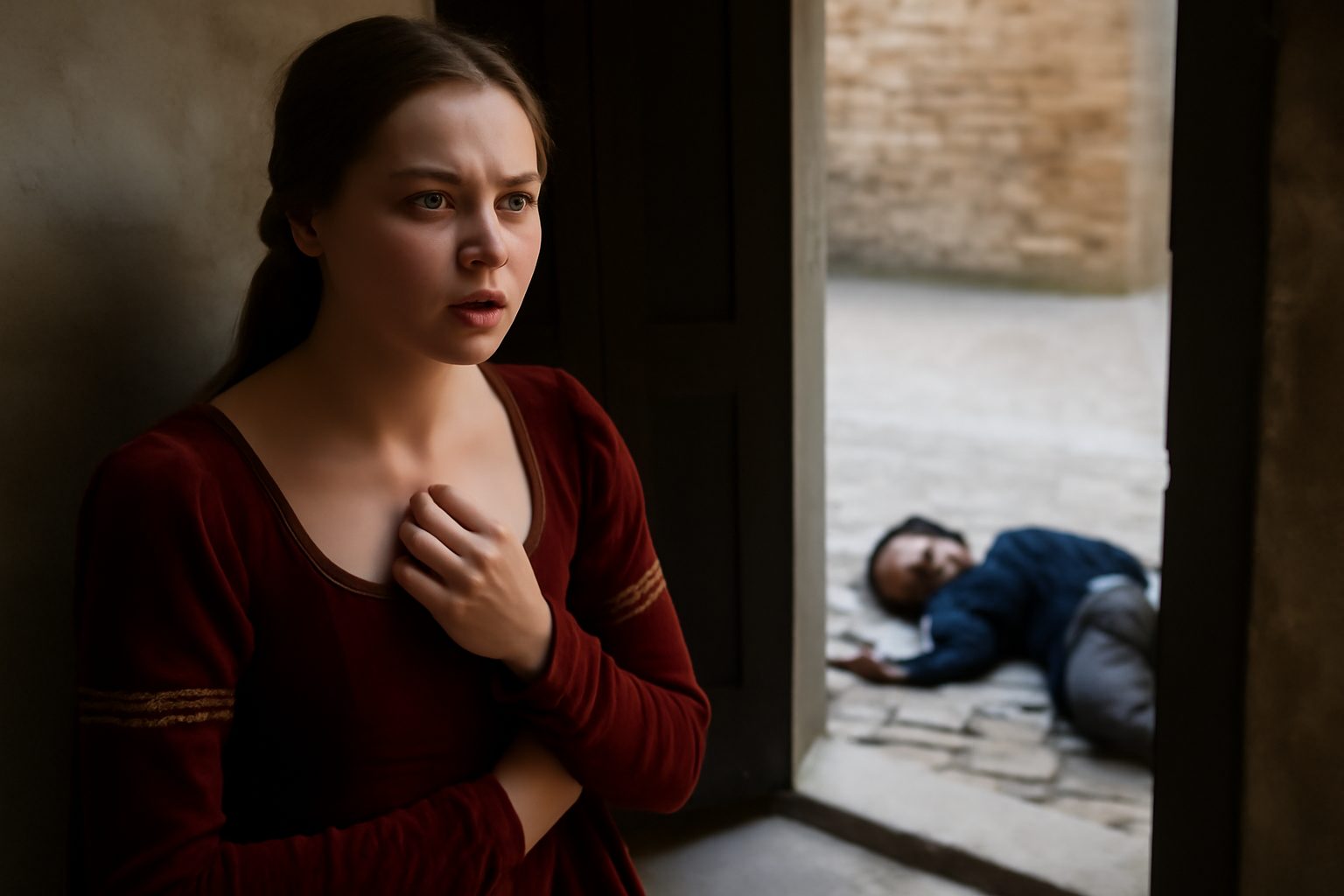
In Act 3, Scene 2 of Romeo and Juliet, Juliet delivers this impassioned soliloquy as she eagerly awaits nightfall and Romeo's arrival. Having secretly married Romeo earlier that day, she longs for the cover of darkness so they can consummate their love. The verse captures her restless anticipation, as she implores time to move faster.
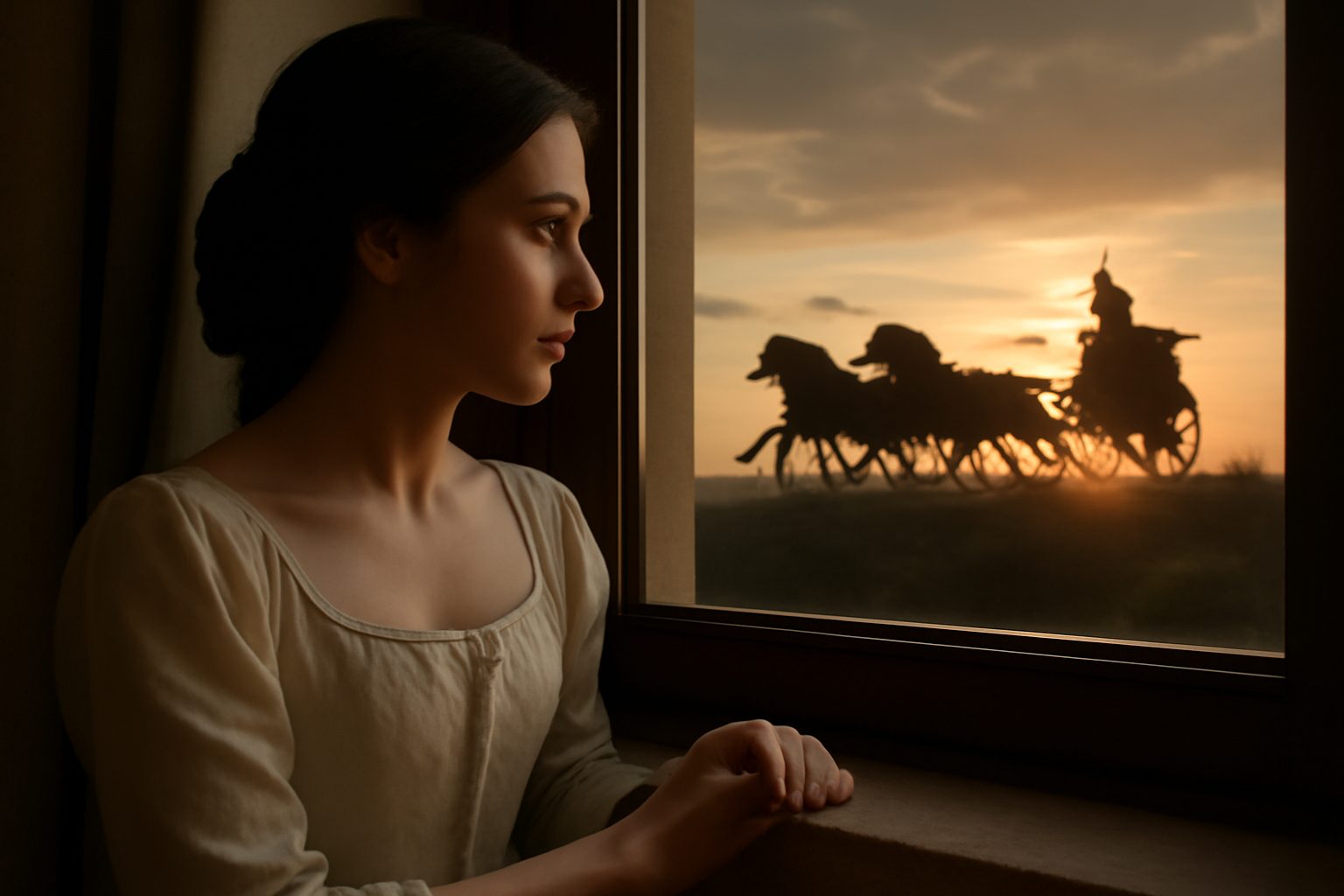
Juliet: "Gallop apace, you fiery-footed steeds,"
In modern day english, we would say:
Hurry up, time, move faster like horses with fiery feet.
Frequently Asked Questions
What is Juliet asking the horses to do in this line?
She is asking the horses to run faster.
Why does Juliet want the horses to go quickly?
She is impatient for night to come so she can be with Romeo.
Connections to other verses:
Connections to "Gallop apace, you fiery-footed steeds"
Juliet's opening soliloquy, Gallop apace, you fiery-footed steeds, establishes her fervent longing for night and Romeo's arrival, setting a tone of passionate anticipation that starkly contrasts with the tragic news to follow.
Imagery of Night and Darkness
Juliet's invocation for night to arrive quickly connects thematically with And bring in cloudy night immediately, reinforcing her desire for concealment and intimacy. Similarly, It best agrees with night. Come, civil night echoes her plea for a respectful, loving darkness, while Come, gentle night, come, loving, black-brow'd night personifies night as a comforting and anticipated presence.
Anticipation of Romeo's Arrival
Her eager call for Romeo in Come, night; come, Romeo; come, thou day in night directly continues the impatient tone of the opening lines. The romantic idealization of Romeo is further emphasized in For thou wilt lie upon the wings of night, imagining his arrival with celestial grace, and Give me my Romeo; and, when he shall die, where she poetically associates him with eternal beauty.
Contrast with Later Despair
The hopeful imagery sharply contrasts with the despair in later verses, such as Ah, well-a-day! he's dead, he's dead, he's dead! and Alack the day! he's gone, he's kill'd, he's dead!, where the Nurse's cries shatter Juliet's anticipatory joy. This emotional shift is encapsulated in Tybalt is gone, and Romeo banished, highlighting the tragic turn from romantic yearning to devastating loss.
Transformation of Night's Meaning
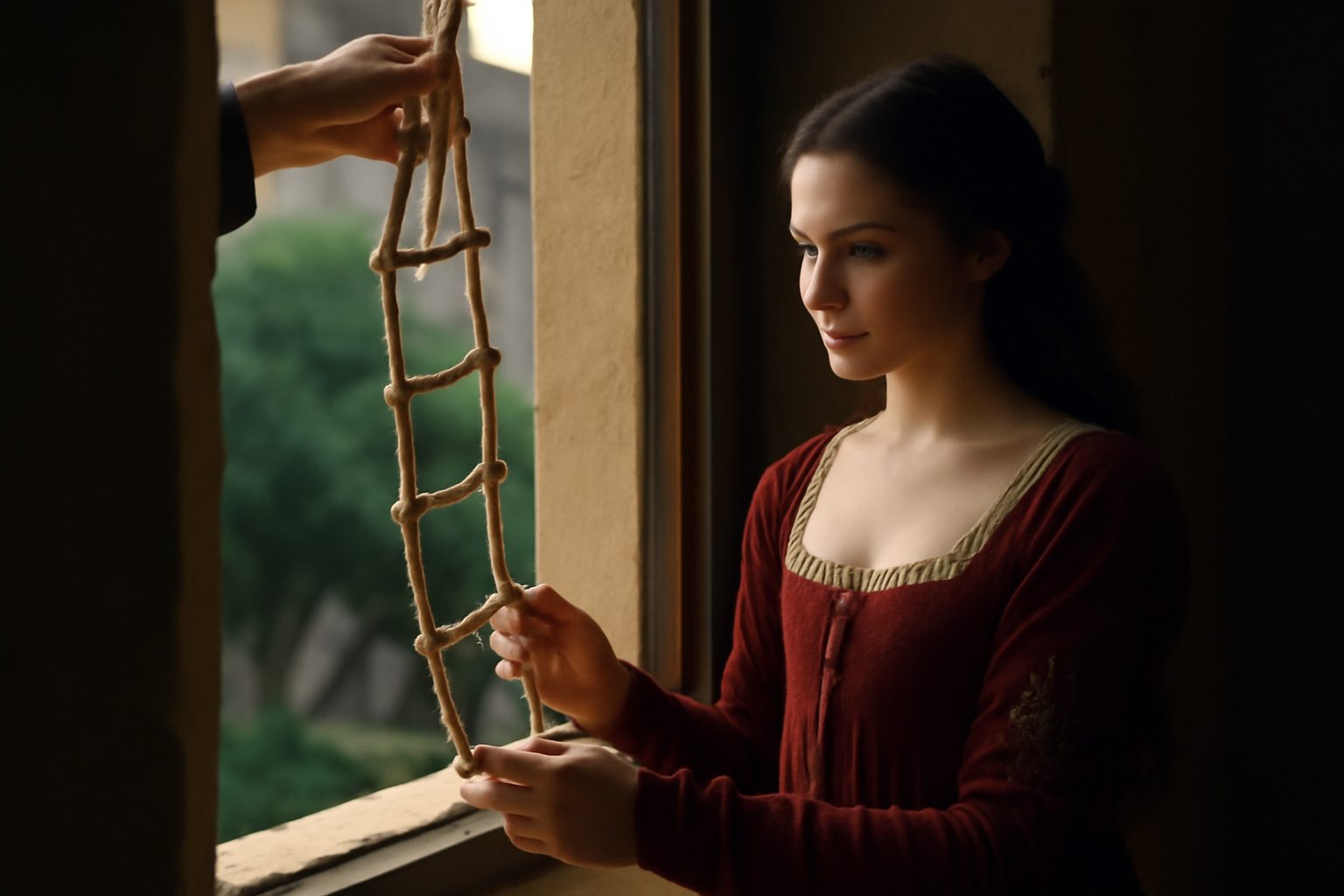
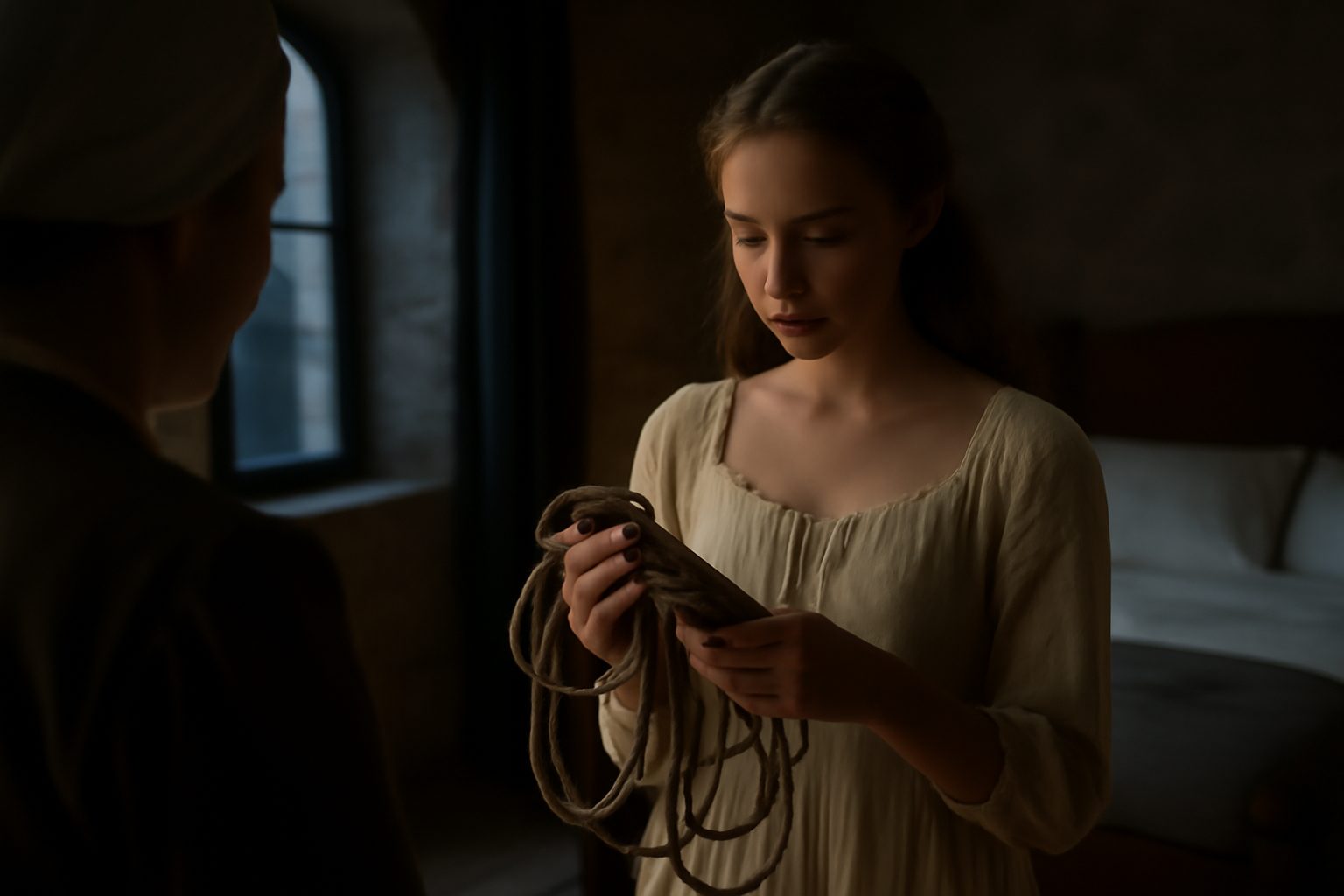
Initially a symbol of union, night becomes associated with grief and death, as seen in And death, not Romeo, take my maidenhead!, where Juliet equates night with mortality. The cords mentioned in Come, cords, come, nurse; I'll to my wedding-bed, originally for Romeo's ladder, now signify her despair, mirroring the transformation from hopeful invocation to tragic resolution.