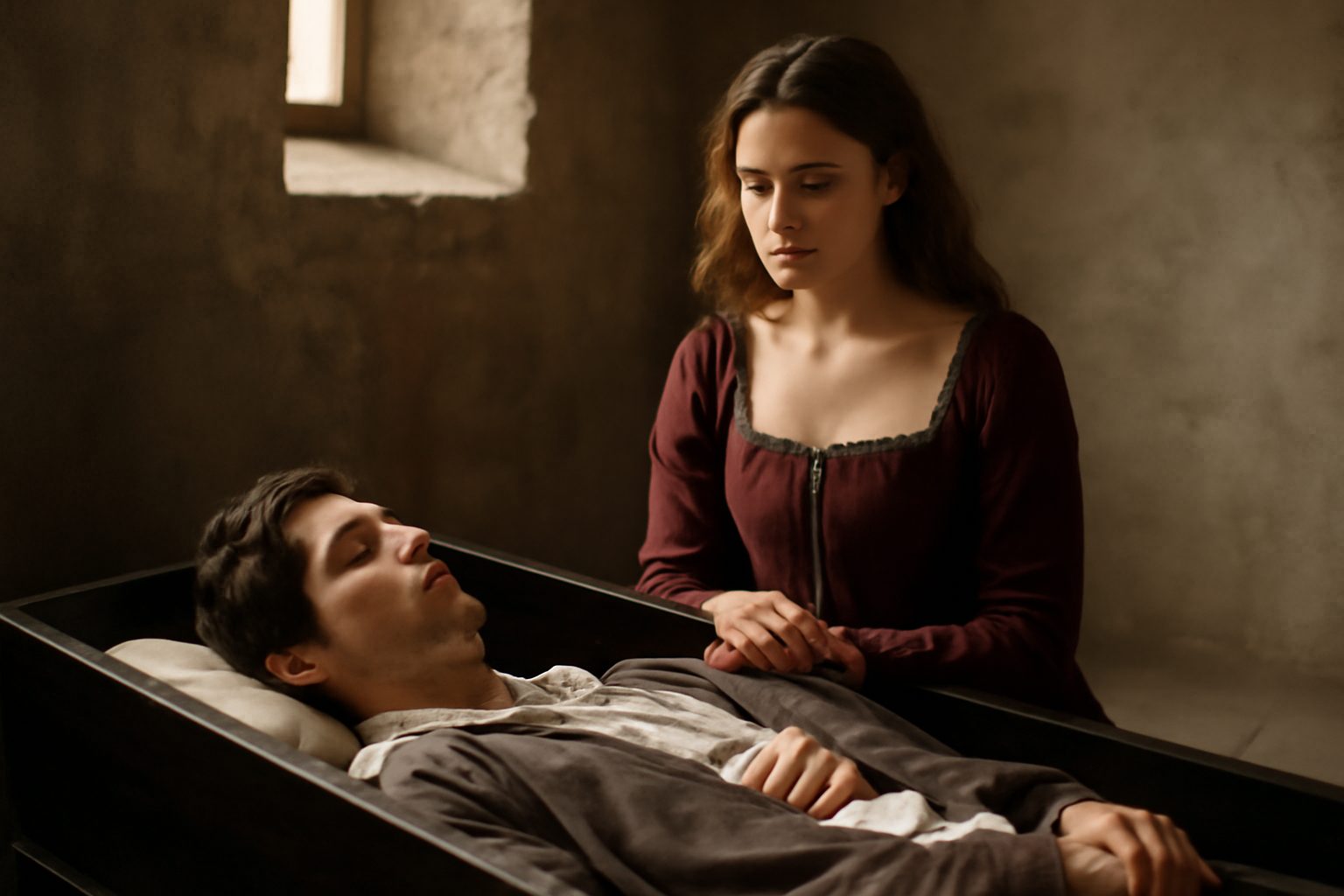
In Act 3, Scene 2 of Romeo and Juliet, the Nurse arrives with news of Tybalt's death and Romeo's banishment, leaving Juliet distraught. As Juliet desperately seeks answers, she urges the Nurse to fetch the ropes—meant as a ladder for Romeo to visit her—symbolizing her fleeting hope. This brief line reflects Juliet's frantic state, clinging to the remnants of her doomed love.
Nurse: "Ay, ay, the cords."
In modern day english, we would say:
Yes, yes, the ropes.
Frequently Asked Questions
What is the nurse referring to when she says the cords?
The nurse is referring to the ropes that Romeo will use to climb up to Juliet's room.
Connections to other verses:
Connections to "Ay, ay, the cords."
The line "Ay, ay, the cords." is spoken by Juliet in response to the Nurse's mention of the ropes (cords) that Romeo was to use to climb into Juliet's chamber for their wedding night. This moment is part of Juliet's eager anticipation for Romeo's arrival, which is abruptly shattered by the news of Tybalt's death and Romeo's banishment.
Anticipation and Preparation
Juliet's readiness is further emphasized in "Come, cords, come, nurse; I'll to my wedding-bed;", where she directly calls for the cords, associating them with her imminent union with Romeo. Similarly, "Take up those cords: poor ropes, you are beguiled," reflects her later realization that the cords will not be used for their joyful purpose, symbolizing the betrayal of her hopes.
Contrast with Grief and Loss
The initial excitement surrounding the cords starkly contrasts with the despair that follows. For instance, "Ah, well-a-day! he's dead, he's dead, he's dead!" and "Alack the day! he's gone, he's kill'd, he's dead!" highlight the Nurse's lamentations over Tybalt's death, which immediately overshadow Juliet's anticipatory joy. The cords, meant for celebration, become a painful reminder of what might have been.
Symbolism of the Cords
The cords also tie into themes of fate and entanglement. In "And thou and Romeo press one heavy bier!", Juliet envisions a shared death, foreshadowing the tragic end where their love is ultimately bound by fate, much like the cords that were to unite them physically. This connection is deepened in "And death, not Romeo, take my maidenhead!", where she prefers death over loss, echoing the cords' shift from symbols of love to instruments of despair.
Nurse's Role and Juliet's Reliance
The Nurse's involvement with the cords is evident in "That Romeo bid thee fetch?", where Juliet questions her about the ropes, showing her dependence on the Nurse for facilitating her relationship with Romeo. This dynamic is crucial, as the Nurse later delivers the devastating news that changes everything, making the cords a pivot between hope and heartbreak.