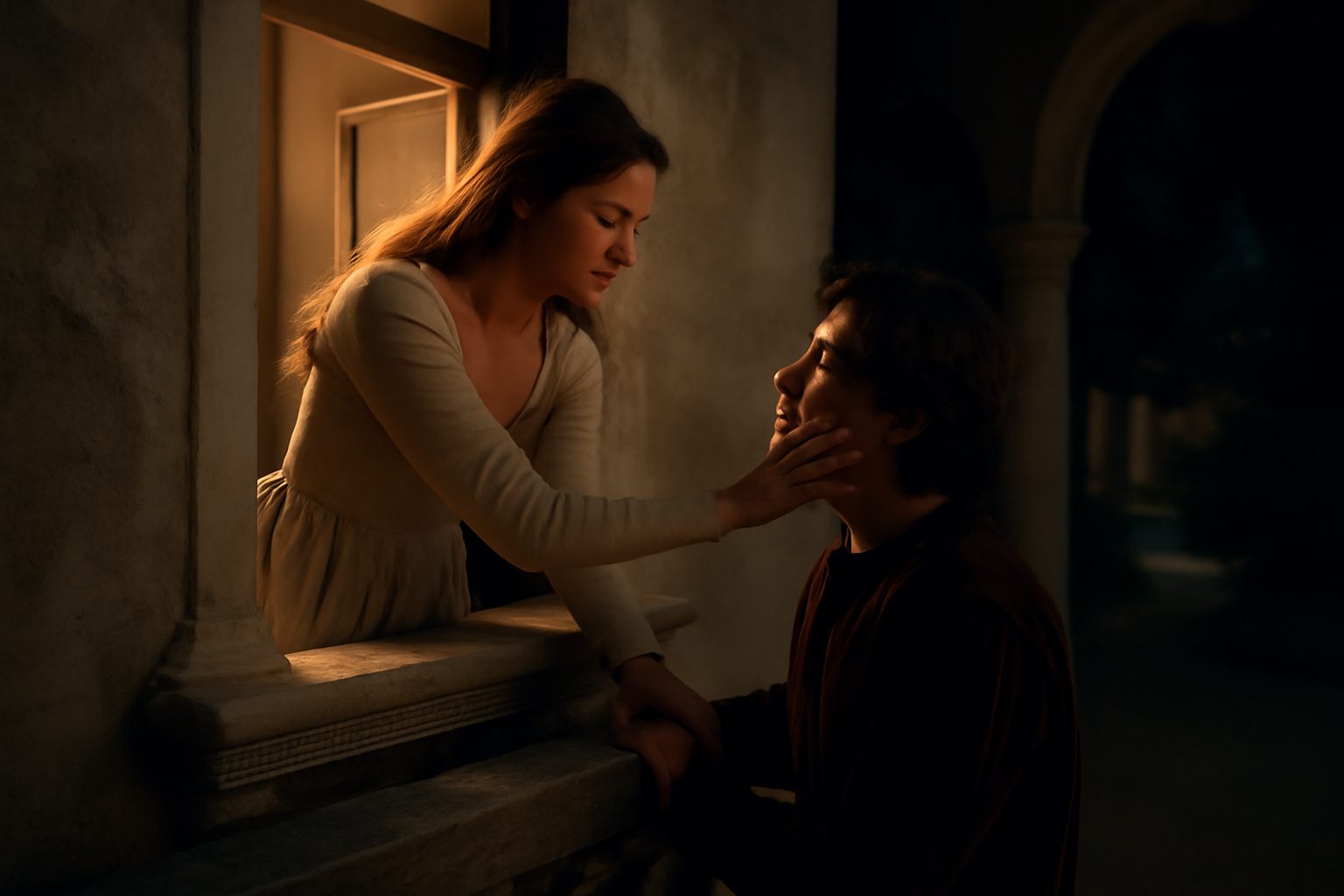
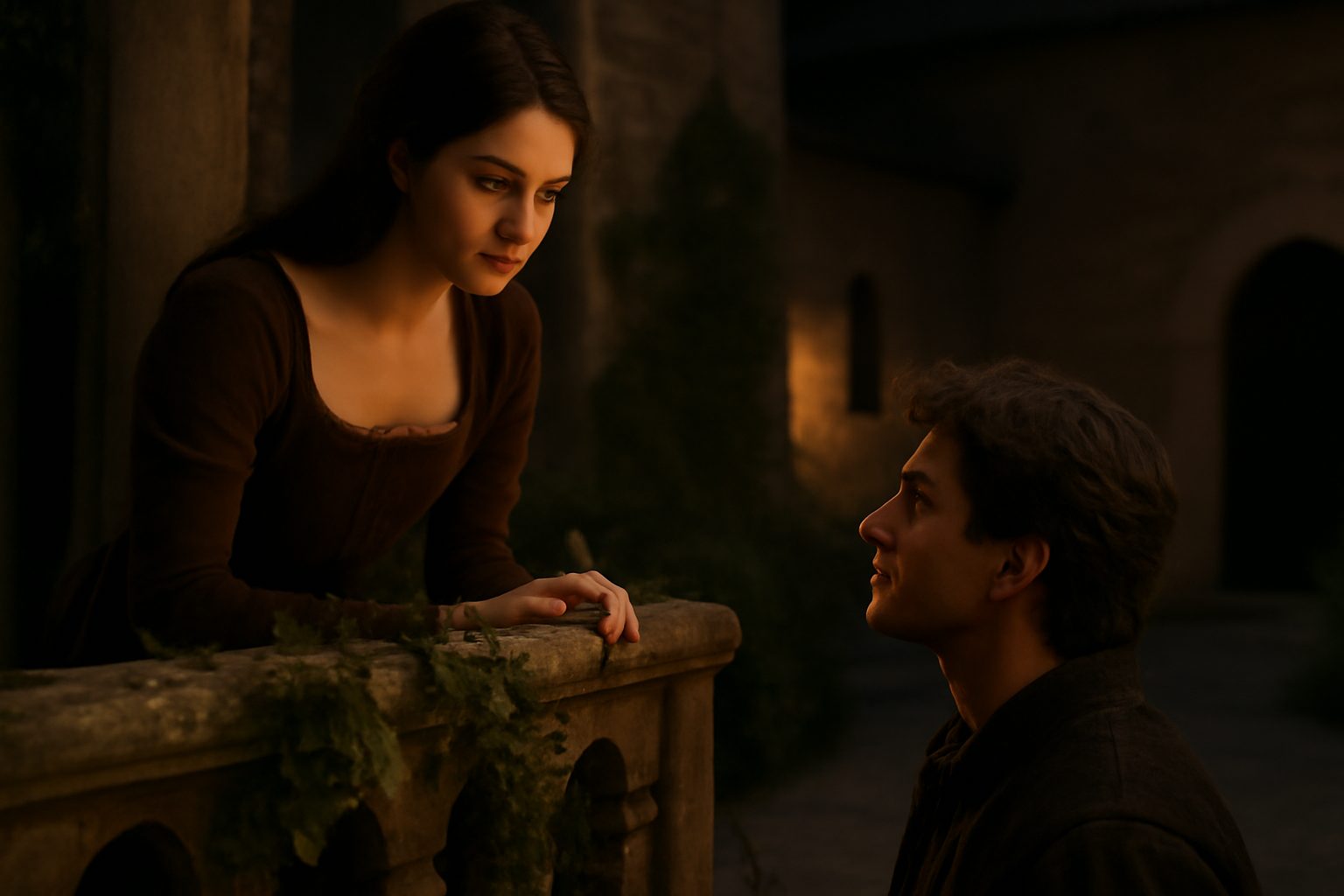
In Act 3, Scene 2 of Romeo and Juliet, Juliet anxiously awaits news from her nurse about Romeo. Unaware that he has just killed her cousin Tybalt, she imagines their love as a victorious game. This line captures her conflicted emotions, as she unwittingly foreshadows the tragic turn their romance will take.
Juliet: "And learn me how to lose a winning match,"
In modern day english, we would say:
Teach me how to accept defeat even when I was so close to winning.
Frequently Asked Questions
What does Juliet want to learn in this line from Romeo and Juliet?
Juliet wants to learn how to accept losing even when she was winning.
Connections to other verses:
Connections to "And learn me how to lose a winning match"
The verse "And learn me how to lose a winning match" reflects Juliet's paradoxical experience of love and loss. It connects thematically and emotionally to several other verses in the scene.
Contrast of Joy and Sorrow
Juliet's anticipation of her wedding night, expressed in lines like "Leap to these arms, untalk'd of and unseen" and "Come, night; come, Romeo; come, thou day in night", contrasts sharply with the tragic news she receives. The "winning match" of love turns into loss, mirroring her later exclamation "O, break, my heart! poor bankrupt, break at once!".
Oxymoronic Expressions
The idea of losing what was won parallels the oxymorons Juliet uses upon learning of Romeo's actions, such as "Beautiful tyrant! fiend angelical!" and "Dove-feather'd raven! wolvish-ravening lamb!". These highlight the conflict between appearance and reality, much like the paradox in the original verse.
Emotional Descent
Juliet's initial hopefulness devolves into despair, evident in verses like "Ah, well-a-day! he's dead, he's dead, he's dead!" and "All slain, all dead. 'Romeo is banished!'". The notion of "losing a winning match" culminates in her realization of Romeo's banishment, described as a word that murders her ("That murder'd me: I would forget it fain").
Resolution and Defiance
Despite the loss, Juliet's resolve strengthens, as seen in "And death, not Romeo, take my maidenhead!" and her determination to reunite with Romeo in "O, find him! give this ring to my true knight". This shows her transition from despair to action, echoing the initial call to "learn" how to cope with loss.