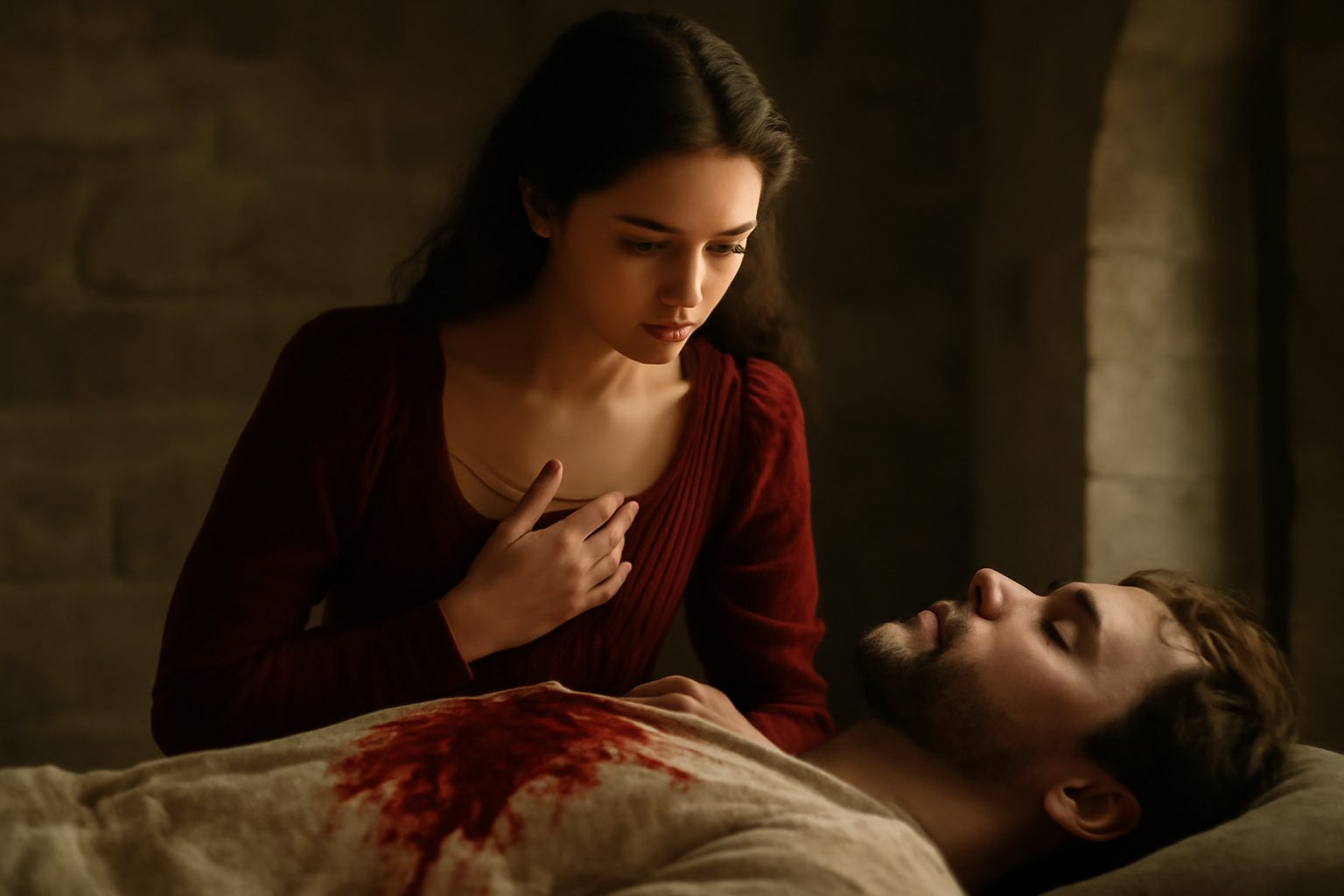
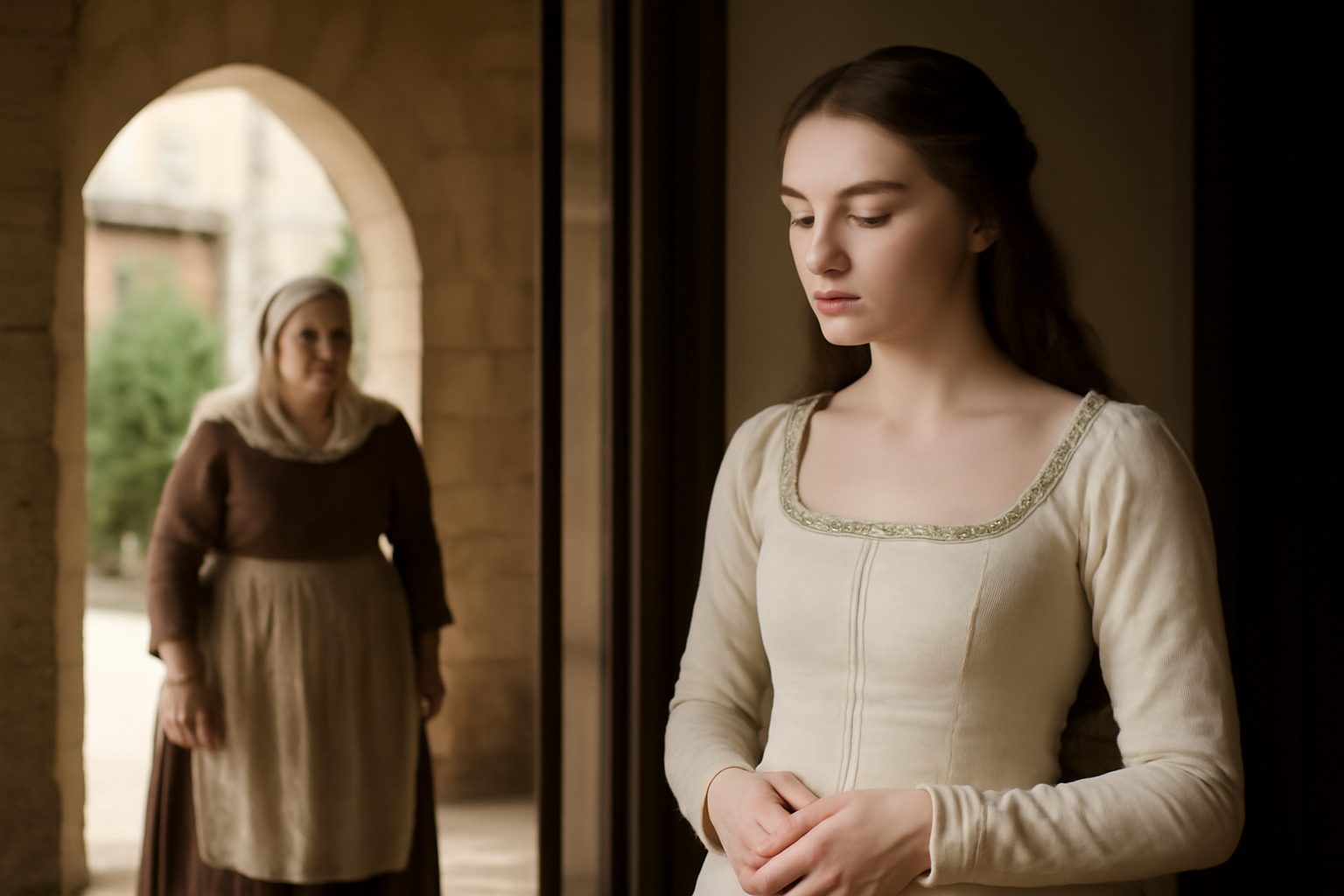
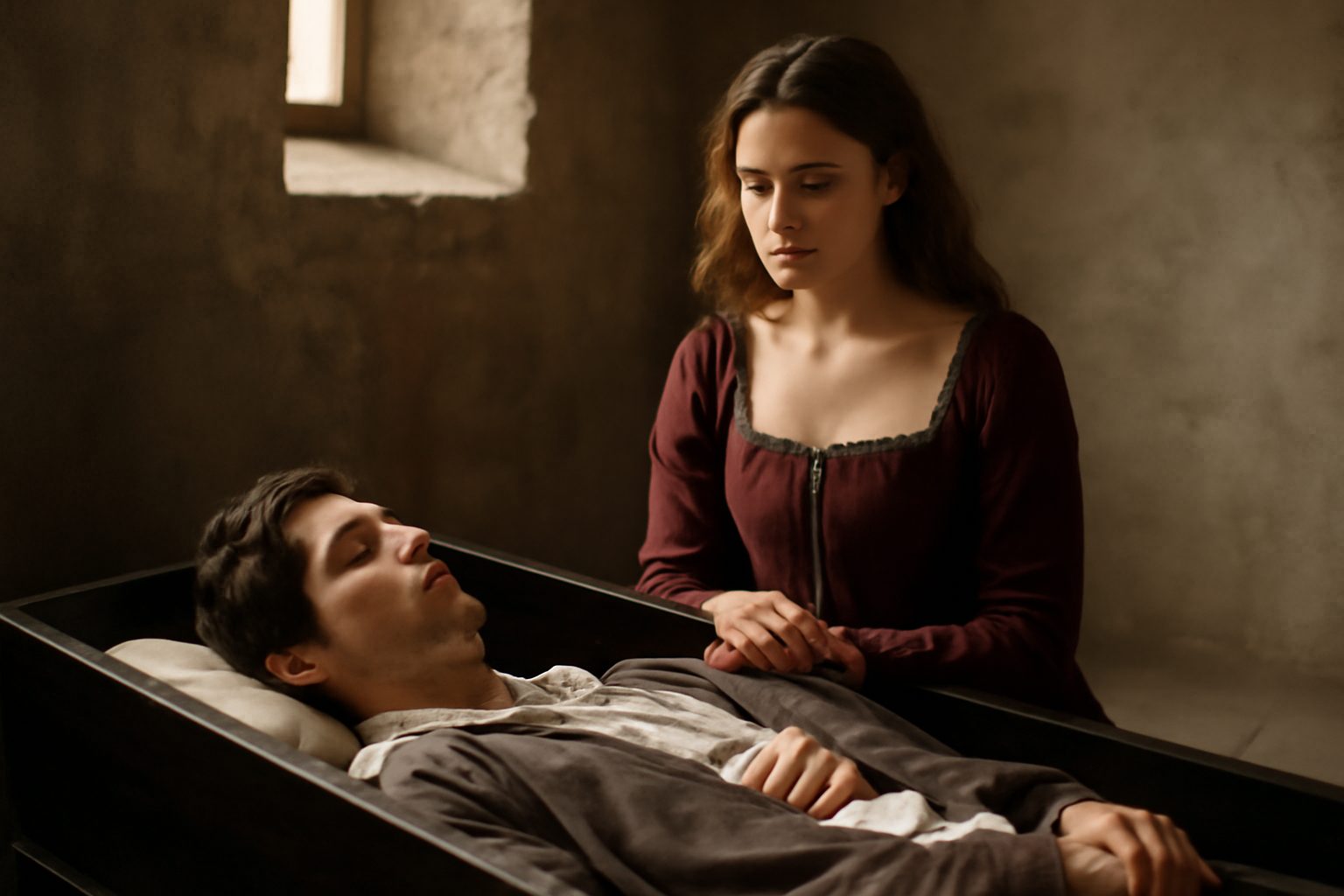
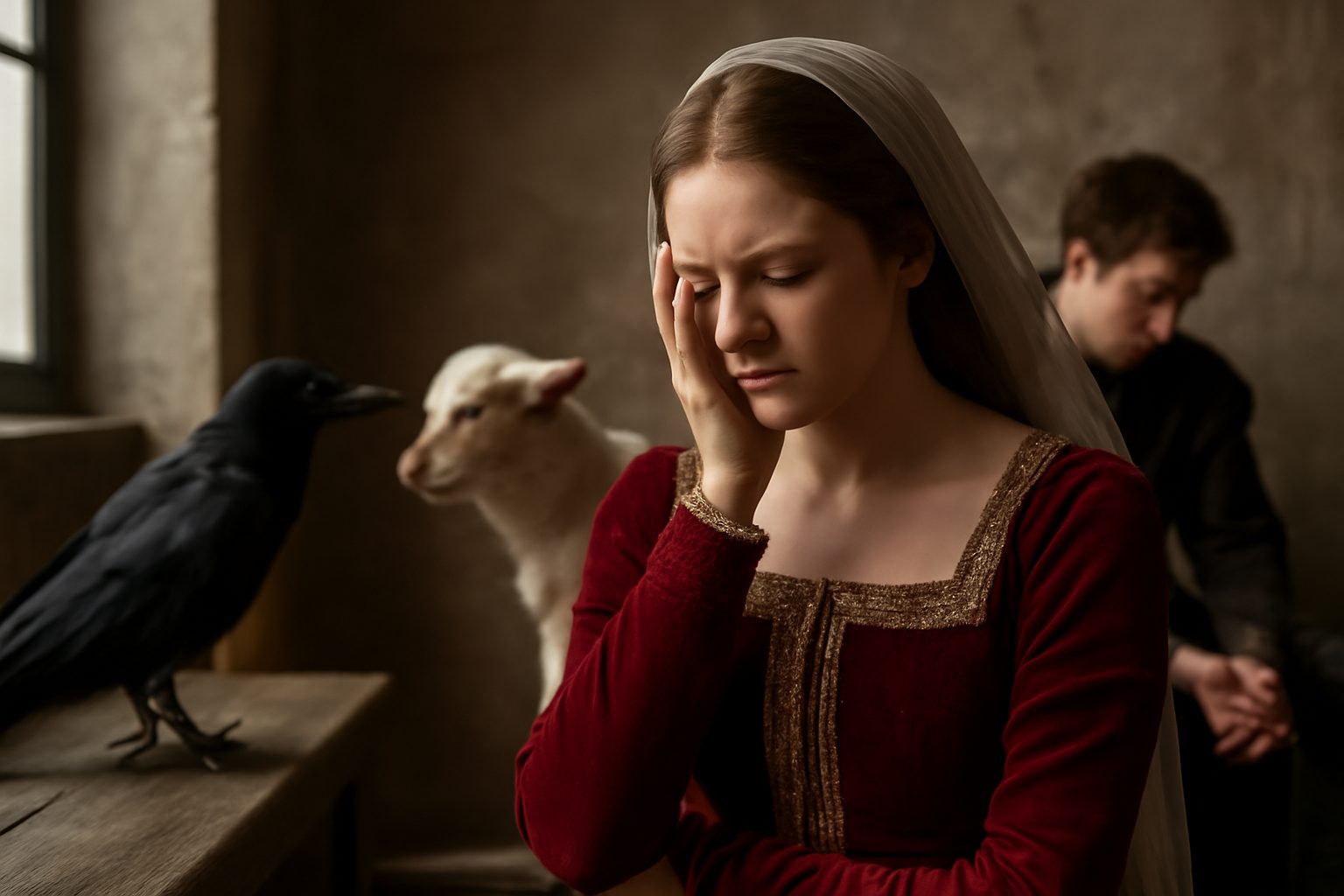
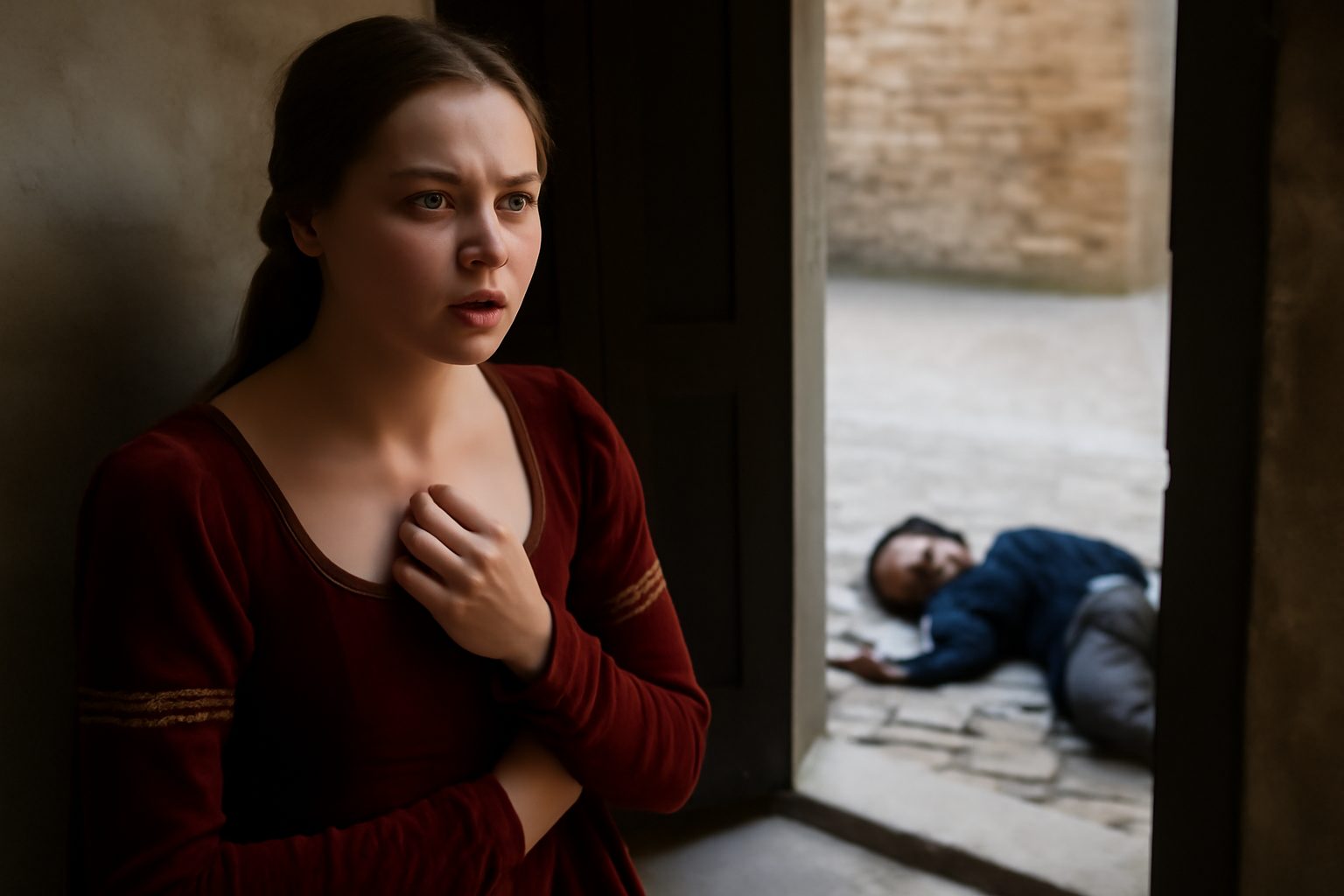
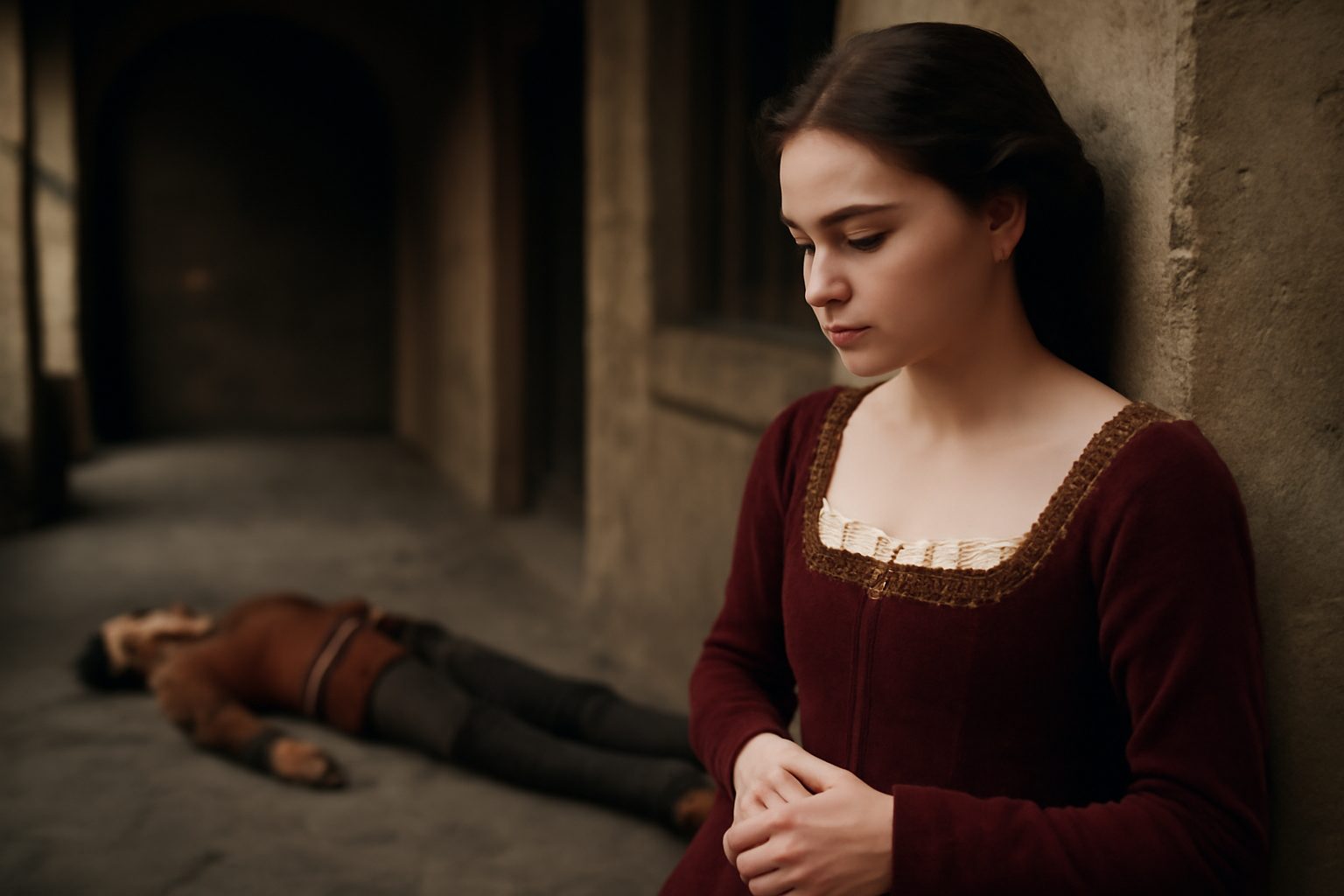
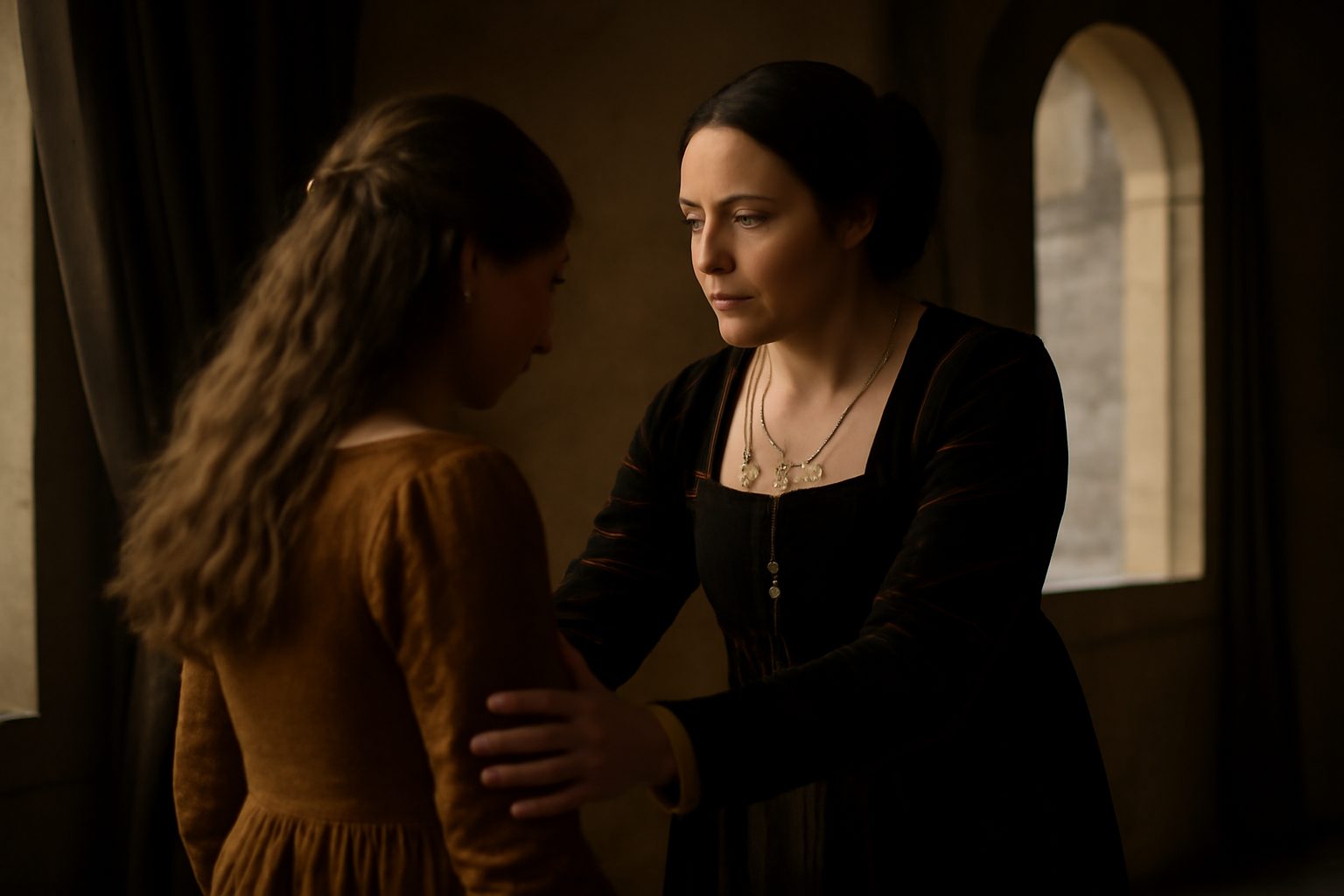
In Act 3, Scene 2 of Romeo and Juliet, the Nurse arrives in distress to deliver news to Juliet about a violent confrontation. Her graphic description of the scene, including the mention of blood and fainting, heightens the tension as Juliet anxiously awaits word of Romeo. This moment underscores the chaos and tragedy unfolding, leaving Juliet unprepared for the grim revelation to come.
Nurse: "All in gore-blood; I swounded at the sight."
In modern day english, we would say:
Covered in blood and gore; I fainted when I saw it.
Frequently Asked Questions
What does the Nurse mean when she says she swounded at the sight?
She means she fainted because she saw so much blood.
Connections to other verses:
Connections to "All in gore-blood; I swounded at the sight."
The verse "All in gore-blood; I swounded at the sight." vividly describes the Nurse's reaction to witnessing Tybalt's bloody corpse. This moment of shock and horror is deeply interconnected with other verses in the scene, particularly those detailing the physical and emotional aftermath of the violence.
Visual and Emotional Descriptions of Death
The graphic imagery in this line is echoed in "A piteous corse, a bloody piteous corse;", which reinforces the gruesome sight that causes the Nurse to faint. Similarly, "Pale, pale as ashes, all bedaub'd in blood," provides further detail on Tybalt's appearance, emphasizing the contrast between pallor and blood that heightens the horror.
Reactions to the Tragedy
The Nurse's physical collapse—"I swounded at the sight"—is a response to the overwhelming news, which is met with other exclamations of grief. For instance, "Ah, well-a-day! he's dead, he's dead, he's dead!" and "Alack the day! he's gone, he's kill'd, he's dead!" convey a similar sense of despair and repetition that underscores the shock. Juliet's own emotional turmoil is captured in "O, break, my heart! poor bankrupt, break at once!", linking internal anguish to the Nurse's external reaction.
Context of the Bloodshed
The reference to "gore-blood" ties directly to the cause of the violence: Romeo's slaying of Tybalt. This is addressed in "O God! did Romeo's hand shed Tybalt's blood?", where Juliet grapples with the revelation. The theme of blood and honor recurs in "God save the mark!--here on his manly breast:", which may allude to the fatal wound, further connecting to the Nurse's horrified observation.
Aftermath and Despair
The Nurse's swoon symbolizes the overwhelming nature of the events, which lead to broader expressions of loss and confusion, such as "What storm is this that blows so contrary?". The collective grief is also reflected in "Weeping and wailing over Tybalt's corse:", showing how the sight of bloodshed permeates the entire scene.