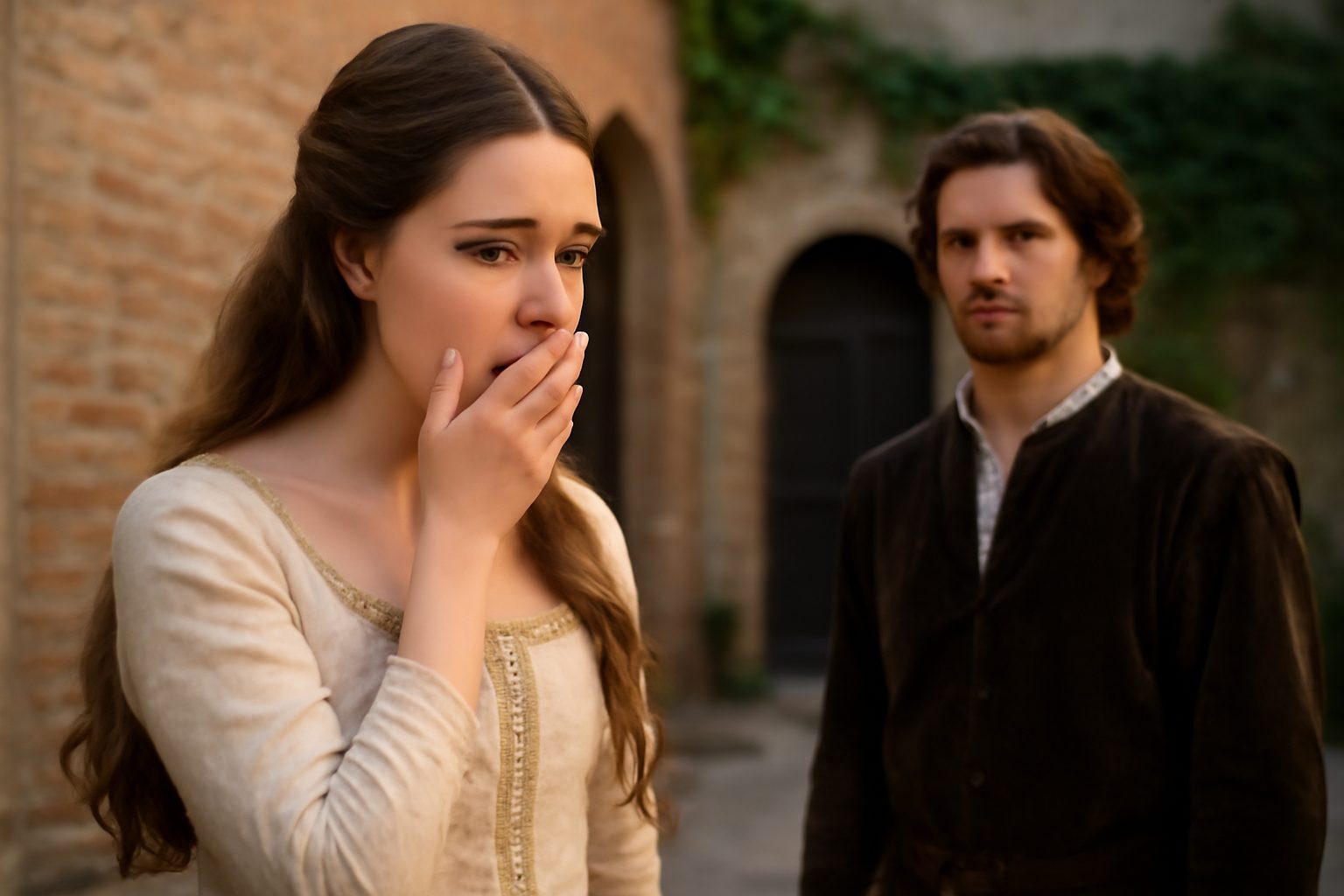
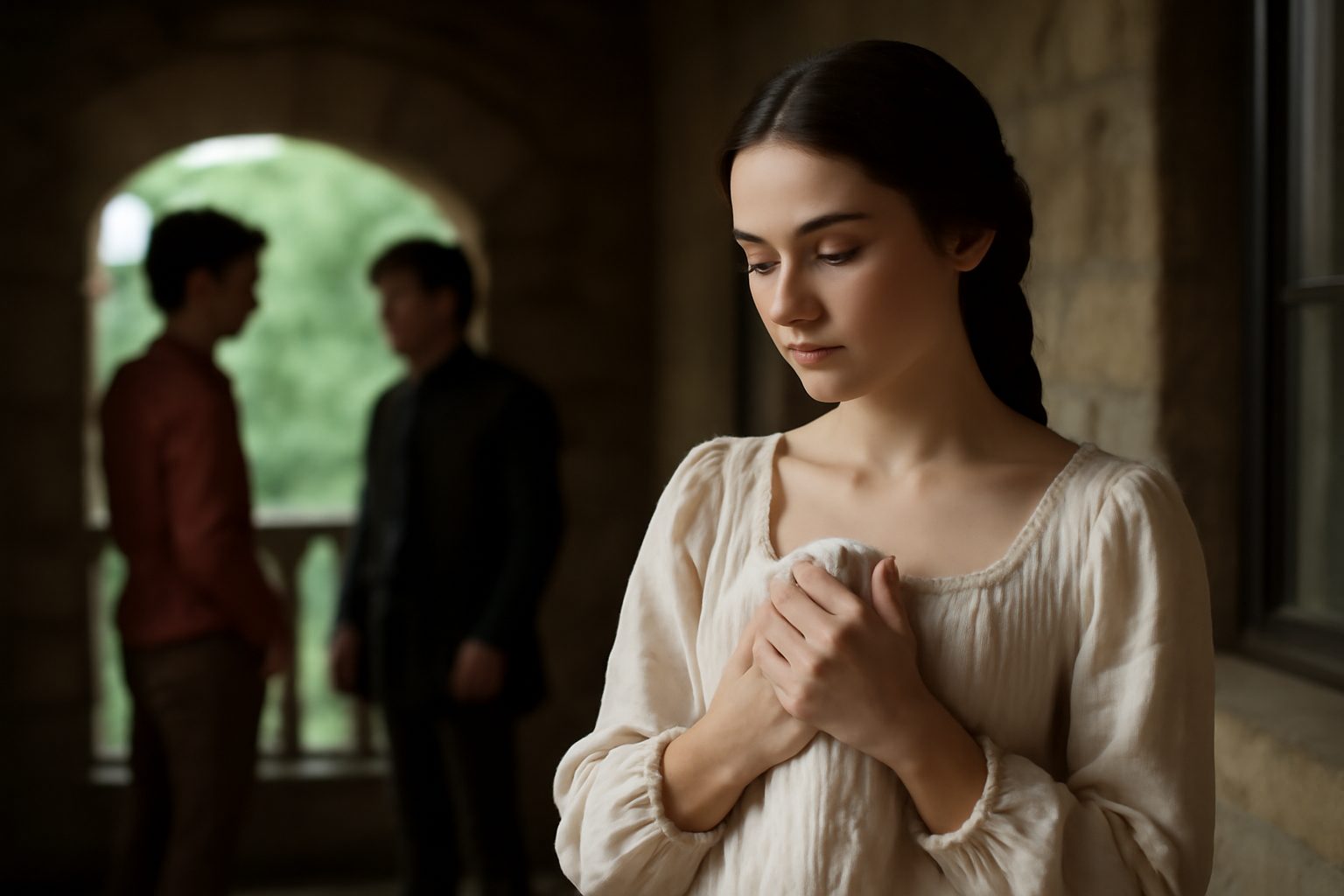
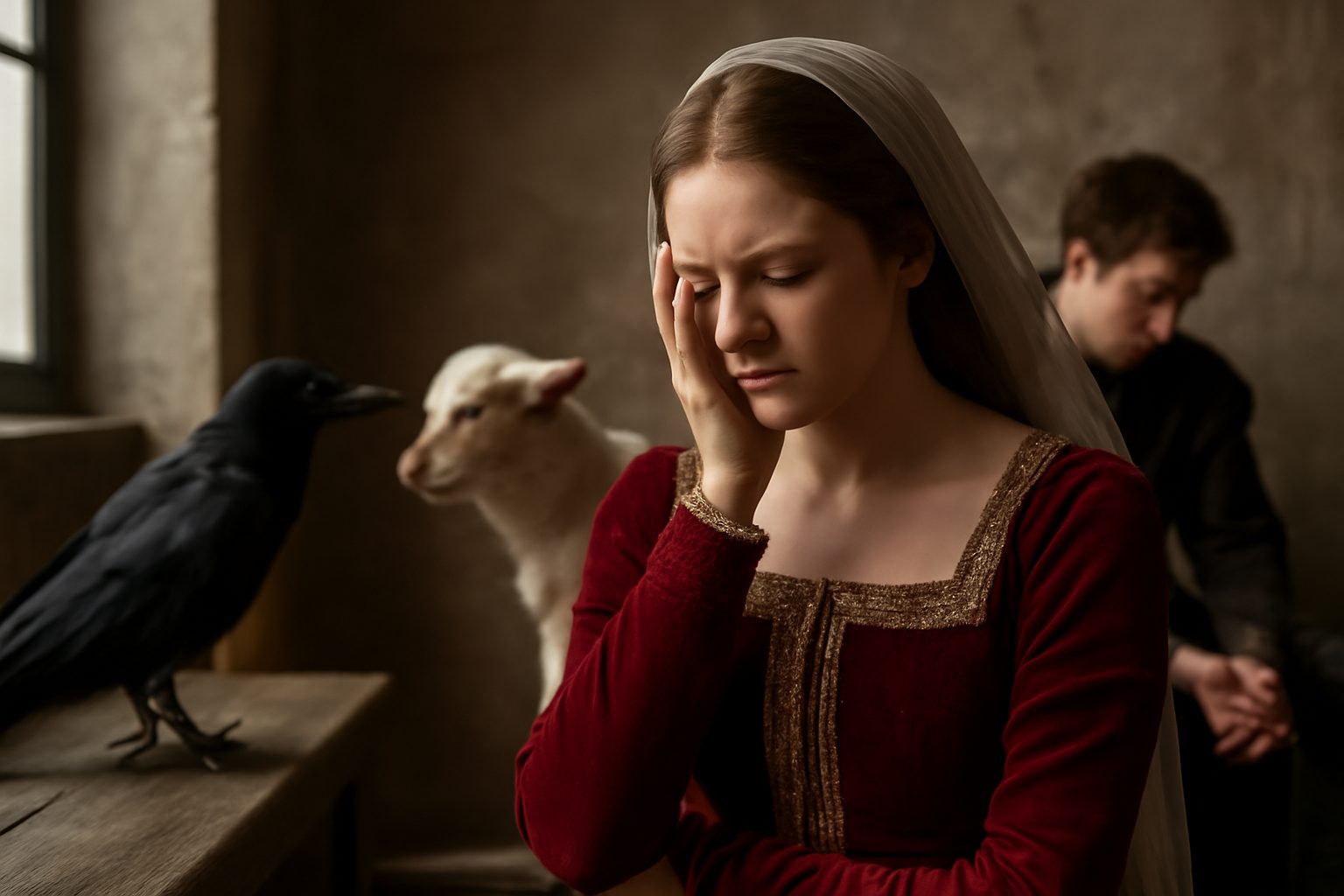
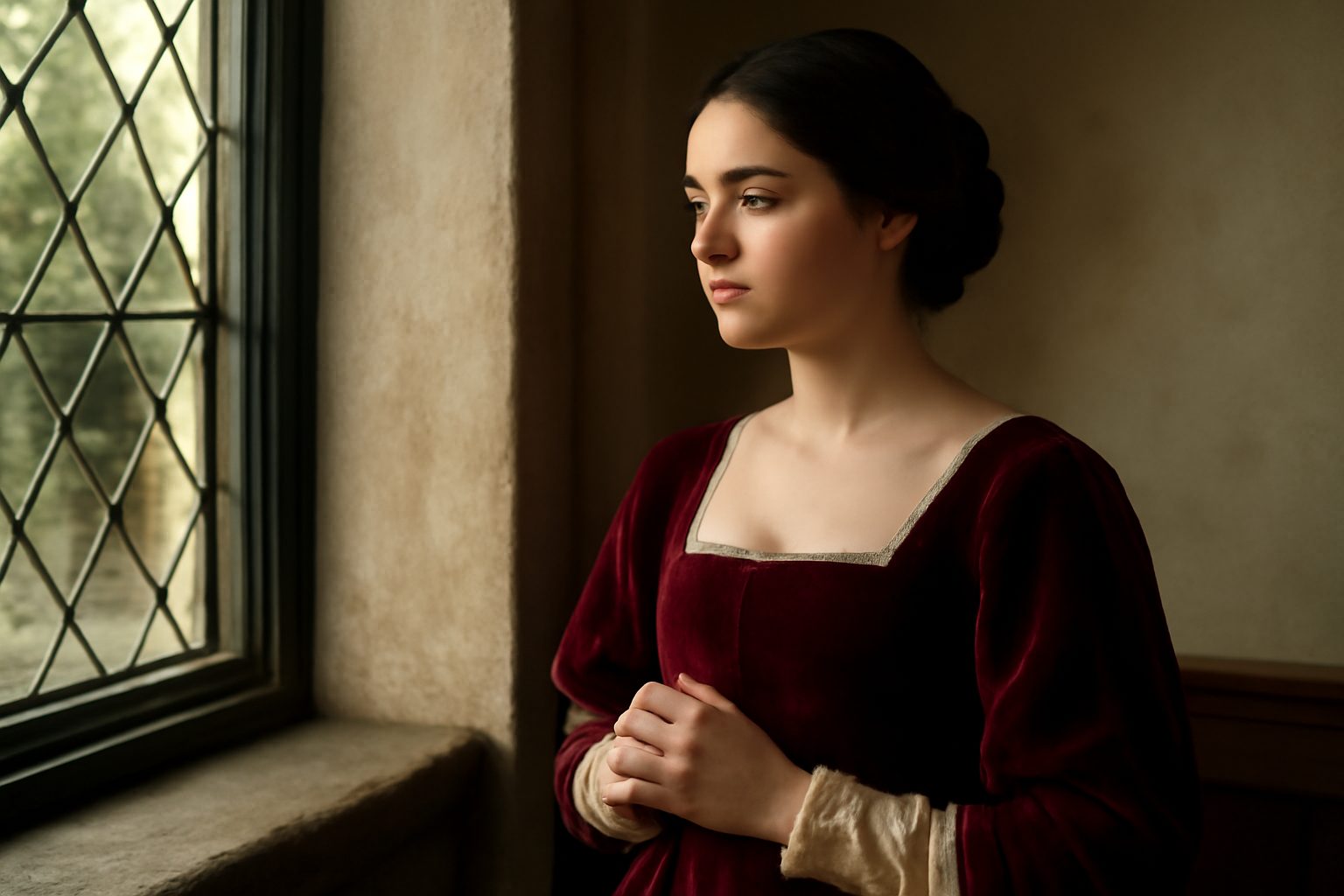
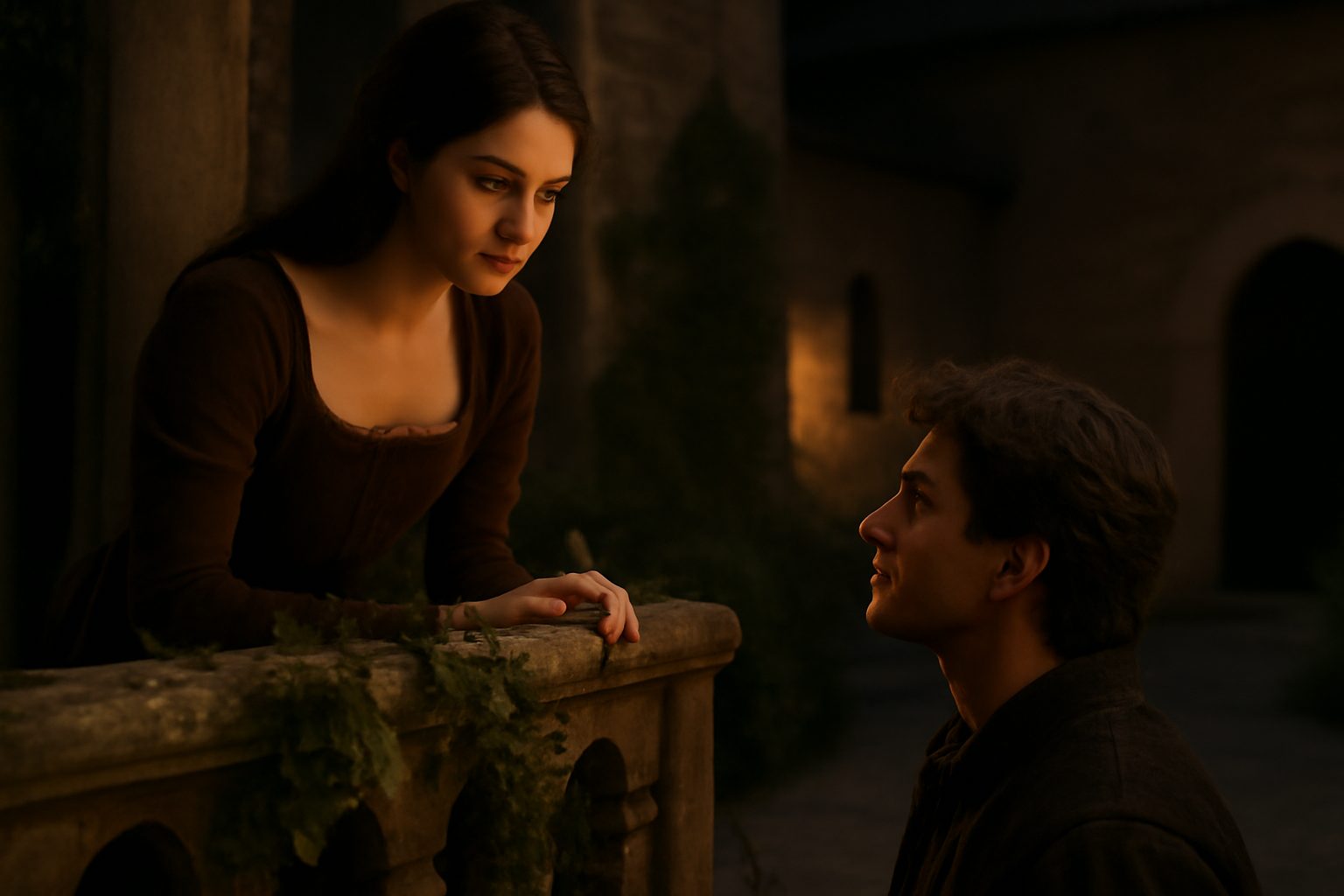
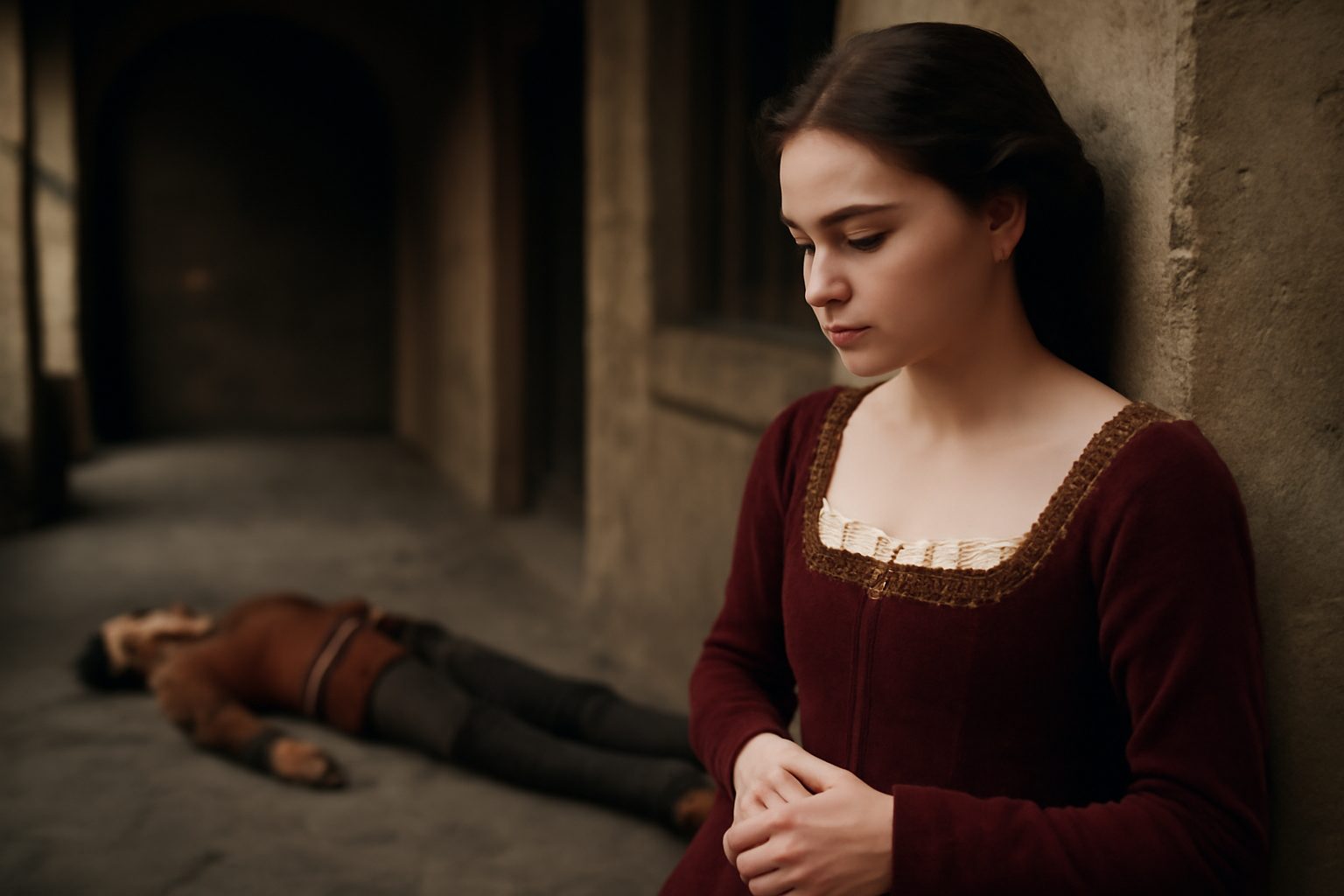
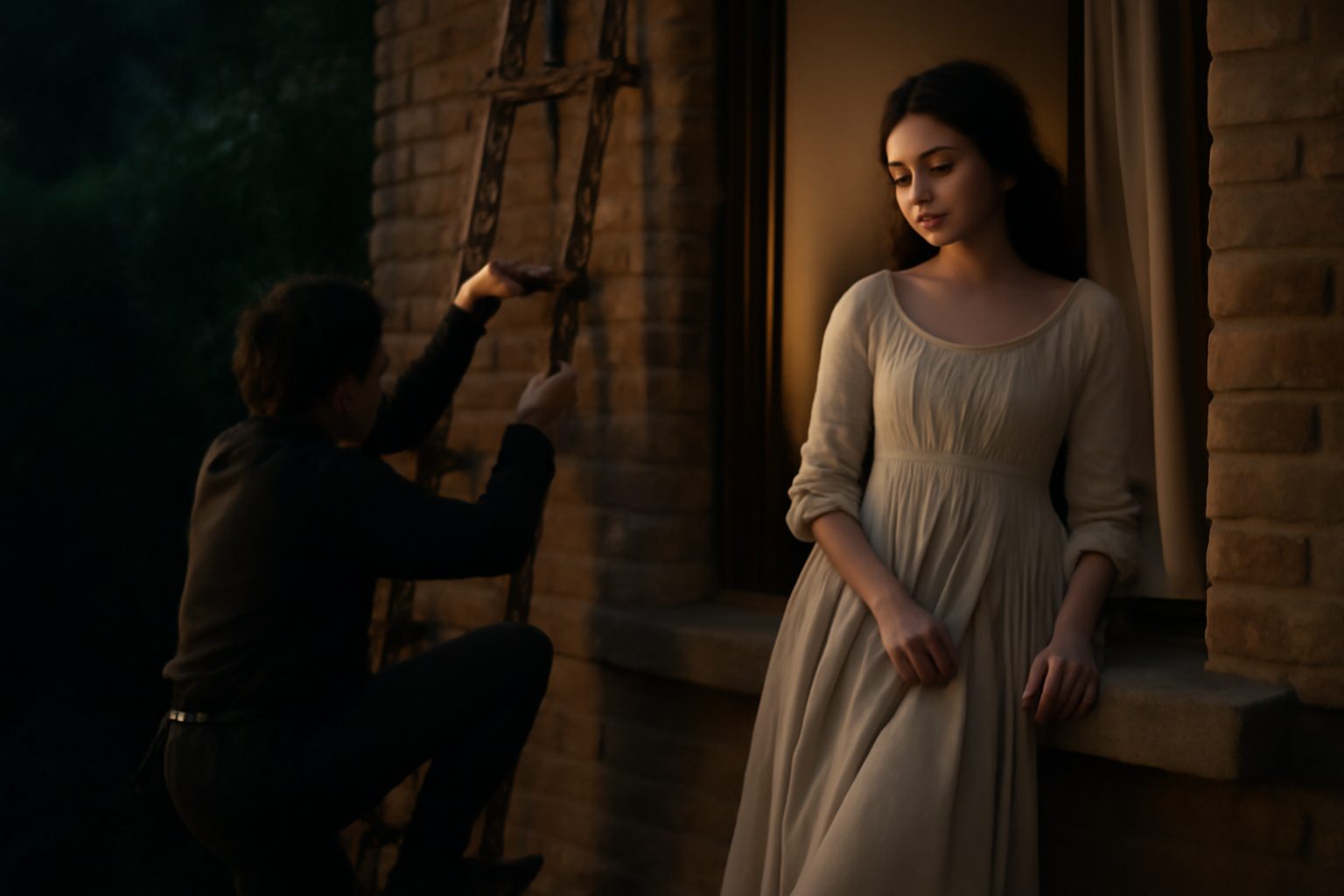
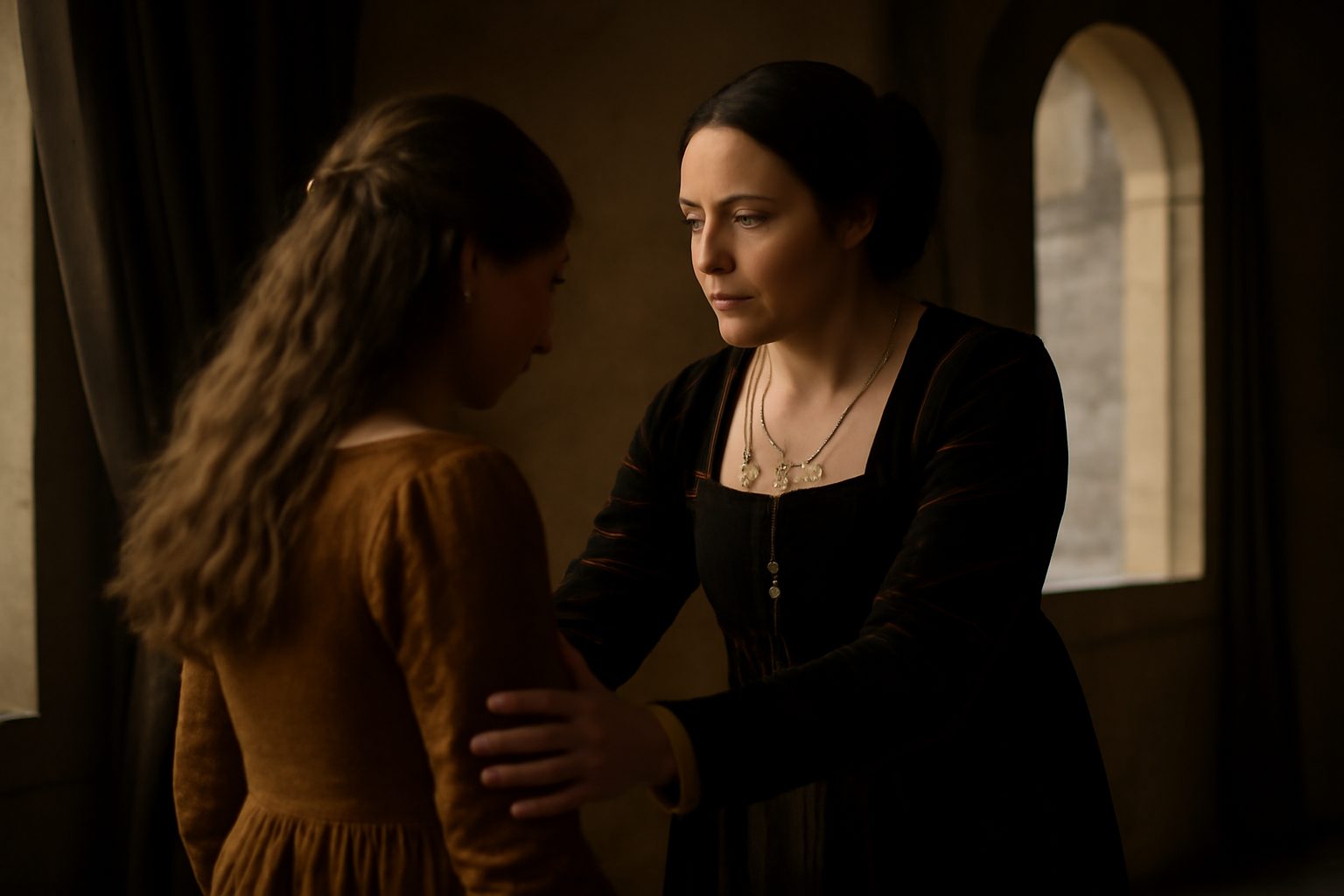
In Act 3 Scene 2 of Romeo and Juliet, Juliet speaks these words as she grapples with the shocking news that Romeo has killed her cousin Tybalt. Her conflicted emotions lead her to question Romeo's true nature, torn between love for her husband and grief over his violent act. The line captures her inner turmoil as she struggles to reconcile the man she adores with the one who has brought tragedy to her family.
Juliet: "Just opposite to what thou justly seem'st,"
In modern day english, we would say:
You are the complete opposite of what you appear to be.
Frequently Asked Questions
What does Juliet mean when she says that someone appears to be the opposite of what they truly are?
Juliet is saying that the person looks one way on the outside but is actually very different on the inside.
Connections to other verses:
Connections to "Just opposite to what thou justly seem'st"
The verse "Just opposite to what thou justly seem'st" reflects Juliet's anguish over the contradiction between Romeo's appearance and his actions. This theme of paradoxical identity and deception resonates throughout the scene.
Related Paradoxical Descriptions
Juliet's lament continues with "Beautiful tyrant! fiend angelical!" and "Dove-feather'd raven! wolvish-ravening lamb!", emphasizing the oxymoronic nature of her perception of Romeo after he kills Tybalt.
Contrast Between Appearance and Reality
The idea of deceptive appearances is further explored in "O serpent heart, hid with a flowering face!" and "Despised substance of divinest show!", highlighting the conflict between Romeo's outer beauty and his violent act.
Emotional Turmoil and Inner Conflict
Juliet's inner conflict is palpable in "Shall I speak ill of him that is my husband?", showing her struggle between loyalty to Romeo and grief for Tybalt. Her despair deepens with "O, break, my heart! poor bankrupt, break at once!".
Nurse's Reaction and Misunderstanding
The Nurse's misinterpretation of Juliet's grief is evident in "Shame come to Romeo!", to which Juliet reacts defensively, reaffirming her complex feelings toward Romeo.
Conclusion of Paradoxical Imagery
The culmination of this thematic exploration is seen in "A damned saint, an honourable villain!", which encapsulates the essence of the contradictions Juliet grapples with throughout the scene.