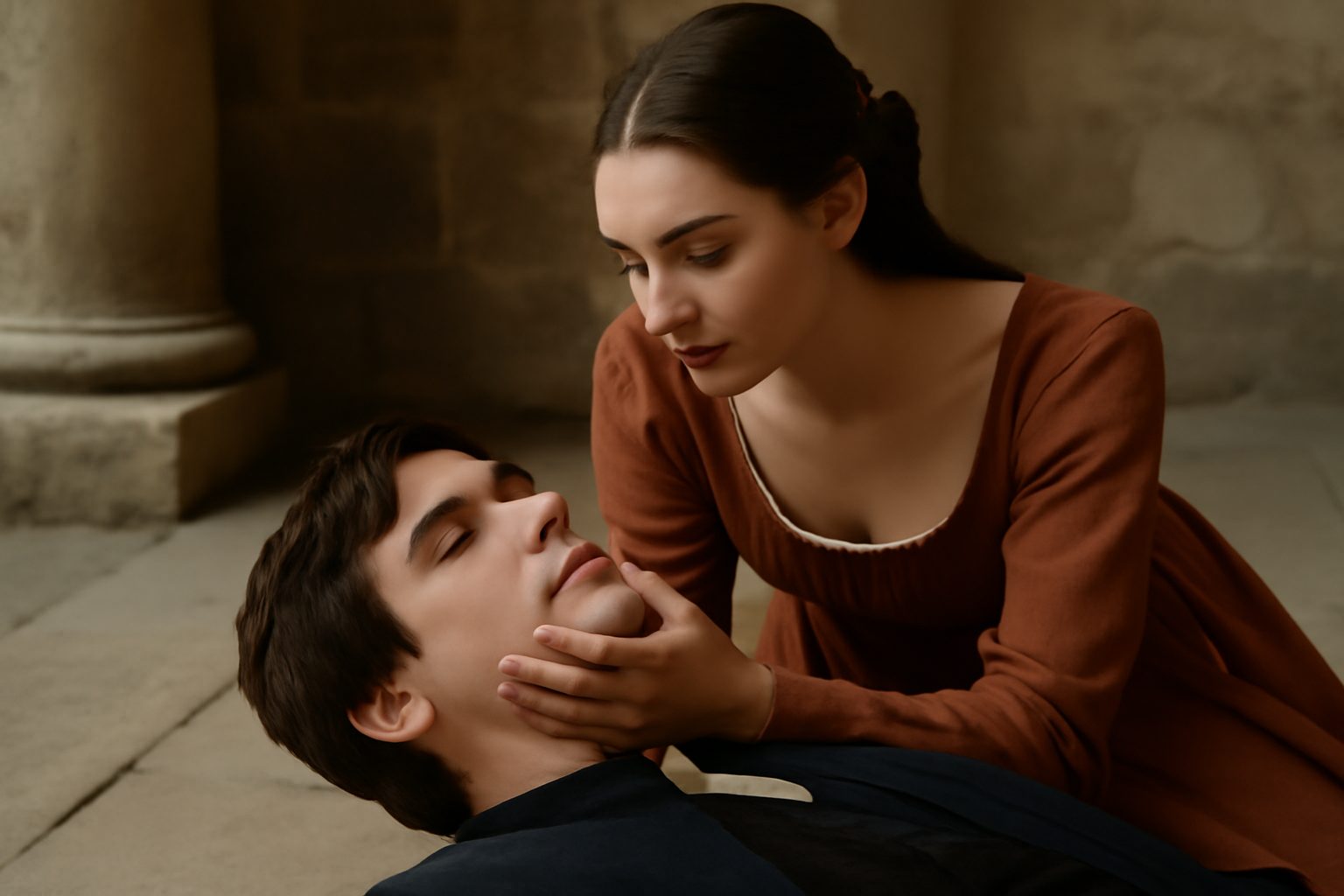
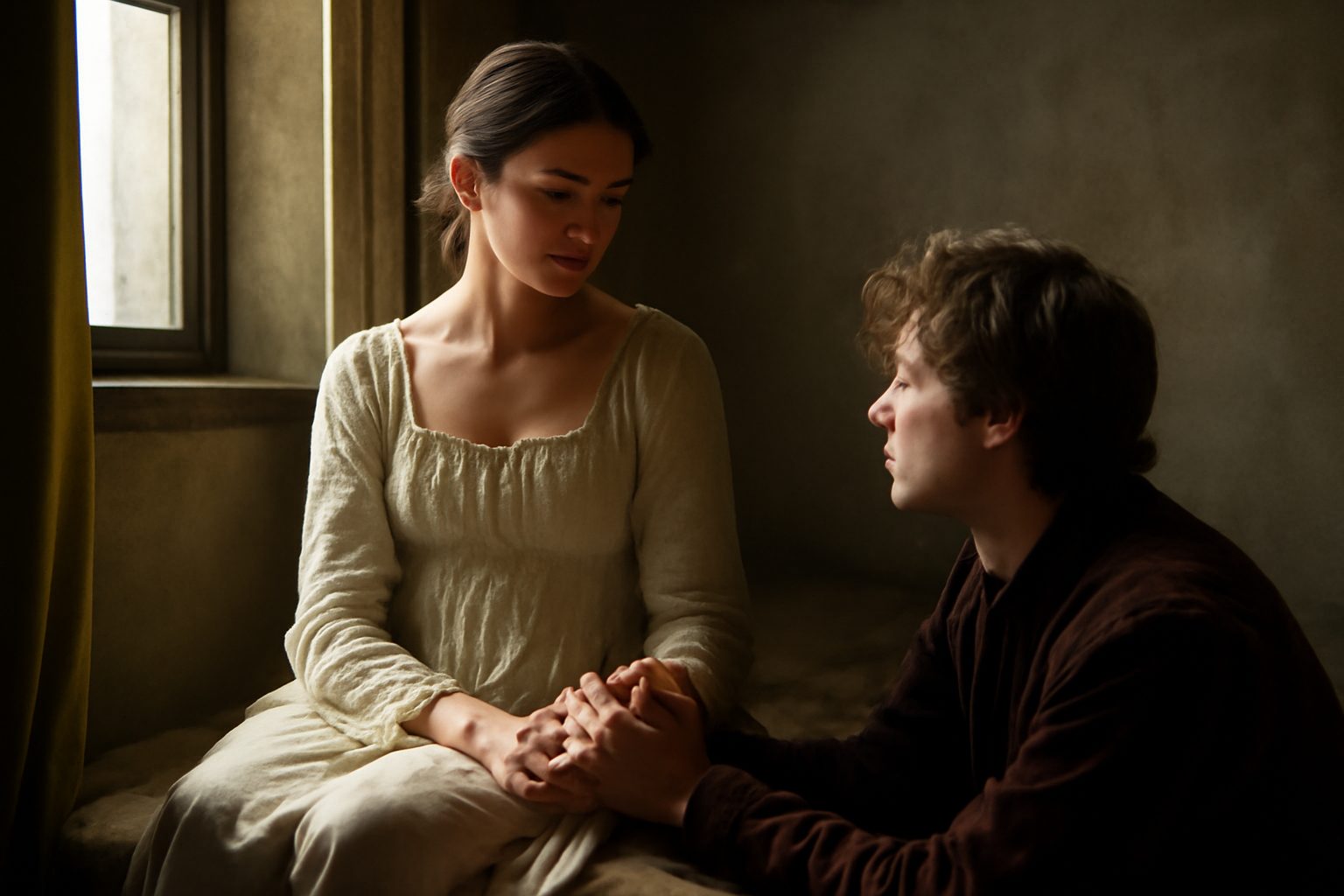
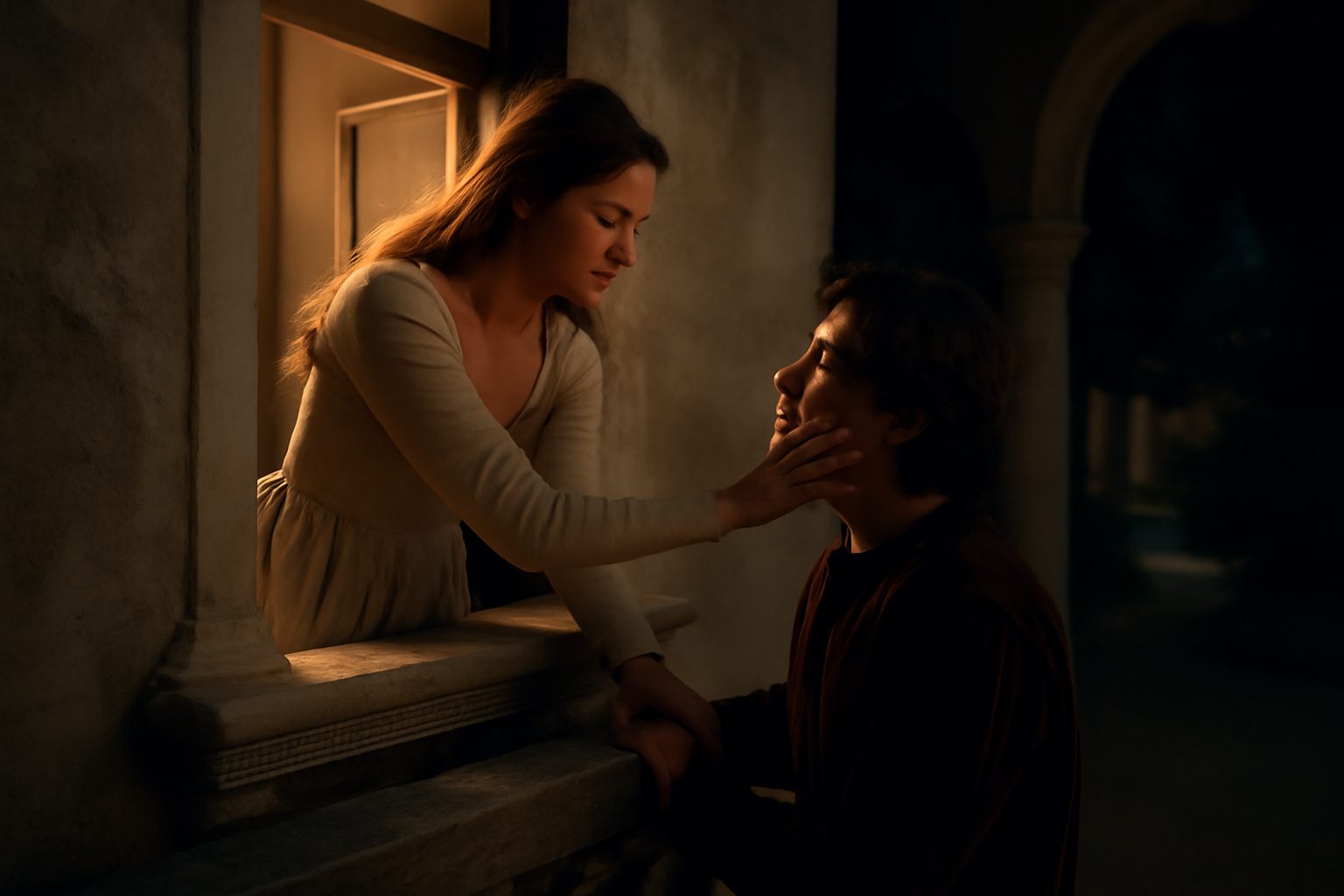
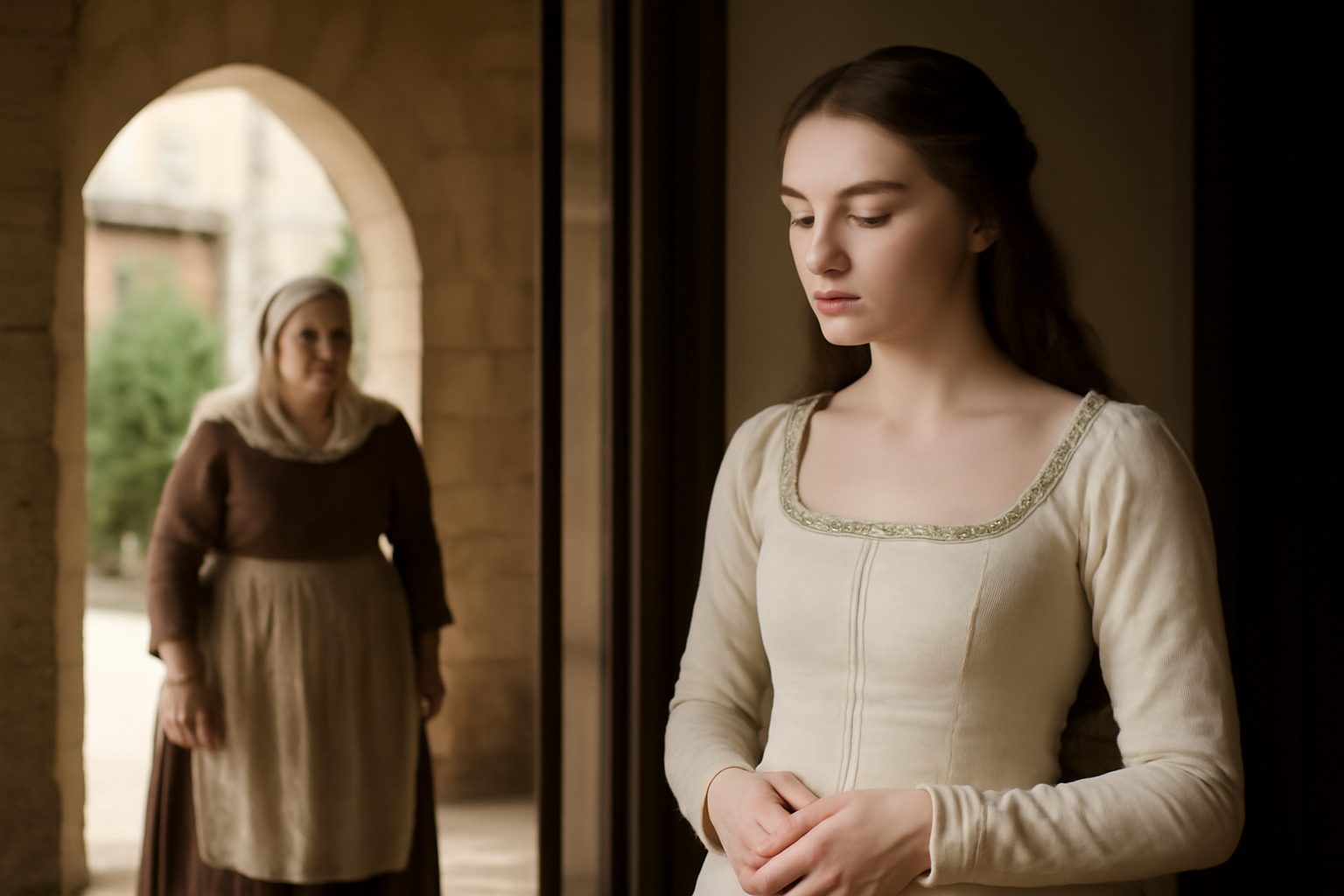
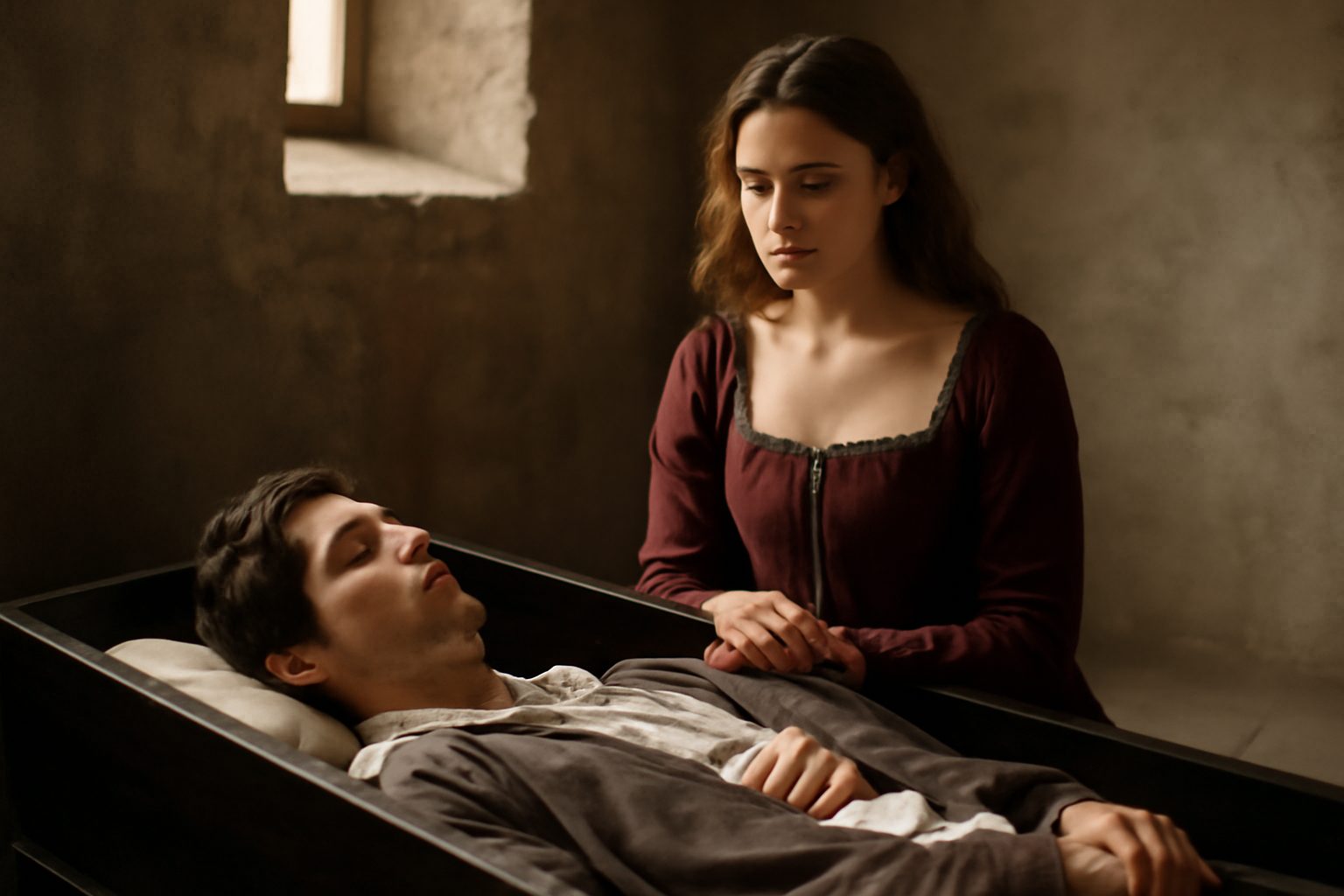
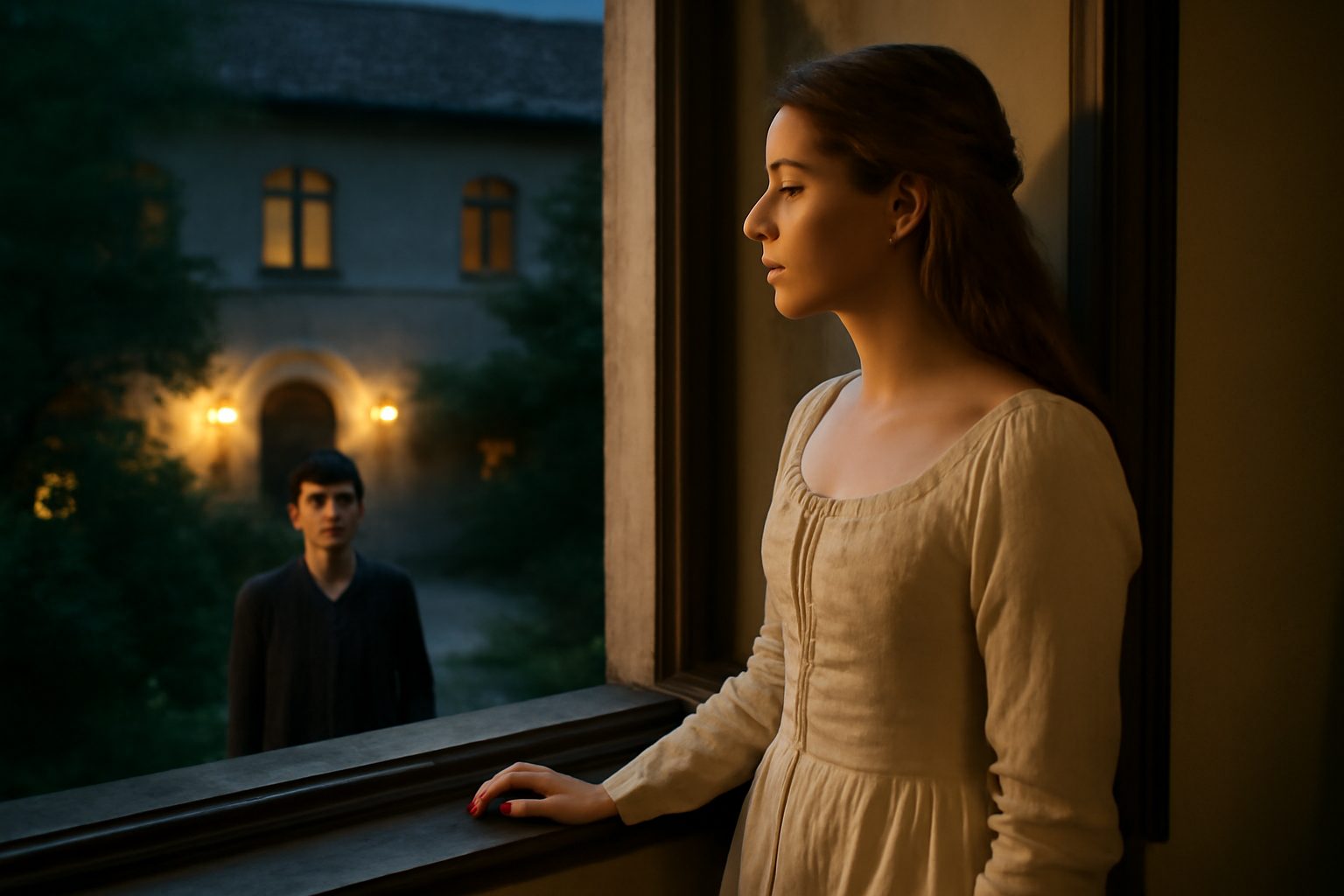
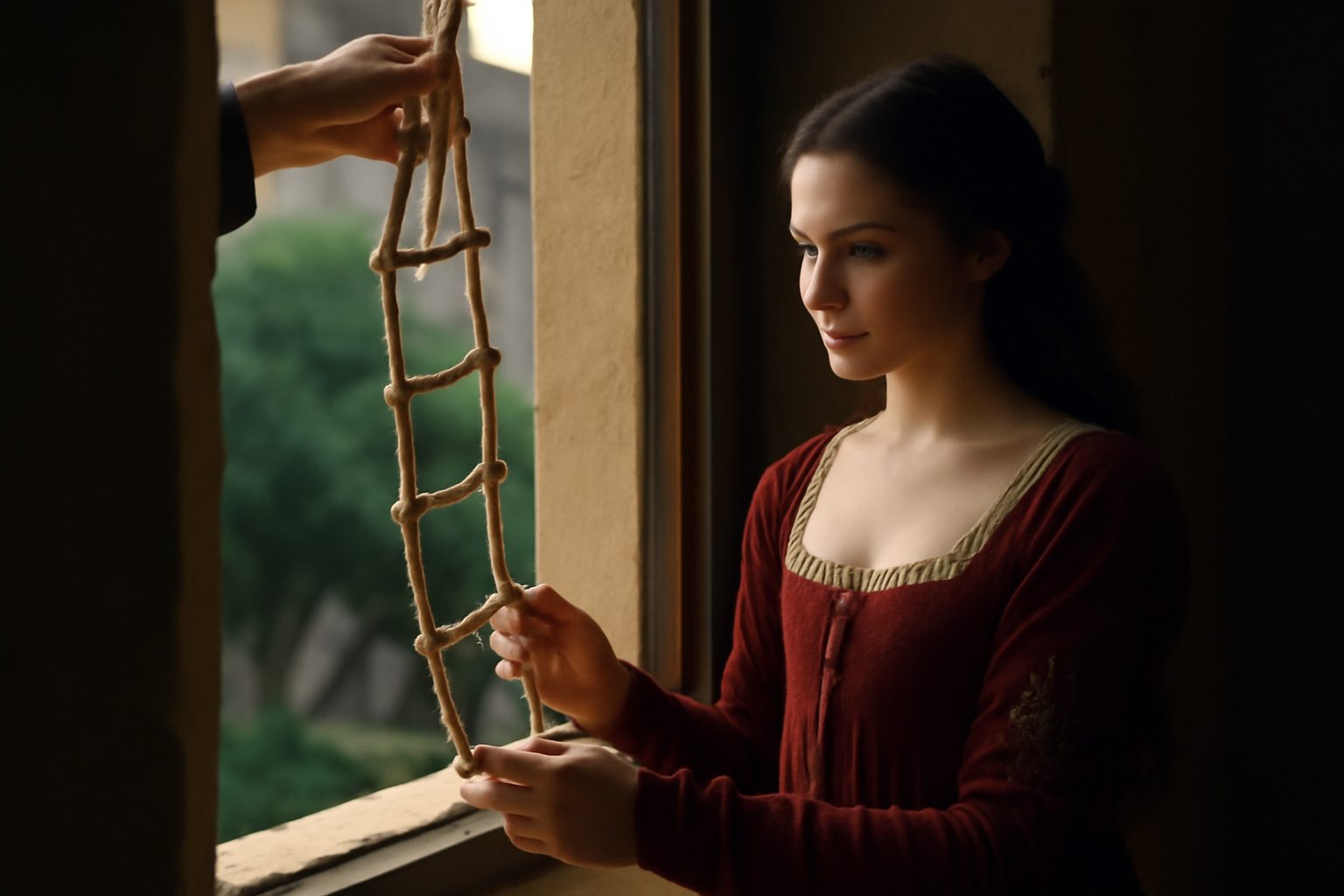
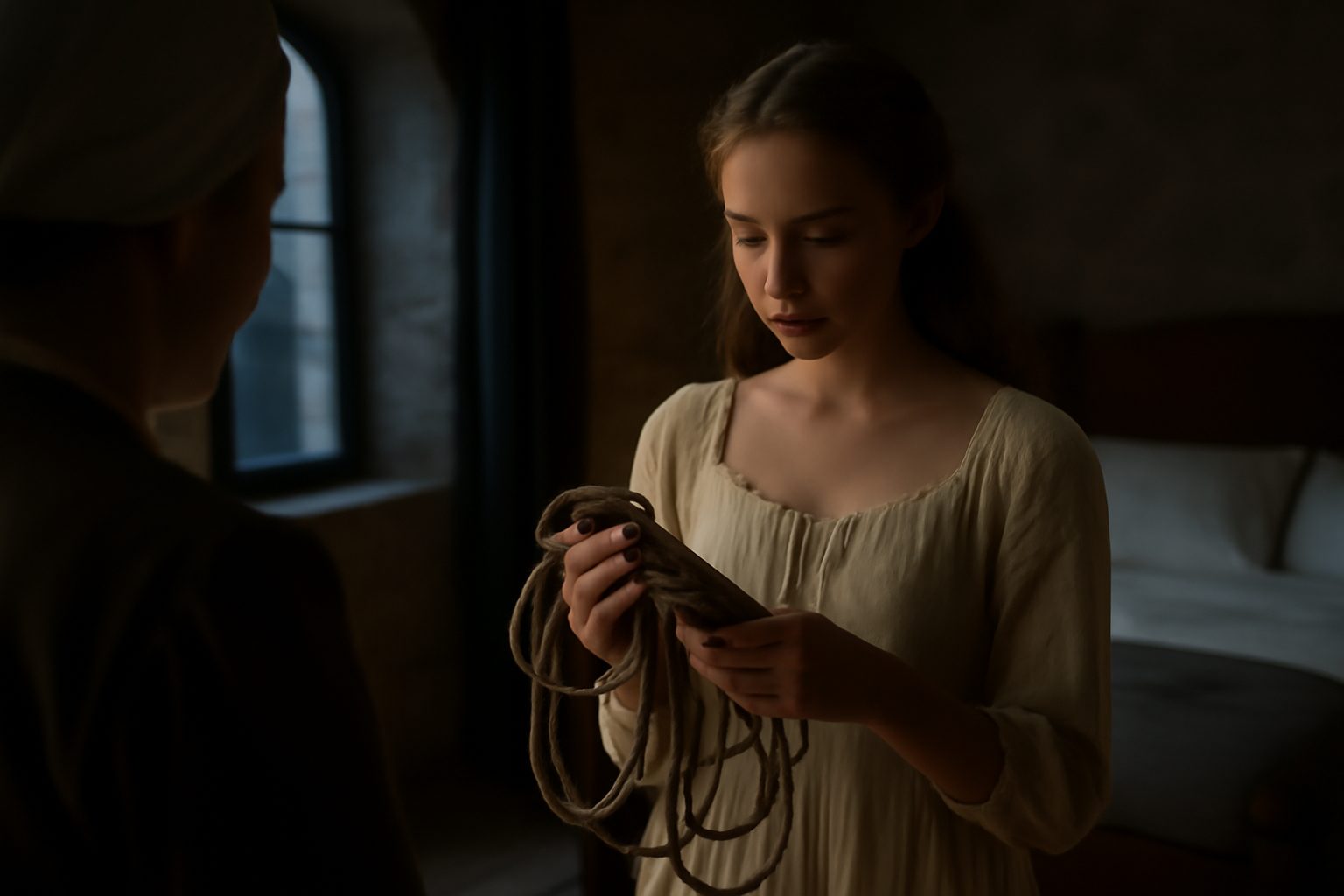
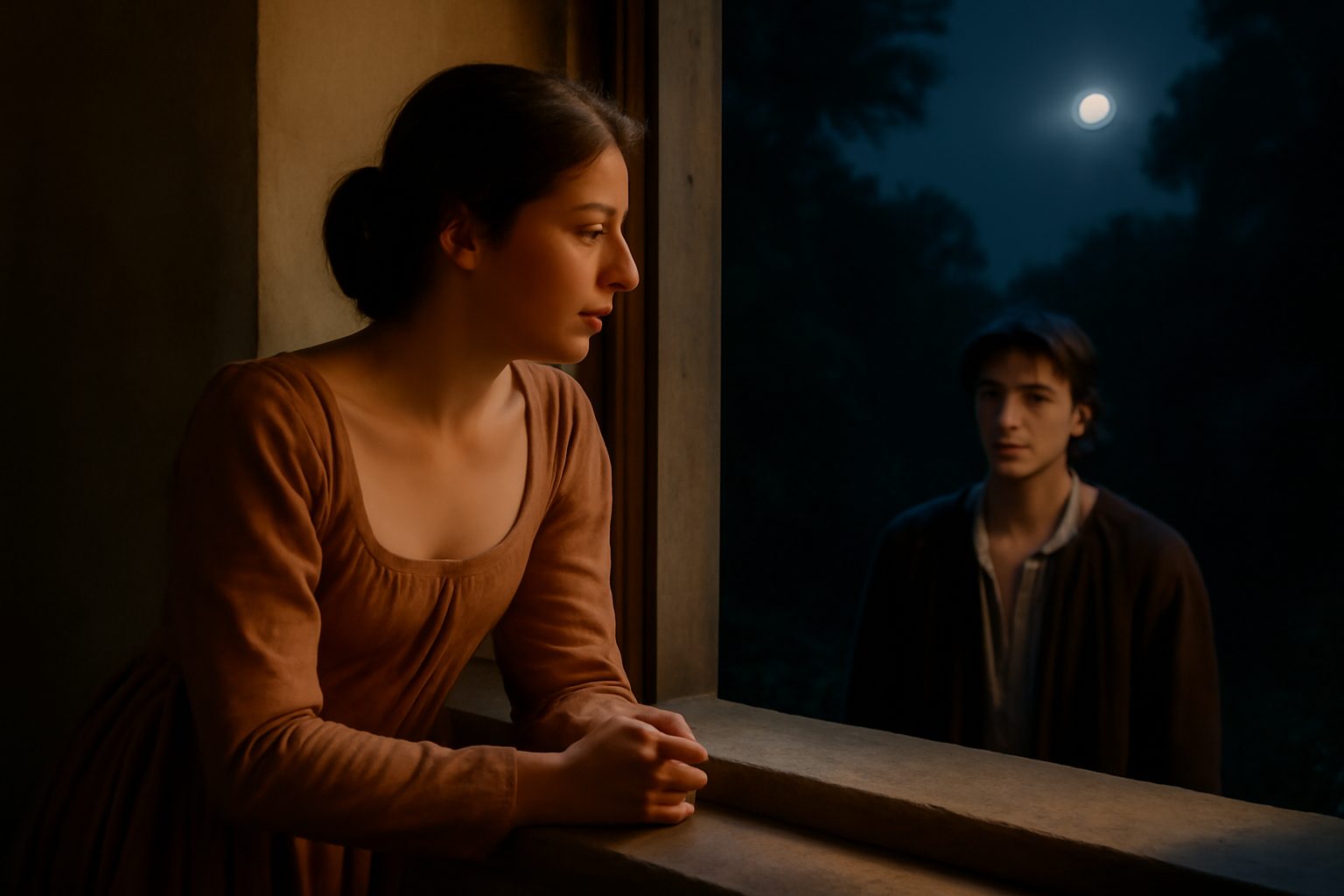
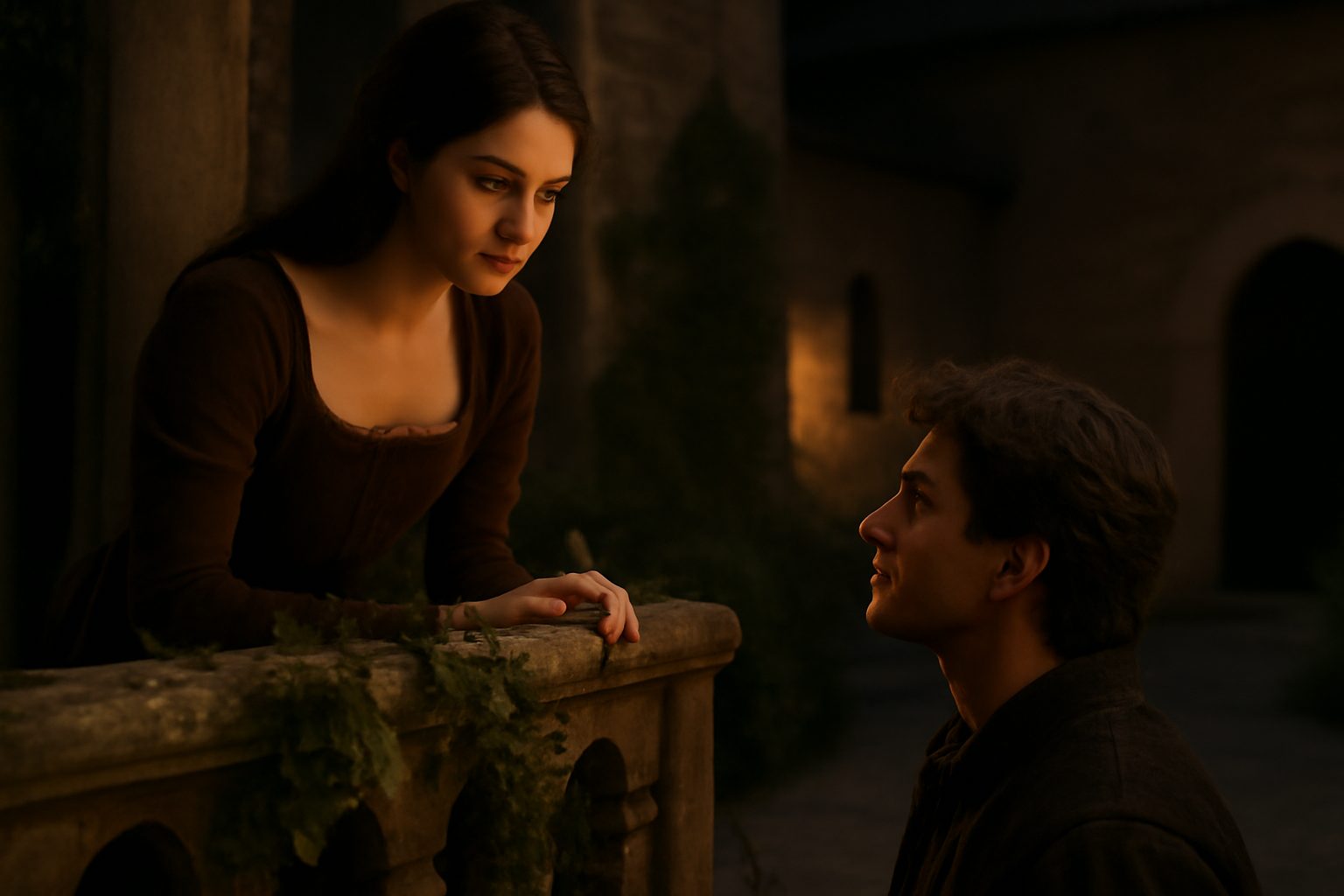
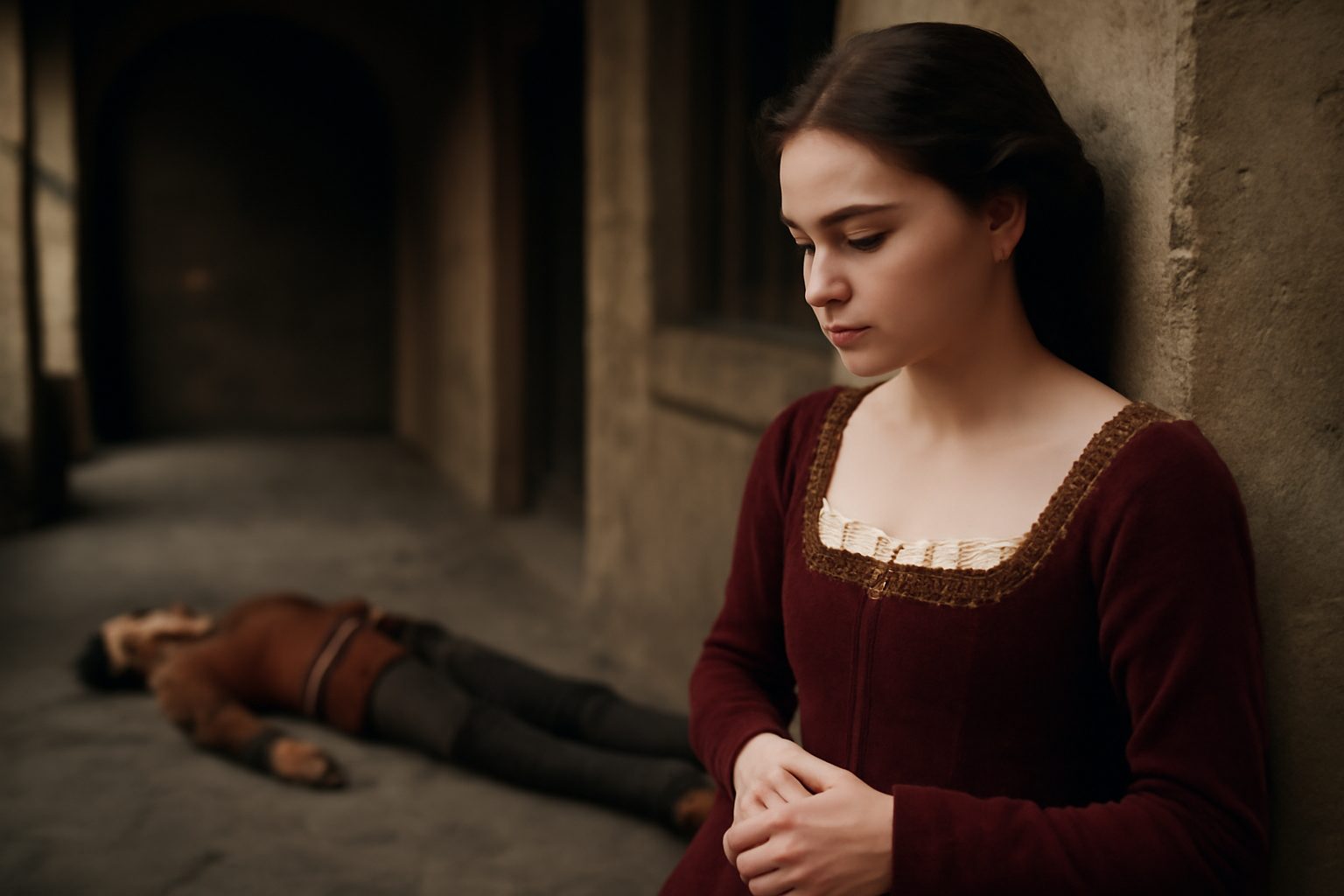
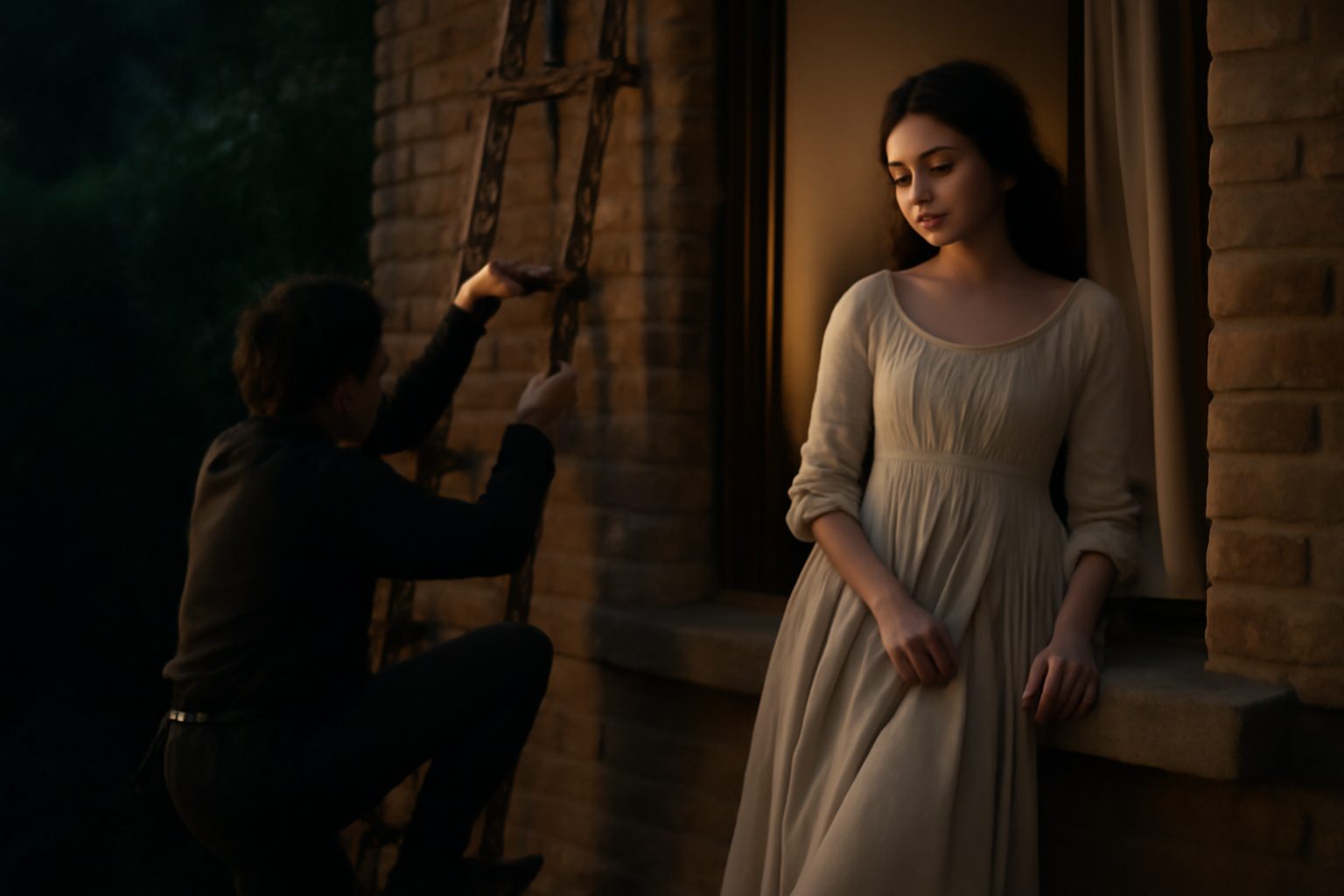
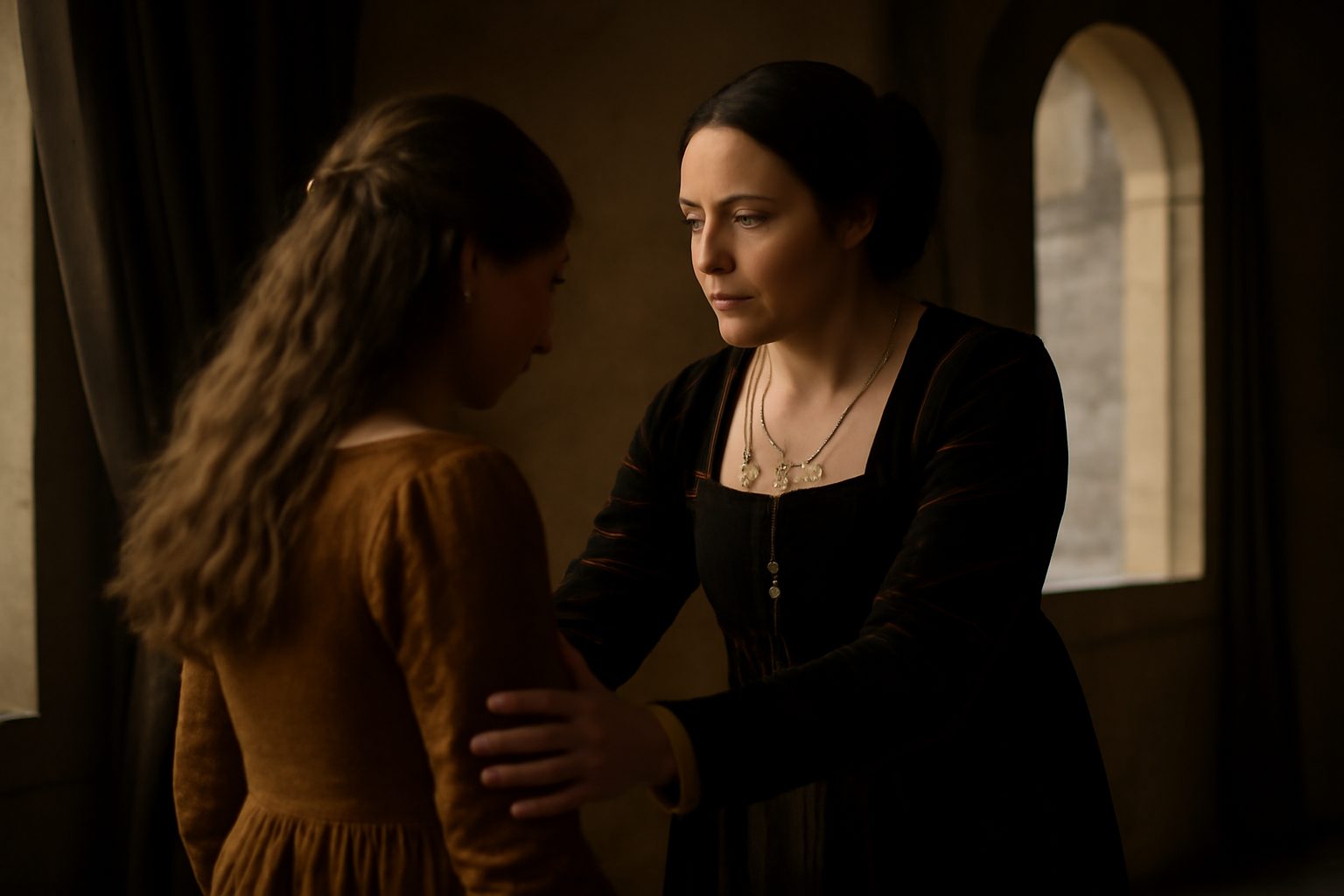
In Act 3, Scene 2 of Romeo and Juliet, Juliet anxiously awaits news from her nurse about Romeo, unaware that he has just killed her cousin Tybalt. When the nurse arrives with the rope ladder Romeo was meant to use for their secret wedding night, Juliet misinterprets it as a sign of his death. Her despair turns to bitter irony as she reflects on how something meant to unite them now symbolizes betrayal and loss.
Juliet: "So fairly bound? O that deceit should dwell"
In modern day english, we would say:
She looks so pure and beautiful—how could such lies hide behind that appearance?
Frequently Asked Questions
What is Juliet upset about in this line from Romeo and Juliet?
Juliet is upset because she feels deceived by someone who appeared to be good and trustworthy.
Connections to other verses:
Connections to "So fairly bound? O that deceit should dwell"
This verse, found at /romeo-and-juliet/three/3-2/act-3-scene-2-86/, reflects Juliet's shock and disillusionment upon learning of Romeo's role in Tybalt's death. It connects thematically and emotionally with several other verses in the scene.
Theme of Deceit and Appearance vs. Reality
Juliet's lament about deceit dwelling in something "fairly bound" echoes her earlier oxymoronic descriptions of Romeo in "Beautiful tyrant! fiend angelical!" and "Dove-feather'd raven! wolvish-ravening lamb!", emphasizing the conflict between outward beauty and inner violence.
Nurse's Role and Miscommunication
The verse follows the Nurse's chaotic delivery of news in "Ah, well-a-day! he's dead, he's dead, he's dead!" and "Alack the day! he's gone, he's kill'd, he's dead!", where Juliet initially misinterprets "he" as Romeo, not Tybalt. This misunderstanding fuels her sense of betrayal.
Juliet's Emotional Turmoil
Her anguish here parallels "O, break, my heart! poor bankrupt, break at once!" and "Vile earth, to earth resign; end motion here", showing her rapid shift from idealistic love to despair.
Contrast with Earlier Idealism
This moment starkly contrasts with her earlier hopeful anticipation in "O, I have bought the mansion of a love" and "Give me my Romeo; and, when he shall die", highlighting how violence shatters her romantic illusions.
Connection to Banishment
Her focus on deceit precedes her realization of Romeo's banishment, explored in "That 'banished,' that one word 'banished'" and "Romeo is banished,' to speak that word", compounding her grief.