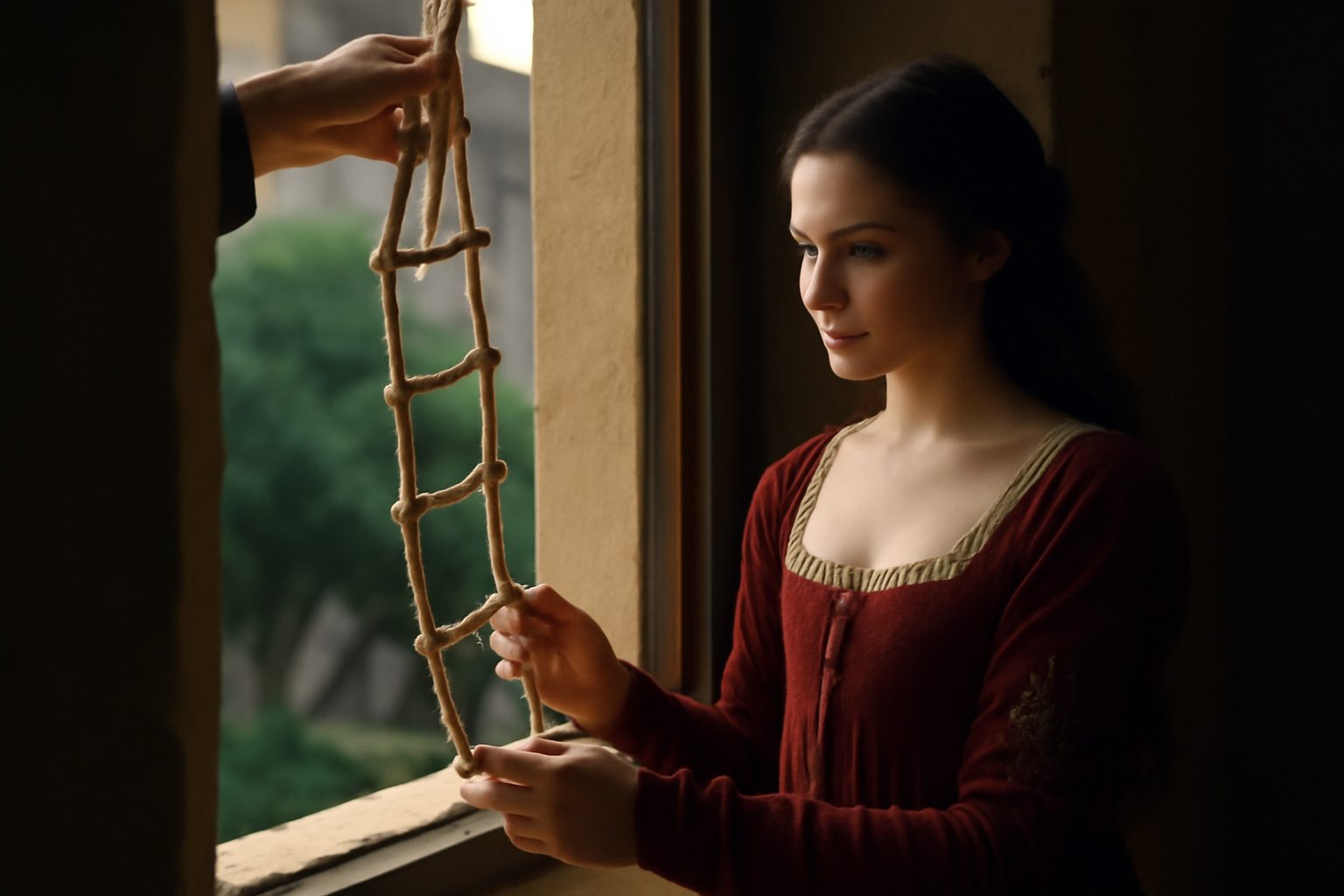
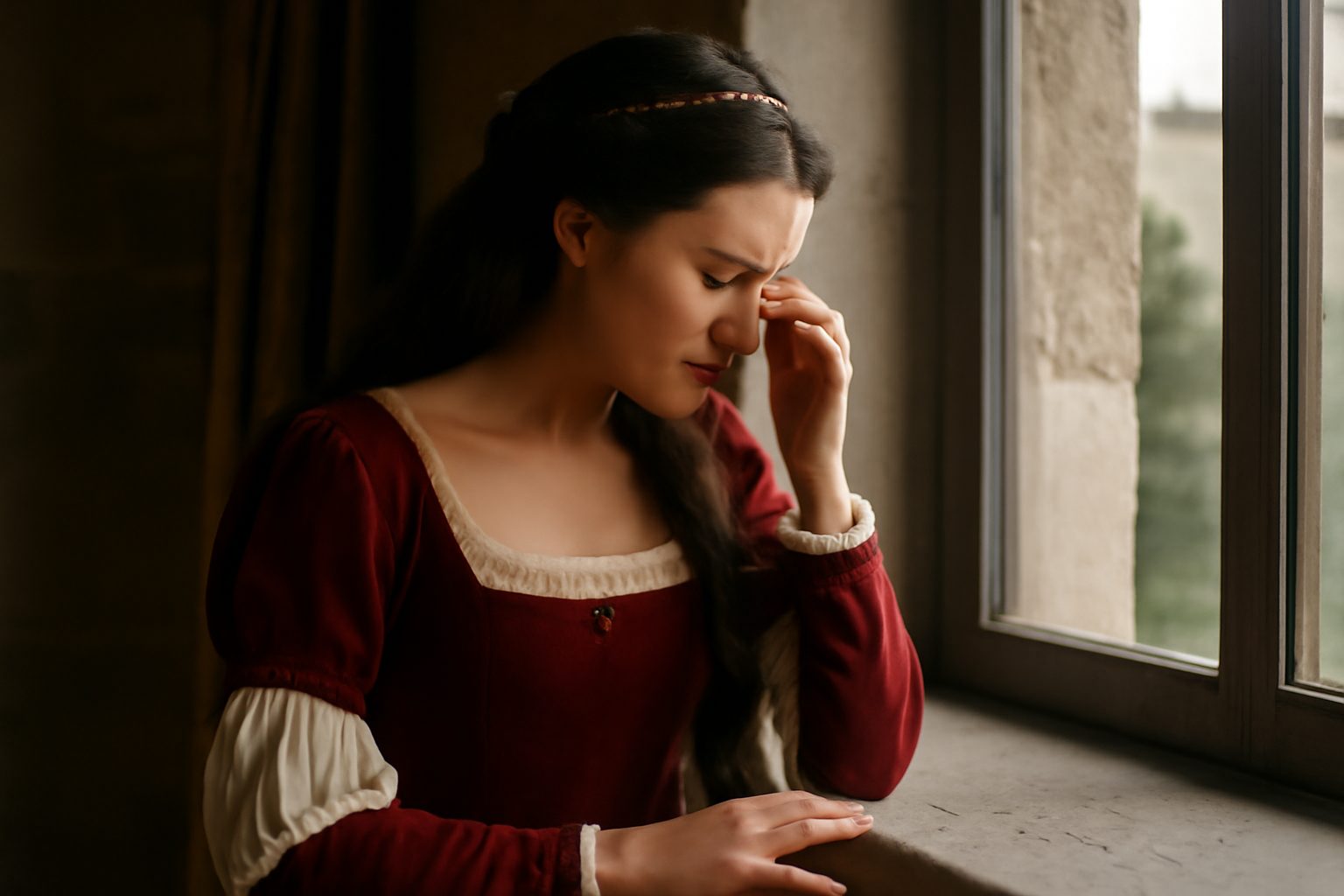
In Act 3 Scene 2 of Romeo and Juliet, Juliet anxiously awaits nightfall so Romeo can join her after their secret marriage. Unaware of the deadly conflict that has just unfolded, she imagines Romeo in radiant terms, envisioning him as a ruler whose brilliance outshines all else. This line captures her idealized love, contrasting sharply with the tragic events unfolding beyond her knowledge.
Juliet: "Sole monarch of the universal earth."
In modern day english, we would say:
Juliet is saying that Romeo is the one true ruler of the entire world.
Frequently Asked Questions
What does Juliet mean when she calls someone the sole monarch of the universal earth?
Juliet is expressing that the person she is referring to is the most important and powerful figure in the entire world to her.
Connections to other verses:
Connections to "Sole monarch of the universal earth"
The verse Sole monarch of the universal earth is part of Juliet's impassioned defense of Romeo after learning he killed Tybalt. It reflects her idealization of him as a figure of unparalleled honor and worth, despite his actions.
Contrast with Earlier Idealization
Earlier in the scene, Juliet eagerly awaits her wedding night, imagining Romeo as a radiant presence: And he will make the face of heaven so fine and Take him and cut him out in little stars. These lines establish Romeo as almost divine, a theme that culminates in the "sole monarch" metaphor, emphasizing his perceived supremacy.
Juxtaposition with Duality and Conflict
Juliet's praise clashes with her initial horror upon hearing of Tybalt's death. She grapples with Romeo's dual nature, calling him Beautiful tyrant! fiend angelical! and Dove-feather'd raven! wolvish-ravening lamb!. The "sole monarch" line emerges as she reconciles these contradictions, asserting his inherent nobility.
Connection to Themes of Exile and Loss
The idealization in Sole monarch of the universal earth contrasts sharply with the devastation of his banishment. Juliet later laments, Romeo is banished,' to speak that word, highlighting how exile diminishes the man she once elevated to monarch-like status. This tension underscores the tragedy of their situation.
Defiance and Loyalty
Juliet's declaration serves as an act of defiance against those who condemn Romeo, including her nurse, who cries Shame come to Romeo!. By insisting Romeo is a "sole monarch," Juliet reaffirms her loyalty, asking Shall I speak ill of him that is my husband?, reinforcing her unwavering devotion.