
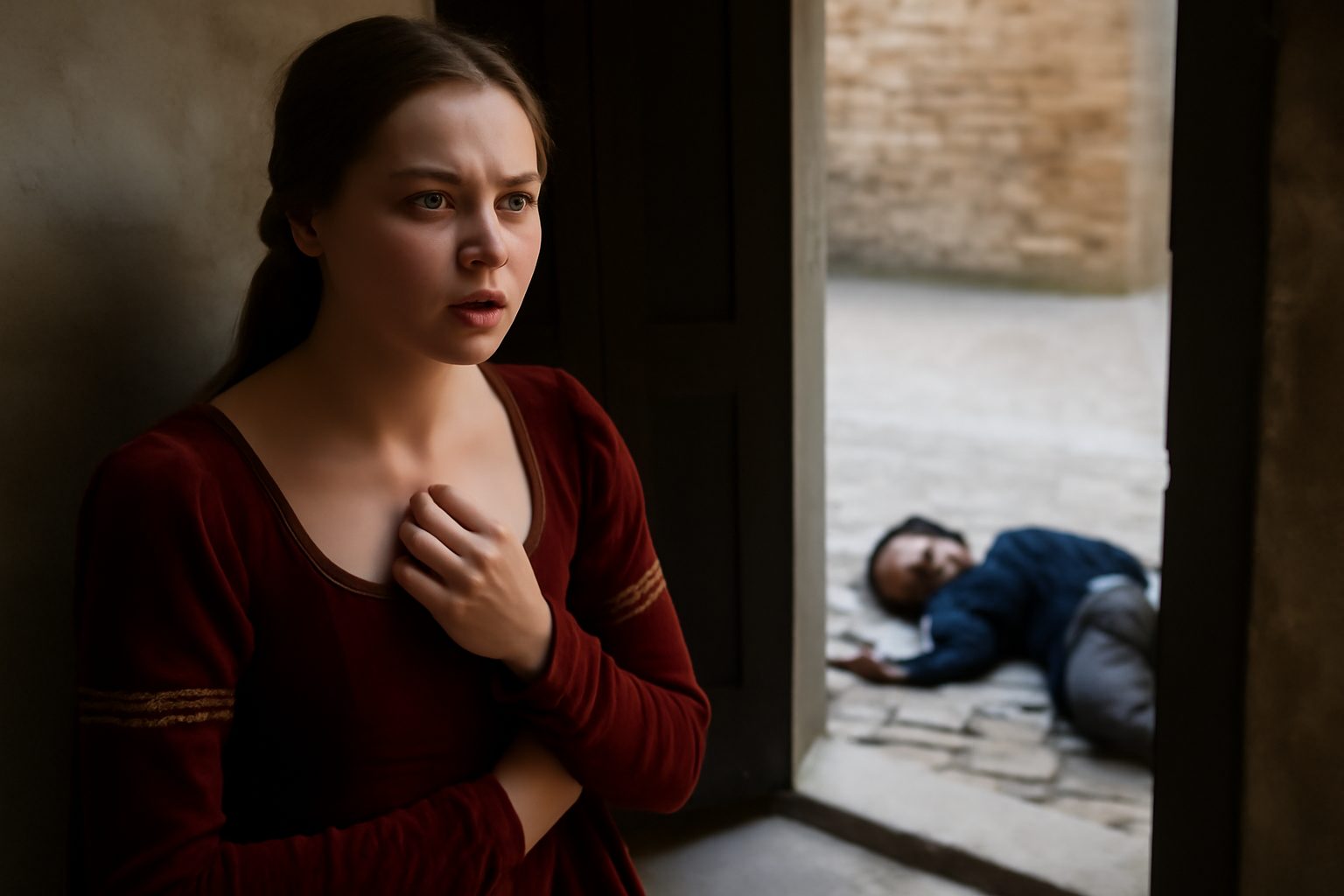
In Act 3, Scene 2 of Romeo and Juliet, Juliet speaks these words after learning that Romeo has killed Tybalt, her cousin. She is torn between grief for Tybalt and relief that Romeo, her husband, survived the fight Tybalt had provoked. This moment captures her inner conflict as loyalty to her family clashes with her love for Romeo.
Juliet: "My husband lives, that Tybalt would have slain;"
In modern day english, we would say:
My husband is alive, but Tybalt wanted to kill him.
Frequently Asked Questions
Who does Juliet say her husband is in danger from?
Tybalt
Connections to other verses:
Connections to "My husband lives, that Tybalt would have slain;"
This verse, spoken by Juliet, reflects her conflicted emotions upon learning that Romeo has killed Tybalt. It highlights the tension between her loyalty to her family and her love for Romeo, a theme echoed throughout the scene.
Related Verses
- That villain cousin would have kill'd my husband: – This line directly precedes the target verse, reinforcing Tybalt's intent to harm Romeo and justifying Juliet's defense of her husband.
- And Tybalt's dead, that would have slain my… – Juliet acknowledges Tybalt's death while reiterating his threat to Romeo, creating a parallel structure that underscores her inner conflict.
- O God! did Romeo's hand shed Tybalt's blood? – This earlier exclamation shows Juliet's initial shock and horror, which evolves into the more measured reflection seen in the target verse.
- Shall I speak ill of him that is my husband? – Juliet questions whether to condemn Romeo, directly tying to her acknowledgment of his survival in the target verse.
- Hath slain ten thousand Tybalts. Tybalt's death – Here, Juliet rationalizes that Romeo's action was necessary, supporting the idea that Tybalt posed a lethal threat.

























































Tagged 1736