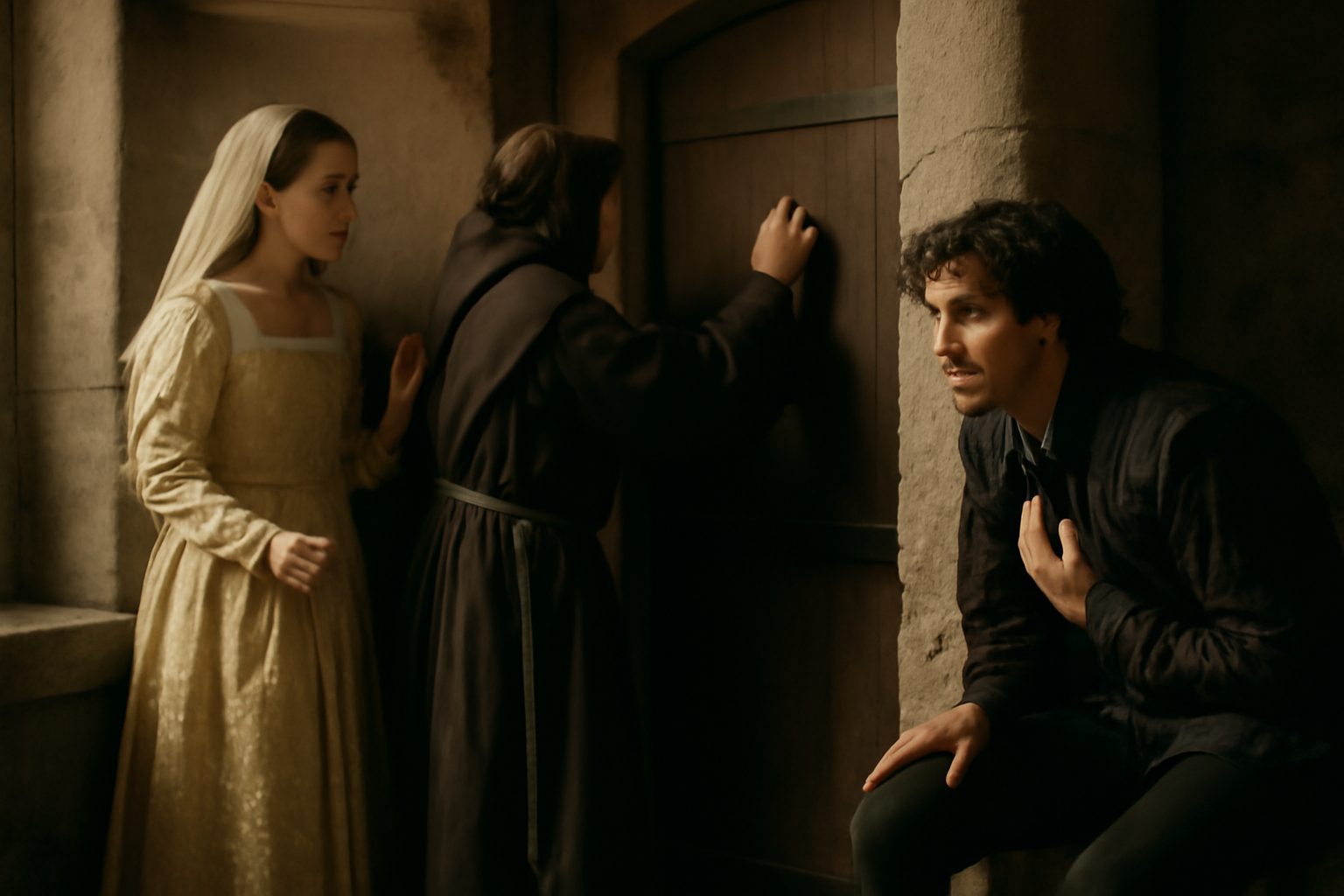
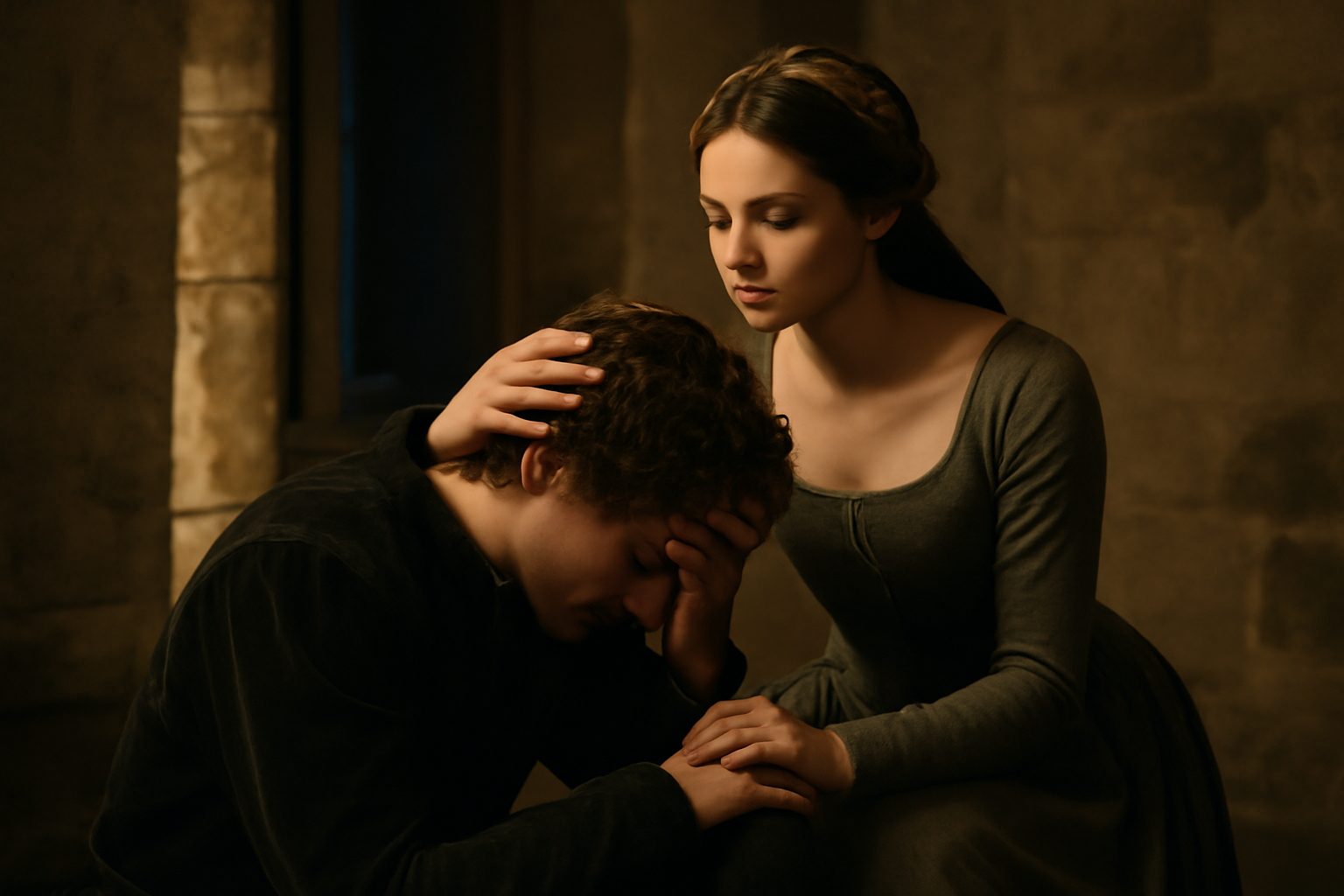
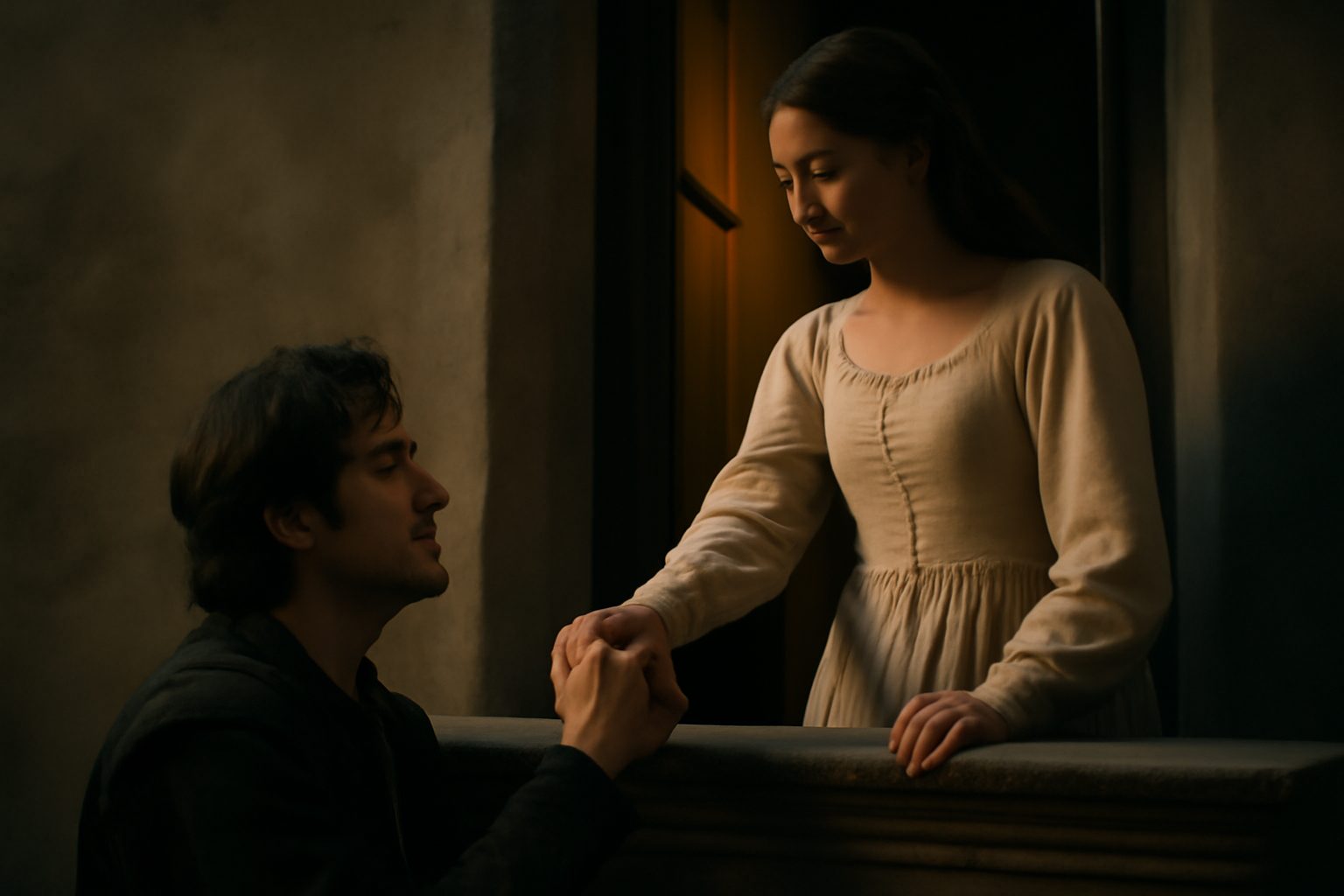
In Act 3, Scene 3 of Romeo and Juliet, Friar Laurence informs Romeo of the Prince's judgment after Romeo kills Tybalt in a fit of rage. The friar's words reveal that Romeo has been banished from Verona rather than sentenced to death, a crucial turning point for the desperate young lover. This moment heightens the tension as Romeo grapples with the consequences of his actions and his separation from Juliet.
Friar Laurence: "I bring thee tidings of the prince's doom."
In modern day english, we would say:
I have news for you about the prince’s punishment.
Frequently Asked Questions
What news does Friar Laurence bring in this scene?
He brings news about the prince's punishment.
Connections to other verses:
Connections to "I bring thee tidings of the prince's doom"
The line I bring thee tidings of the prince's doom is spoken by Friar Laurence to Romeo, delivering the news of his punishment for killing Tybalt. This moment sets the tone for the entire scene, as Romeo's reaction to his banishment becomes the central focus.
Immediate Reactions and Despair
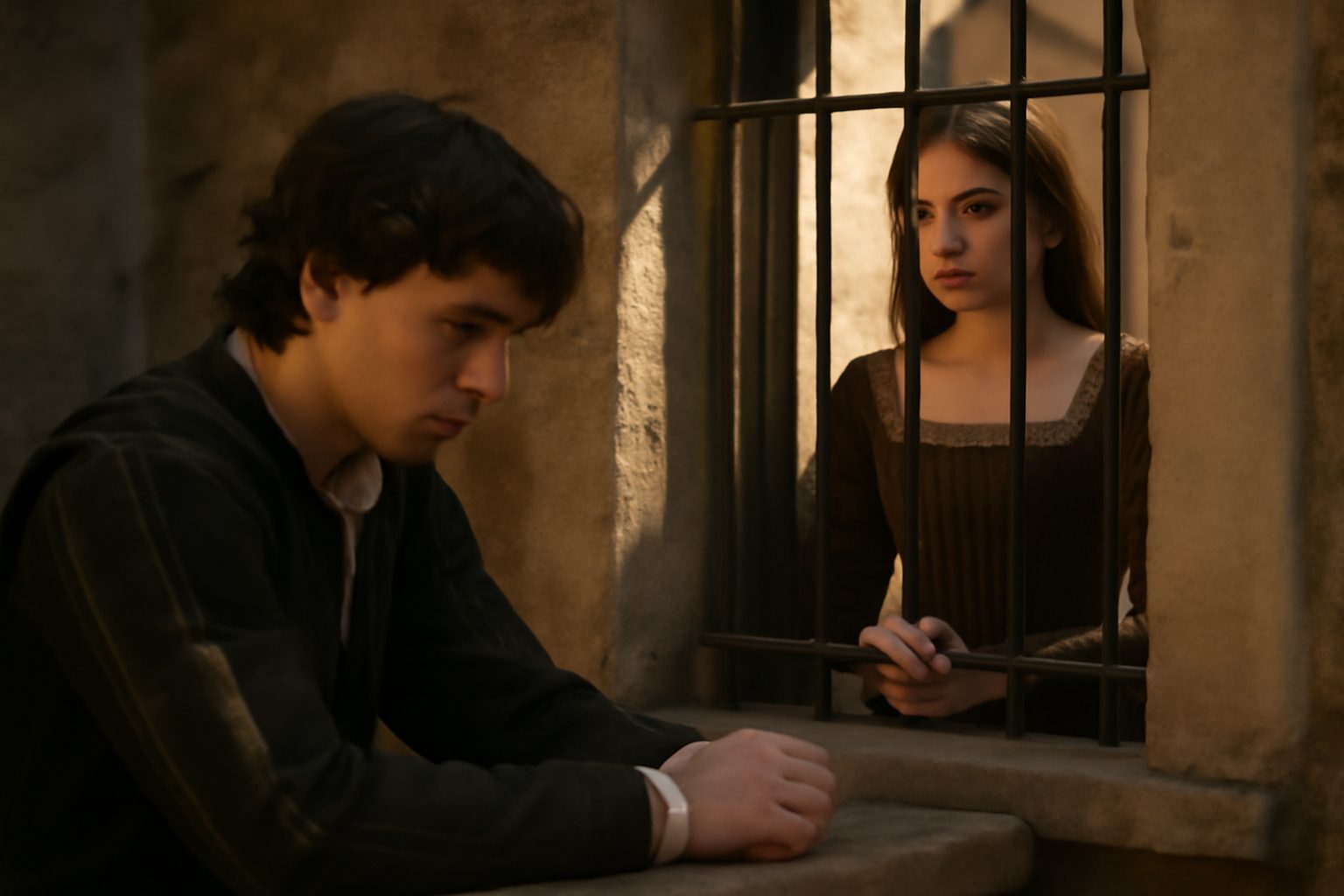
Romeo's response to the news is one of utter despair, as seen in his exclamation: What less than dooms-day is the prince's doom? He views banishment as a fate worse than death, a sentiment echoed in Ha, banishment! be merciful, say 'death;', where he pleads for death over exile. His anguish deepens as he laments, And world's exile is death: then banished, equating separation from Verona with a living death.
Friar Laurence's Counsel
Friar Laurence attempts to console Romeo, arguing that the punishment is lenient: Thy fault our law calls death; but the kind prince... / Taking thy part, hath rush'd aside the law. He emphasizes that Romeo should be grateful, stating This is dear mercy, and thou seest it not. Despite this, Romeo remains inconsolable, rejecting the Friar's reasoning with Tis torture, and not mercy: heaven is here.
Connections to Juliet and Hope
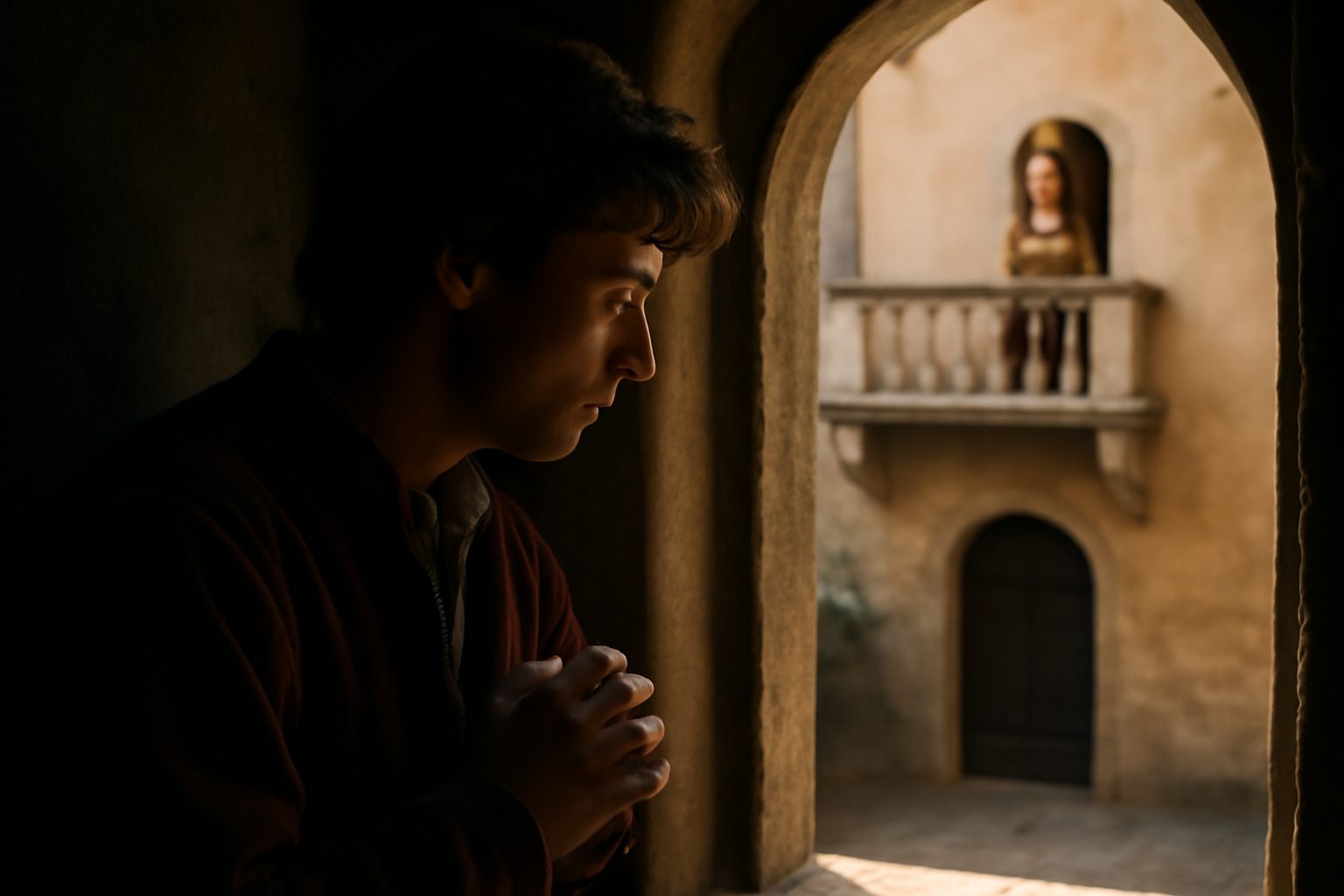
The news of the prince's doom also ties to Romeo's thoughts of Juliet. He grieves that their joy is stained, as expressed in Now I have stain'd the childhood of our joy. However, the Friar offers a plan for reconciliation, urging Romeo to To blaze your marriage, reconcile your friends, and promising that the Prince may Beg pardon of the prince, and call thee back. This injects a note of hope into the otherwise bleak tidings.
Contrast with Other Characters
Romeo's dramatic reaction contrasts with the Nurse's arrival bearing messages from Juliet, such as Here, sir, a ring she bid me give you, sir, which symbolizes Juliet's enduring love. The Friar's practical advice, including Go, get thee to thy love, as was decreed, further highlights the difference between Romeo's emotional turmoil and the supportive efforts of those around him.