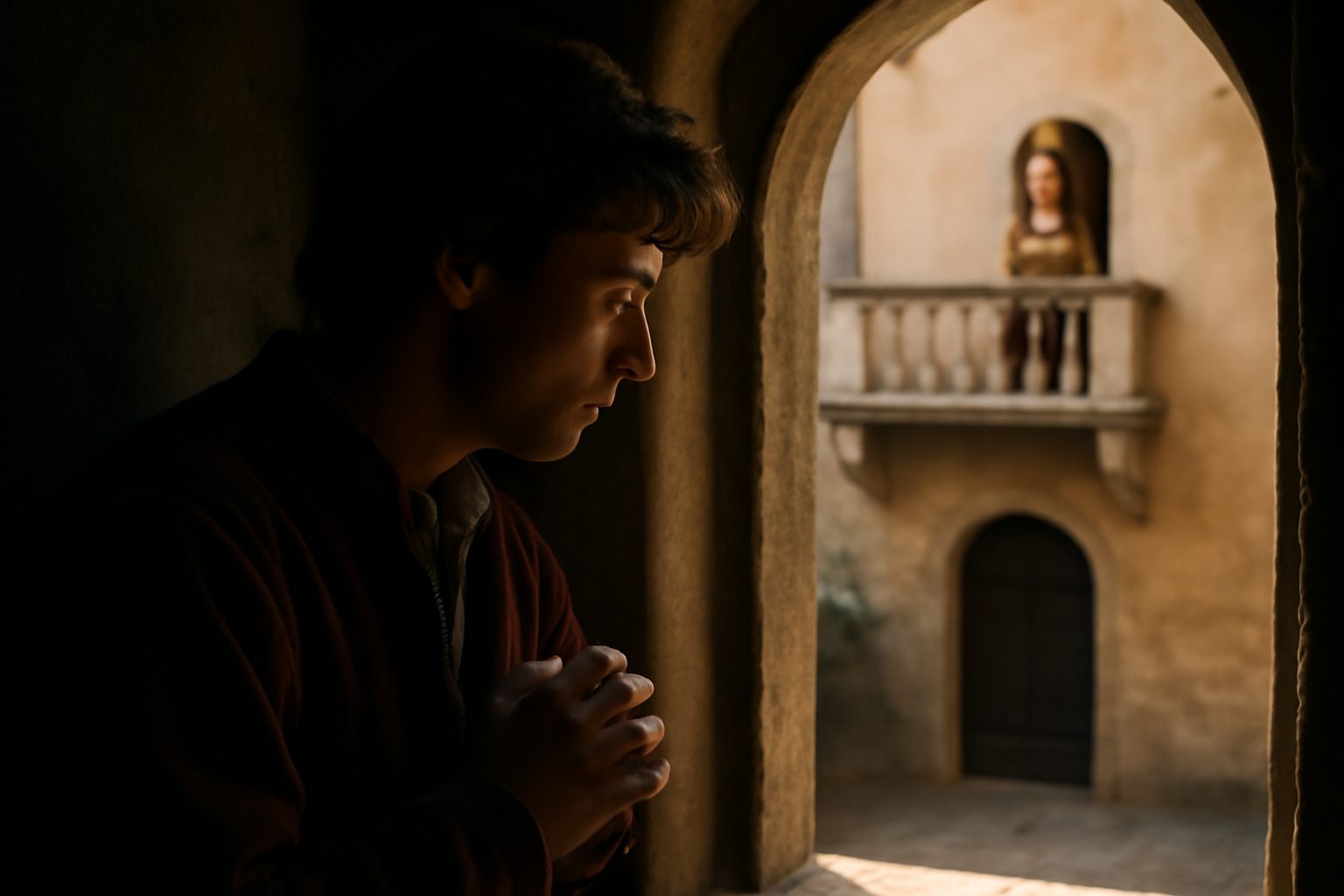
In Act 3, Scene 3 of Romeo and Juliet, Friar Laurence scolds Romeo for his despair after being banished from Verona for killing Tybalt. The friar argues that Romeo’s punishment could have been far worse—death—and that banishment is an act of mercy. Romeo, blinded by grief over separation from Juliet, fails to recognize this leniency, prompting the friar’s exasperated remark.
Friar Laurence: "This is dear mercy, and thou seest it not."
In modern day english, we would say:
This is a kind and generous act, but you refuse to see it that way.
Frequently Asked Questions
What does Friar Laurence mean when he says Romeo does not see the mercy being shown to him?
Friar Laurence is telling Romeo that he is being shown kindness (by not receiving a worse punishment for killing Tybalt), but Romeo is too upset to recognize it.
Connections to other verses:
Connections to "This is dear mercy, and thou seest it not"
The line "This is dear mercy, and thou seest it not" is spoken by Friar Laurence, emphasizing that Romeo's banishment is a merciful alternative to death. This theme of mercy versus punishment is echoed in several other verses:
Mercy and Judgment
- "Thy fault our law calls death; but the kind prince... turned that black word death to banishment" directly supports the Friar's point, showing the Prince's leniency.
- "Taking thy part, hath rush'd aside the law" reinforces the idea that Romeo has been granted a reprieve.
- "The law that threaten'd death becomes thy friend" further illustrates how the punishment has been mitigated.
Romeo's Blindness to Mercy
- Romeo's inability to see the mercy in his sentence is highlighted in "'Tis torture, and not mercy: heaven is here", where he equates banishment with suffering.
- His despair is evident in "Ha, banishment! be merciful, say 'death'", showing his preference for death over exile.
- "To mangle me with that word 'banished'?" underscores his perception of banishment as a cruel punishment.
Contrasting Perspectives
- Friar Laurence's attempts to console Romeo include "And turns it to exile; there art thou happy", urging him to see the positive side.
- "A pack of blessings lights up upon thy back" metaphorically suggests that Romeo's situation is filled with hidden advantages.
- Yet, Romeo's stubborn refusal is captured in "Yet 'banished'? Hang up philosophy!", dismissing rational comfort.