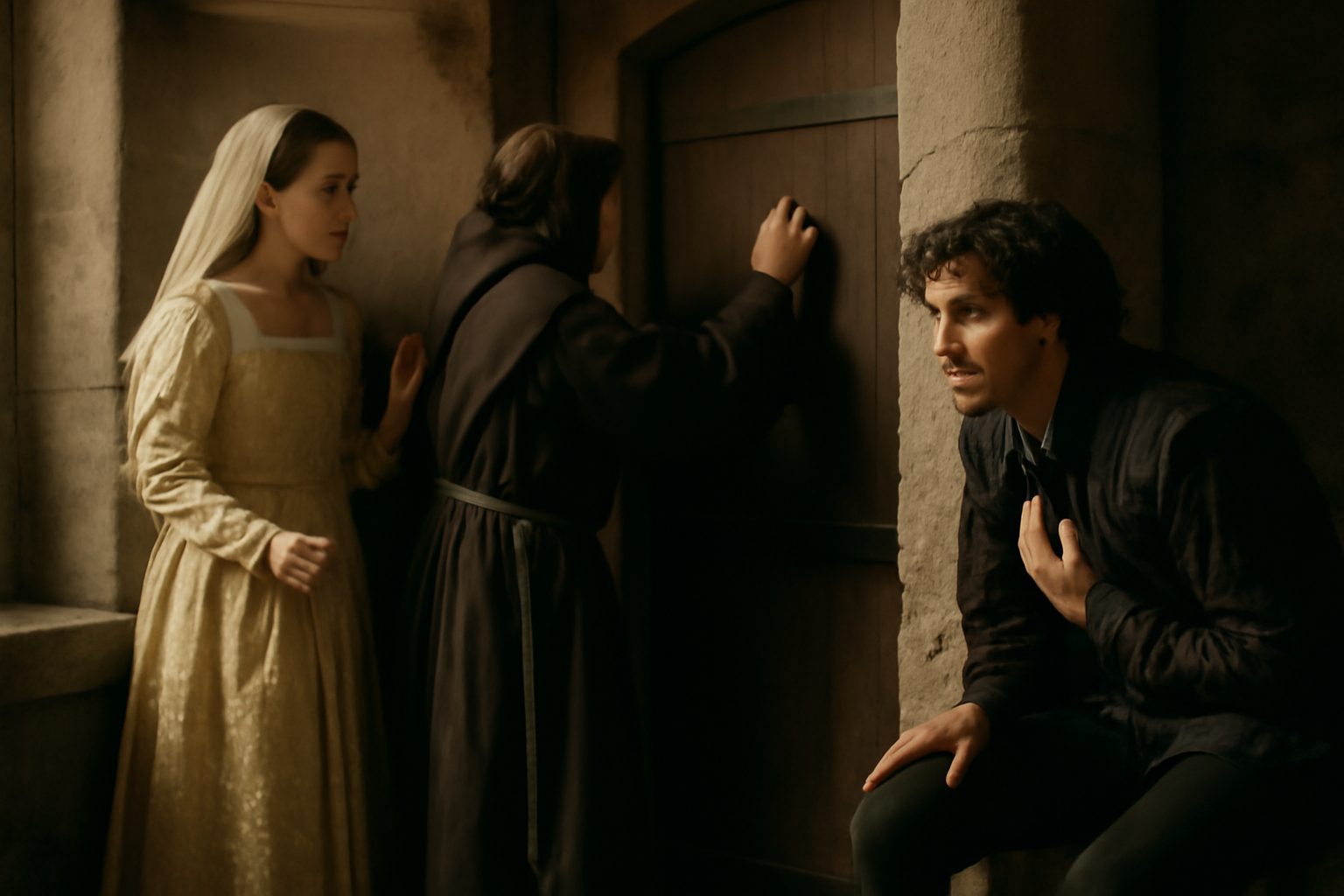
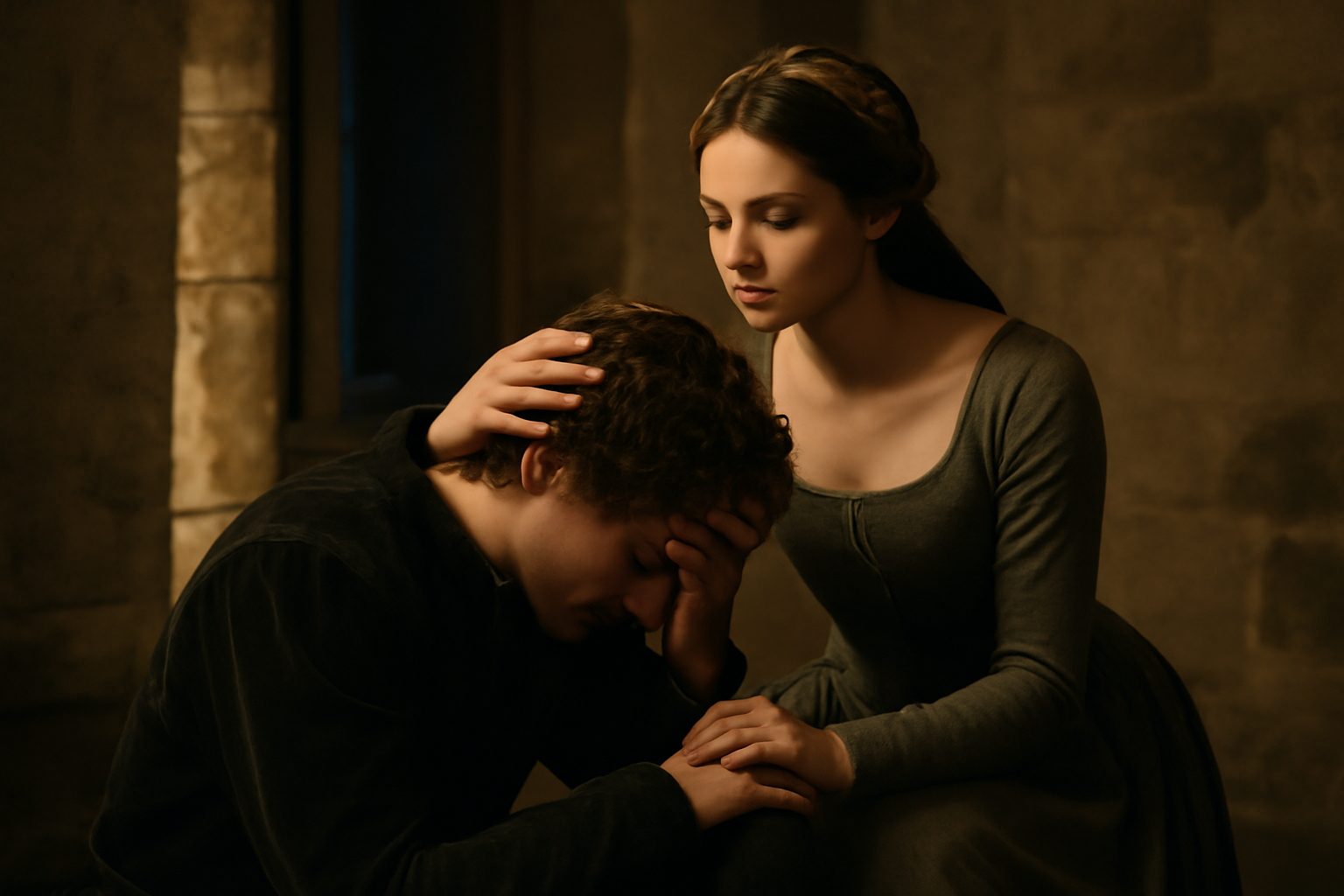
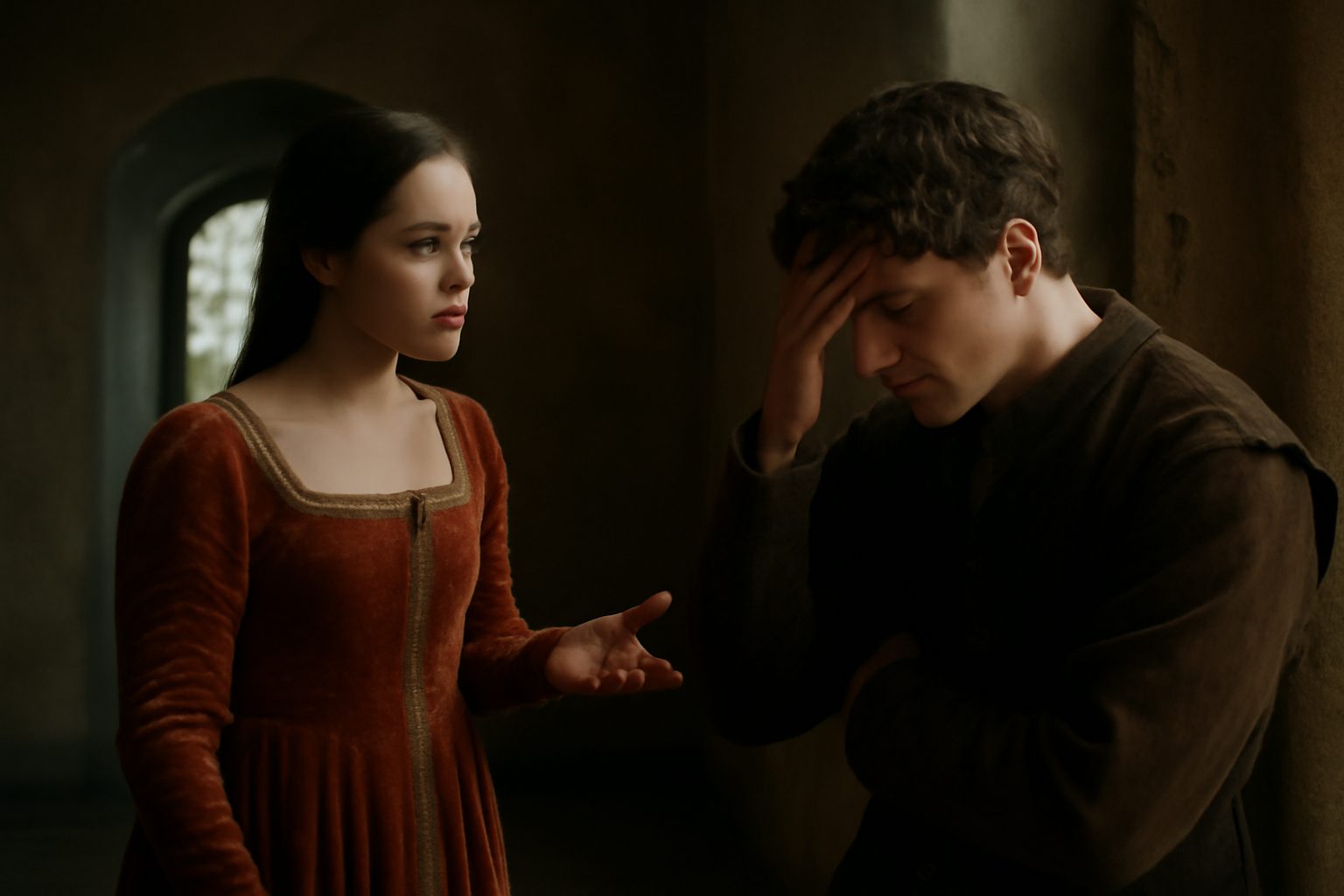
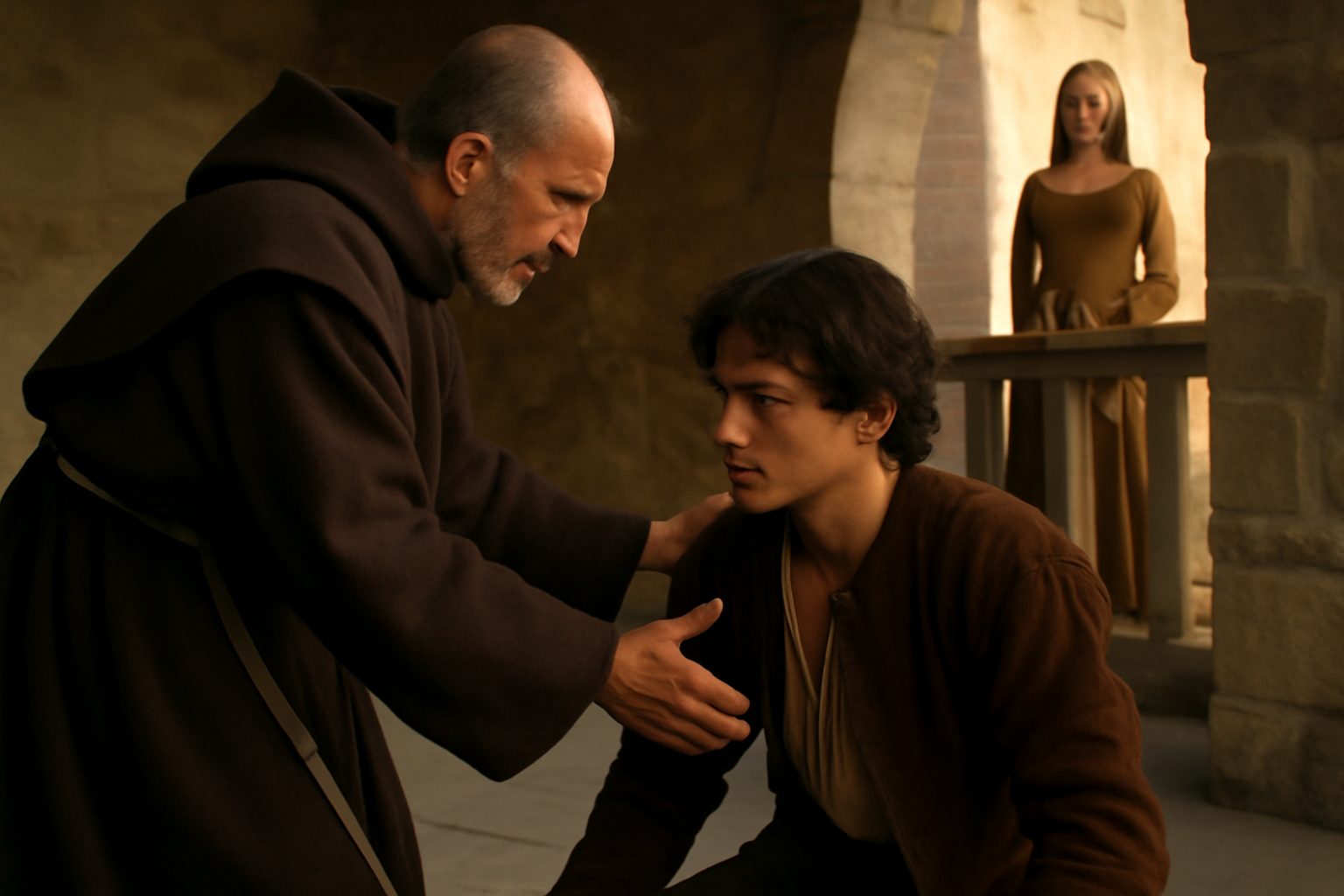
In Act 3 Scene 3 of Romeo and Juliet, Friar Laurence informs Romeo that the Prince has banished him from Verona as punishment for killing Tybalt. Overwhelmed by despair, Romeo reacts with exaggerated distress, comparing his exile to a catastrophic, world-ending fate. This line captures his melodramatic response, emphasizing how he perceives banishment as a punishment worse than death.
Romeo: "What less than dooms-day is the prince's doom?"
In modern day english, we would say:
The prince's punishment is as severe as the end of the world.
Frequently Asked Questions
What is Romeo worried about when he mentions the prince's decision?
Romeo is worried that the prince's punishment for him will be as severe as doomsday, meaning very harsh or final.
Connections to other verses:
Connections to "What less than dooms-day is the prince's doom?"
This line, spoken by Romeo, expresses his despair at the Prince's judgment of banishment, which he equates to a death sentence. It connects thematically and emotionally to several other verses in the scene.
Related to the Prince's Judgment and Mercy
- Father, what news? what is the prince's doom? – This is Romeo's initial question, showing his anxiety about the verdict.
- I bring thee tidings of the prince's doom. – Friar Laurence confirms the judgment, setting the stage for Romeo's reaction.
- Thy fault our law calls death; but the kind prince… – Highlights the Prince's mercy in commuting the death sentence to banishment.
- Taking thy part, hath rush'd aside the law, – Further emphasizes the Prince's leniency toward Romeo.
- This is dear mercy, and thou seest it not. – Friar Laurence tries to make Romeo see the mercy in his punishment.
Romeo's Perception of Banishment as Death
- Ha, banishment! be merciful, say 'death;' – Romeo prefers death over banishment, viewing exile as worse.
- There is no world without Verona walls, – Romeo believes life outside Verona is meaningless, reinforcing his despair.
- And world's exile is death: then banished, – He explicitly equates banishment with death.
- And say'st thou yet that exile is not death? – Romeo challenges the Friar's attempt to minimize his suffering.
- But 'banished' to kill me?--'banished'? – He sees the word itself as a weapon destroying him.
Emotional and Philosophical Responses
- Tis torture, and not mercy: heaven is here, – Romeo insists that being away from Juliet is torture, not mercy.
- O friar, the damned use that word in hell; – He associates "banishment" with damnation, echoing his dooms-day reference.
- Yet 'banished'? Hang up philosophy! – Romeo dismisses rational comfort, consumed by emotional pain.
- What, rouse thee, man! thy Juliet is alive, – The Friar tries to pull Romeo from his despair by reminding him of Juliet's survival.