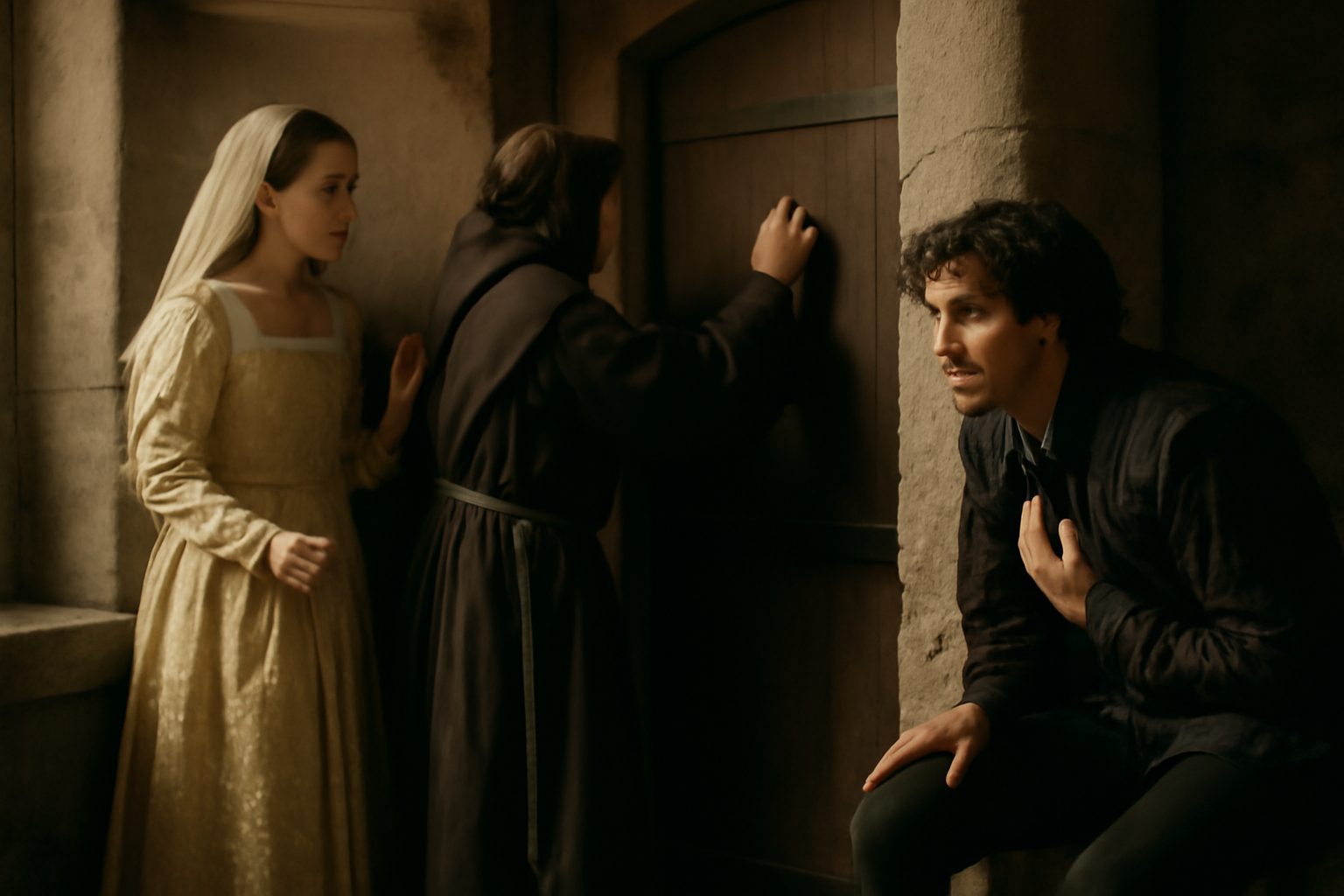
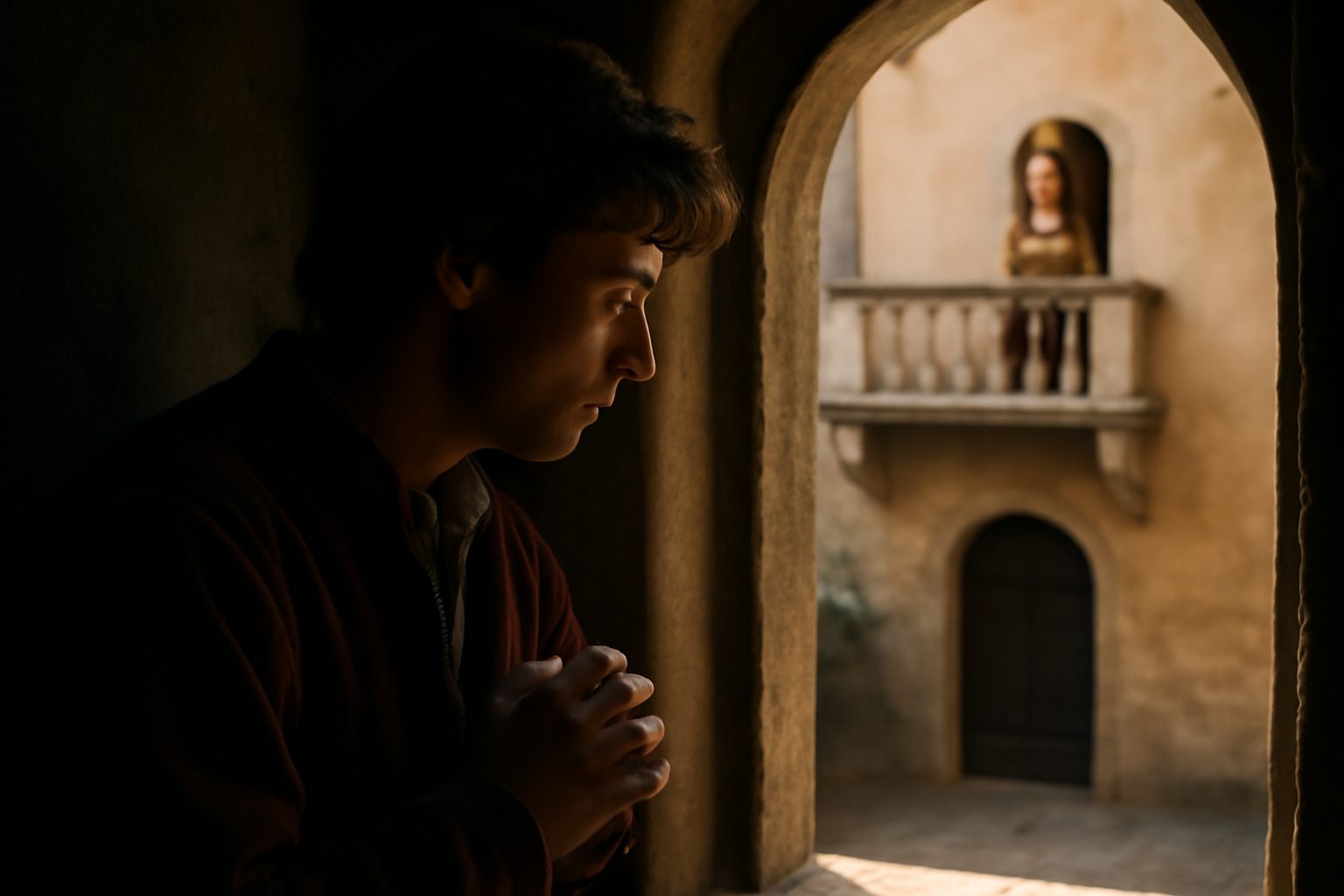
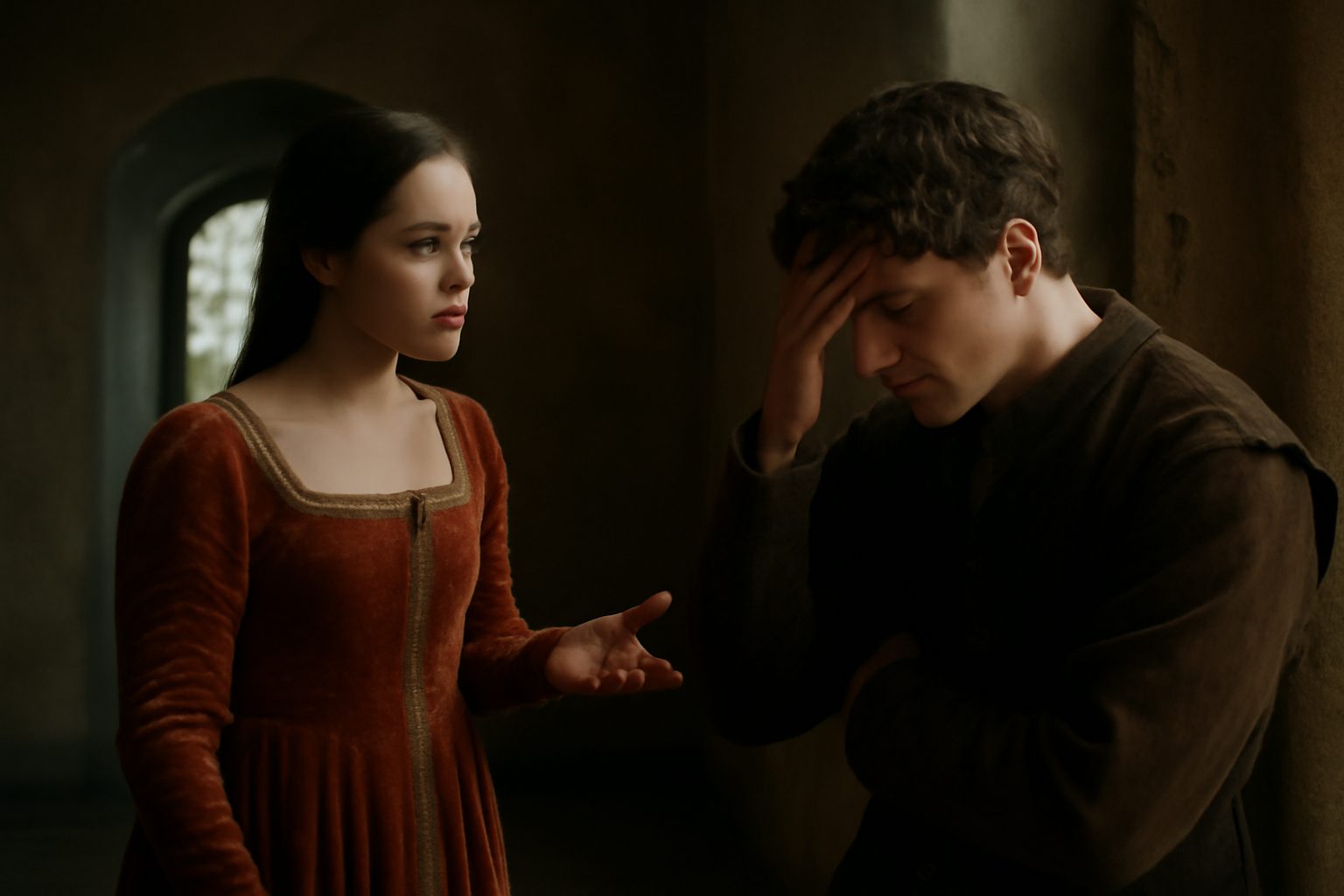
In Act 3, Scene 3 of Romeo and Juliet, Romeo has just been banished from Verona for killing Tybalt, Juliet's cousin. Overwhelmed by despair, he reacts with anguish to Friar Laurence's attempt to console him, seeing banishment as a fate worse than death because it separates him from Juliet. This line captures his raw emotional turmoil as he grapples with the consequences of his actions.
Romeo: "To mangle me with that word 'banished'?"
In modern day english, we would say:
Are you really going to tear me apart by saying I’m banished?
Frequently Asked Questions
Why is Romeo upset about being banished?
Romeo is upset because being banished means he cannot be with Juliet, the woman he loves.
Connections to other verses:
Connections to "To mangle me with that word 'banished'?"
Romeo's anguished cry in this verse reflects his perception of banishment as a form of torture, a theme echoed throughout the scene. His despair is immediately countered by Friar Laurence's attempts to rationalize the situation.
Friar Laurence's Counsel
The Friar responds to Romeo's outburst with patience, urging him to see banishment as mercy rather than punishment. In "This is dear mercy, and thou seest it not", he emphasizes that Romeo's life was spared when death was the expected sentence. He further elaborates in "And turns it to exile; there art thou happy", arguing that exile is a fortunate outcome. The Friar even claims in "The law that threaten'd death becomes thy friend" that the law has shown Romeo favor.
Romeo's Counterarguments
Romeo rejects this perspective, equating banishment with death in several verses. He declares in "And world's exile is death: then banished" that exile is a living death. He reiterates this in "And say'st thou yet that exile is not death?", challenging the Friar's reasoning. His despair peaks in "'Tis torture, and not mercy: heaven is here", where he asserts that true heaven is Verona with Juliet, making exile hellish.
Emotional Extremes
Romeo's reaction to the word "banished" is part of his larger emotional collapse. He is described as falling "upon the ground" in this verse, physically manifesting his despair. The Friar chastises this behavior in "Thy tears are womanish; thy wild acts denote", accusing him of unmanly grief. Romeo's fixation on the word leads him to dismiss comfort in "Yet 'banished'? Hang up philosophy!", rejecting rational solace.
Connection to Juliet
Ultimately, Romeo's horror at banishment stems from his separation from Juliet. He values her presence above all, stating in "Live here in heaven and may look on her" that seeing her is heaven. The Friar uses this to motivate him, saying in "What, rouse thee, man! thy Juliet is alive" that her survival should give him hope. The plan for them to reunite is outlined in "Go, get thee to thy love, as was decreed", offering a practical path forward despite the banishment.