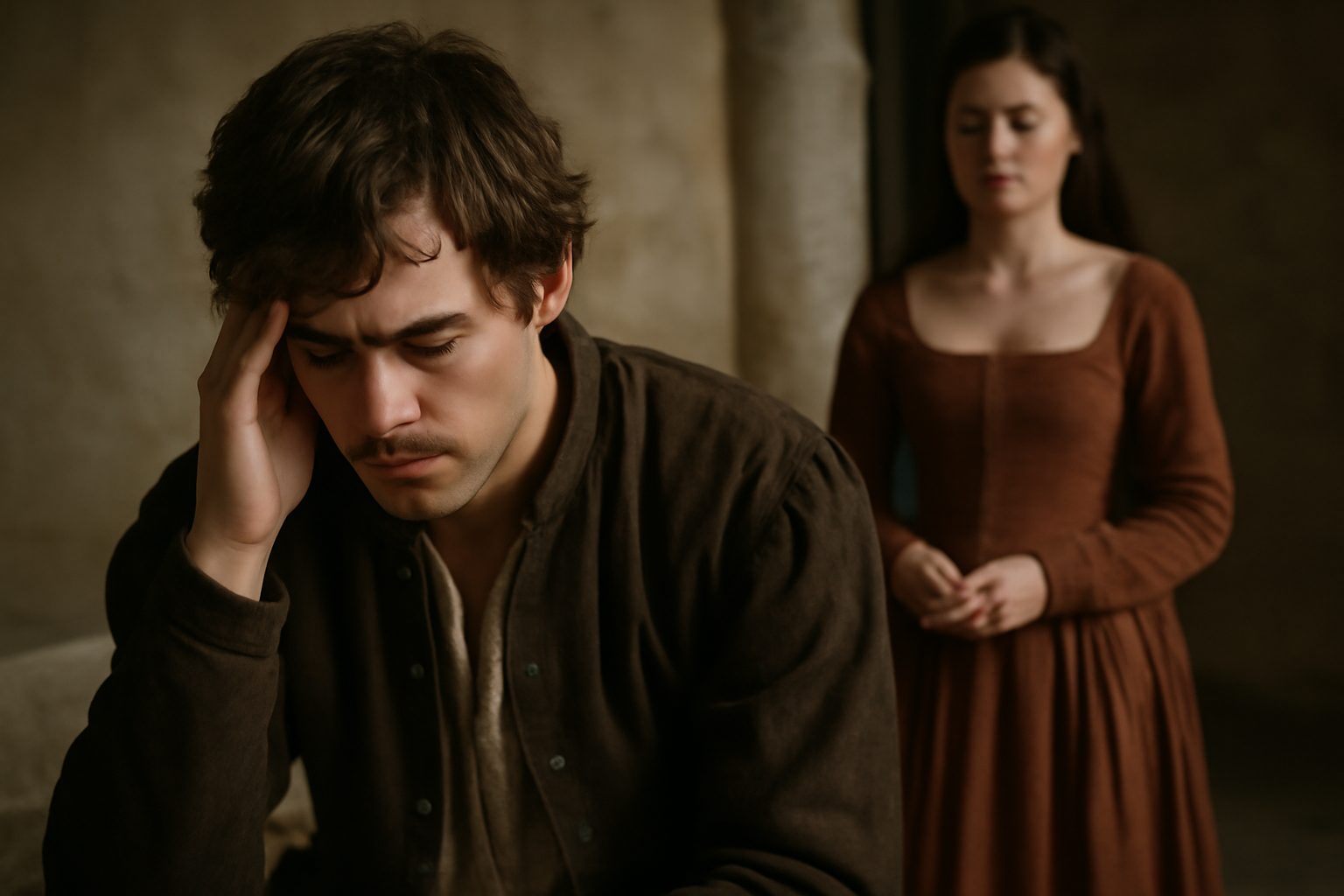
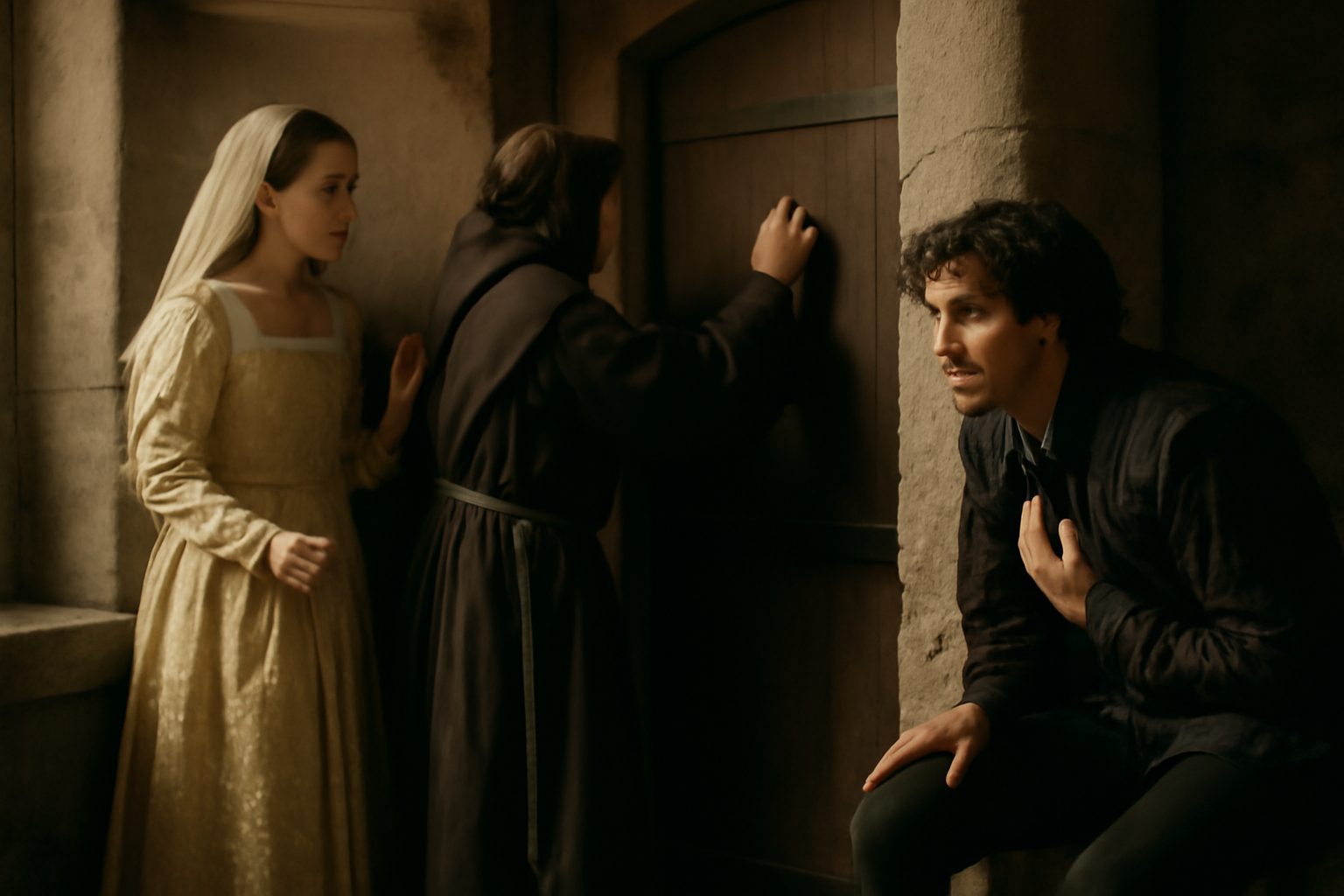
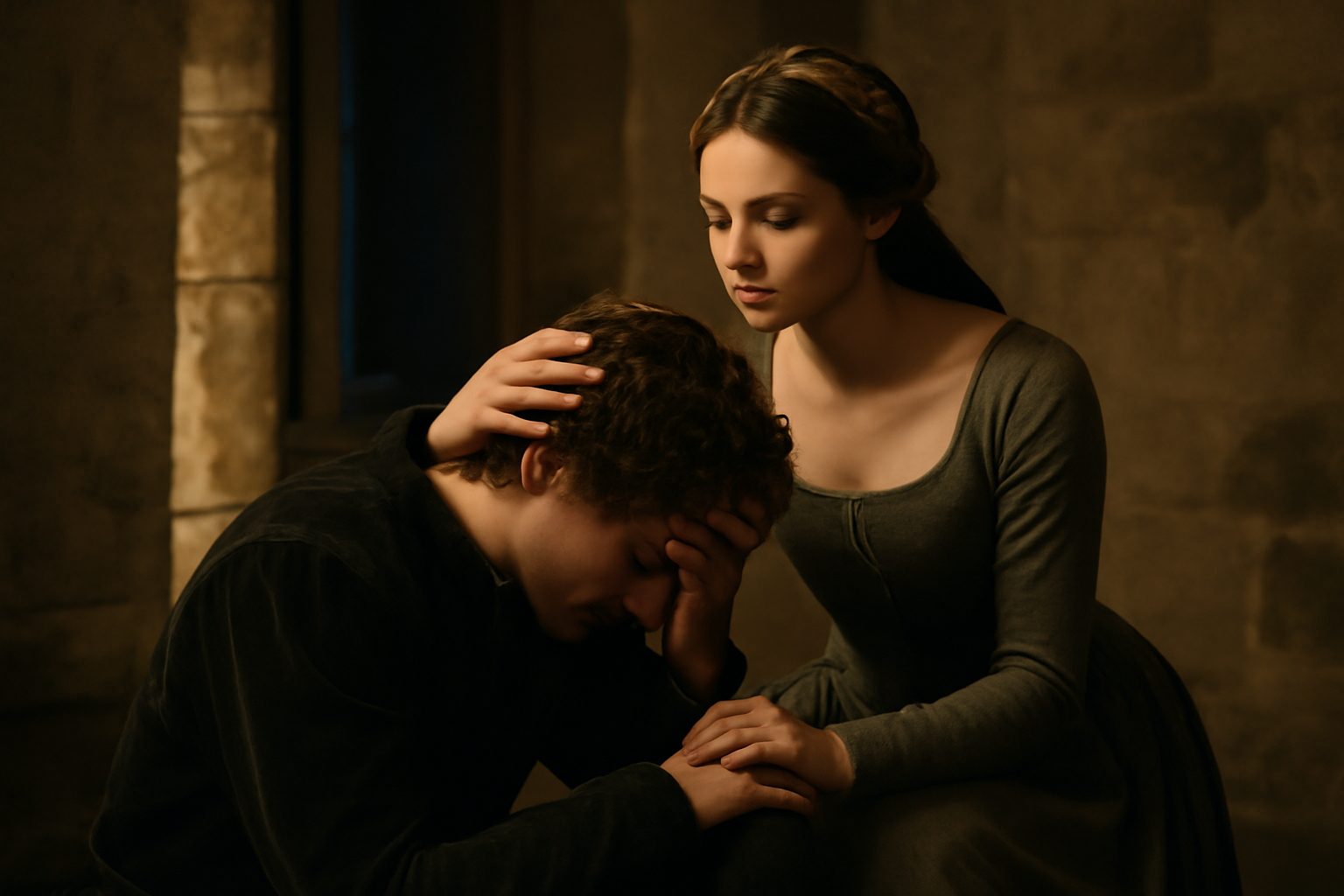
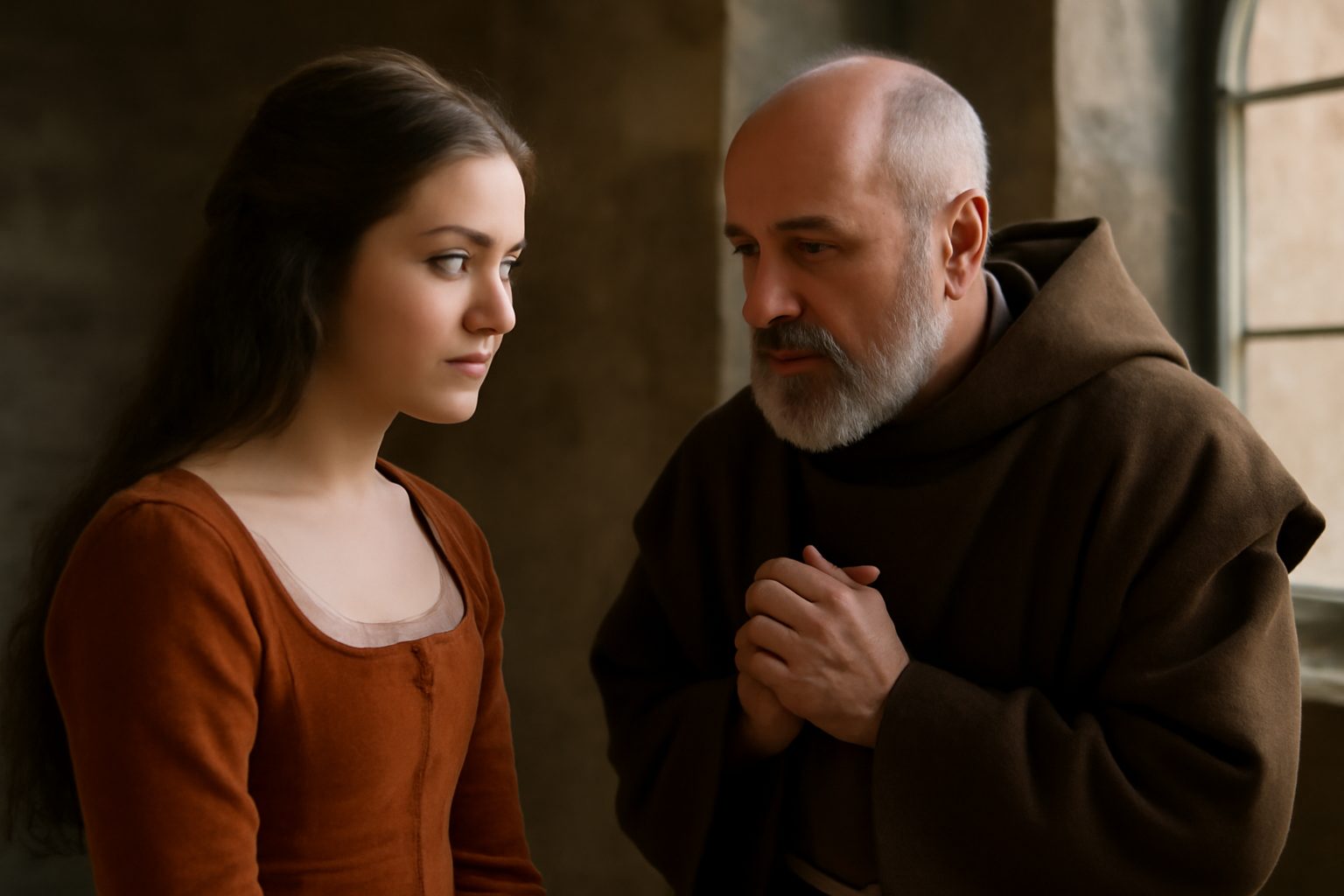
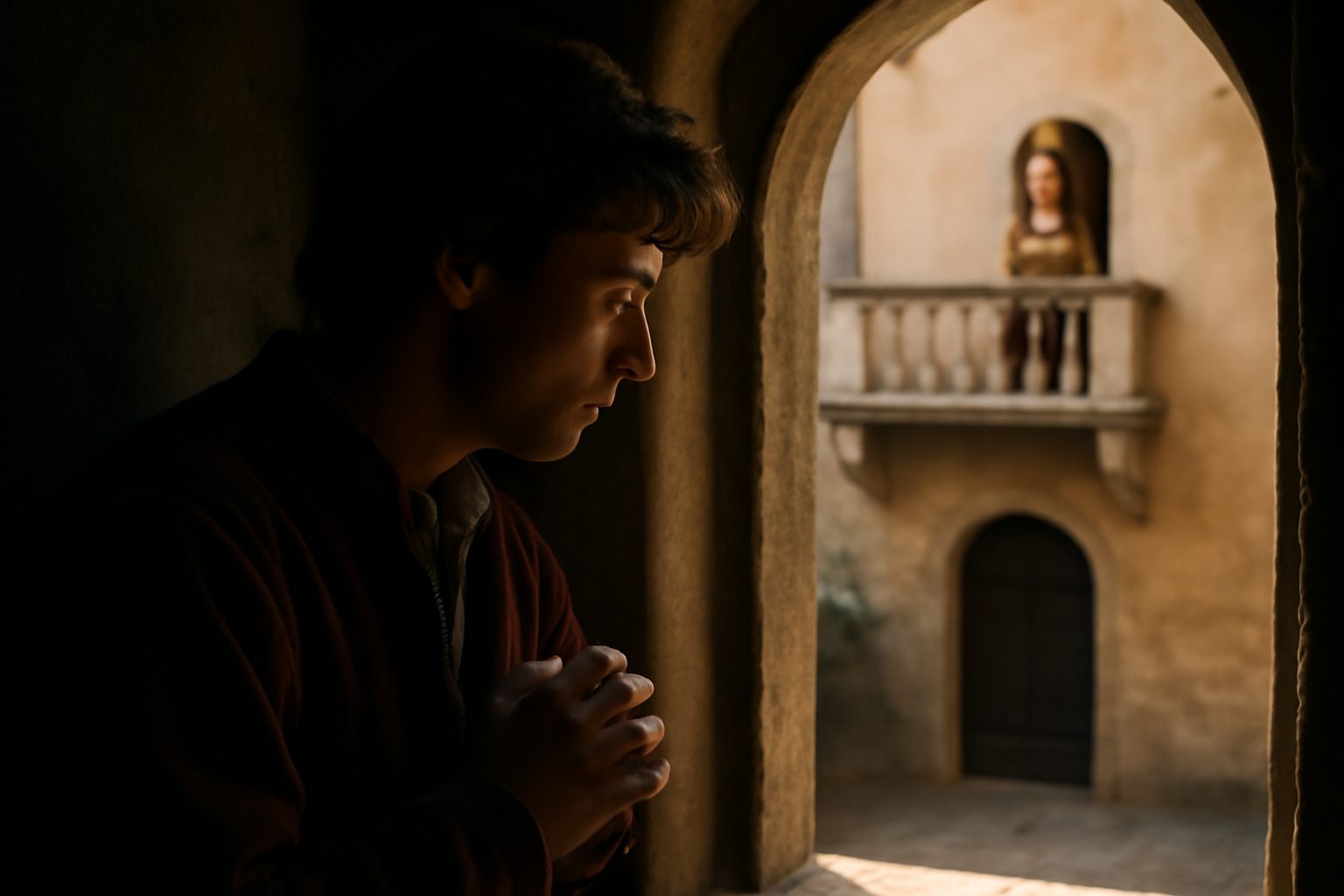
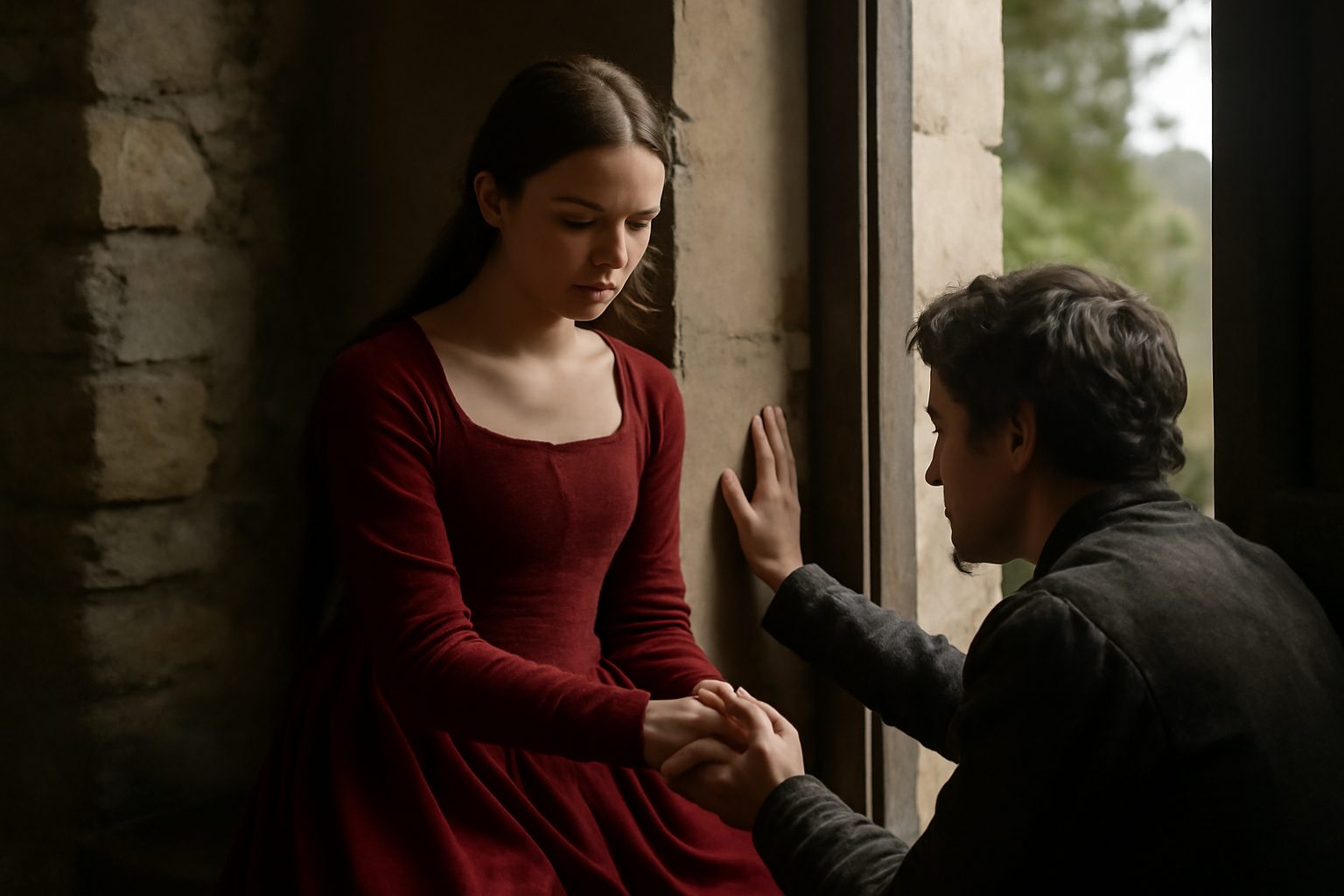
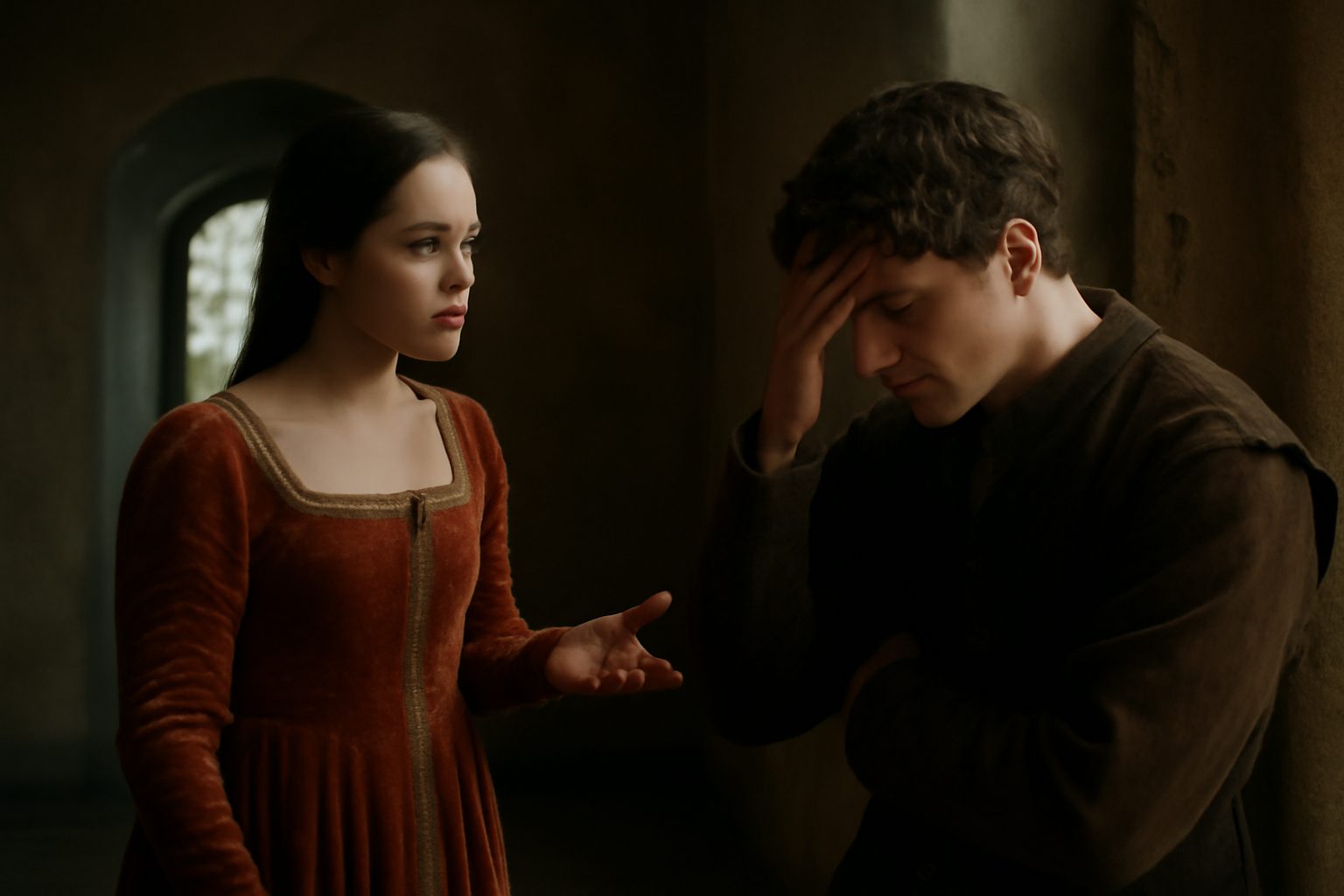
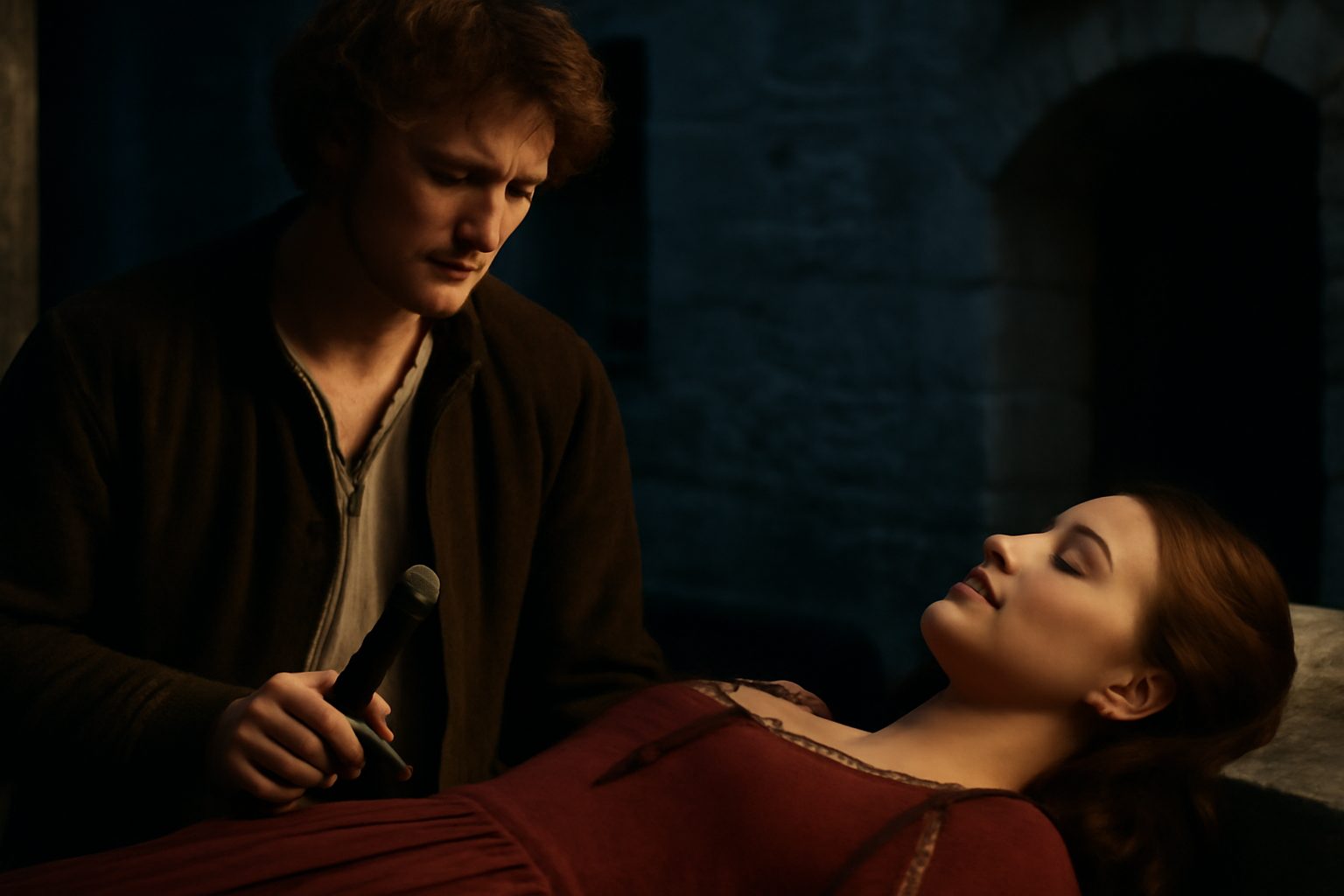
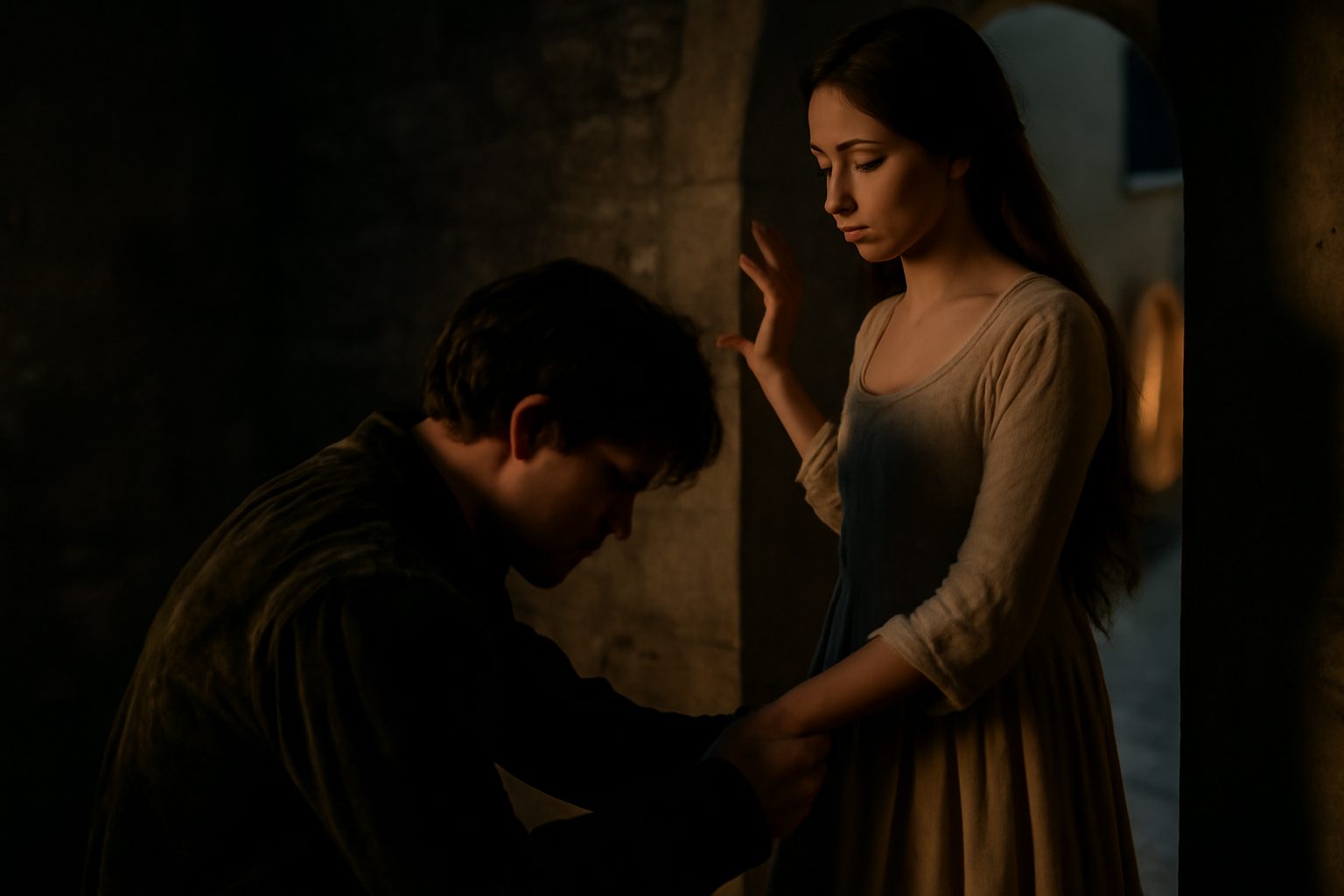
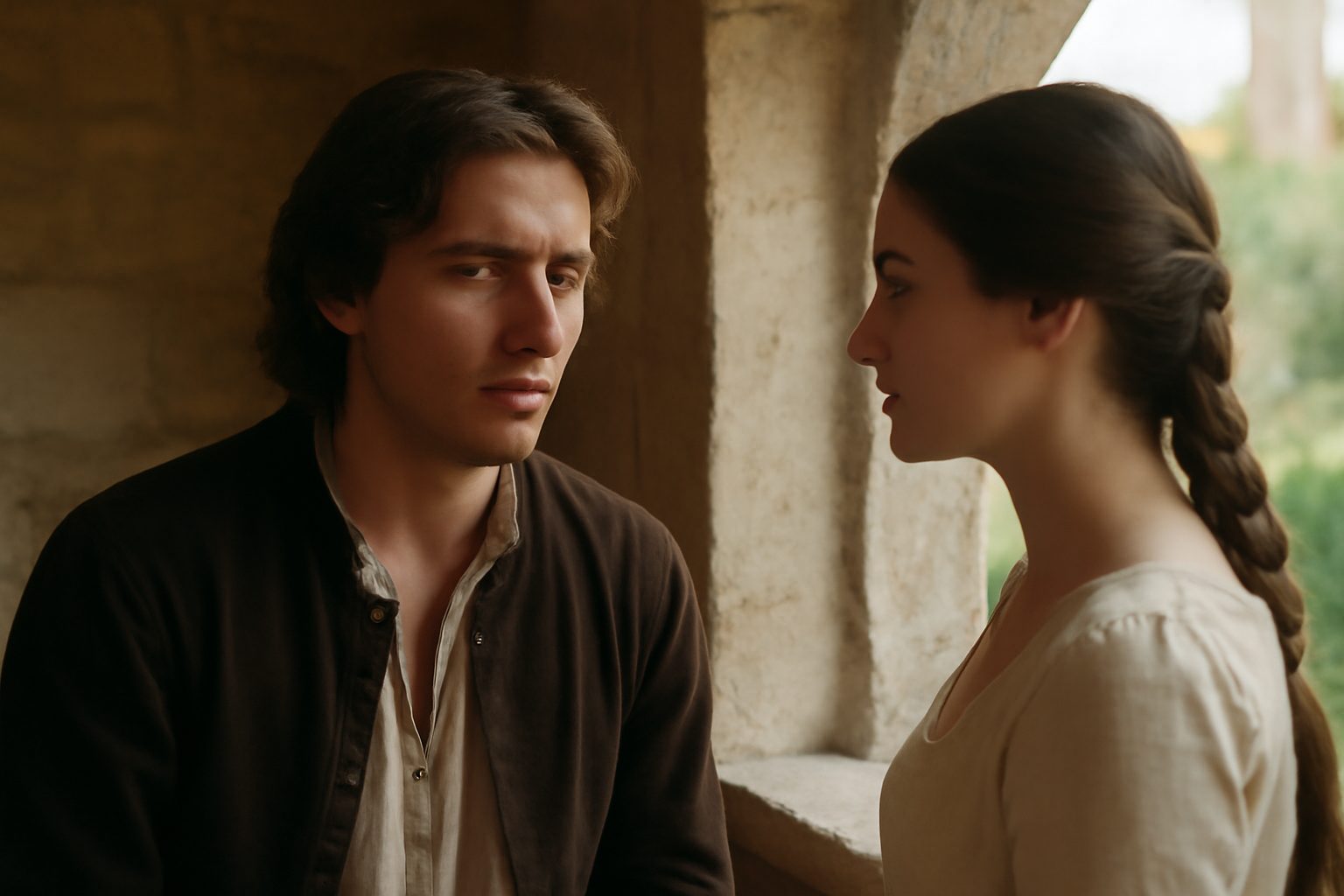
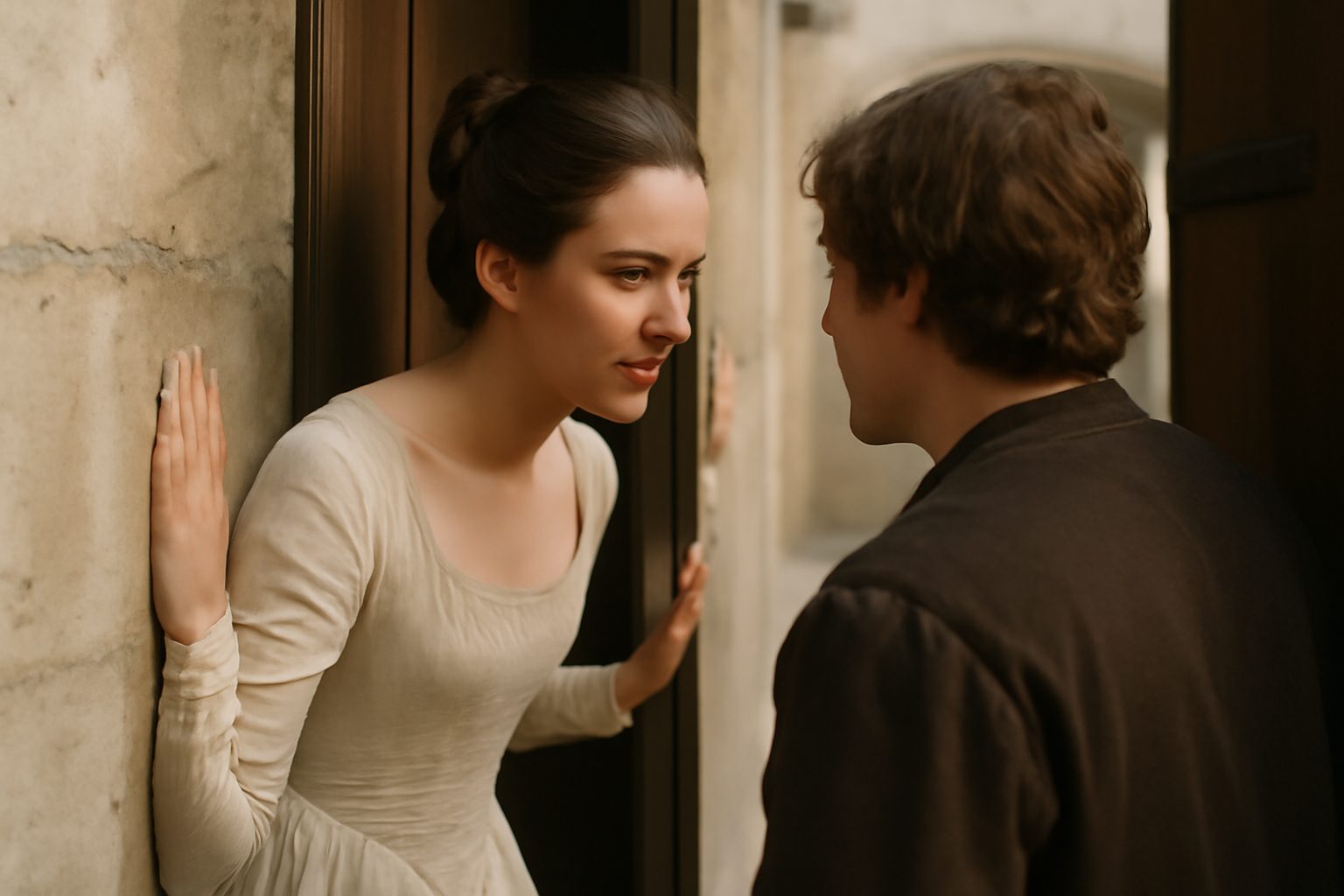
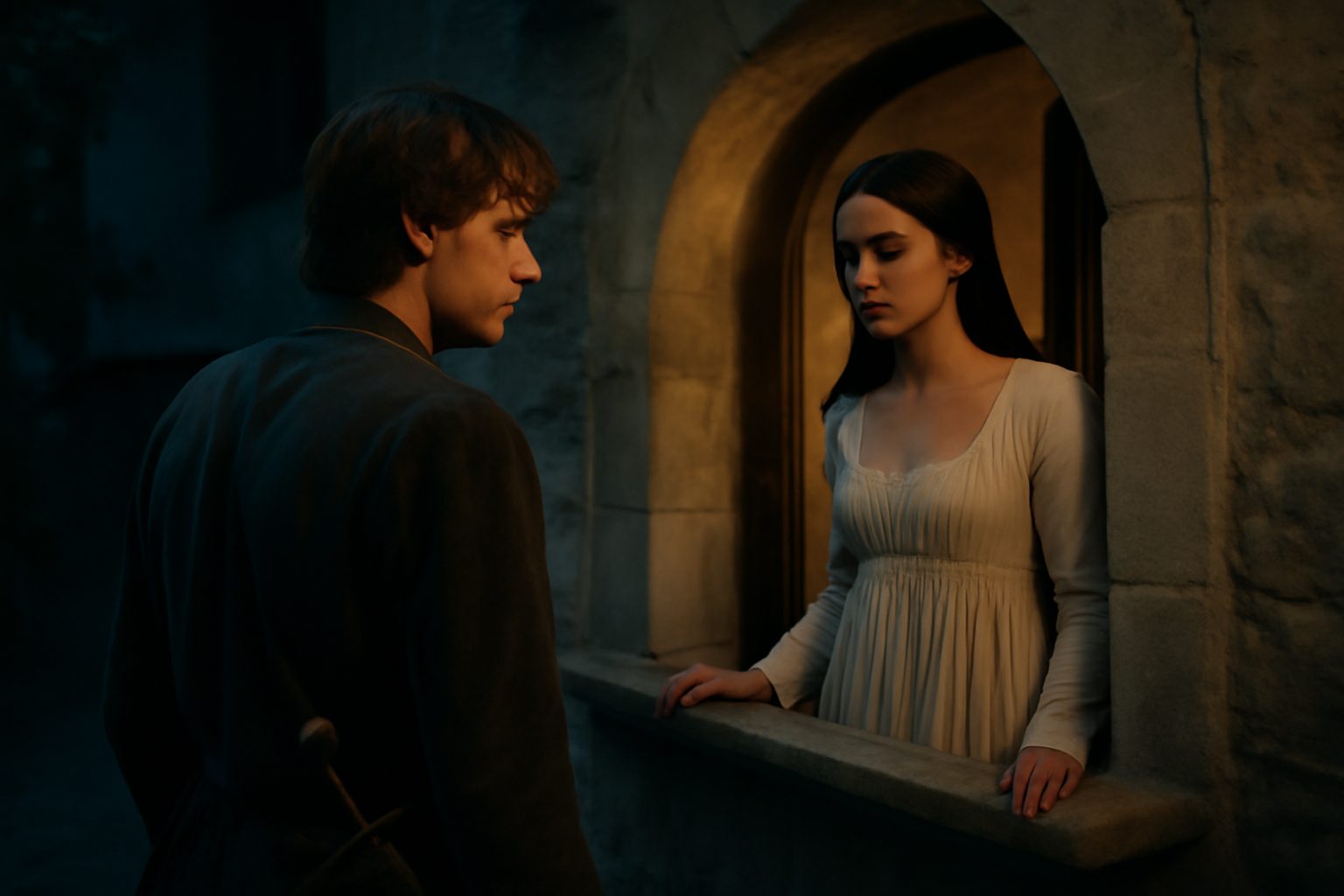
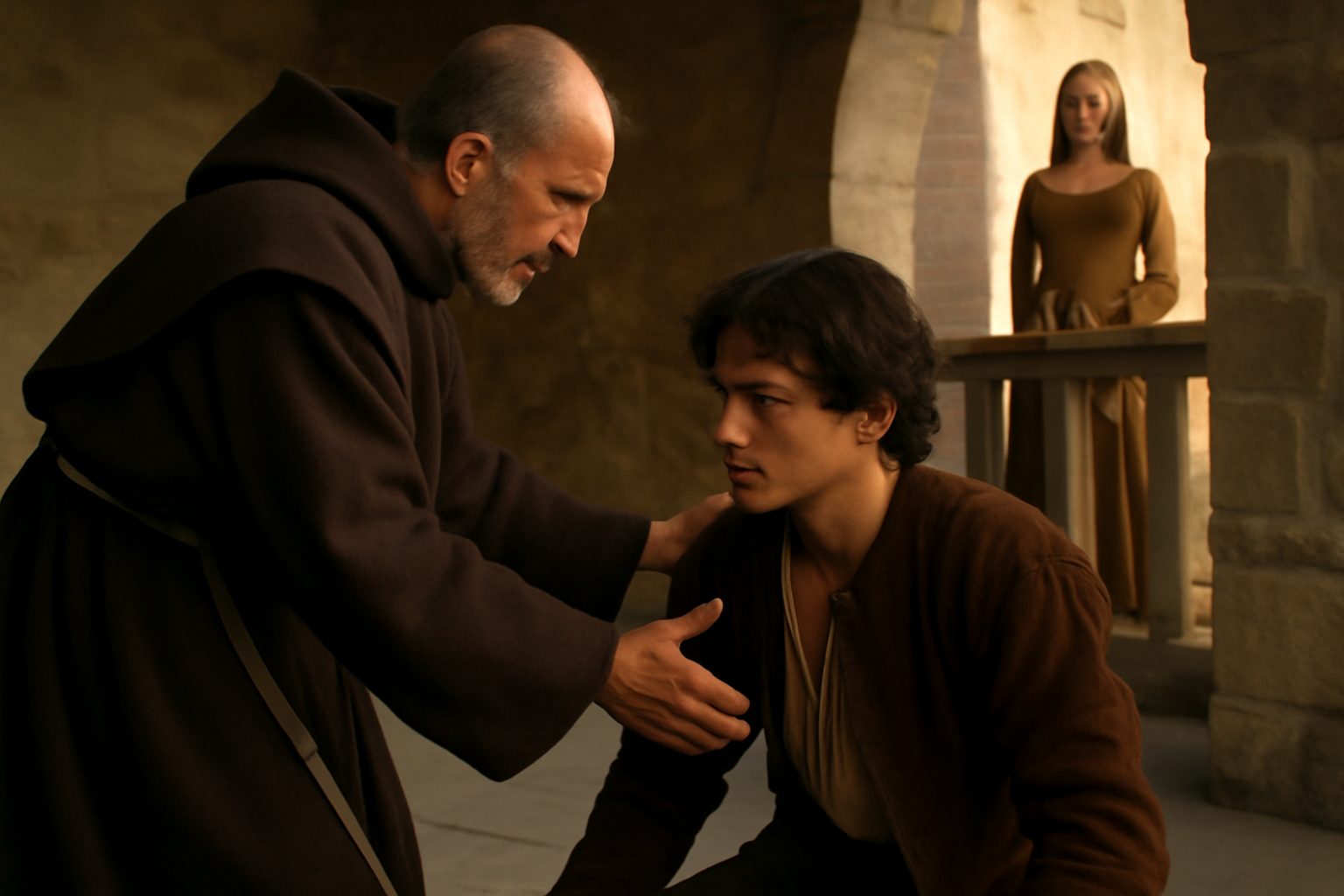
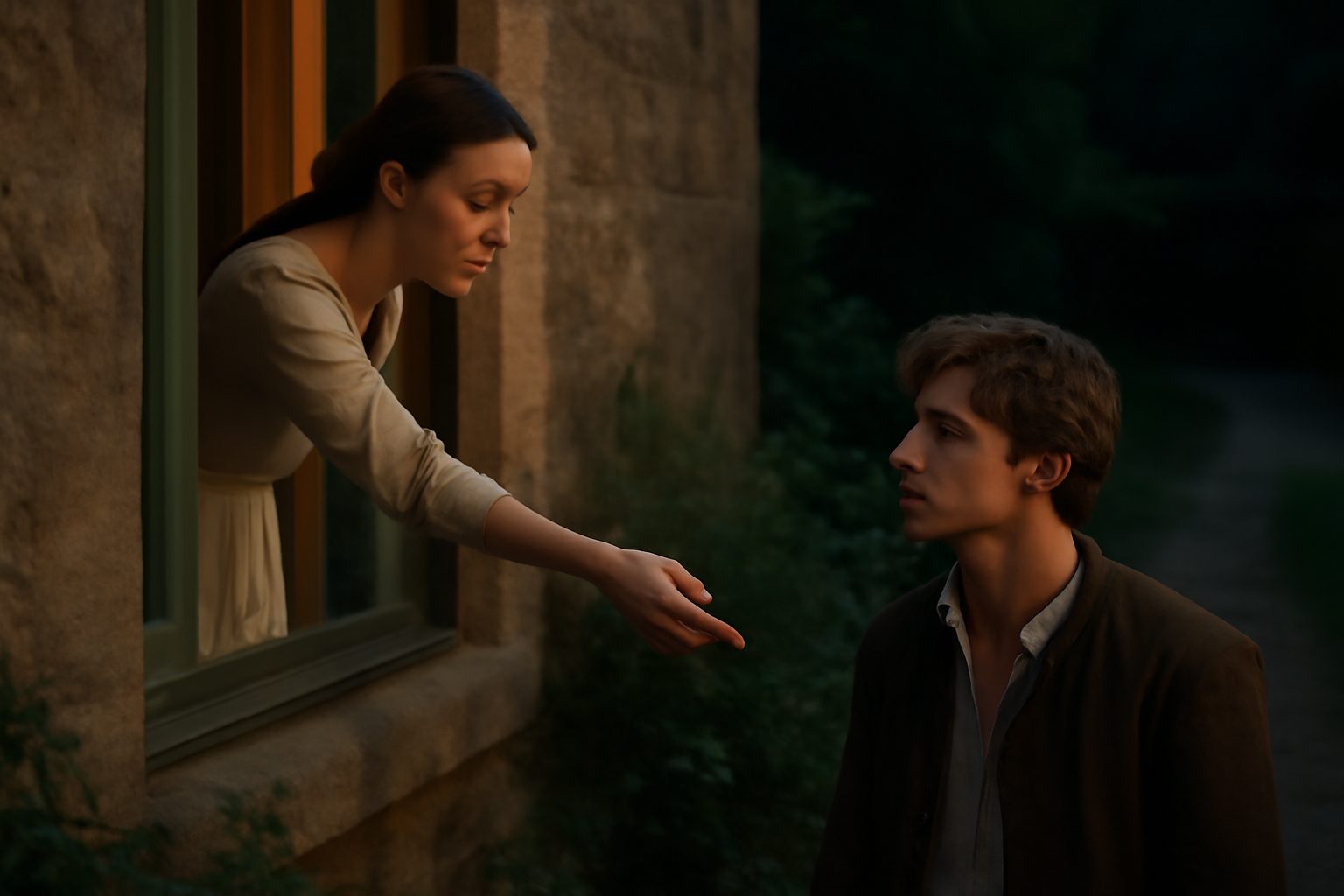
In Act 3, Scene 3 of Romeo and Juliet, Friar Laurence informs Romeo of his banishment from Verona as punishment for killing Tybalt. This line captures the moment when the Nurse arrives, recounting how Tybalt initially sought Romeo before their fatal duel. It underscores the chaos and escalating consequences of the feud between the Montagues and Capulets.
Nurse: "And Tybalt calls; and then on Romeo cries,"
In modern day english, we would say:
Tybalt shouts for Romeo, then attacks him.
Frequently Asked Questions
What does the Nurse say about Tybalt and Romeo in this line?
The Nurse says that Tybalt calls out and then shouts at Romeo.
Connections to other verses:
Connections to "And Tybalt calls; and then on Romeo cries"
The verse "And Tybalt calls; and then on Romeo cries" is part of the Nurse's description of Juliet's distress. It highlights the dual outcry over Tybalt's death and Romeo's banishment, emphasizing the tragic conflict between love and loss.
Related Verses on Juliet's Anguish
This line connects to "O, she says nothing, sir, but weeps and weeps", illustrating Juliet's overwhelming grief. Similarly, "And now falls on her bed; and then starts up" and "And then down falls again" depict her physical collapse, mirroring the emotional turmoil described in the original verse.
Romeo's Reaction and Despair
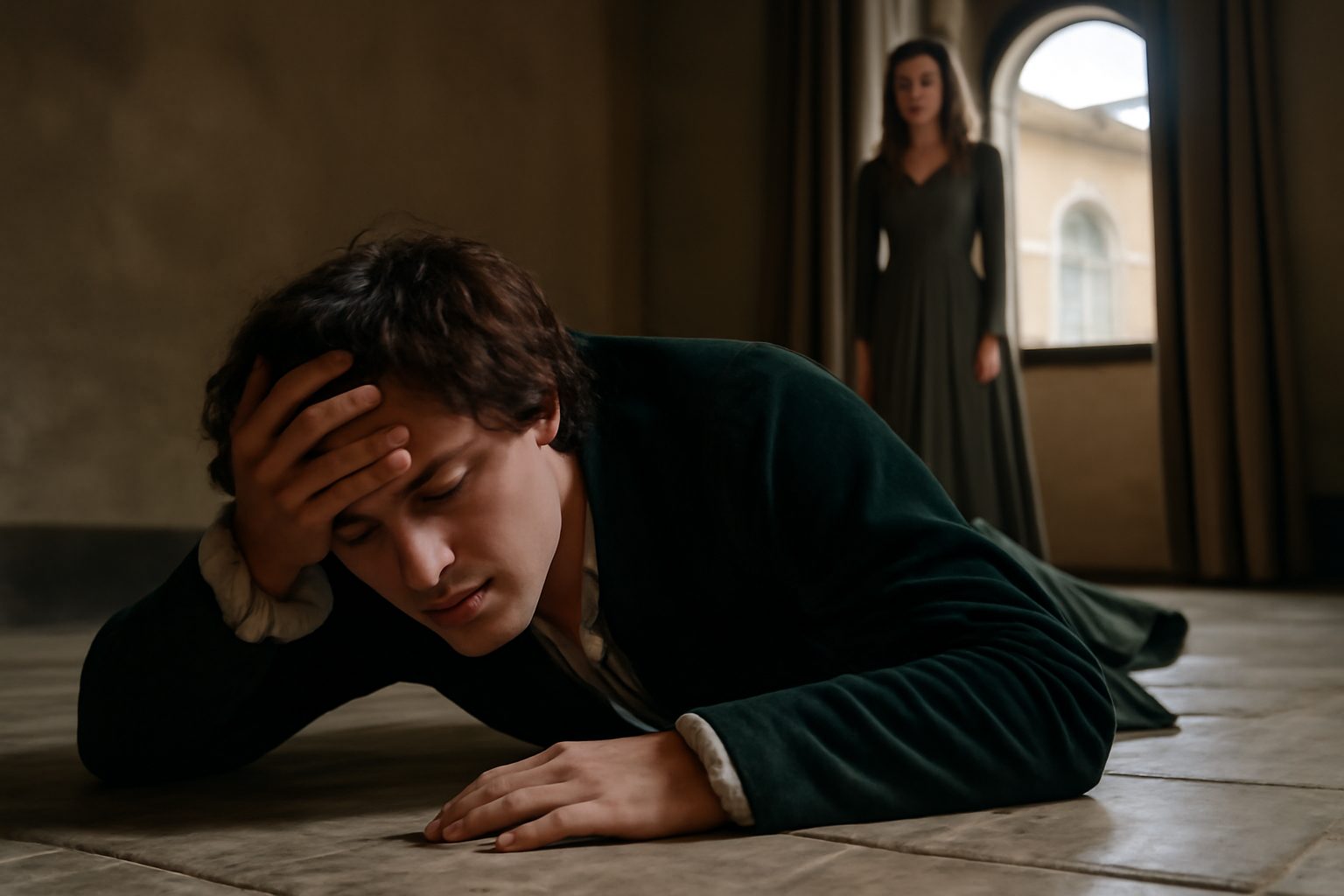
Romeo's own despair is echoed in verses like "And fall upon the ground, as I do now", where he mirrors Juliet's physical anguish. His sense of guilt is further emphasized in "Murder'd her kinsman. O, tell me, friar, tell me", showing his torment over killing Tybalt.
The Theme of Banishment
The verse also ties into the broader theme of banishment, such as in "And say'st thou yet that exile is not death?", where Romeo equates exile with a living death. This connects to the despair caused by the separation mentioned in the original line.
Friar Lawrence's Counsel
Friar Lawrence's attempts to console Romeo are seen in verses like "What, rouse thee, man! thy Juliet is alive", offering a counterpoint to the distress described. Additionally, "A pack of blessings lights up upon thy back" highlights the Friar's effort to show Romeo the silver lining in his situation.