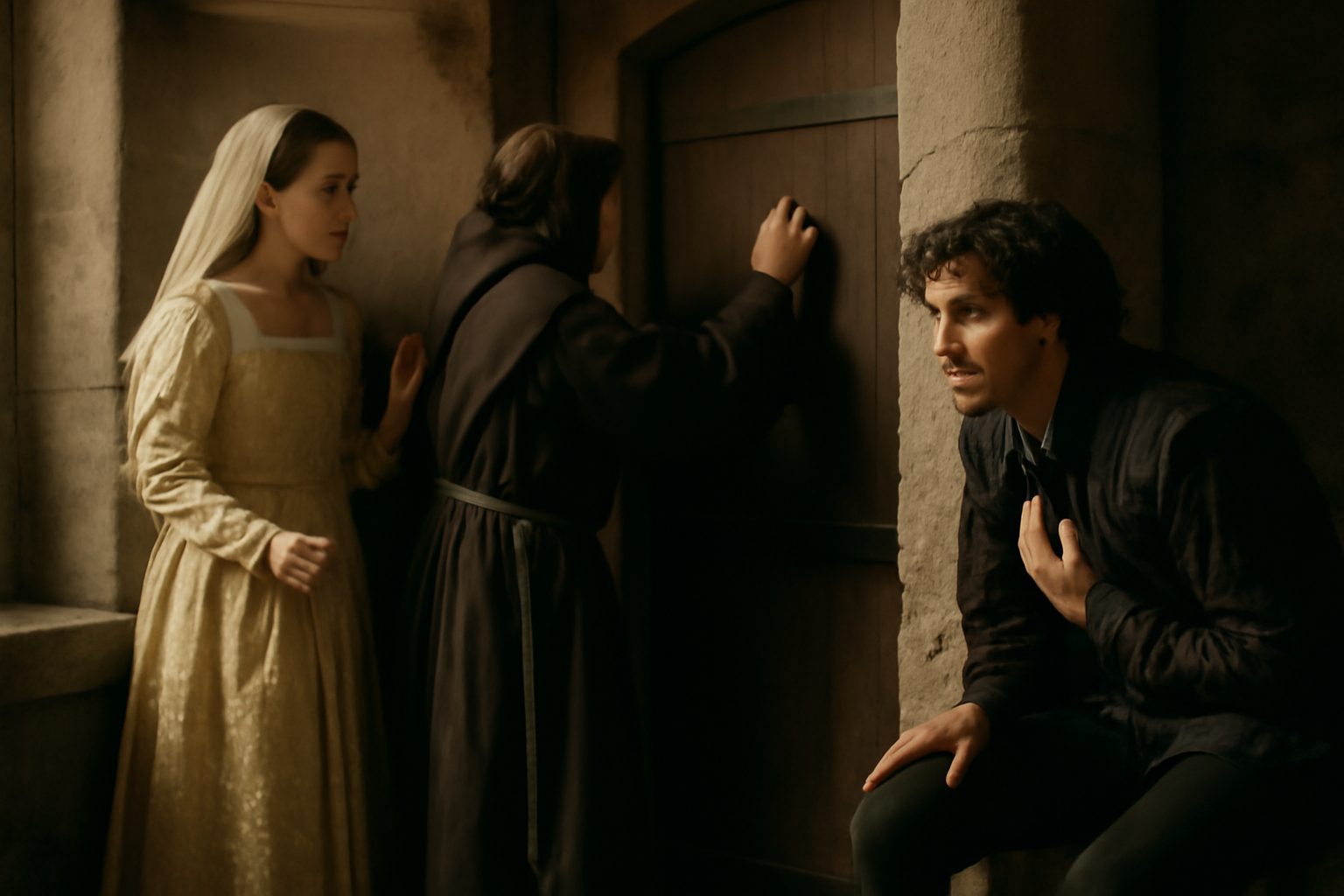
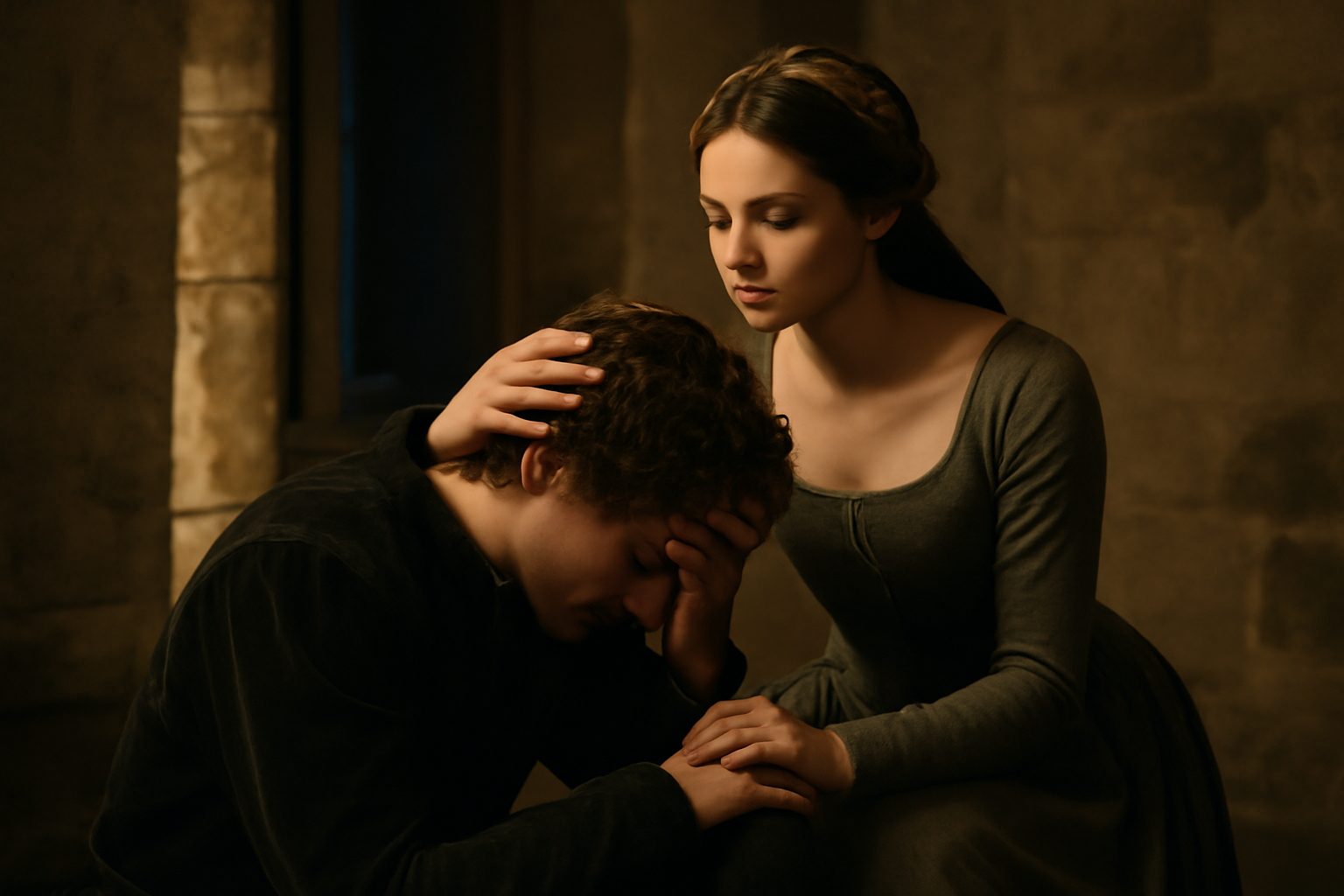
In Act 3 Scene 3 of Romeo and Juliet, Friar Laurence is attempting to console Romeo after his banishment from Verona for killing Tybalt. Romeo, overwhelmed by despair, dismisses the Friar's words of comfort, insisting that no advice or reasoning can change his fate. This line captures his hopelessness as he rejects further discussion, believing nothing can improve his situation.
Romeo: "It helps not, it prevails not: talk no more."
In modern day english, we would say:
Talking won’t help or change anything, so just stop.
Frequently Asked Questions
What is Romeo feeling when he says these words?
Romeo is feeling hopeless and frustrated, as he believes talking will not change his situation.
Who is Romeo speaking to in this line?
Romeo is speaking to Friar Laurence, who is trying to comfort him after his banishment.
Connections to other verses:
Connections to "It helps not, it prevails not: talk no more."
This line, spoken by Romeo, reflects his despair and refusal to be consoled. It connects thematically and emotionally with several other verses in the scene.
Despair and Rejection of Comfort
Romeo's dismissal of the Friar's counsel is echoed in Yet 'banished'? Hang up philosophy!, where he rejects rational solace. Similarly, his anguish aligns with O friar, the damned use that word in hell;, emphasizing his view of banishment as a fate worse than death.
Friar Lawrence's Attempts to Console
The Friar's efforts, which Romeo dismisses, include urging patience in Be patient, for the world is broad and wide. and offering perspective in And turns it to exile; there art thou happy:. Romeo's stubborn despair contrasts with the Friar's logical arguments, such as noting the mercy in This is dear mercy, and thou seest it not..
Emotional Extremes and Juliet's Plight
Romeo's fixation on his suffering mirrors Juliet's distress, described in O, she says nothing, sir, but weeps and weeps;. His inability to see beyond his pain is critiqued in What, rouse thee, man! thy Juliet is alive,, where the Friar reminds him of hope through Juliet's survival.
Self-Destructive Tendencies
Romeo's defeatist attitude culminates in thoughts of self-harm, as in Hast thou slain Tybalt? wilt thou slay thyself?, highlighting the depth of his crisis. The Friar chastises this behavior in Fie, fie, thou shamest thy shape, thy love, thy…, urging him to embrace reason and strength.