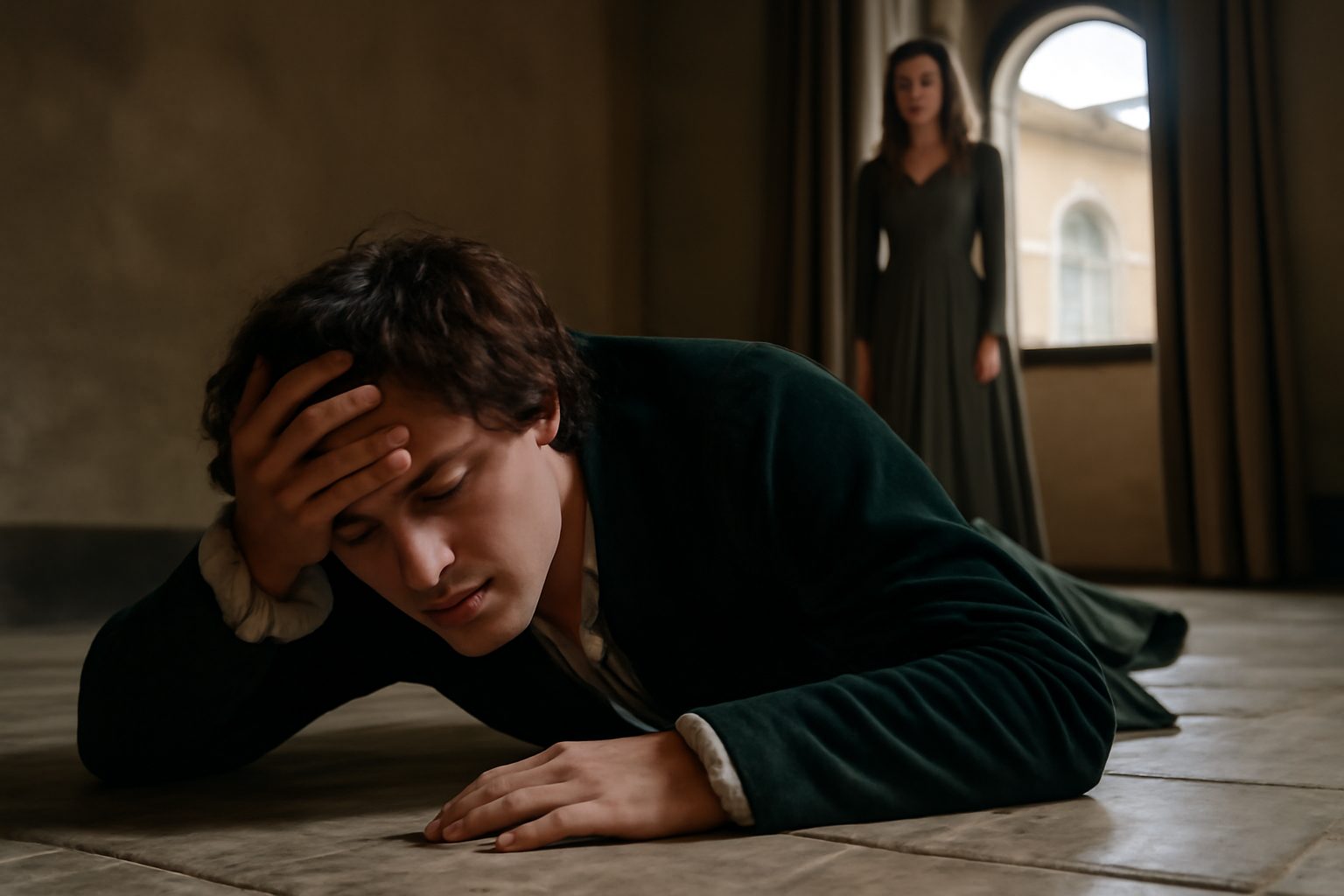
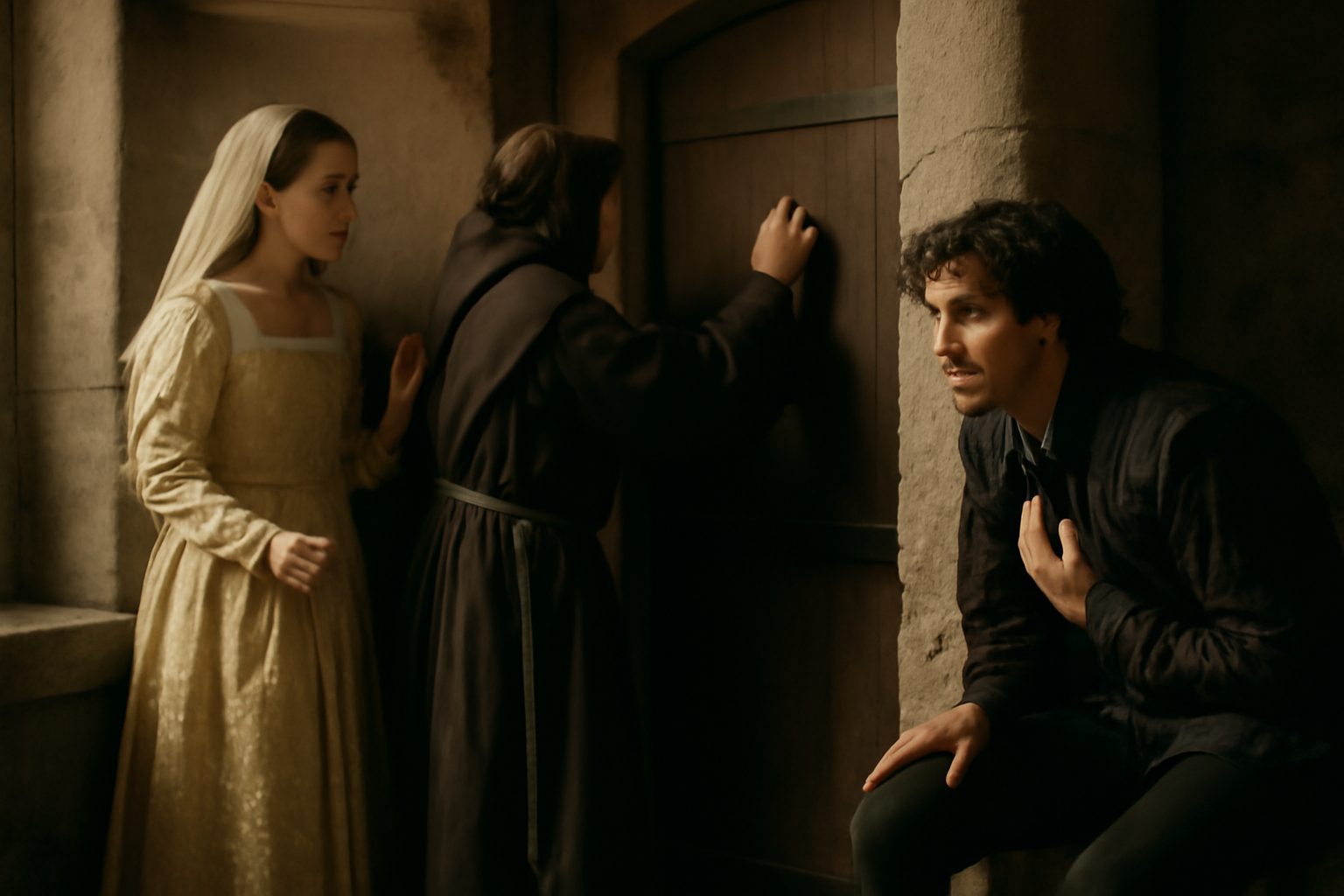
In Act 3 Scene 3 of Romeo and Juliet, Romeo is in despair after being banished for killing Tybalt. Friar Laurence tries to reason with him, but Romeo, overwhelmed by emotion, dismisses the Friar's words, suggesting that those consumed by madness cannot listen to reason. This line captures Romeo's turmoil and his refusal to find solace in the Friar's counsel.
Friar Laurence: "O, then I see that madmen have no ears."
In modern day english, we would say:
It’s clear now that crazy people don’t listen to reason.
Frequently Asked Questions
What does Friar Laurence mean when he says that madmen have no ears?
He means that people who are acting crazy or irrational do not listen to reason or advice.
Connections to other verses:
Connections to "O, then I see that madmen have no ears."
This line, spoken by Friar Laurence, reflects his frustration with Romeo's refusal to listen to reason. It connects thematically and contextually to several other verses in the scene.
Resistance to Counsel
Friar Laurence's exasperation is a response to Romeo's dismissal of philosophical comfort, as seen in "Yet 'banished'? Hang up philosophy!" and "It helps not, it prevails not: talk no more." These lines underscore Romeo's emotional state, which prevents him from heeding advice.
Emotional Turmoil and Irrationality
Romeo's despair, highlighted in "Ha, banishment! be merciful, say 'death;'" and "And say'st thou yet that exile is not death?", shows his inability to process the Friar's rational arguments, reinforcing the idea that he is acting like a "madman."
Friar's Attempts to Reason
Earlier, the Friar tries to counsel Romeo with lines like "I'll give thee armour to keep off that word:" and "Adversity's sweet milk, philosophy," but Romeo's overwhelming grief, as expressed in "And fall upon the ground, as I do now," renders him deaf to such wisdom.
Contrast with Juliet's State
The Nurse's description of Juliet's similar distress in "O, she says nothing, sir, but weeps and weeps;" parallels Romeo's irrationality, suggesting both lovers are consumed by emotion, though Romeo's refusal to listen is uniquely highlighted by the Friar's remark.
Resolution and Practical Advice
Despite Romeo's initial resistance, the Friar eventually cuts through his despair with forceful guidance, such as "Go, get thee to thy love, as was decreed," showing that persistence is needed to break through Romeo's emotional barrier.