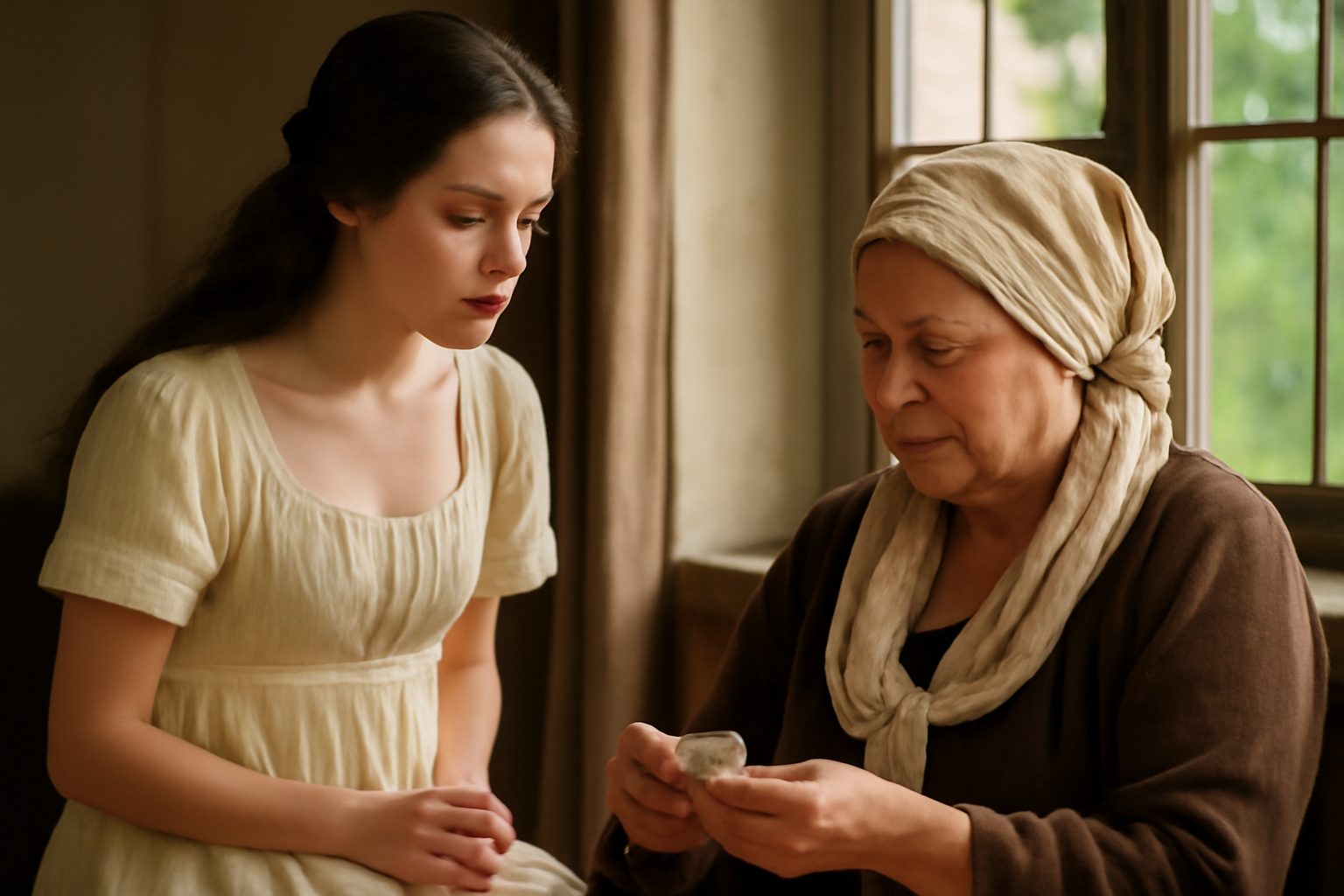
In Act 2, Scene 5 of Romeo and Juliet, Juliet impatiently awaits the Nurse's return with news from Romeo. When the Nurse finally arrives, she playfully delays sharing the message, prompting Juliet to urge her to deliver even sad news with a cheerful tone. This moment highlights Juliet's eagerness and the Nurse's teasing nature, underscoring the tension between youthful impatience and playful reluctance.
Juliet: "Though news be sad, yet tell them merrily;"
In modern day english, we would say:
Even if the news is bad, deliver it in a cheerful way.
Frequently Asked Questions
What does Juliet mean when she says to deliver sad news in a happy way?
Juliet is suggesting that even if the news is bad, it should be told with a cheerful tone to soften the impact.
Connections to other verses:
Connections to "Though news be sad, yet tell them merrily"
This line, spoken by Juliet, establishes a thematic framework for how news—particularly concerning love—should be delivered, regardless of its nature. It reflects her youthful idealism and impatience, setting the tone for her interactions with the Nurse.
Related to Impatience and Delivery of News
Juliet’s instruction connects to her earlier exasperation at the Nurse’s delay, as seen in "The excuse that thou dost make in this delay", where she criticizes the Nurse’s sluggishness. Her desire for news to be delivered "merrily" also contrasts with the Nurse’s weariness and complaints, such as in "Fie, how my bones ache! what a jaunt have I had!", highlighting the generational and temperamental differences between them.
Emotional Contrast and Irony
The verse’s emphasis on delivering sad news merrily introduces irony, given the play’s tragic outcome. It also relates to Juliet’s anxious questioning in "Is thy news good, or bad? answer to that", showing her desperate need for clarity amid emotional turmoil. Additionally, the Nurse’s playful yet evasive behavior, exemplified in "Nay, come, I pray thee, speak; good, good nurse,…", contrasts with Juliet’s directness, further emphasizing the tension in their exchange.
Broader Context of Love and Communication
Juliet’s line also ties into the scene’s exploration of love’s urgency, as reflected in "Therefore do nimble-pinion'd doves draw love", which metaphorically underscores swift communication. Furthermore, her eventual relief upon hearing Romeo’s plans in "There stays a husband to make you a wife" provides a narrative payoff to her insistence on joyous news delivery, albeit with underlying dramatic irony given the play’s conclusion.