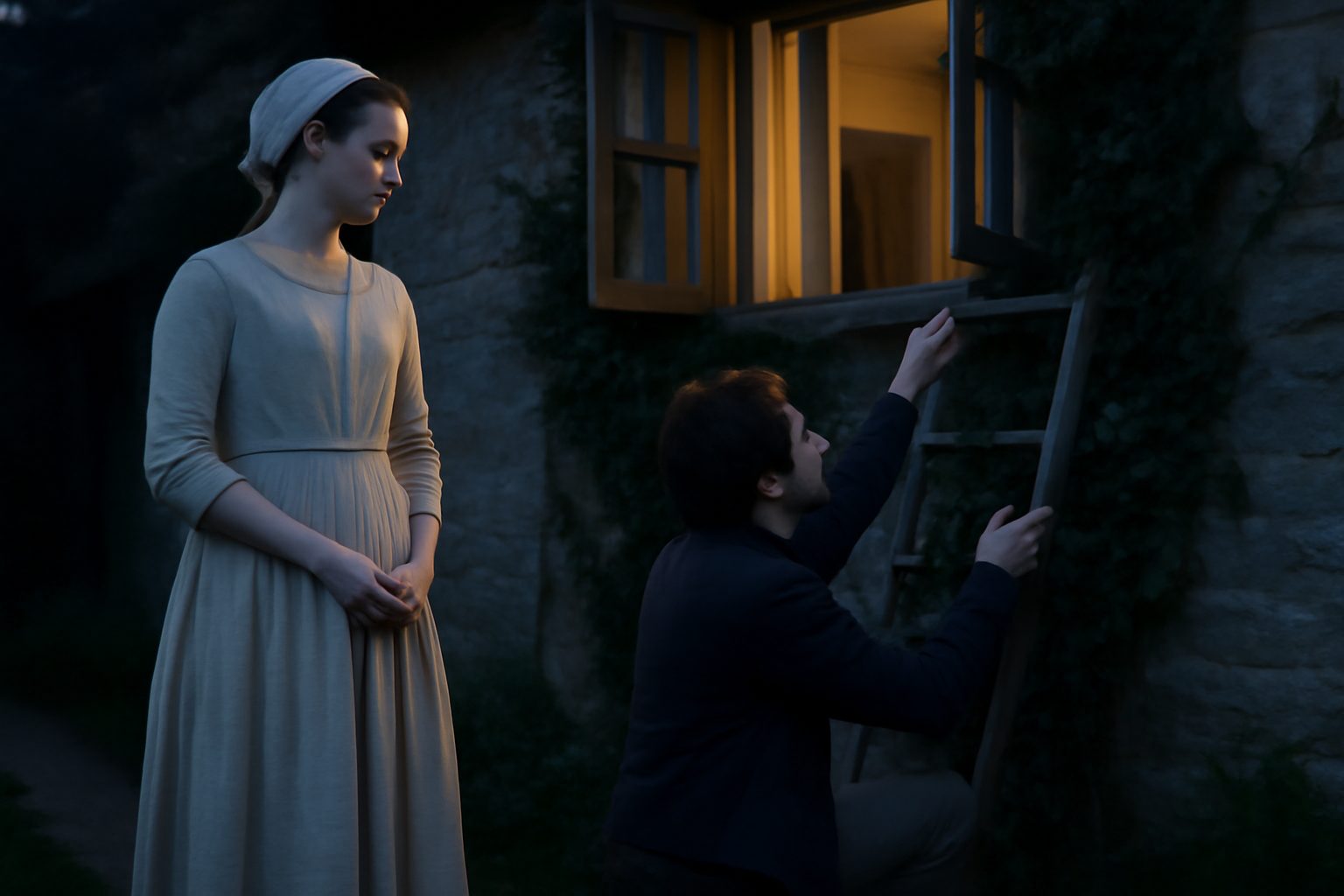
In Act 2, Scene 5 of Romeo and Juliet, the Nurse returns to Juliet after meeting with Romeo to relay his plans for their secret marriage. Frustrated by the Nurse's playful delay, Juliet urges her to stop teasing and deliver the message quickly. The line reflects Juliet's impatience and eagerness to hear Romeo's words, even as the Nurse momentarily diverts the conversation to her own weariness.
Nurse: "Go; I'll to dinner: hie you to the cell."
In modern day english, we would say:
Go on; I’m going to dinner—hurry to the chapel.
Frequently Asked Questions
What does the Nurse tell the person she is speaking to in this line?
The Nurse tells the person to go to the cell while she goes to dinner.
Connections to other verses:
Connections to "Go; I'll to dinner: hie you to the cell."
This line, spoken by Juliet, serves as the culmination of the scene's tension and marks a transition from anxious waiting to decisive action. It connects thematically and structurally with several other verses in Act 2, Scene 5.
Impatience and Urgency
Juliet's urgency here echoes her earlier impatience while waiting for the Nurse's return. In "Is three long hours, yet she is not come", she expresses frustration over the delay, which contrasts with her later command to hasten to the cell. Similarly, "O, she is lame! love's heralds should be thoughts" underscores her desire for swift communication, a sentiment that culminates in her directive to "hie you to the cell."
Physical Exhaustion and Duty
The Nurse's complaints about her physical state, such as "Fie, how my bones ache! what a jaunt have I had!" and "My back o' t' other side,--O, my back, my back!", highlight the burdens she bears as a messenger. Juliet's acknowledgment of this in lines like "I am the drudge and toil in your delight" (spoken by the Nurse) adds depth to Juliet's command, as it follows a scene of the Nurse's laborious efforts.
Transition to Action
Juliet's line directly leads into the next phase of the plan. It is preceded by "Then hie you hence to Friar Laurence' cell", where the Nurse instructs Juliet to go to the friar, and followed by "Hie to high fortune! Honest nurse, farewell", which reinforces the urgency and optimism for their secret union. This creates a cohesive narrative flow from planning to execution.
Emotional Climax and Resolution
After the Nurse's prolonged teasing and Juliet's anxious inquiries, such as "Let me be satisfied, is't good or bad?", Juliet's command signifies a shift from uncertainty to determination. The resolution of the suspense built through verses like "Is thy news good, or bad? answer to that" culminates in this decisive moment, propelling the plot toward the clandestine marriage.