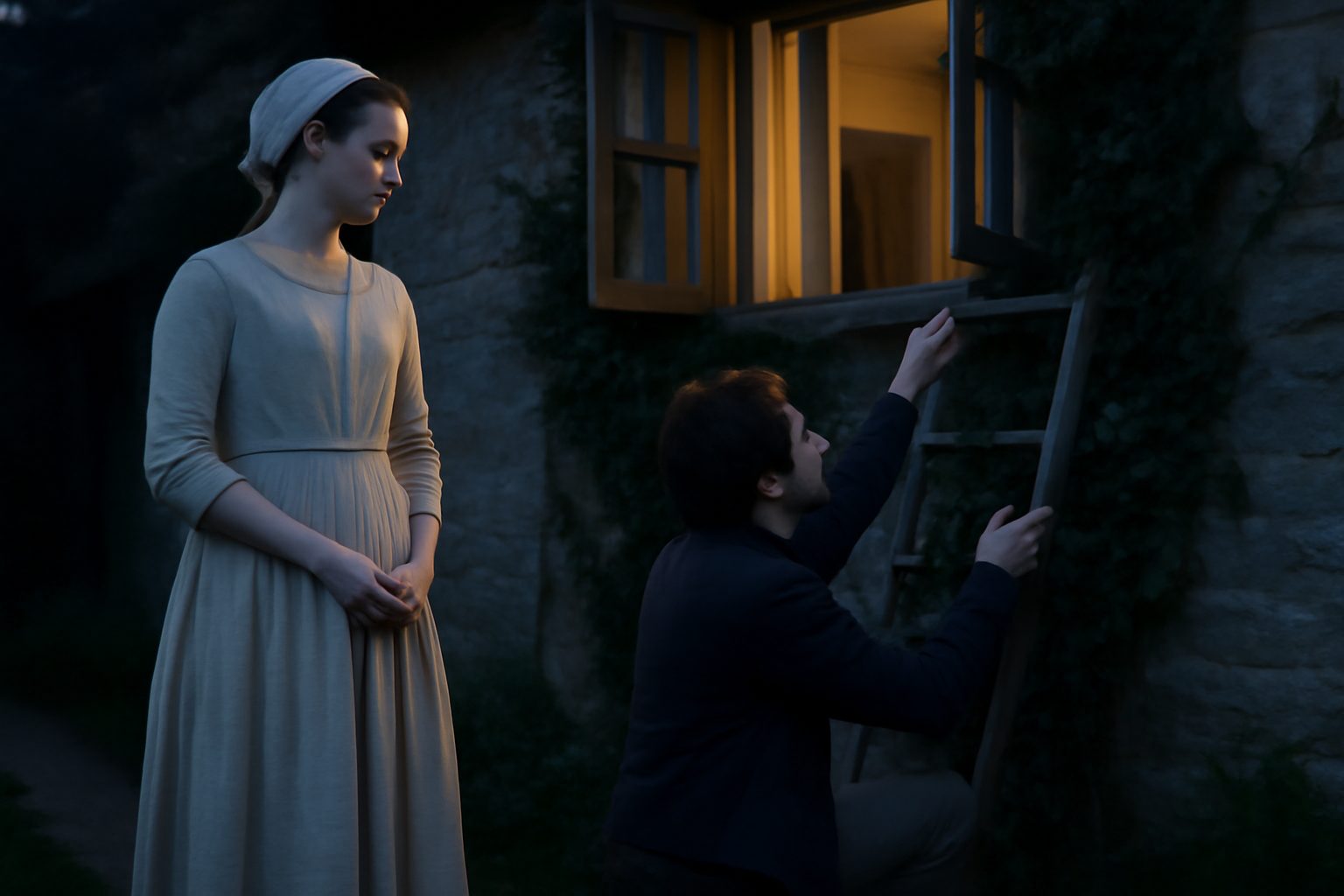
In Act 2, Scene 5 of Romeo and Juliet, Juliet impatiently awaits the Nurse's return with news from Romeo. When the Nurse finally arrives, she delays sharing the message, pretending to be out of breath and exhausted. Juliet, frustrated by the delay, questions how the Nurse can claim to be breathless when she is clearly still speaking.
Juliet: "How art thou out of breath, when thou hast breath"
In modern day english, we would say:
How can you be out of breath when you still have breath left to speak?
Frequently Asked Questions
What is Juliet confused about in this line?
Juliet is confused about how Romeo can be out of breath when he clearly still has breath left to speak.
Connections to other verses:
Connections to "How art thou out of breath, when thou hast breath"
This line, spoken by Juliet, highlights the Nurse's dramatic complaints about being out of breath despite having enough breath to speak at length. It connects thematically and contextually to several other verses in the scene.
Physical Exhaustion and Complaints
Juliet's remark directly responds to the Nurse's earlier statement: "Do you not see that I am out of breath?". The Nurse continues to emphasize her physical strain in "Fie, how my bones ache! what a jaunt have I had!" and "My back o' t' other side,--O, my back, my back!", reinforcing her exaggerated fatigue.
Impatience and Urgency
Juliet's frustration with the Nurse's delays is evident in "The excuse that thou dost make in this delay" and "Is longer than the tale thou dost excuse". Her urgency contrasts with the Nurse's sluggishness, paralleling the earlier imagery of swift messengers in "Which ten times faster glide than the sun's beams".
Playful Banter and Irony
The Nurse's humorous retorts, such as "I' faith, I am sorry that thou art not well" and "Are you so hot? marry, come up, I trow", add irony to the exchange, underscoring the contrast between Juliet's earnestness and the Nurse's teasing demeanor.
Resolution and Action
Ultimately, the scene shifts from complaints to action, as seen in "Then hie you hence to Friar Laurence' cell" and "Hie you to church; I must another way", resolving the tension built by the Nurse's breathless theatrics.