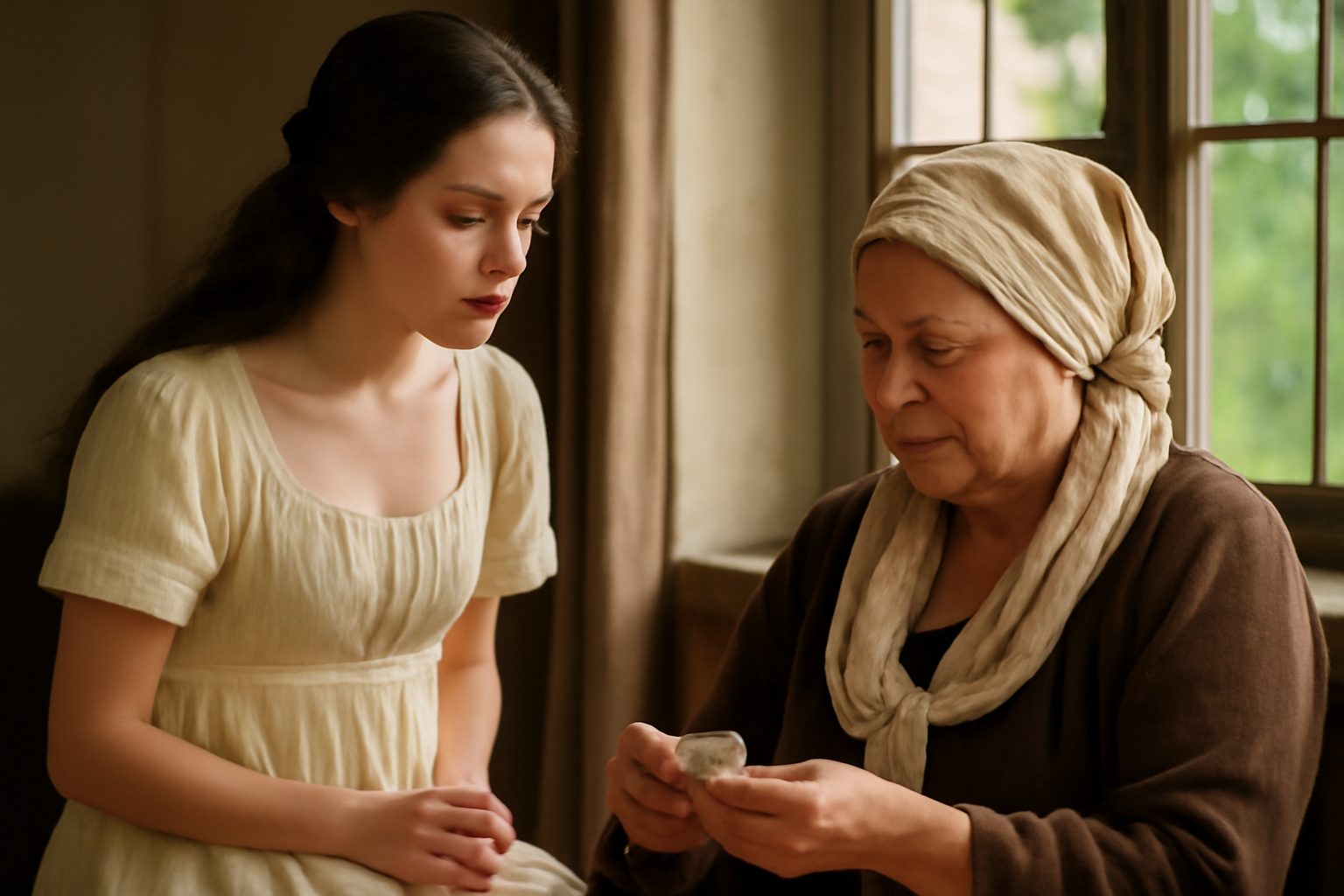
In Act 2, Scene 5 of Romeo and Juliet, Juliet impatiently waits for the Nurse to return with news from Romeo. When the Nurse finally arrives but delays sharing the message, Juliet grows frustrated, teasing her for being slow and cryptic. This line reflects Juliet's exasperation, as she believes the Nurse is being deliberately obscure rather than simply delivering the answer she longs to hear.
Nurse: "Well, you have made a simple choice; you know not"
In modern day english, we would say:
You picked someone without thinking it through; you don’t even understand what you’ve done.
Frequently Asked Questions
What does the Nurse think about Juliet's choice in this scene?
The Nurse thinks Juliet's choice is foolish or unwise.
Connections to other verses:
Connections to "Well, you have made a simple choice; you know not"
This line, spoken by the Nurse to Juliet, reflects her opinion on Juliet's hasty decision to marry Romeo. It connects thematically and contextually to several other verses in the scene.
Related to Juliet's Impatience and Youth
The Nurse's remark about Juliet's "simple choice" ties into Juliet's youthful impatience, as seen in O honey nurse, what news?, where Juliet eagerly seeks information. Similarly, Sweet, sweet, sweet nurse, tell me, what says my love? underscores her urgency and emotional investment.
Contrast with the Nurse's Experience
The Nurse's perspective on love and marriage, implied in her criticism of Juliet's choice, is further elaborated in But old folks, many feign as they were dead, highlighting generational differences in expressing affection. Her pragmatic, albeit cynical, view contrasts with Juliet's idealism.
Reflections on Romeo's Character
The Nurse's doubt about Juliet's choice relates to her earlier descriptions of Romeo. In how to choose a man: Romeo! no, not he, she playfully critiques Romeo, suggesting he may not be the ideal match, which aligns with her comment on the "simple choice." However, she later praises him in Your love says, like an honest gentleman, and a, showing her mixed but ultimately supportive stance.
Connection to the Nurse's Role as Messenger
The Nurse's involvement in the lovers' plans is central to this exchange. Her weariness from acting as their go-between is evident in I am the drudge and toil in your delight, which contextualizes her critical tone here as part of her larger frustration with bearing their burdens.