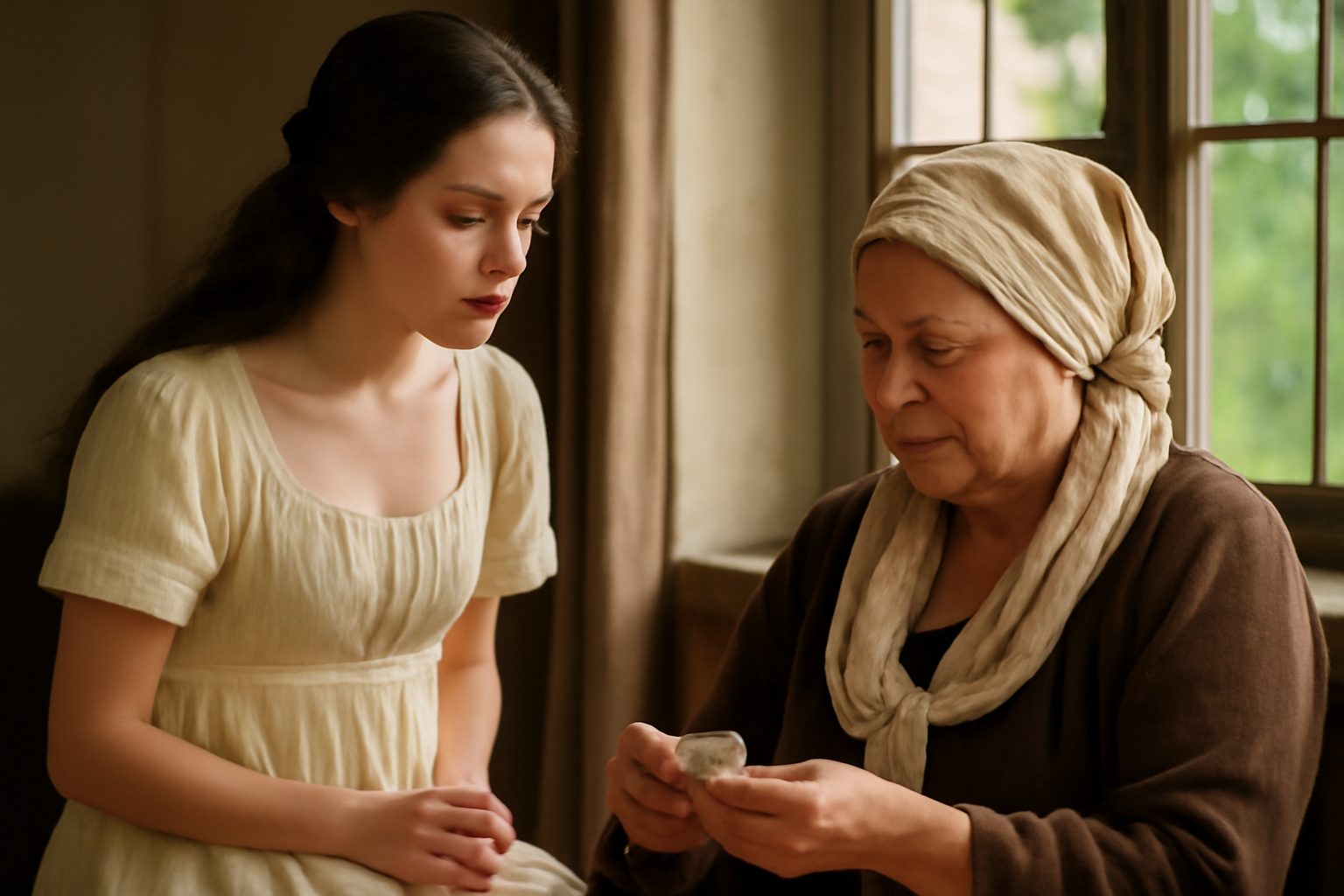
In Act 2, Scene 5 of Romeo and Juliet, Juliet impatiently waits for the Nurse to return with news from Romeo. The Nurse playfully delays sharing the message, teasing Juliet with exaggerated complaints about her aching body. This line reflects the Nurse's dramatic flair as she lists her physical woes, heightening Juliet's frustration and anticipation.
Nurse: "all men's; and for a hand, and a foot, and a body,"
In modern day english, we would say:
Nurse is complaining that men are all the same—they want everything from a woman, like her hand, her foot, and her whole body.
Frequently Asked Questions
What is the nurse describing in this line from Romeo and Juliet?
The nurse is describing parts of a man's body, mentioning a hand, a foot, and a body.
Connections to other verses:
Connections to "all men's; and for a hand, and a foot, and a body"
The verse "all men's; and for a hand, and a foot, and a body" is part of the Nurse's playful, teasing description of Romeo's qualities, where she humorously compares his attributes to those of other men. This line emphasizes the idea that Romeo is superior in every part—hand, foot, and body—to all other men.
Connection to Physical and Emotional States
This praise of Romeo's physical form contrasts with the Nurse's own complaints about her physical state, such as in "Fie, how my bones ache! what a jaunt have I had!", where she emphasizes her weariness from the journey. Similarly, "My back o' t' other side,--O, my back, my back!" highlights her physical discomfort, serving as a foil to the idealized description of Romeo's body.
Connection to Romeo's Courtesy and Character
The Nurse's admiration for Romeo's physical excellence is complemented by her praise of his character elsewhere. For instance, "Your love says, like an honest gentleman, and a" (and the fuller description in "courteous, and a kind, and a handsome, and, I") reinforces that Romeo is not only physically superior but also virtuous and well-mannered, tying back to the idea that he excels in every aspect.
Connection to Juliet's Impatience and Emotional State
Juliet's anxious waiting for news of Romeo contrasts with the Nurse's leisurely praise. In "O honey nurse, what news?", Juliet's eagerness is palpable, and the Nurse's delay in delivering the message—drawing out descriptions like "all men's"—heightens the dramatic tension. This is further emphasized in "Nay, come, I pray thee, speak; good, good nurse,…", where Juliet pleads for the news, underscoring the contrast between the Nurse's playful teasing and Juliet's urgency.
Connection to Broader Themes of Love and Idealism
The idealization of Romeo in this verse aligns with the scene's exploration of youthful, passionate love. Earlier, "And therefore hath the wind-swift Cupid wings." references the speed and force of love, while "She would be as swift in motion as a ball;" imagines an idealized, rapid response to love's calls. The Nurse's detailed praise of Romeo's body part by part feeds into this theme of love's perfection and the lovers' idealized views of each other.