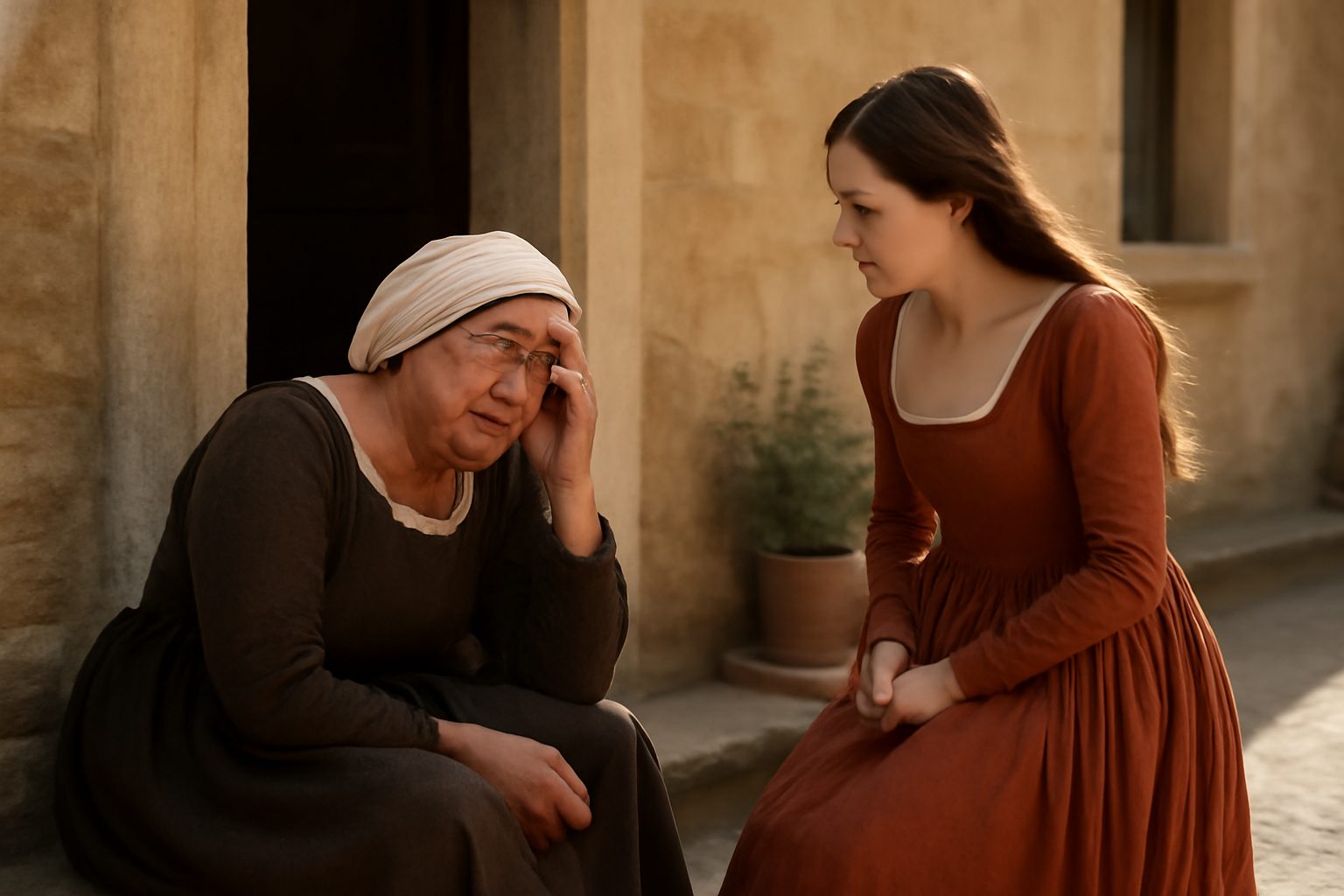
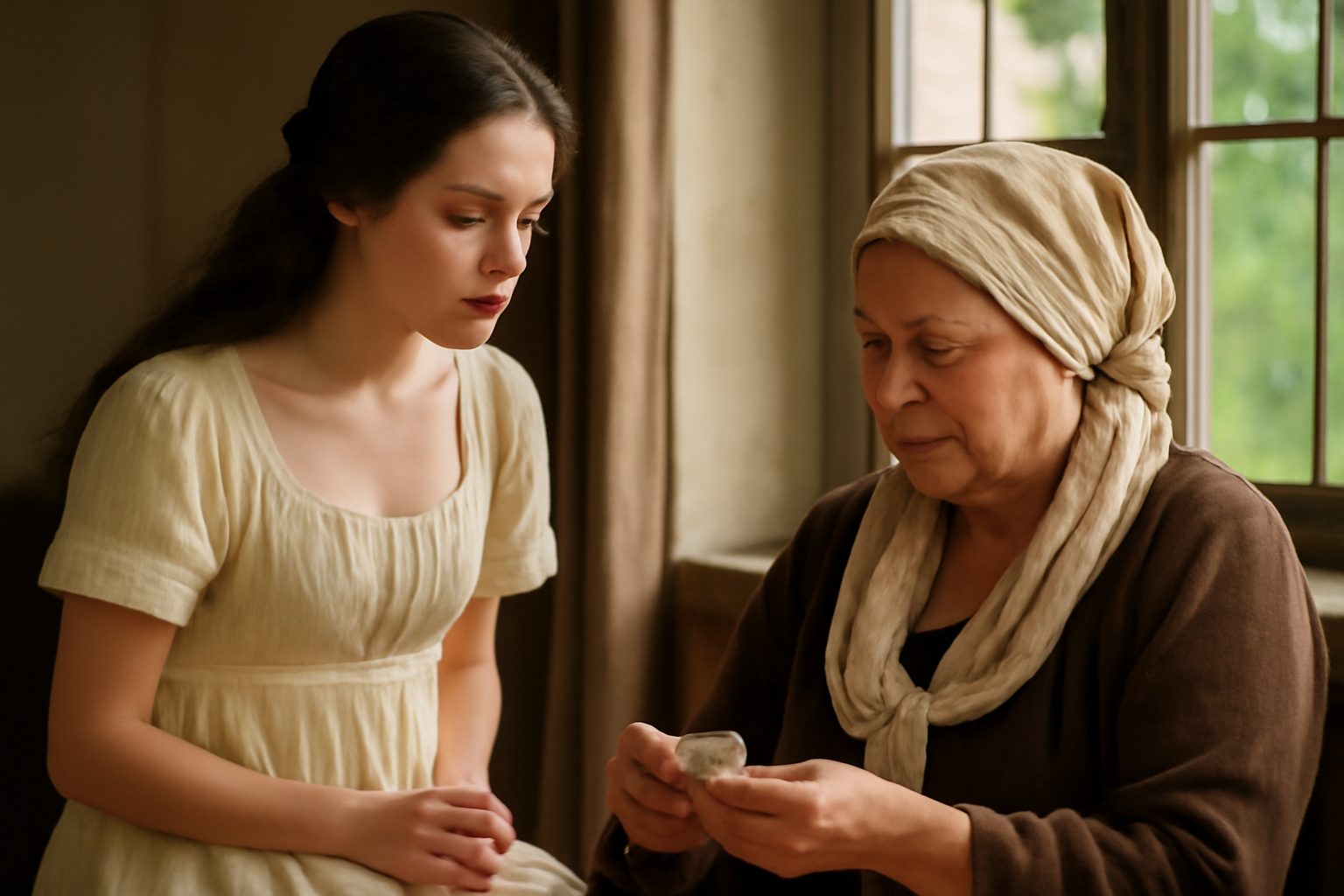
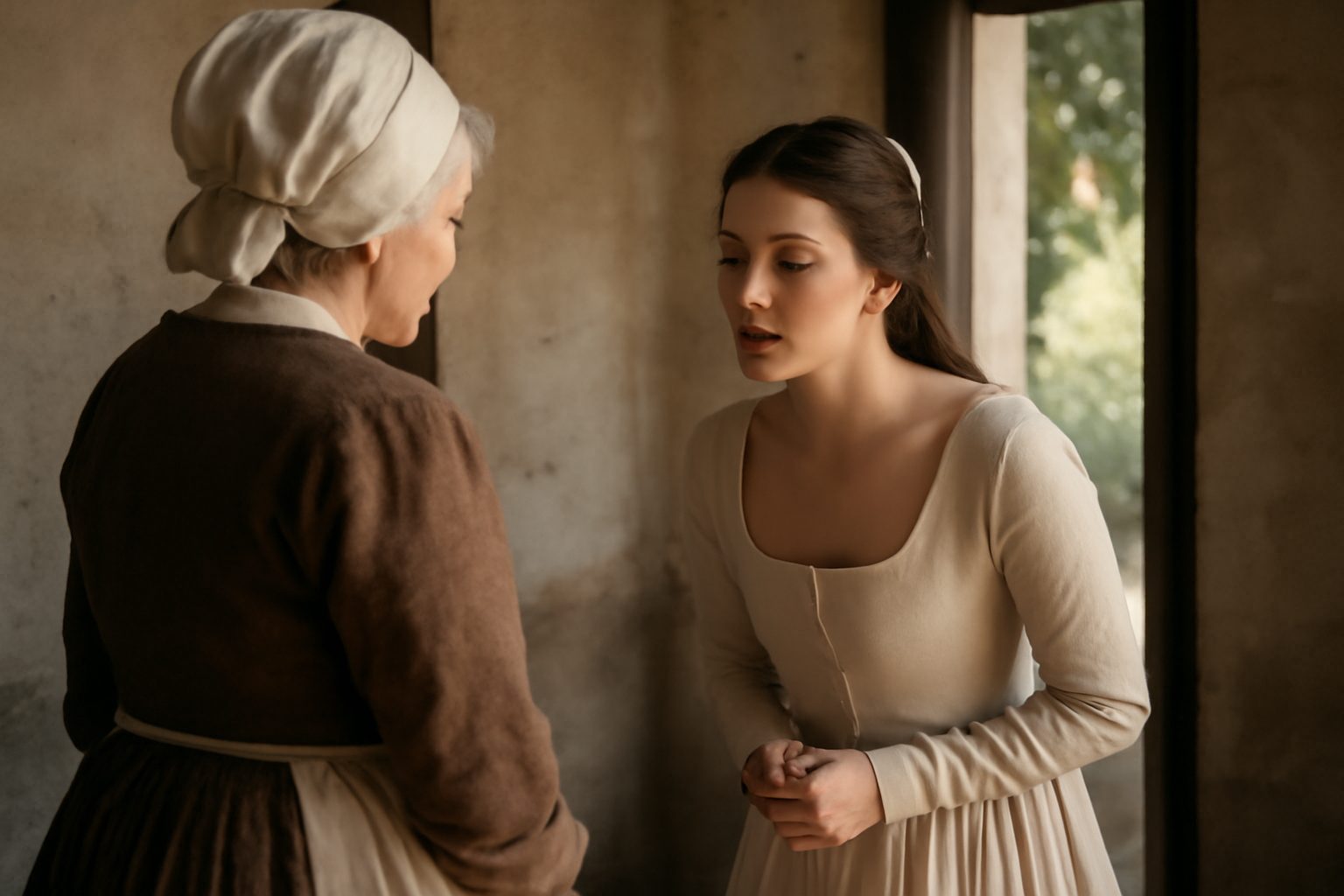
In Act 2, Scene 5 of Romeo and Juliet, the Nurse returns to Juliet after meeting with Romeo to deliver news of their secret wedding plans. Overwrought with anticipation, Juliet grows impatient as the Nurse playfully delays sharing the message, complaining instead about her physical exhaustion. This line captures the Nurse's exaggerated weariness, a moment of comic relief that heightens Juliet's frustration and eagerness.
Nurse: "Lord, how my head aches! what a head have I!"
In modern day english, we would say:
Oh man, my head is killing me—what a headache!
Frequently Asked Questions
What is the Nurse complaining about in this line?
The Nurse is complaining about having a headache.
Connections to other verses:
Physical Discomfort and Exhaustion
The verse "Lord, how my head aches! what a head have I!" (/romeo-and-juliet/two/2-5/act-2-scene-5-49/) is part of a pattern where the Nurse complains about her physical state. She similarly exclaims, "Fie, how my bones ache! what a jaunt have I had!" (/romeo-and-juliet/two/2-5/act-2-scene-5-27/), emphasizing her weariness from the journey. Her claim of being "out of breath" (/romeo-and-juliet/two/2-5/act-2-scene-5-31/) further underscores her exhaustion, which Juliet questions in /romeo-and-juliet/two/2-5/act-2-scene-5-32/.
Dramatic Delay and Frustration
The Nurse's complaints about her physical ailments serve to heighten the tension and delay the revelation of Romeo's message. Juliet's growing impatience is clear when she says, "The excuse that thou dost make in this delay / Is longer than the tale thou dost excuse" (/romeo-and-juliet/two/2-5/act-2-scene-5-34/). The Nurse’s aches and pains contrast with Juliet’s eagerness, as seen in her plea, "I would thou hadst my bones, and I thy news" (/romeo-and-juliet/two/2-5/act-2-scene-5-28/).
Exaggeration and Humor
The Nurse’s melodramatic description of her suffering adds a layer of comedy to the scene. Her claim that her heart "beats as it would fall in twenty pieces" (/romeo-and-juliet/two/2-5/act-2-scene-5-50/) echoes the exaggerated tone of her headache and bone aches. This humor is juxtaposed with Juliet’s earnest appeals, such as "Sweet, sweet, sweet nurse, tell me, what says my love?" (/romeo-and-juliet/two/2-5/act-2-scene-5-55/).
Contrast with Youthful Energy
The Nurse’s complaints about her physical state highlight the generational difference between her and Juliet. While the Nurse feels "unwieldy, slow, heavy and pale as lead" (/romeo-and-juliet/two/2-5/act-2-scene-5-17/), Juliet is filled with "wanton blood" (/romeo-and-juliet/two/2-5/act-2-scene-5-72/) and impatient energy. The Nurse’s role as "the drudge and toil in your delight" (/romeo-and-juliet/two/2-5/act-2-scene-5-77/) emphasizes this contrast, as she bears the physical burden for Juliet’s romantic pursuits.
Resolution and Forward Motion
Despite her complaints, the Nurse eventually provides the necessary information, directing Juliet to "hie you to church" (/romeo-and-juliet/two/2-5/act-2-scene-5-74/) for her marriage to Romeo. The physical discomfort described in the verse gives way to action, as the Nurse assures Juliet, "But you shall bear the burden soon at night" (/romeo-and-juliet/two/2-5/act-2-scene-5-78/), shifting the focus from her own pains to Juliet’s impending union.