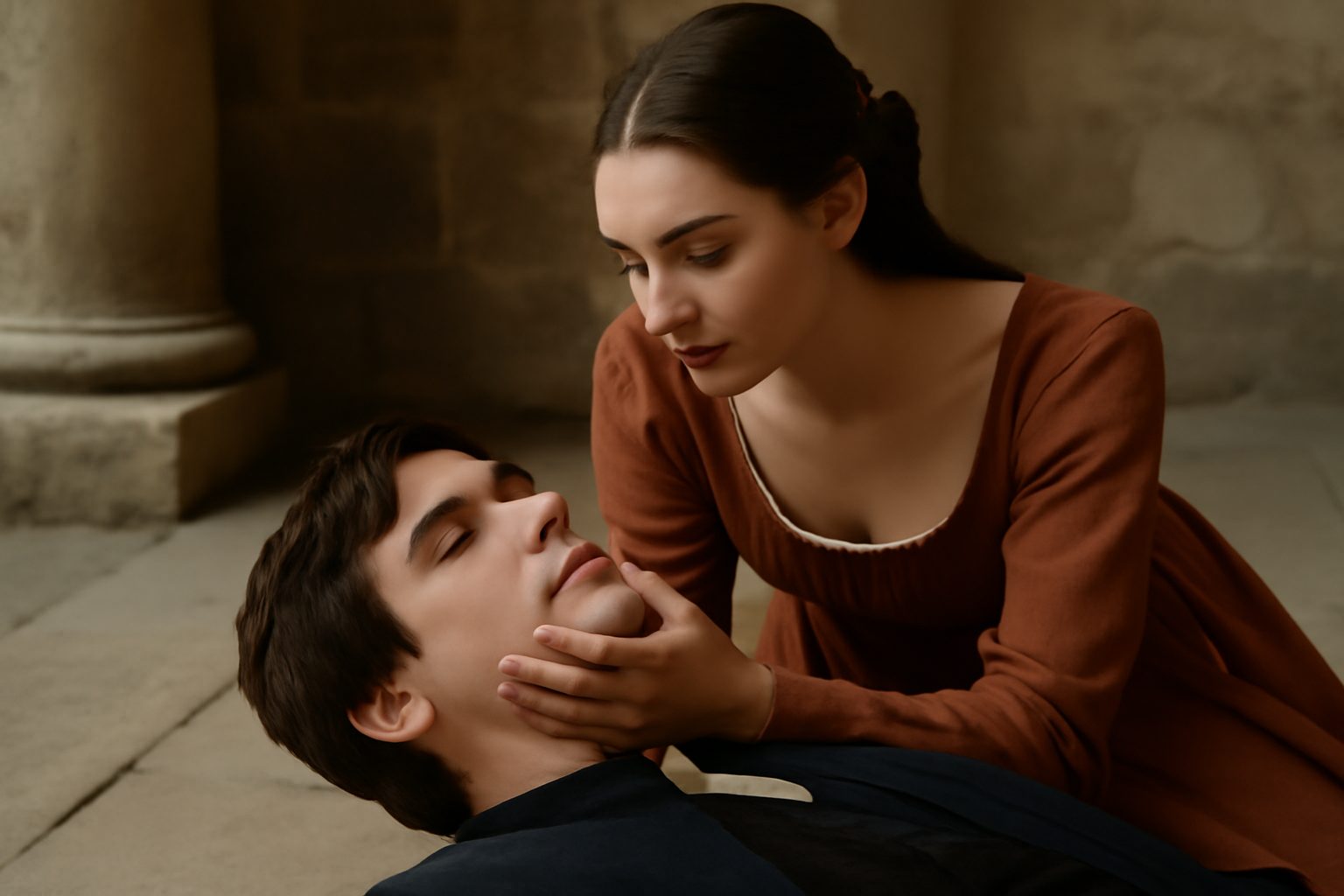
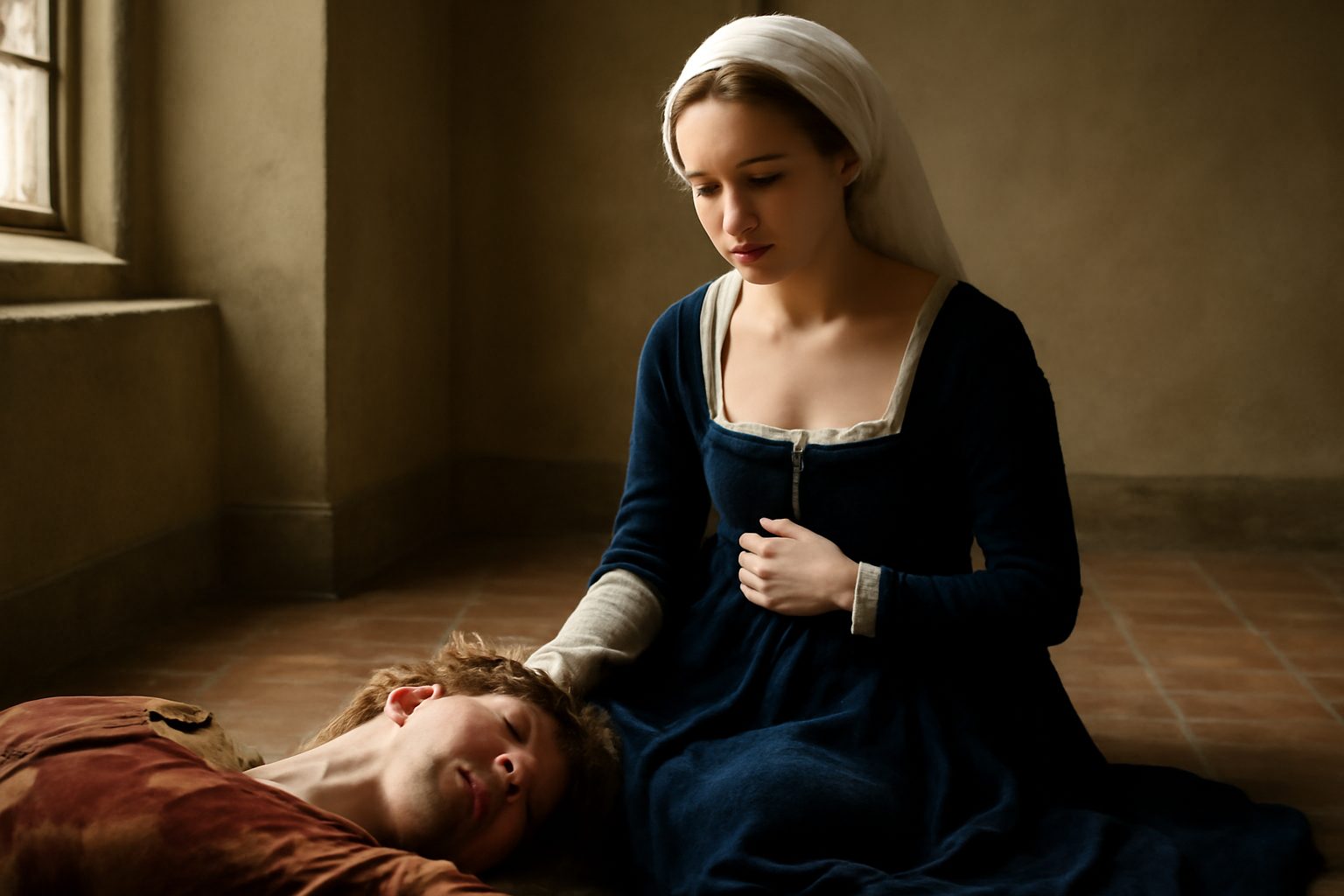
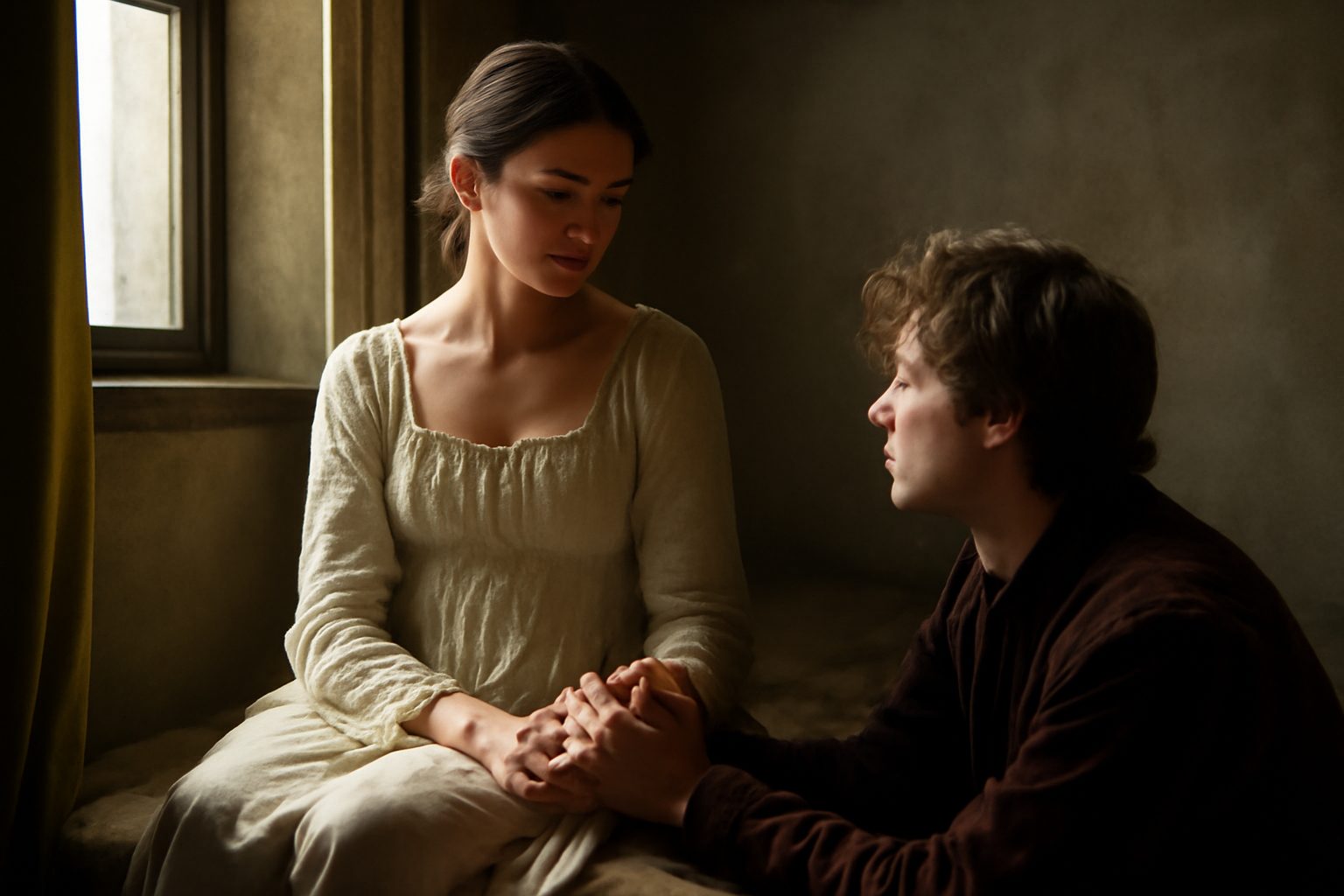
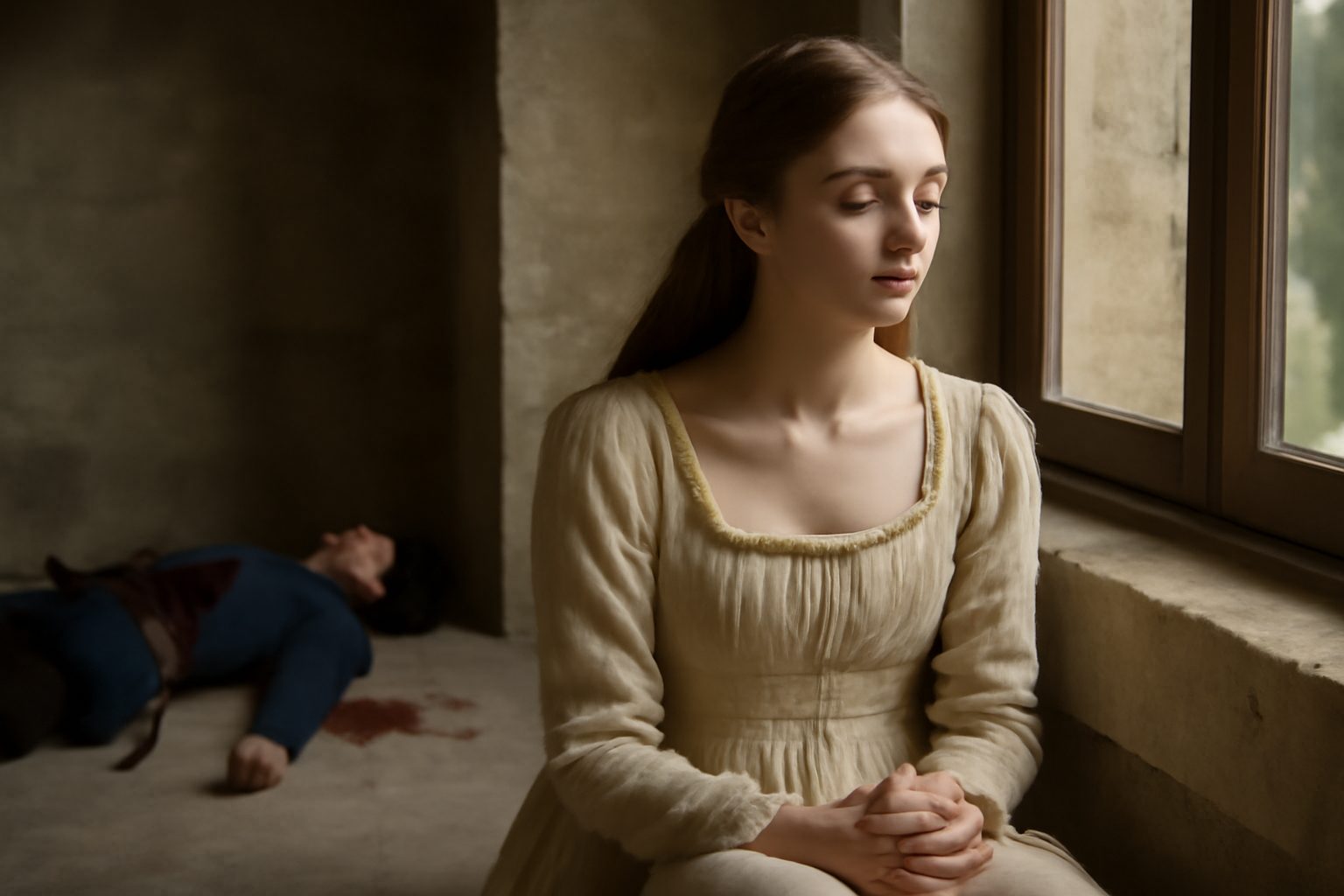
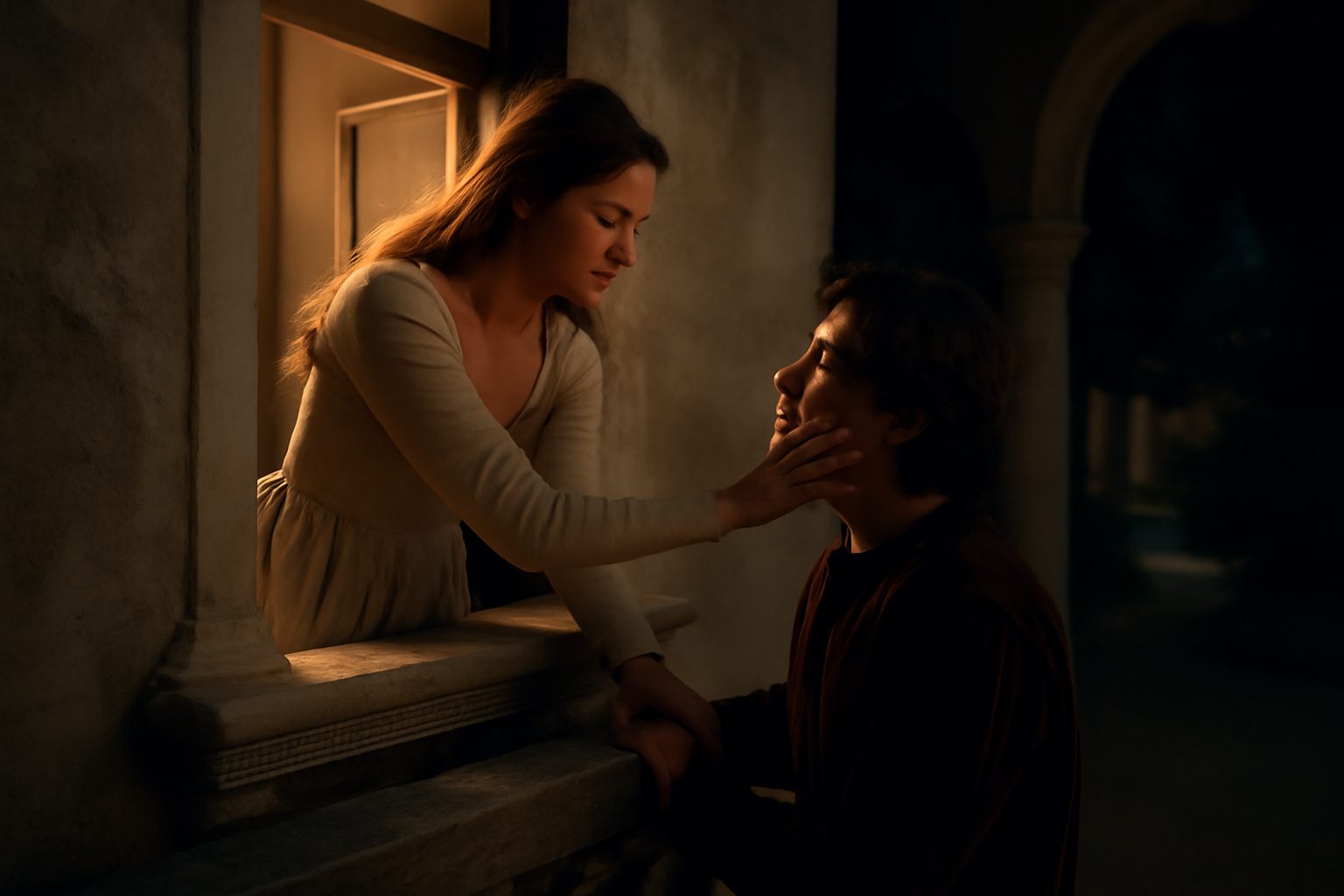
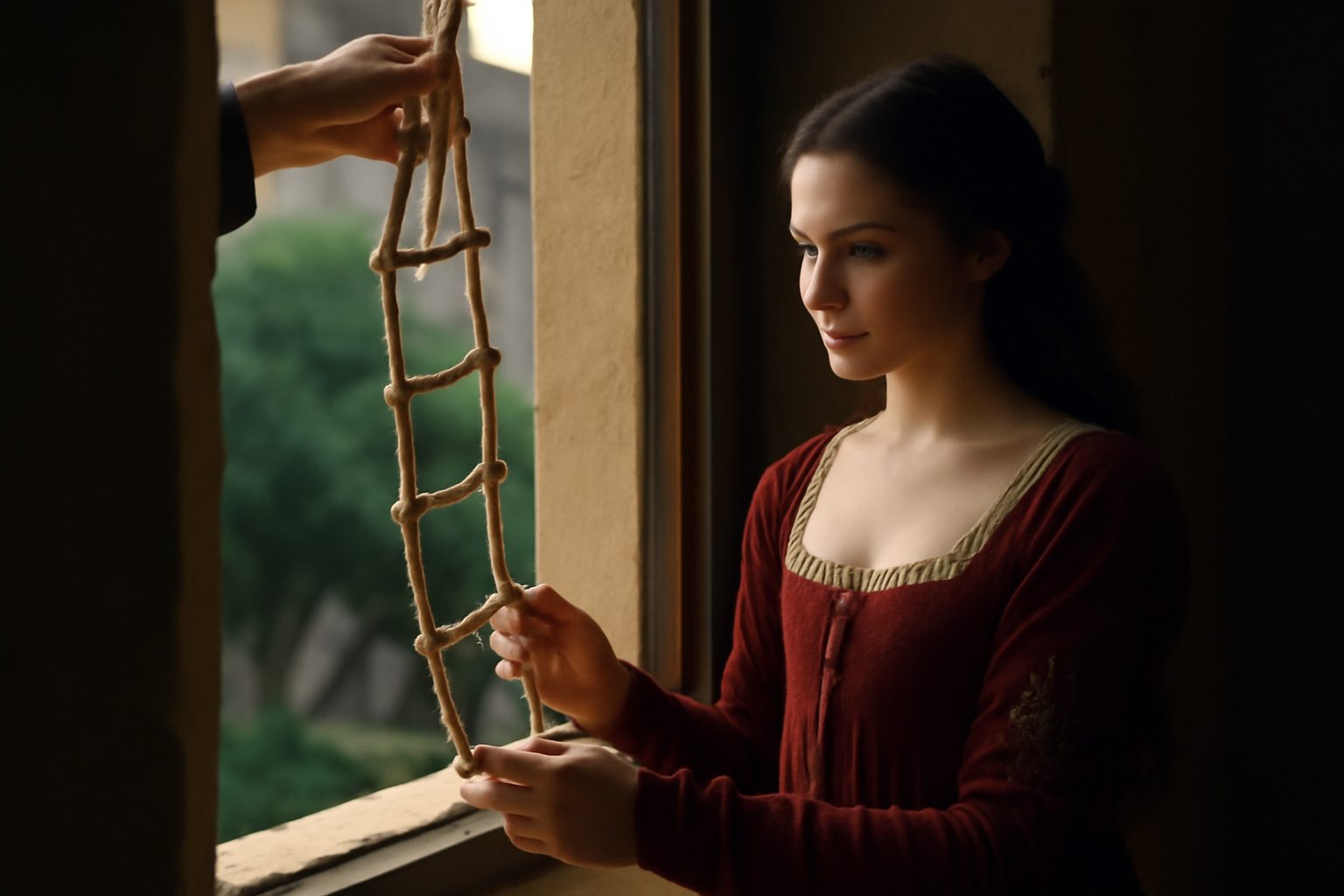
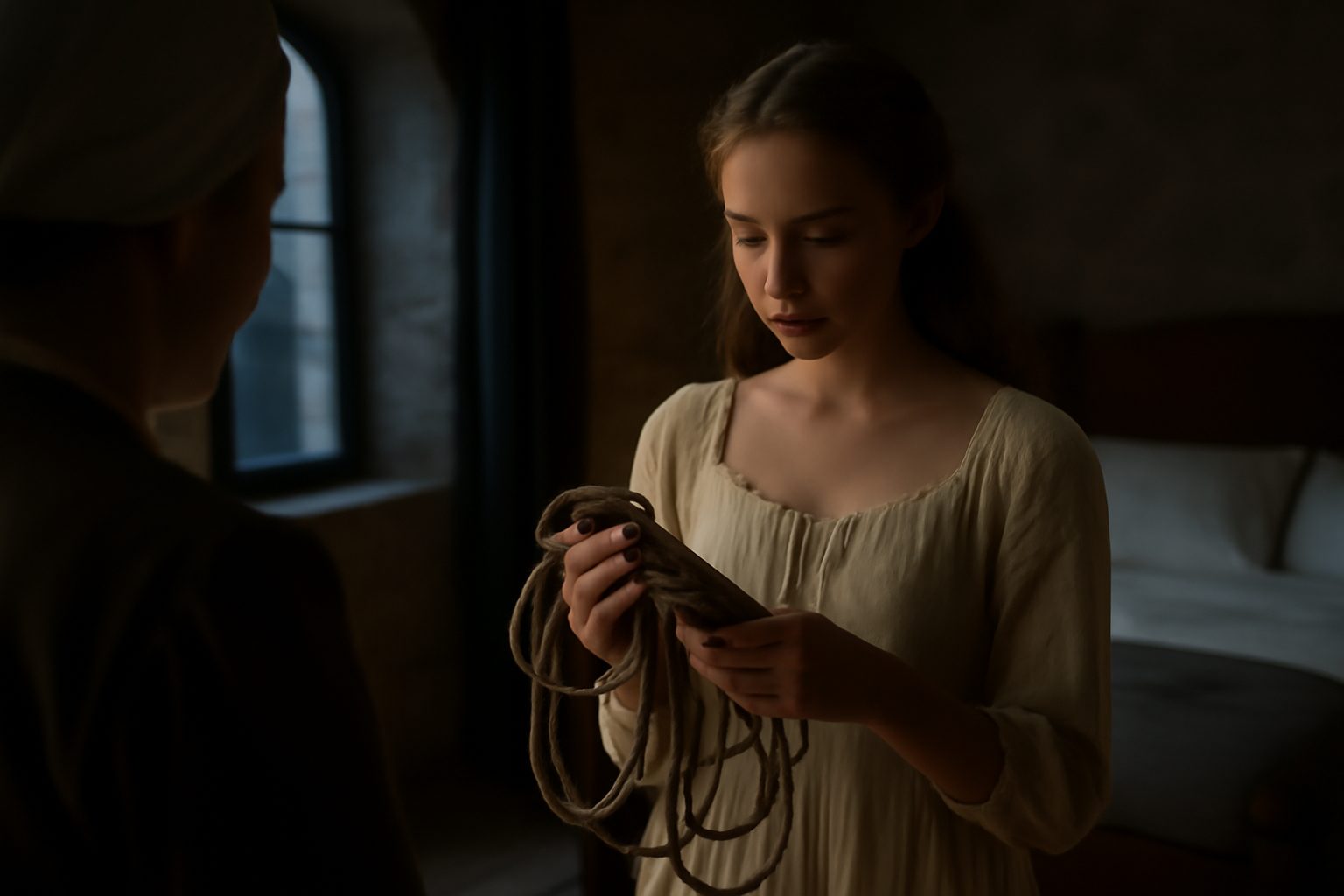
In Act 3, Scene 2 of Romeo and Juliet, Juliet anxiously awaits nightfall so Romeo can join her after their secret wedding. When the Nurse enters with news of Tybalt's death and Romeo's banishment, Juliet's joy turns to despair. This line comes as she laments the ropes meant to bring Romeo to her, now useless because he has been exiled.
Juliet: "Take up those cords: poor ropes, you are beguiled,"
In modern day english, we would say:
Pick up those ropes—poor things, you’ve been tricked too.
Frequently Asked Questions
What is Juliet talking about when she mentions the ropes in this scene?
Juliet is talking about the ropes or cords that were meant to be used for a ladder to help Romeo climb up to her, but now they are useless because Romeo has been banished.
Connections to other verses:
Connections to "Take up those cords: poor ropes, you are beguiled"
This verse, found at /romeo-and-juliet/three/3-2/act-3-scene-2-136/, reflects Juliet's despair and the tragic irony of the ropes intended for her wedding night now symbolizing her sorrow. It connects thematically and emotionally to several other verses in the scene.
Direct References to the Cords
Earlier in the scene, Juliet anticipates Romeo's arrival with the cords, as seen in "Ay, ay, the cords", where she confirms the Nurse has brought them. Later, her despair culminates in "Come, cords, come, nurse; I'll to my wedding-bed", where she resigns herself to a symbolic death, linking the cords to her tragic fate.
Emotional Despair and Grief
Juliet's anguish over Romeo's banishment echoes in verses like "O, break, my heart! poor bankrupt, break at once!", mirroring the emotional collapse in the cords verse. Her lament over conflicting loyalties, such as in "My dear-loved cousin, and my dearer lord?", highlights the inner turmoil that makes the cords "beguiled."
Contrast with Earlier Hope
The cords were initially associated with joy and anticipation, as in Juliet's earlier plea for night to bring Romeo: "Come, night; come, Romeo; come, thou day in night". The shift to despair underscores the scene's tragic turn, emphasized by verses like "All slain, all dead. 'Romeo is banished!'".
Symbolism of Betrayal and Loss
Juliet's sense of betrayal by fate aligns with "All forsworn, all naught, all dissemblers", where she decries universal deceit. The cords, now useless, symbolize this disillusionment, similar to her cry in "But I, a maid, die maiden-widowed", capturing lost hopes.