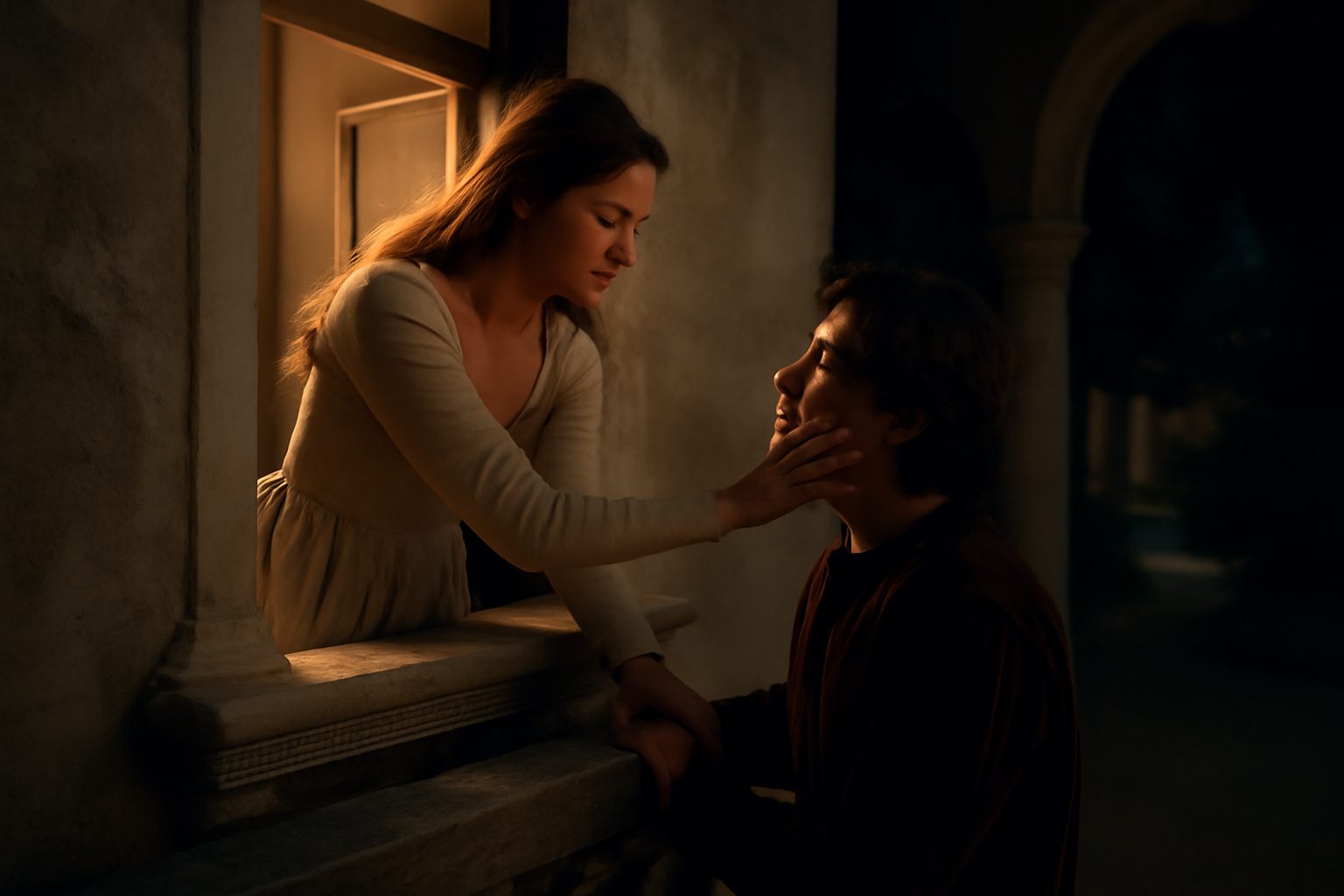
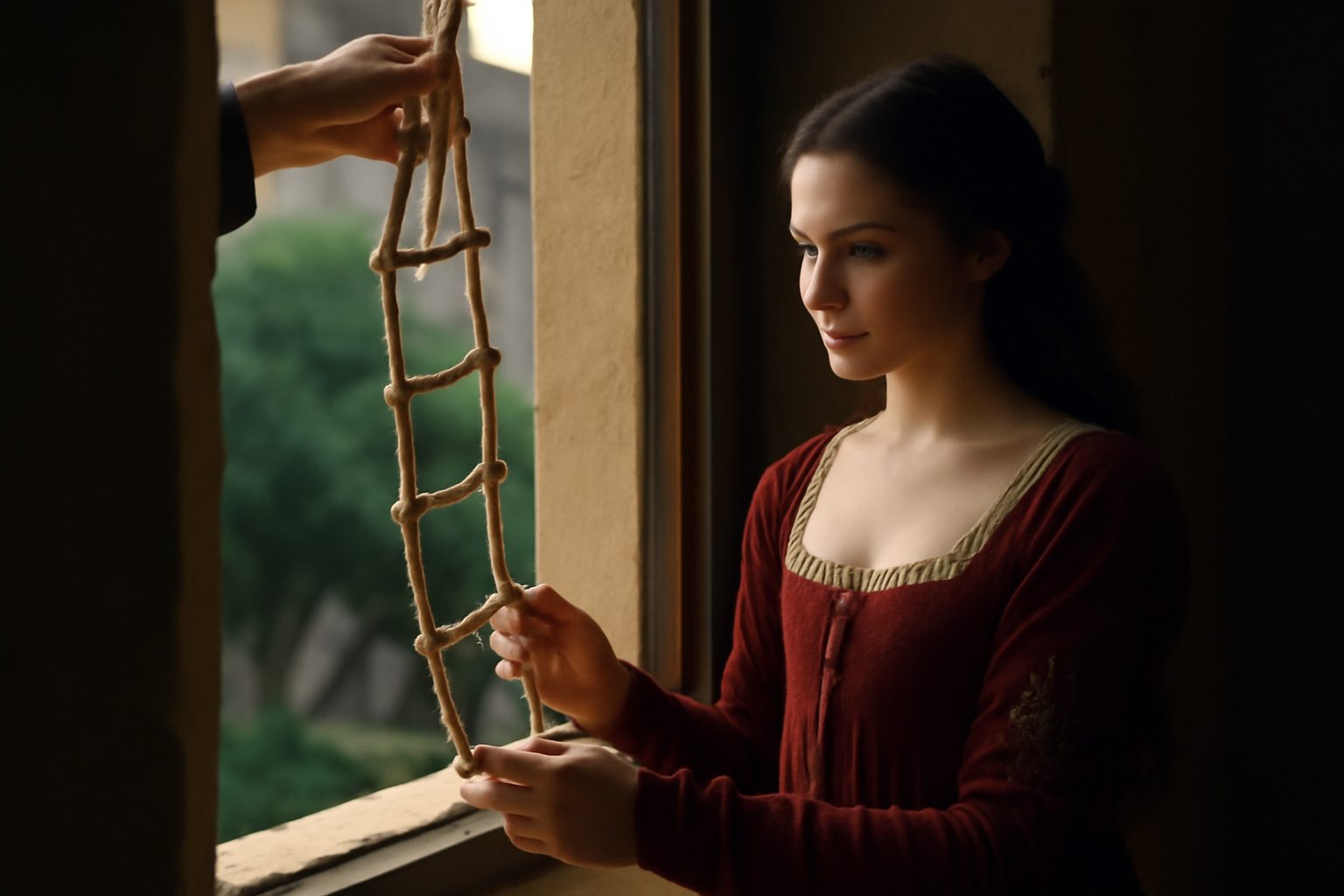
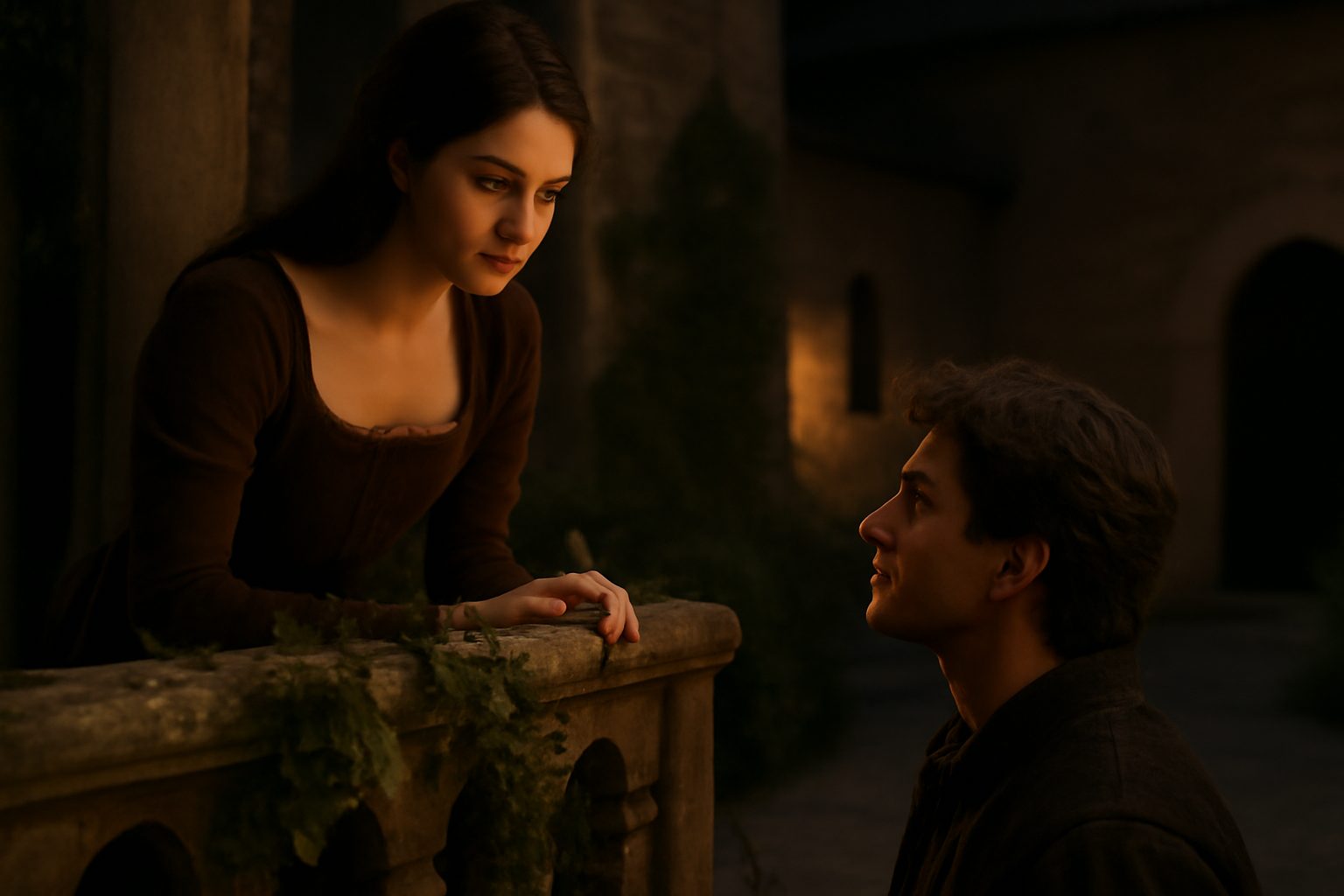
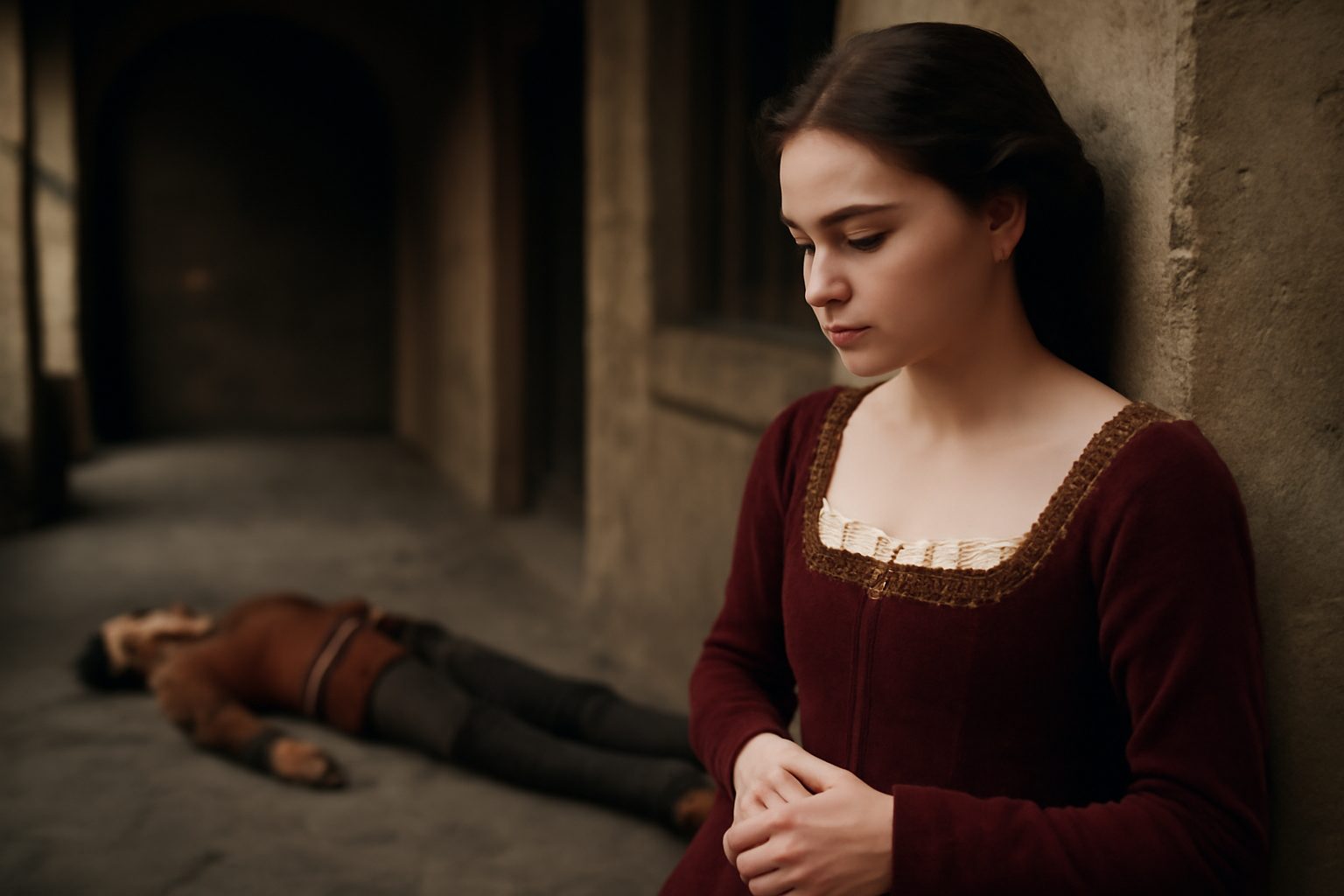
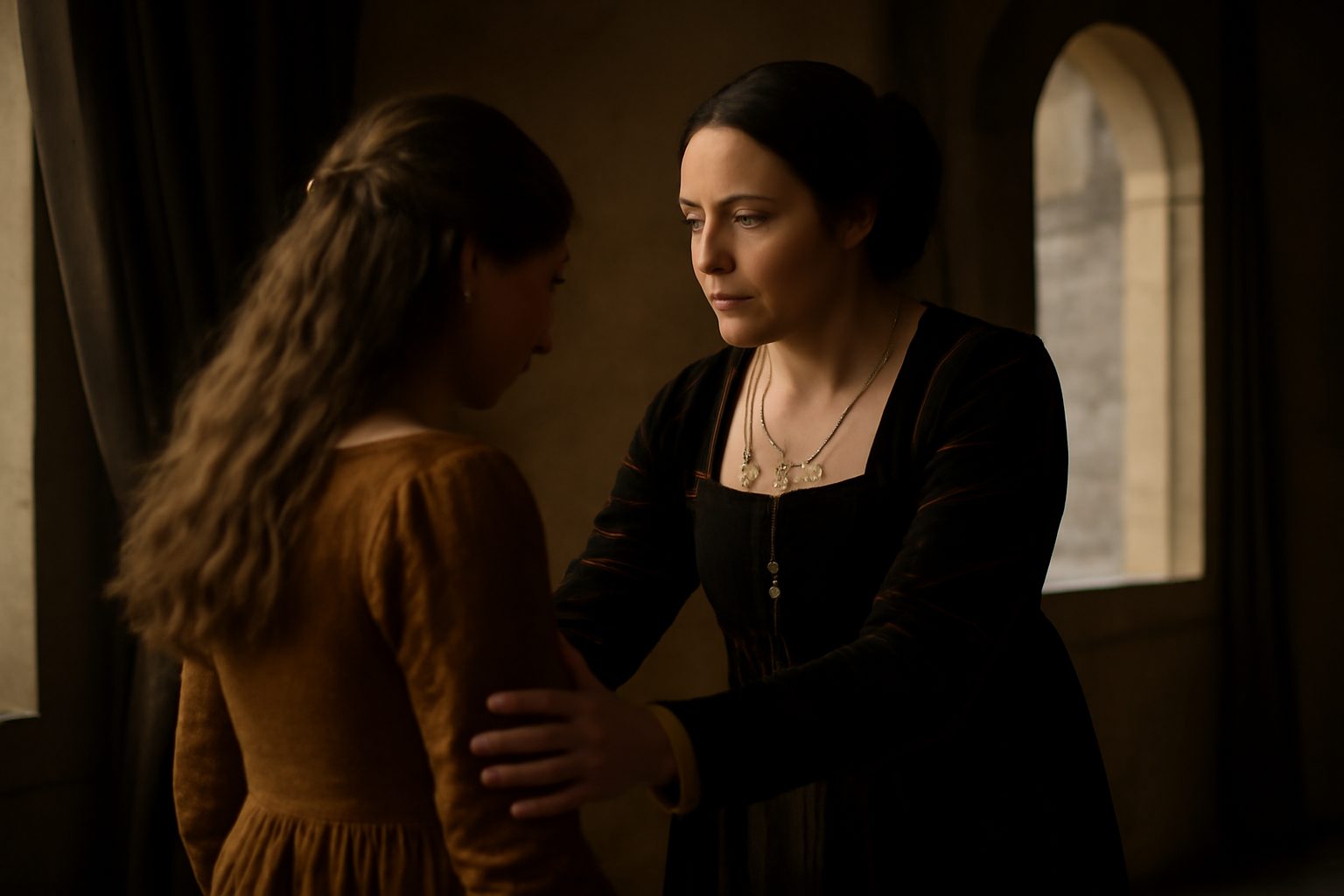
In Act 3 Scene 2 of Romeo and Juliet, Juliet anxiously awaits news from her nurse about Romeo. When the nurse arrives with word of Tybalt's death and Romeo's banishment, Juliet is overwhelmed by conflicting emotions—grief for her cousin and despair for her exiled husband. Her anguished question captures the turmoil of a world suddenly upended by violence and loss.
Juliet: "What storm is this that blows so contrary?"
In modern day english, we would say:
What kind of terrible situation is this that everything is going so wrong?
Frequently Asked Questions
What is Juliet feeling when she asks about the storm?
Juliet is feeling confused and upset because of the unexpected bad news she has just received.
Connections to other verses:
Connections to "What storm is this that blows so contrary?"
Juliet's question "What storm is this that blows so contrary?" serves as a powerful metaphor for the emotional turmoil she experiences upon learning of Tybalt's death and Romeo's banishment. This line connects thematically and emotionally with several other verses in the scene.
Immediate Emotional Turmoil
The "storm" Juliet references directly follows her initial shock at the Nurse's fragmented news, particularly "Ah, well-a-day! he's dead, he's dead, he's dead!" and "Alack the day! he's gone, he's kill'd, he's dead!" These exclamations create the chaotic atmosphere that prompts her storm metaphor.
Contradictory Emotions
Juliet's storm imagery reflects her conflicting feelings about Romeo, captured in oxymoronic descriptions like "Beautiful tyrant! fiend angelical!" and "Dove-feather'd raven! wolvish-ravening lamb!" These contradictions mirror the "contrary" winds of her emotional storm.
Overwhelming Grief
The storm metaphor connects to verses expressing profound sorrow, such as "O, break, my heart! poor bankrupt, break at once!" and "Back, foolish tears, back to your native spring", showing how Juliet's emotional tempest manifests as both internal anguish and outward weeping.
The Banishment Catastrophe
Ultimately, the storm finds its focal point in Romeo's banishment, which Juliet describes as worse than Tybalt's death in "Some word there was, worser than Tybalt's death" and "That 'banished,' that one word 'banished'". This completes the tempest of emotions that begins with her initial question.