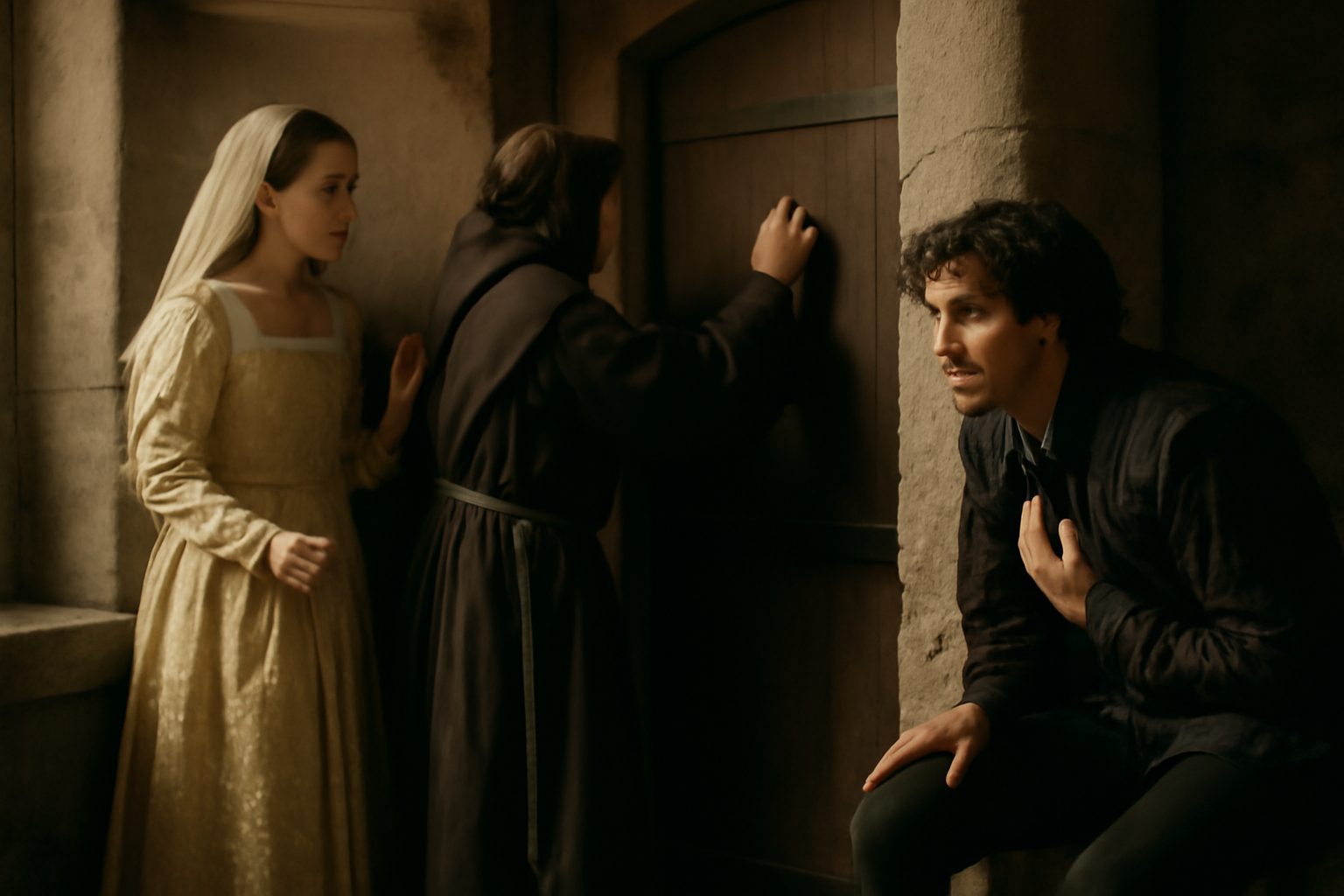
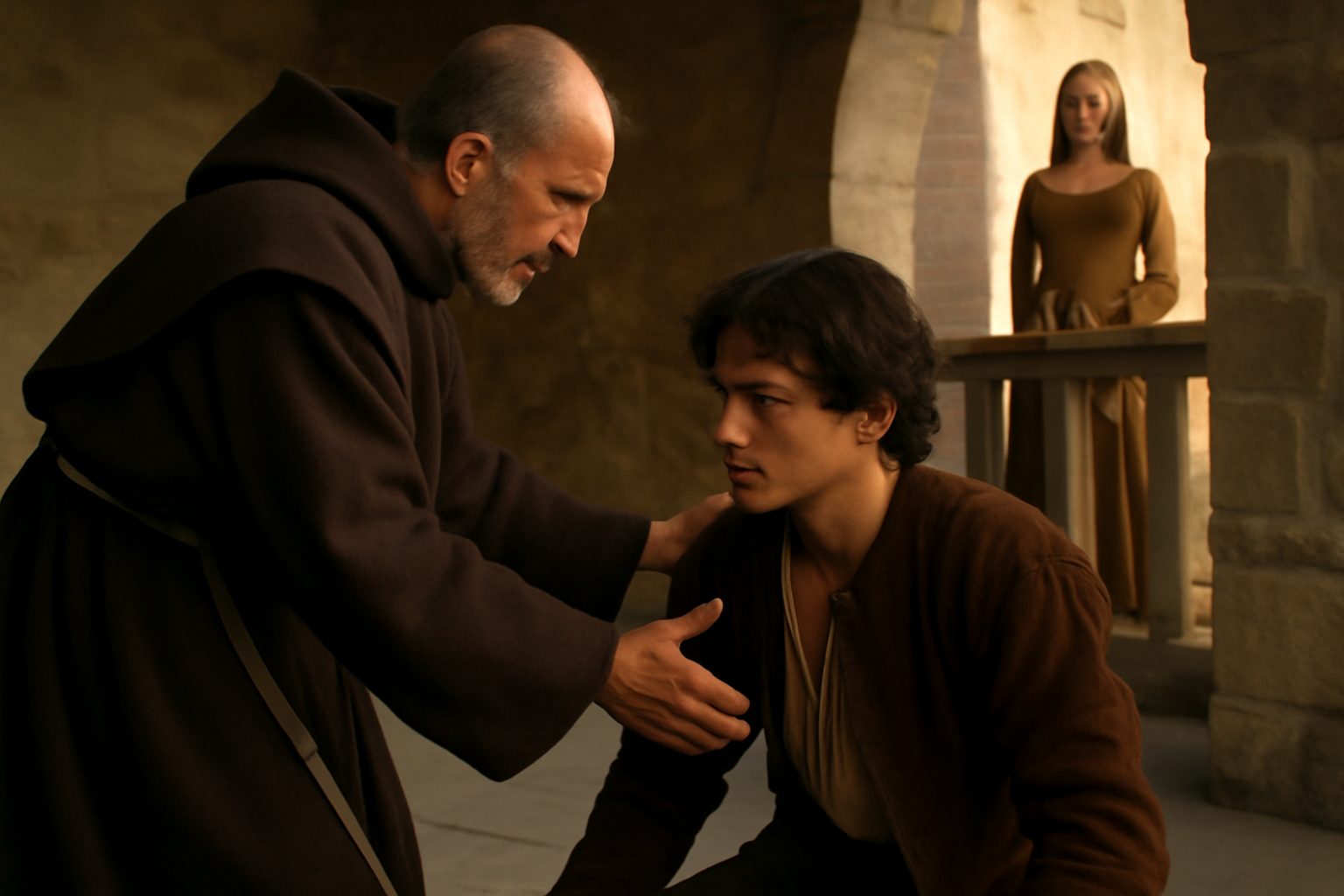
In Act 3, Scene 3 of Romeo and Juliet, Friar Laurence intervenes as Romeo, overwhelmed by grief and guilt after killing Tybalt, draws his sword in a moment of despair. The friar urges him to pause, recognizing the reckless impulsivity of his actions. This moment highlights Romeo's emotional turmoil and the friar's role as a voice of reason.
Friar Laurence: "Hold thy desperate hand:"
In modern day english, we would say:
Stop your reckless action.
Frequently Asked Questions
What is Friar Laurence trying to stop Romeo from doing in this line?
Friar Laurence is trying to stop Romeo from doing something reckless or harmful in his emotional state.
Connections to other verses:
Connections to "Hold thy desperate hand"
The verse Hold thy desperate hand is spoken by Friar Laurence as he intervenes to prevent Romeo from committing suicide in a moment of despair. This line directly connects to several other verses in the scene that highlight Romeo's emotional turmoil and the Friar's attempts to counsel him.
Desperation and Self-Harm
Romeo's desperation is evident in Hast thou slain Tybalt? wilt thou slay thyself?, where the Friar questions Romeo's intent to harm himself, reinforcing the theme of self-destruction. Similarly, By doing damned hate upon thyself? underscores the sinfulness of suicide, which the Friar is trying to prevent.
Counsel and Reason
The Friar's role as a voice of reason is further emphasized in Thou fond mad man, hear me but speak a word, where he urges Romeo to listen rather than act rashly. In Art thou a man? thy form cries out thou art, the Friar challenges Romeo's masculinity and rationality, questioning his descent into hysteria.
Emotional State
Romeo's overwhelming grief is captured in And fall upon the ground, as I do now, illustrating his physical collapse from despair. The Friar's response to this is to offer comfort and perspective, as seen in What, rouse thee, man! thy Juliet is alive, reminding Romeo that there is still hope because Juliet lives.
Rejection of Comfort
Despite the Friar's efforts, Romeo initially rejects solace, as shown in It helps not, it prevails not: talk no more, where he dismisses the Friar's advice. This stubborn despair is why the Friar must physically and verbally intervene with "Hold thy desperate hand."