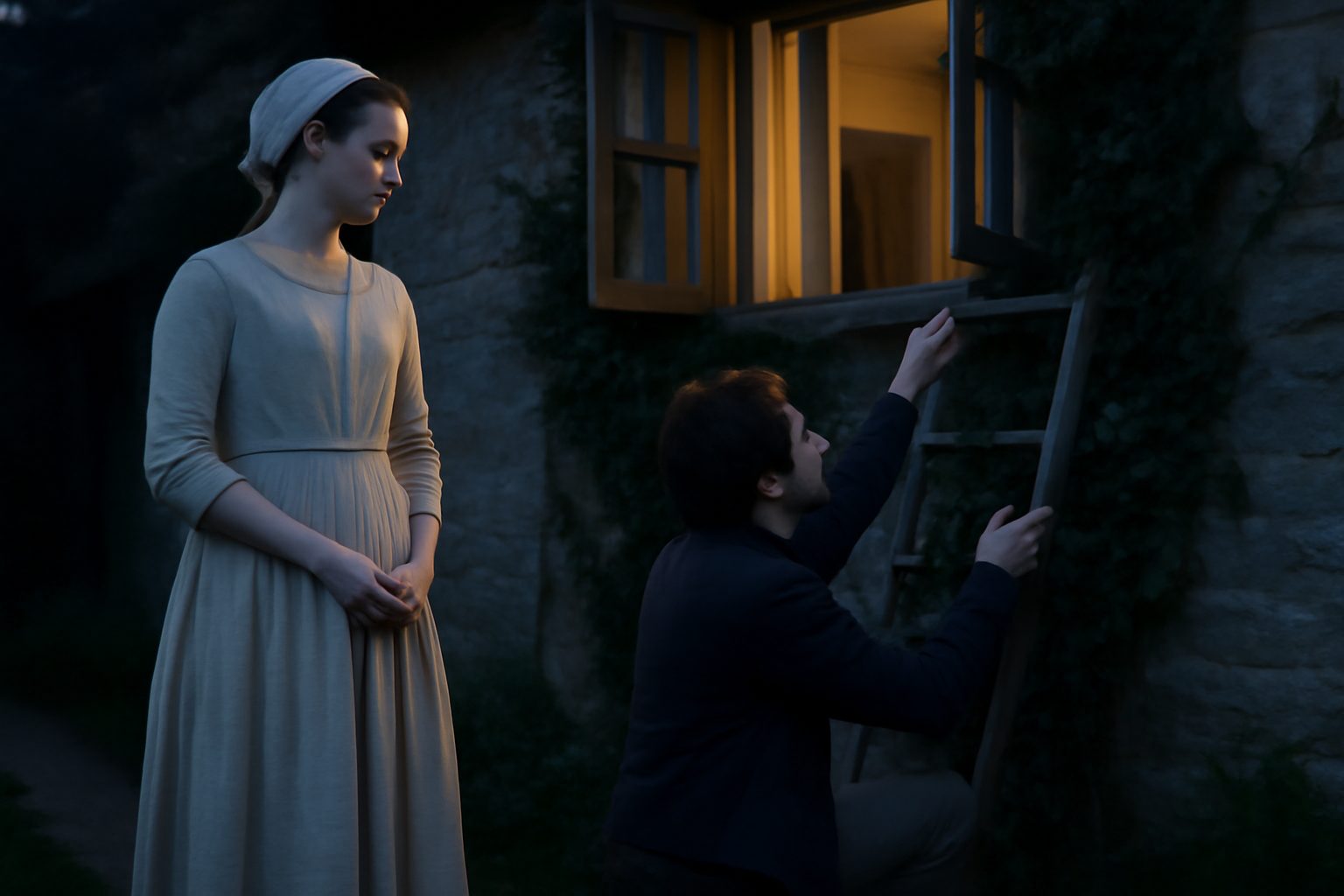
In Act 2, Scene 5 of Romeo and Juliet, Juliet impatiently awaits the return of her Nurse, who has gone to meet Romeo and learn his plans for their secret marriage. This line captures Juliet's restless anticipation as she compares the slow passage of time to the swift movement of light, emphasizing her eagerness for news. The verse reflects her youthful impatience and the intensity of her emotions as she longs for confirmation of her future with Romeo.
Juliet: "Which ten times faster glide than the sun's beams,"
In modern day english, we would say:
The nurse is saying that her own excitement and speed in delivering the message are moving much faster than sunlight travels.
Frequently Asked Questions
What does Juliet compare to the speed of the sun's beams in this line?
She compares something that moves ten times faster than the sun's beams.
How much faster is the thing Juliet mentions compared to the sun's beams?
Ten times faster.
Connections to other verses:
Connections to "Which ten times faster glide than the sun's beams"
The verse "Which ten times faster glide than the sun's beams" from Romeo & Juliet Act 2 Scene 5 is part of Juliet's lament about the Nurse's slow return with news from Romeo. It emphasizes the swiftness of thoughts and desires compared to physical movement, a theme echoed throughout the scene.
Related Imagery of Speed and Delay
Juliet's impatience is contrasted with the Nurse's sluggishness. In "O, she is lame! love's heralds should be thoughts", Juliet wishes love's messages could travel as quickly as thoughts, directly linking to the idea of thoughts gliding faster than light. Similarly, "She would be as swift in motion as a ball" imagines an ideal swiftness, while "Unwieldy, slow, heavy and pale as lead" describes the Nurse's actual pace, creating a stark contrast.
Expressions of Impatience and Physical Exhaustion
Juliet's frustration is palpable in lines like "Do you not see that I am out of breath?" and the Nurse's complaints about her aches in "Fie, how my bones ache! what a jaunt have I had!" highlight the physical toll of the delay, underscoring the disparity between emotional urgency and physical limitations.
References to Time and Urgency
The scene is filled with references to time, such as "Is three long hours, yet she is not come" and "In half an hour she promised to return", reinforcing Juliet's anxiety and the slow passage of time, which makes the idea of thoughts moving "ten times faster" all the more poignant.
Concluding Urgency
Ultimately, the urgency culminates in Juliet's need to act quickly, as seen in "Then hie you hence to Friar Laurence' cell" and "Hie you to church; I must another way", where haste is finally emphasized, tying back to the initial desire for speed expressed in the focal verse.