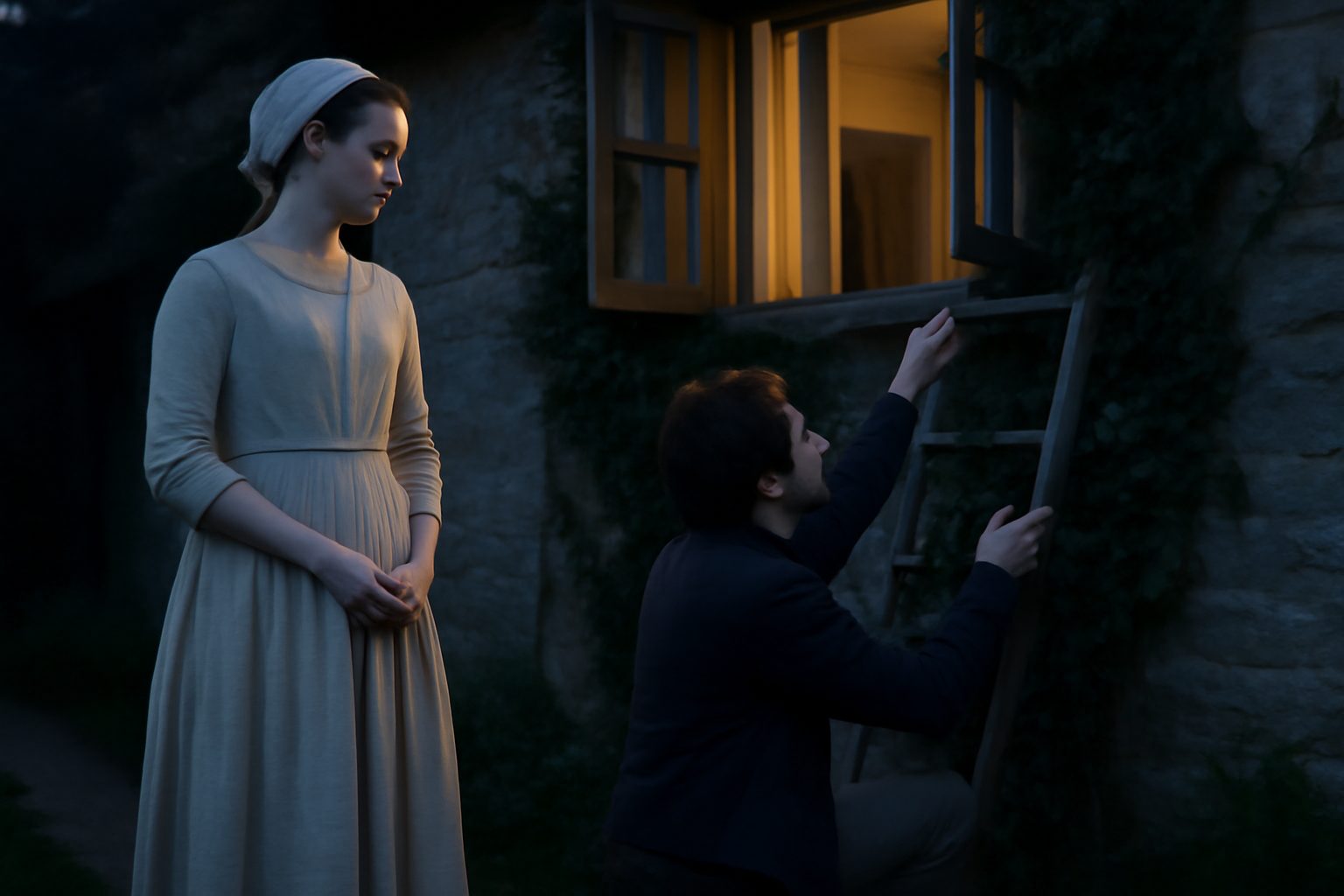
In Act 2, Scene 5 of Romeo and Juliet, Juliet impatiently waits for the Nurse to return with news from Romeo. Frustrated by the delay, she criticizes the Nurse's slowness, suggesting that love's messengers should be as swift as thoughts. This line captures Juliet's youthful impatience and her eagerness to hear word of her secret marriage plans.
Juliet: "O, she is lame! love's heralds should be thoughts,"
In modern day english, we would say:
She’s so slow! Love’s messengers should be as fast as thoughts.
Frequently Asked Questions
What does Juliet mean when she says love's messengers should be thoughts?
Juliet is expressing her impatience, saying that love's messages should travel as fast as thoughts, rather than relying on slow messengers.
Connections to other verses:
Connections to "O, she is lame! love's heralds should be thoughts,"
This verse, spoken by Juliet, expresses her impatience with the Nurse's slow return, contrasting the swiftness of love's thoughts with the Nurse's physical slowness. It connects thematically and structurally with several other lines in the scene.
Impatience and the Passage of Time
Juliet's frustration echoes her earlier lament in "Is three long hours, yet she is not come", emphasizing the agonizing wait. Her idealized view of love's speed is further developed in "Which ten times faster glide than the sun's beams", reinforcing the contrast between emotional urgency and physical delay.
Contrast with the Nurse's Condition
The Nurse's actual state upon return directly opposes Juliet's expectation. In "Unwieldy, slow, heavy and pale as lead", Shakespeare physically manifests the slowness Juliet criticizes. The Nurse's complaints about her physical state, such as "Fie, how my bones ache! what a jaunt have I had!" and "My back o' t' other side,--O, my back, my back!", provide tangible examples of this "lameness".
Dramatic Irony and Payoff
Juliet's complaint creates dramatic irony, as the audience knows the Nurse carries vital news. This tension resolves when the Nurse finally reveals her message in "There stays a husband to make you a wife", making the initial impatience part of Shakespeare's deliberate pacing to heighten emotional impact.