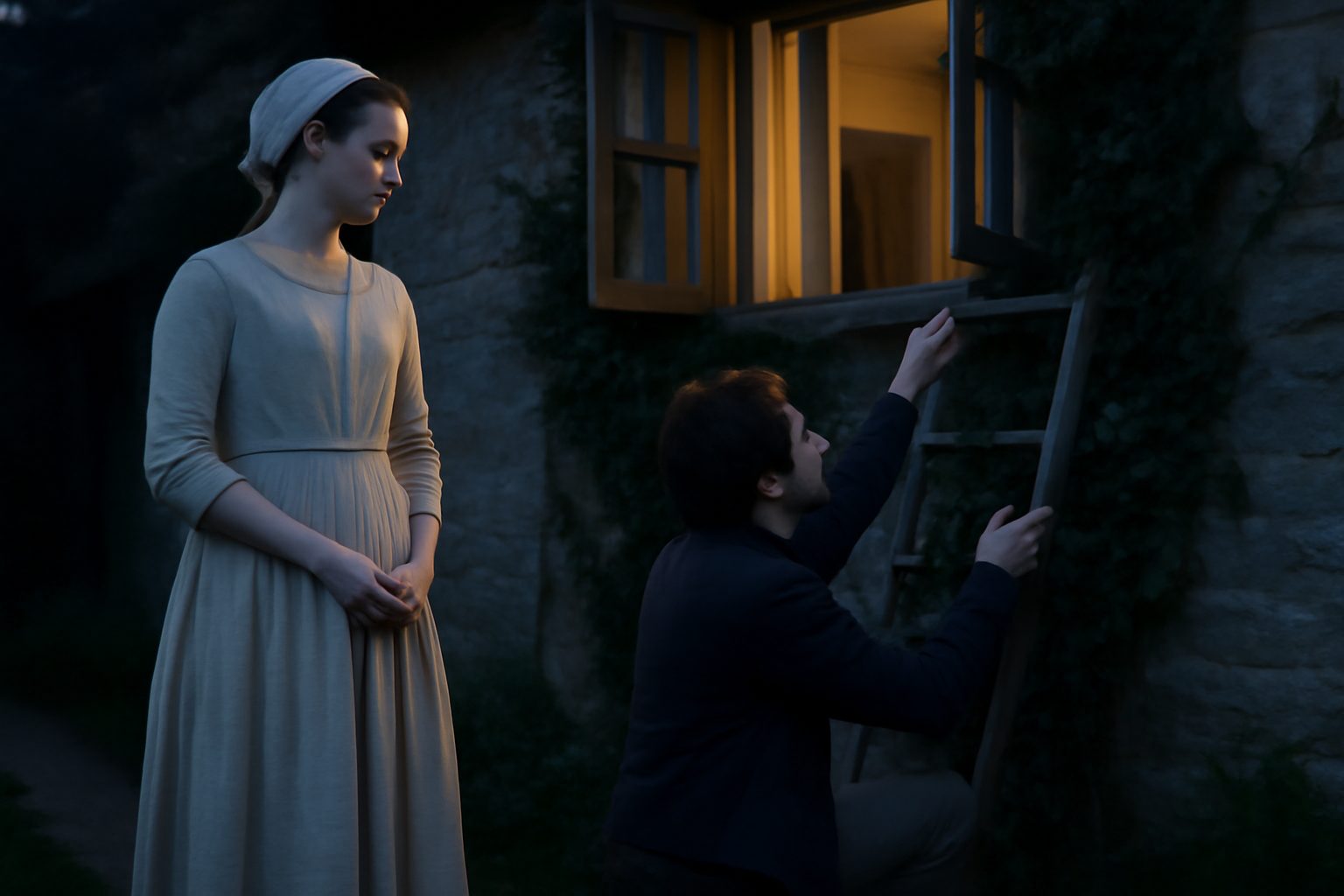
In Act 2, Scene 5 of Romeo and Juliet, the Nurse returns to Juliet after meeting with Romeo to relay his plans for their secret marriage. Frustrated by the Nurse's deliberate slowness and teasing, Juliet impatiently urges her to speak quickly. This line captures Juliet's eagerness and the tension between her youthful impetuosity and the Nurse's more measured approach.
Nurse: "Jesu, what haste? can you not stay awhile?"
In modern day english, we would say:
Jesus, why are you in such a rush? Can’t you wait a moment?
Frequently Asked Questions
What is the nurse asking in this line from Romeo and Juliet?
The nurse is asking why someone is in such a hurry and if they can slow down or wait a moment.
Connections to other verses:
Connections to "Jesu, what haste? can you not stay awhile?"
This line, spoken by Juliet in Act 2 Scene 5 Line 30, reflects her impatience and eagerness for news from the Nurse about Romeo. It connects thematically and emotionally to several other verses in the same scene.
Impatience and Urgency
Juliet's exasperation mirrors her earlier anxious waiting, as seen when she remarks, "Is three long hours, yet she is not come" (Line 11). Her sense of time dragging contrasts with the Nurse's slowness, emphasizing the tension between youthful passion and aged lethargy.
Physical Exhaustion vs. Emotional Eagerness
The Nurse's response to Juliet's haste is evident in her complaints of physical strain, such as "Fie, how my bones ache! what a jaunt have I had!" (Line 27) and "My back o' t' other side,--O, my back, my back!" (Line 51). This creates a stark contrast with Juliet's breathless anticipation.
Playful Teasing and Delay
The Nurse deliberately prolongs Juliet's agony, prompting Juliet's frustrated "Nay, come, I pray thee, speak; good, good nurse,…" (Line 29) and later exclaiming "Is this the poultice for my aching bones?" (Line 65), highlighting the Nurse's manipulative delay tactics.
Youthful Impetuosity
Juliet's inability to "stay awhile" aligns with the scene's depiction of swift, youthful love, as described in "She would be as swift in motion as a ball" (Line 13) and "Which ten times faster glide than the sun's beams" (Line 5), reinforcing the theme of rapid emotional currents.
Relief and Resolution
Ultimately, the haste Juliet desires finds resolution when the Nurse instructs, "Then hie you hence to Friar Laurence' cell" (Line 70), allowing the impatient energy to culminate in action and forward movement for the lovers' plans.