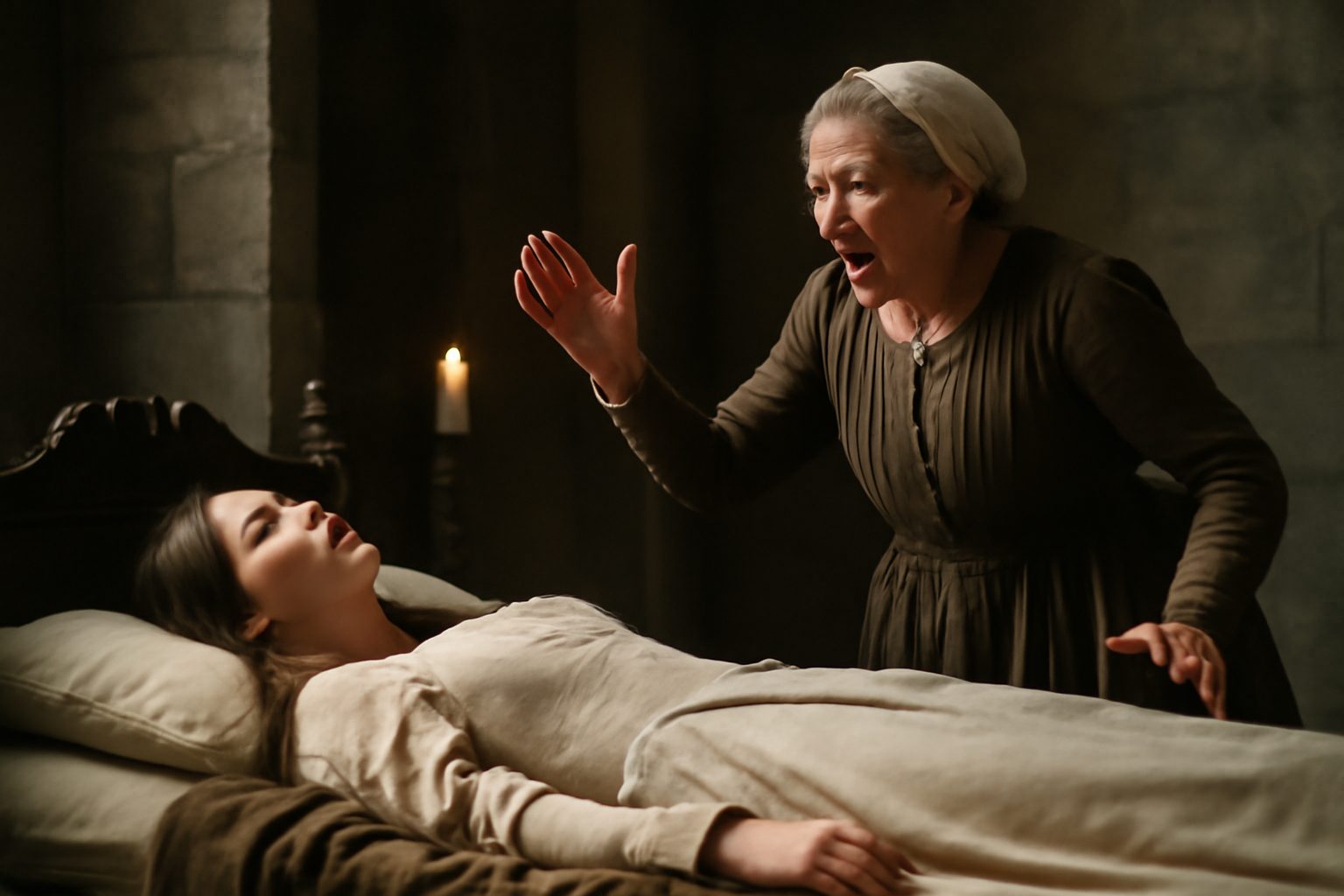
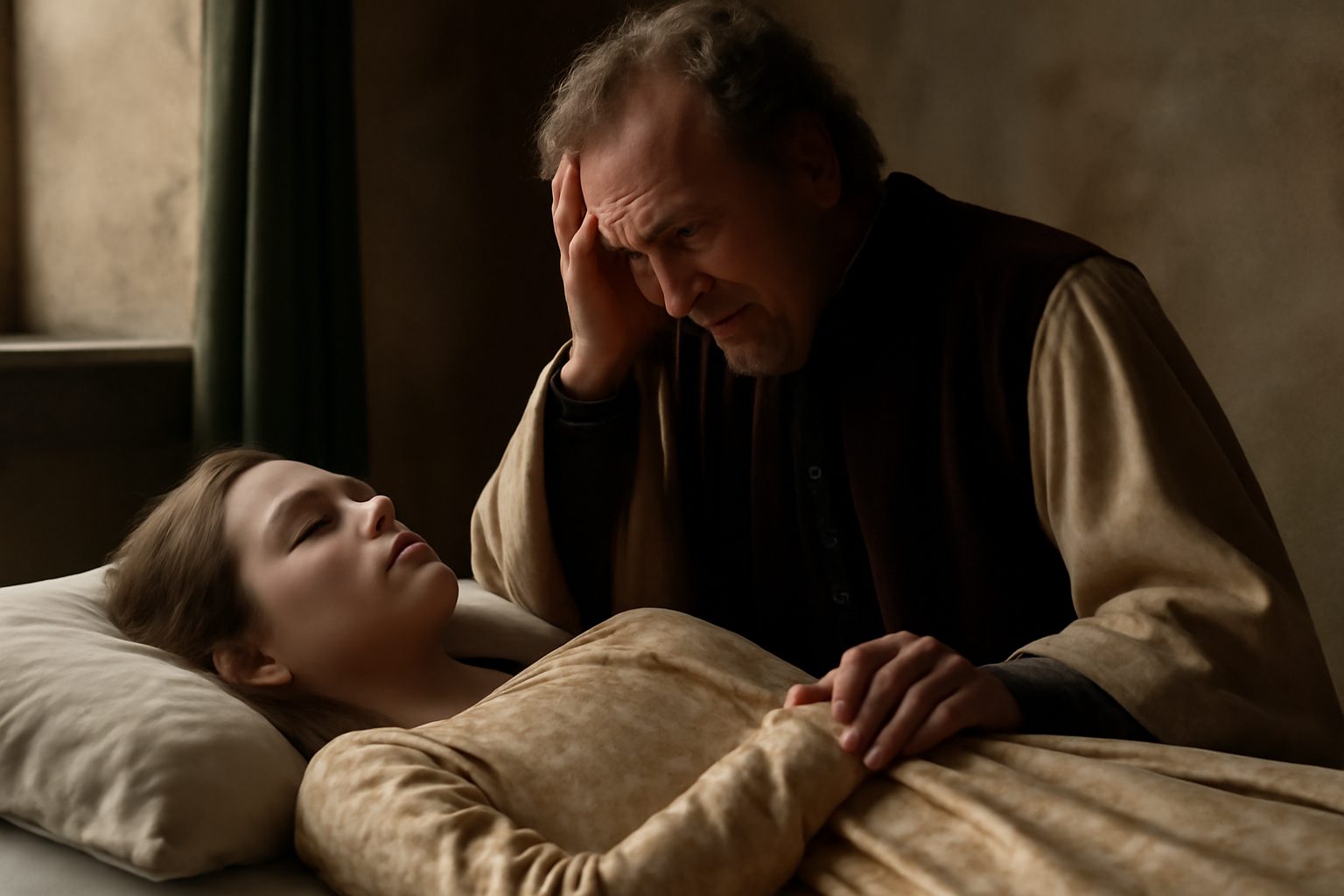
In Act 4, Scene 5 of Romeo and Juliet, the Nurse discovers Juliet seemingly lifeless in her chamber, mistaking her drugged slumber for death. Capulet, upon hearing the news, delivers this line in shock and grief, lamenting that death has taken his daughter as a bride. The moment marks a tragic turning point, as the family's mourning inadvertently sets the stage for the play's devastating conclusion.
Capulet: "Hath Death lain with thy wife. There she lies,"
In modern day english, we would say:
Death has slept with your wife—there she is, dead.
Frequently Asked Questions
What does Capulet mean when he says Death has lain with his wife?
He means that his wife has died, as if Death itself has taken her as a partner.
Connections to other verses:
Connections to "Hath Death lain with thy wife. There she lies,"
This verse, spoken by Capulet, personifies Death as a lover who has claimed Juliet, introducing a theme of macabre union that resonates throughout the scene.
Personification of Death
Capulet's metaphor is echoed in Death is my son-in-law, Death is my heir;, where he further develops the idea of Death replacing Paris. Similarly, Flower as she was, deflowered by him. reinforces this imagery, suggesting violation and loss of innocence.
Expressions of Grief and Despair
The shock and sorrow following Juliet's apparent death are captured in verses like Alack the day, she's dead, she's dead, she's dead! and Alas, alas! Help, help! my lady's dead!, which amplify the initial discovery. Lady Capulet's anguish in O me, O me! My child, my only life, deepens the emotional weight.
Transformation of Joy to Sorrow
The scene contrasts anticipated celebration with actual tragedy, as seen in All things that we ordained festival, and And all things change them to the contrary., highlighting the abrupt shift from wedding preparations to funeral rites.
Finality and Acceptance
Verses such as Life and these lips have long been separated: and Ready to go, but never to return. emphasize death's irrevocability, while Friar Laurence's counsel in Peace, ho, for shame! confusion's cure lives not urges acceptance of fate.