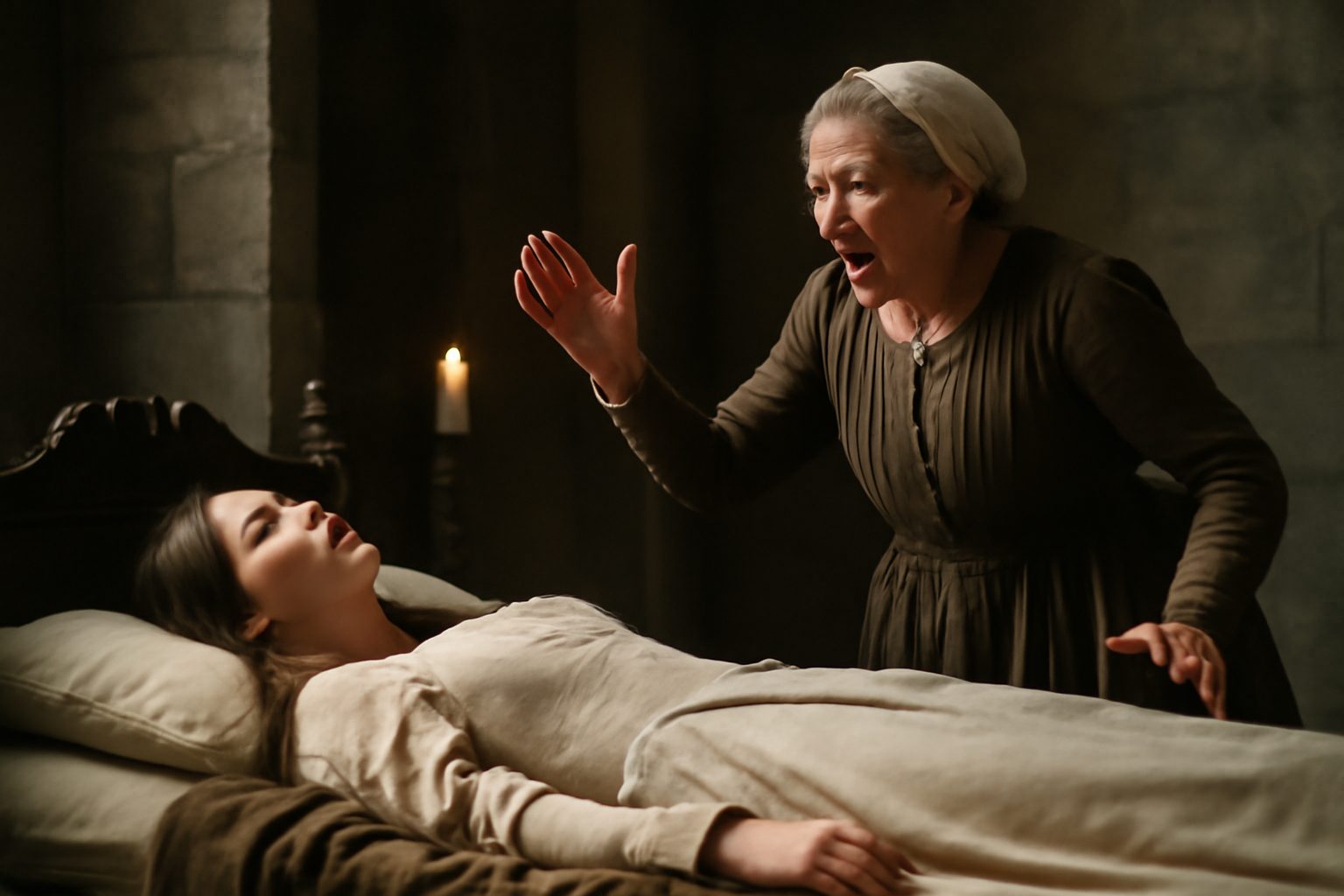
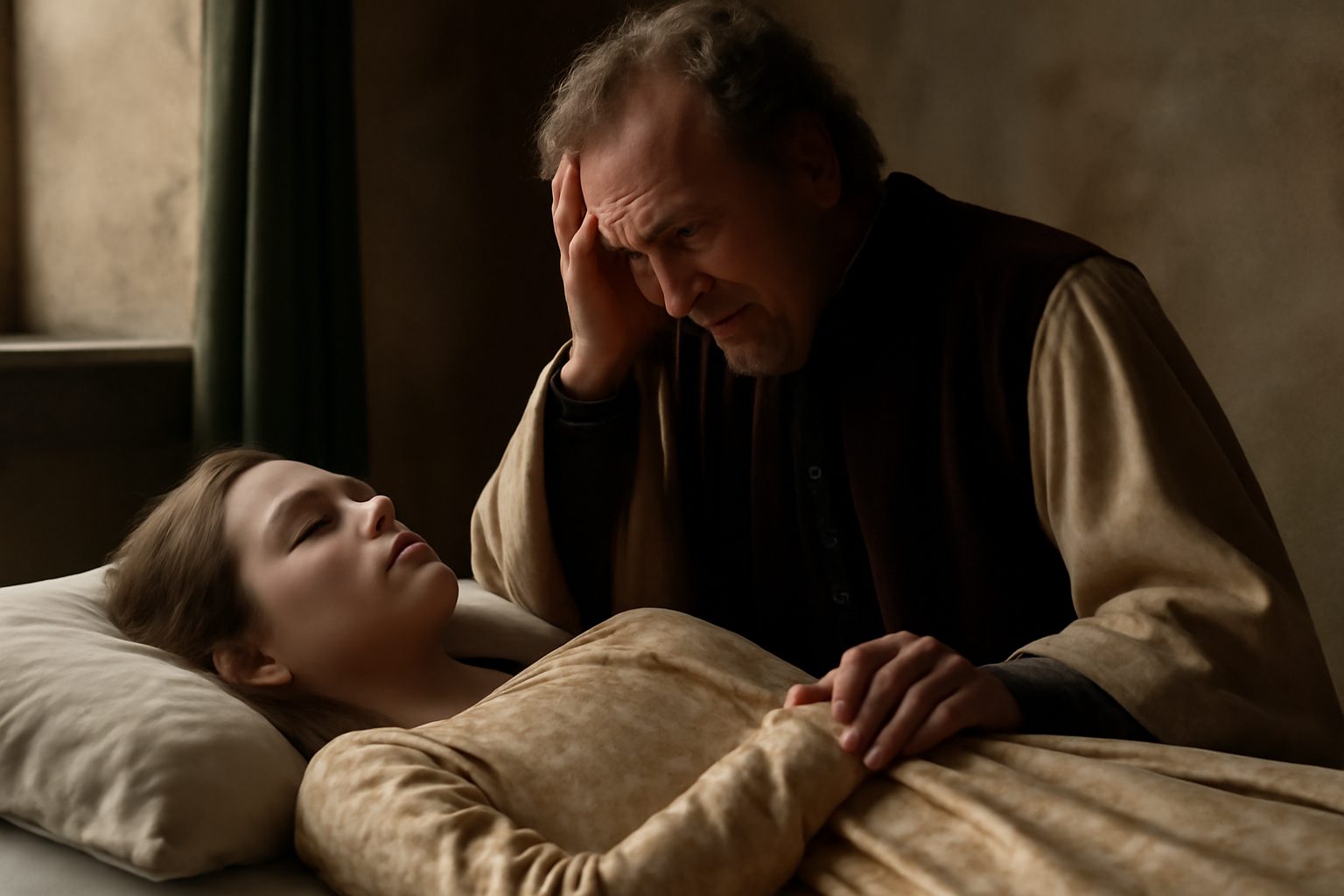
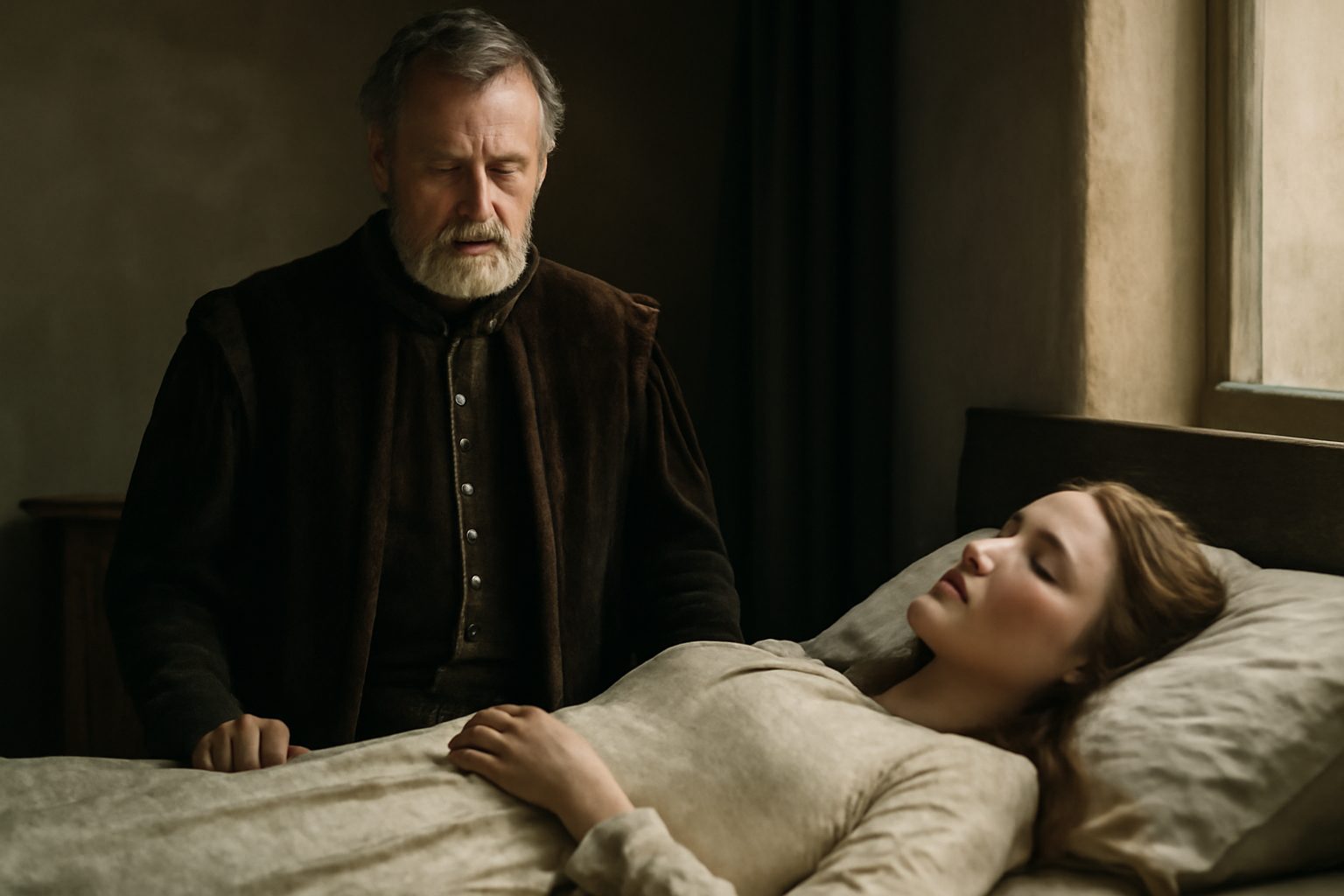
In Act 4, Scene 5 of Romeo and Juliet, the Nurse discovers Juliet seemingly lifeless in her bed, leading the household to believe she has died. Amid the chaos and grief, Peter, the Capulet servant, engages in a brief exchange with the musicians hired for Juliet's wedding, now rendered pointless. His remark about silver having a sweet sound reflects a moment of dark humor, as he alludes to the musicians' desire for payment despite the tragic circumstances.
Musician: "Marry, sir, because silver hath a sweet sound."
In modern day english, we would say:
Well, sir, it's because the word "silver" sounds pleasant when you say it.
Frequently Asked Questions
Why does the musician say silver has a sweet sound?
The musician is referring to the pleasant sound of silver coins, which were often given as payment to musicians.
Connections to other verses:
Connections to Other Verses in Act 4 Scene 5
The verse "Marry, sir, because silver hath a sweet sound" is part of a musical and thematic conversation involving the musicians present in the scene. It is directly linked to several other lines that discuss music, sound, and the ironic contrast between celebration and tragedy.
Direct Musical References
- This line is a response to the question posed in why 'silver sound'? why 'music with her silver, where Peter queries the musicians about the phrase "silver sound."
- It is also connected to for you. It is 'music with her silver sound,', which quotes the same song lyric that Peter is referencing.
- The idea of musicians playing for silver is further elaborated in because musicians have no gold for sounding:, highlighting the financial motives behind their art.
Contrast with Mourning and Death
- The lighthearted discussion about music starkly contrasts with the overwhelming grief expressed in lines like Alack the day, she's dead, she's dead, she's dead! and Accursed, unhappy, wretched, hateful day!, emphasizing the scene's jarring shift from wedding preparations to funeral lamentations.
- This irony is deepened by Capulet’s earlier line, All things that we ordained festival,, which acknowledges the planned celebration now turned to mourning.
Structural and Thematic Links
- The musicians' refusal to play in Not a dump we; 'tis no time to play now. directly responds to the futility of their "silver sound" in a house of death, tying back to the original verse’s context.
- Peter’s witty yet somber interaction culminates in Then music with her silver sound, which poetically resolves the discussion, albeit amidst tragedy.