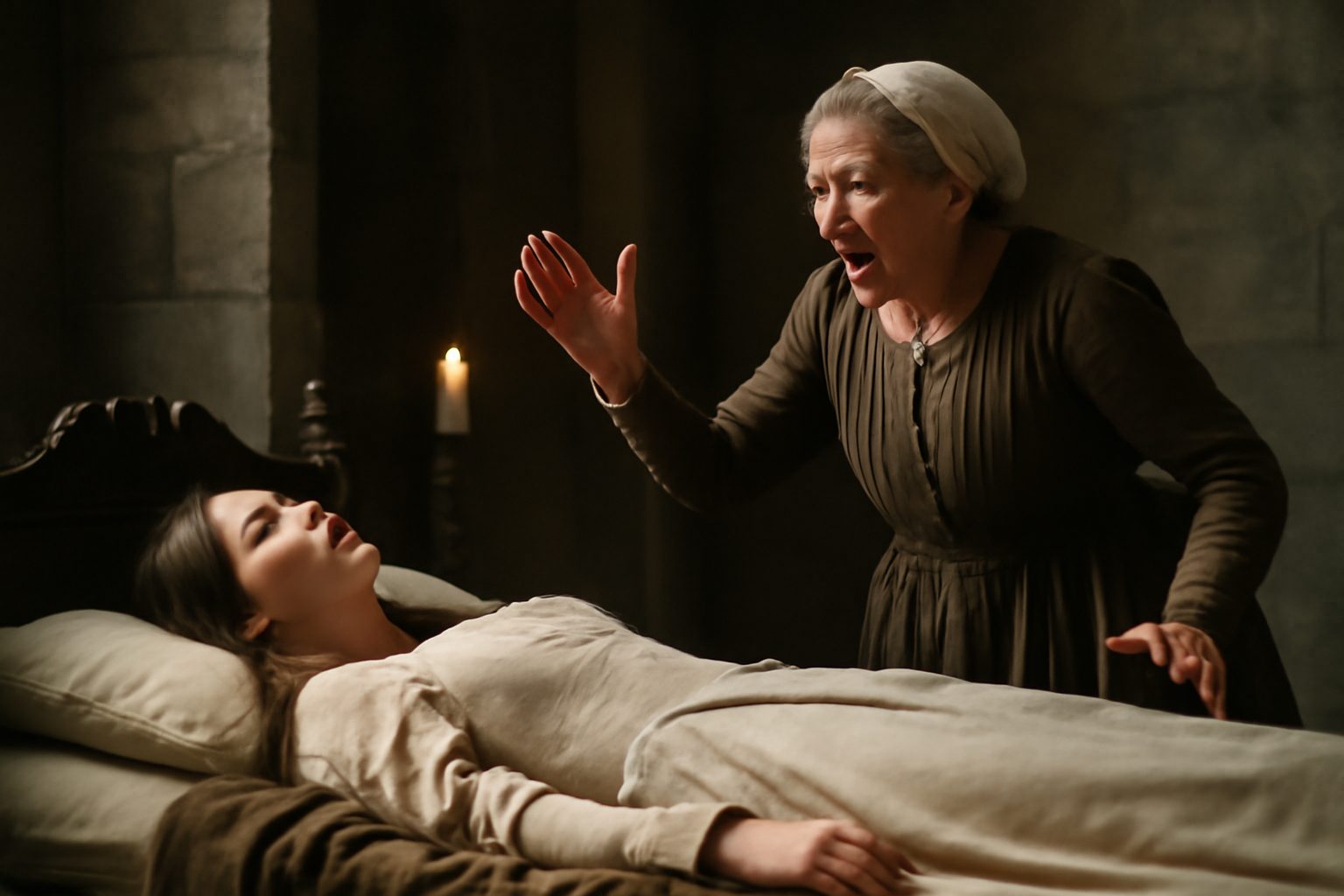
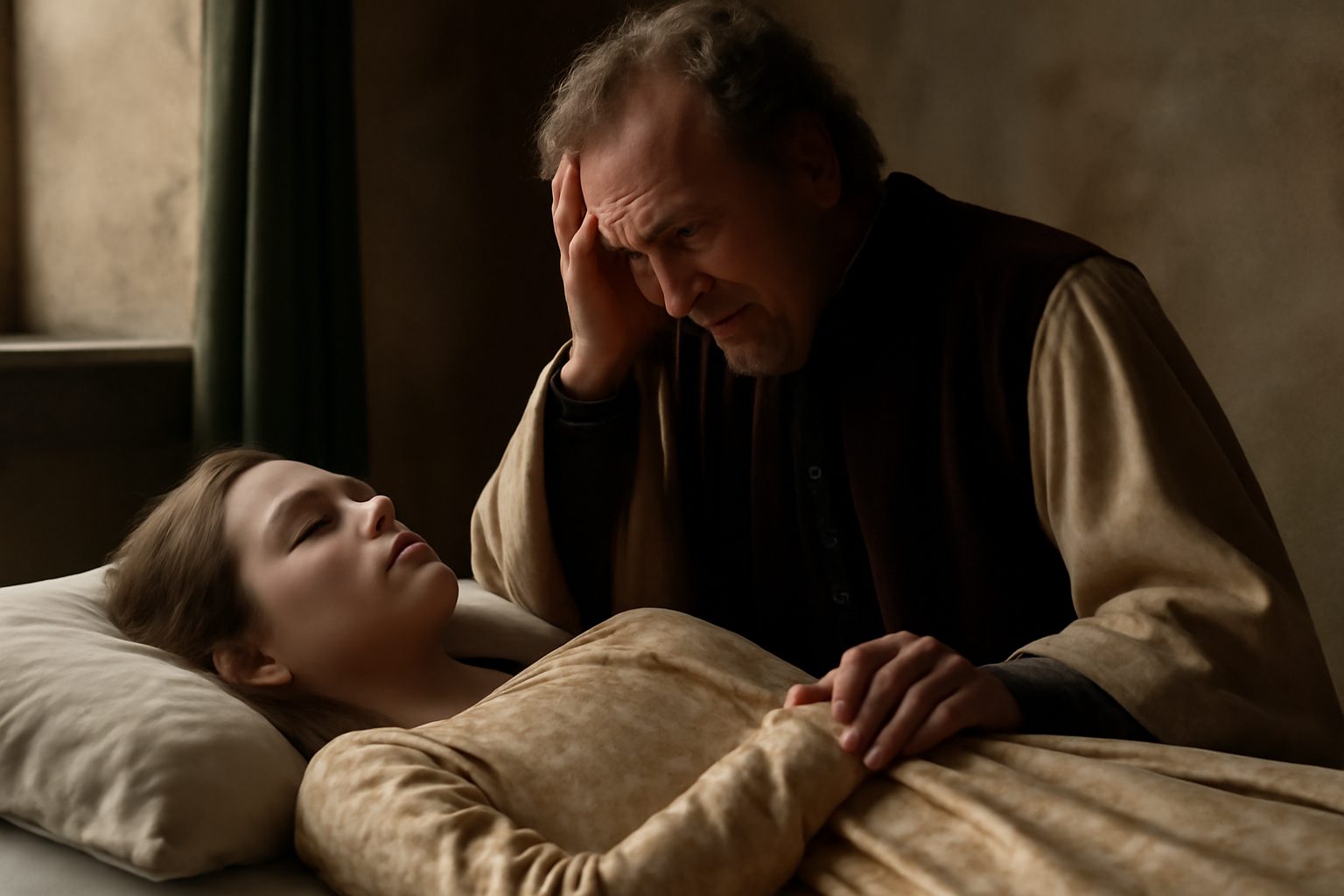
In Act 4, Scene 5 of Romeo and Juliet, the Capulet household awakens to what they believe is Juliet's untimely death on the morning of her wedding to Paris. The Friar's potion has made her appear lifeless, and the joyful celebrations planned for her marriage quickly turn to grief. This line reflects the abrupt shift from festivity to mourning, as the events they had prepared for with excitement are now overshadowed by tragedy.
Capulet: "All things that we ordained festival,"
In modern day english, we would say:
Everything we planned for celebration.
Frequently Asked Questions
What does Capulet mean when he says everything they planned was for celebration?
Capulet is expressing that all the preparations they made were intended for a joyful event, specifically Juliet's wedding, but now they must use them for her funeral instead.
Connections to other verses:
Connections to "All things that we ordained festival"
The verse "All things that we ordained festival" serves as a pivotal moment in Act 4, Scene 5, encapsulating the tragic inversion of celebration into mourning. This line, spoken by Capulet, reflects the abrupt shift from the anticipated wedding festivities to Juliet's apparent death, connecting thematically and structurally to several other verses in the scene.
Transformation of Joy into Sorrow
This verse directly ties to "Our wedding cheer to a sad burial feast", "Our solemn hymns to sullen dirges change", and "Our bridal flowers serve for a buried corse", all of which emphasize the conversion of nuptial elements into funeral rites. Similarly, "And all things change them to the contrary" reinforces this theme of reversal, echoing the sentiment that every prepared joy has been perverted by tragedy.
Contrast with Initial Optimism
Earlier lines like "Come, is the bride ready to go to church?" and "For shame, bring Juliet forth; her lord is come" highlight the festive anticipation that starkly contrasts with the despair following Juliet's discovery. The Nurse's cheerful exclamation, "Marry, and amen, how sound is she asleep!", further underscores the tragic irony, as the sleep mistaken for slumber is actually death.
Expressions of Grief and Despair
The collective lamentations, such as "Alack the day, she's dead, she's dead, she's dead!" and "Accursed, unhappy, wretched, hateful day!", resonate with Capulet's realization that the ordained festival has turned to funeral. Paris's sorrowful cry, "O love! O life! not life, but love in death!", and Lady Capulet's heartrending "And with my child my joys are buried", further deepen the scene's emotional desolation, tying back to the perversion of celebration.
Structural and Tonal Shifts
The verse also connects to the musicians' interlude, where the comic relief provided by lines like "Faith, we may put up our pipes, and be gone" contrasts with the overarching tragedy, yet subtly echoes the theme of ceased celebration. The directive "And go, Sir Paris; every one prepare" shifts the focus from wedding preparations to funeral arrangements, mirroring the transformation noted in "All things that we ordained festival".