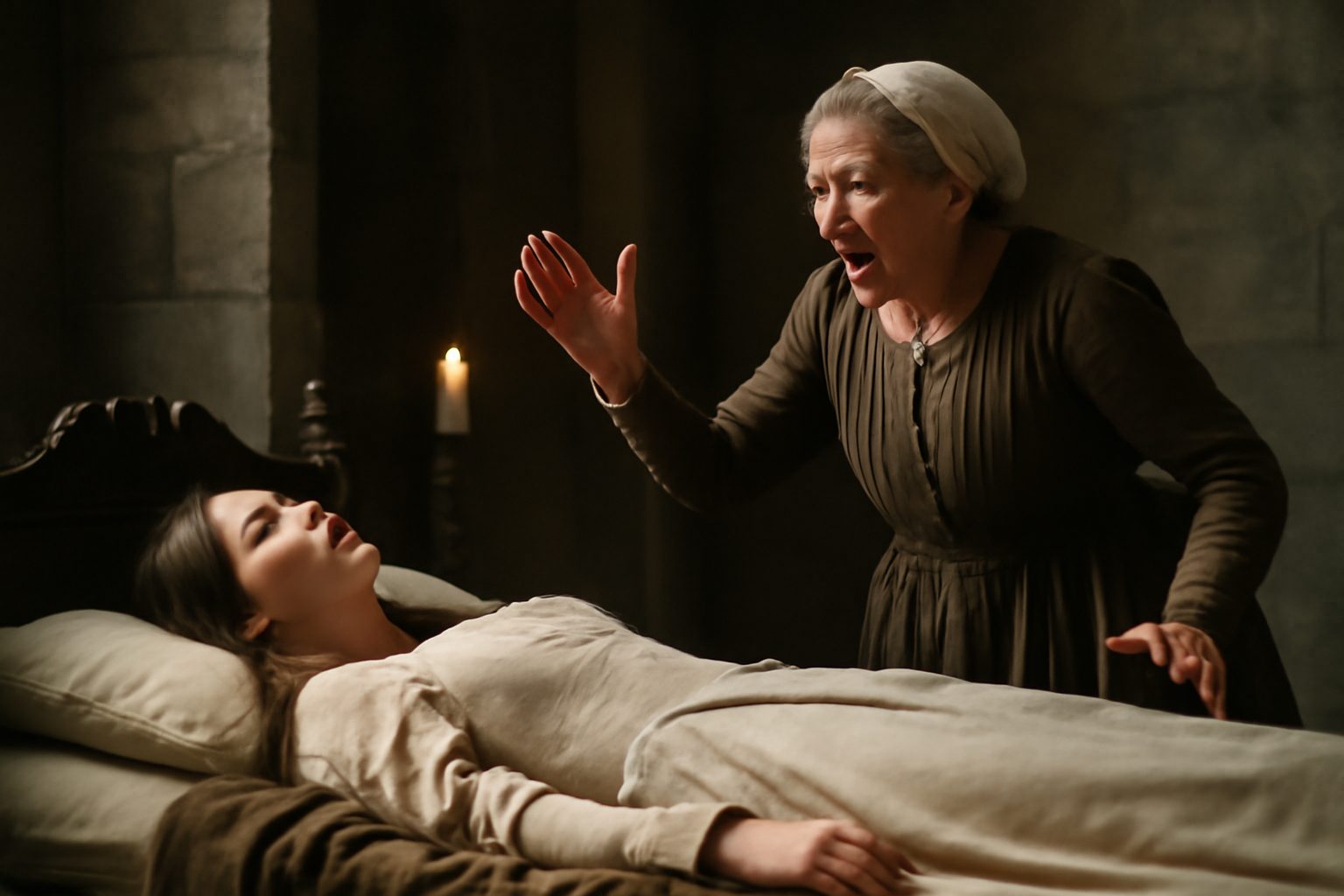
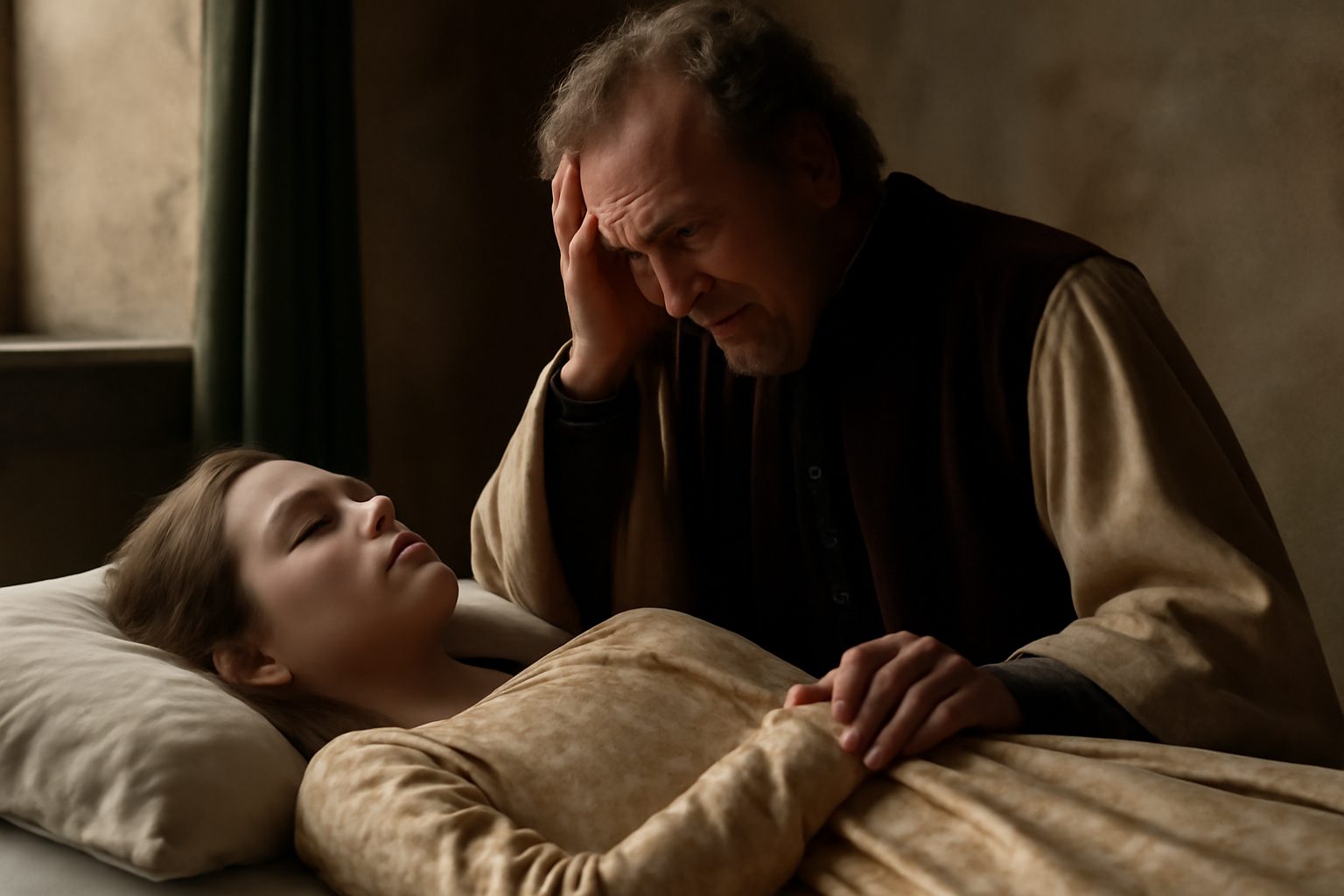
In Act 4, Scene 5 of Romeo and Juliet, the Capulet household believes Juliet has died, and preparations for her funeral begin. Amidst the chaos and grief, Peter, a servant, interrupts the scene with a request for musicians to play a somber tune. His remark about providing a minstrel reflects the bleak irony of the moment, as the musicians, hired for Juliet's wedding, now face the grim task of playing for her funeral.
Peter: "I will give you the minstrel."
In modern day english, we would say:
I’ll hire a musician for you.
Frequently Asked Questions
Who does Peter say he will give the minstrel to?
Peter does not specify who he will give the minstrel to in this line.
What does Peter offer to do in this line?
Peter offers to give the minstrel to someone.
Connections to other verses:
Connections to "I will give you the minstrel"
The line "I will give you the minstrel" is part of a humorous exchange between Peter and the musicians, offering a stark contrast to the tragic events unfolding in the scene. This moment of levity highlights the disconnect between the household's grief and the musicians' practical concerns.
Contrast with Mourning and Grief
While the Capulets lament Juliet's apparent death with lines like "Alack the day, she's dead, she's dead, she's dead!" and "Accursed, unhappy, wretched, hateful day!", Peter's offer of the minstrel introduces an almost absurd interruption, emphasizing the jarring shift from sorrow to mundane reality.
Interaction with the Musicians
This line directly follows the musicians' refusal to play without payment, as seen in "Faith, we may put up our pipes, and be gone" and "No money, on my faith, but the gleek". Peter's sarcastic retort, including "Then I will give you the serving-creature", mocks their mercenary attitude, further underscoring the scene's thematic tension between emotion and practicality.
Connection to "Silver Sound"
The musicians' earlier discussion of "silver sound" in "Then music with her silver sound'" and "I say 'silver sound,' because musicians sound for..." contrasts with Peter's dismissive tone, highlighting how art and commerce clash in the face of tragedy.
Frivolity Amidst Tragedy
This moment parallels the Friar's admonition in "Peace, ho, for shame! confusion's cure lives not", as both serve to critique the mishandling of grief. However, Peter's antics add a layer of dark comedy, contrasting with the solemnity of lines like "And with my child my joys are buried".